

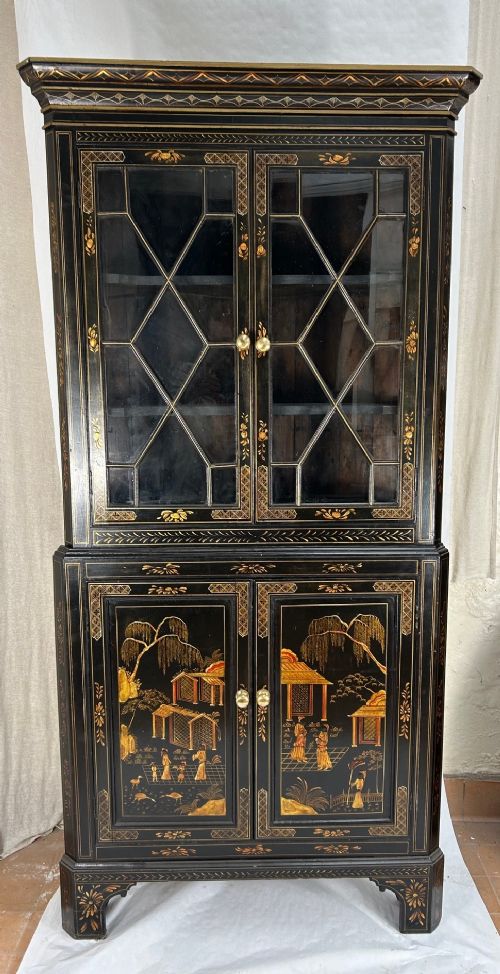
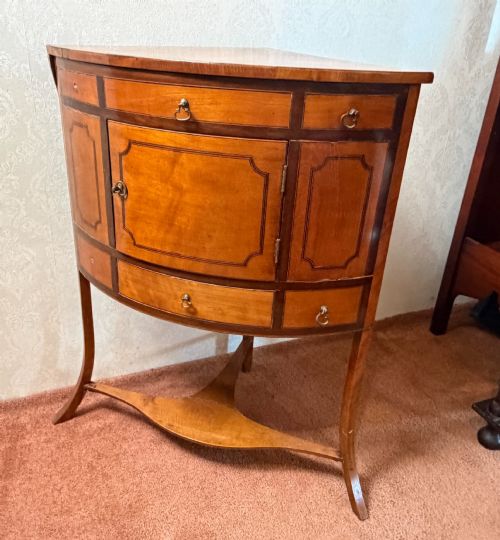
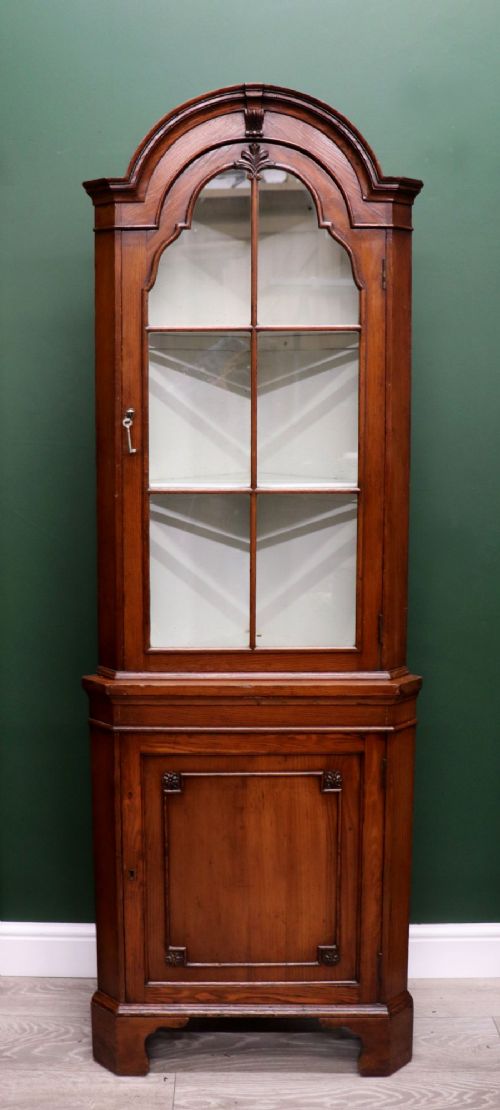
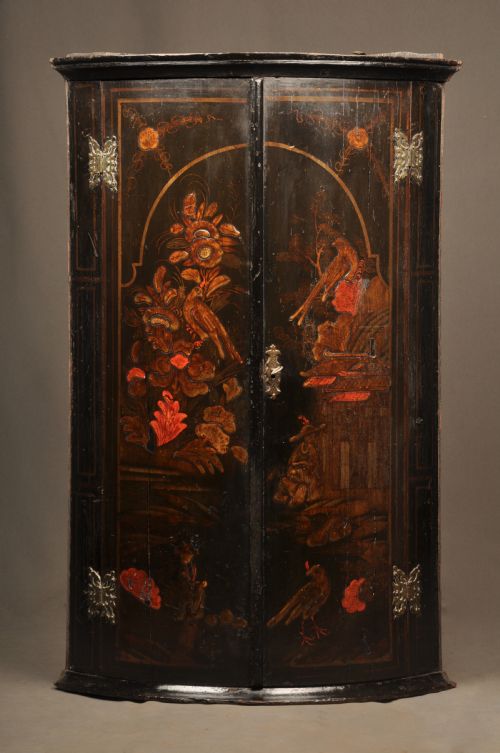




Georgian Style Corner Cupboard
A georgian style corner cupboard brings useful architectural line to an awkward angle while holding everyday china or glassware.

Georgian Style Corner Cupboard
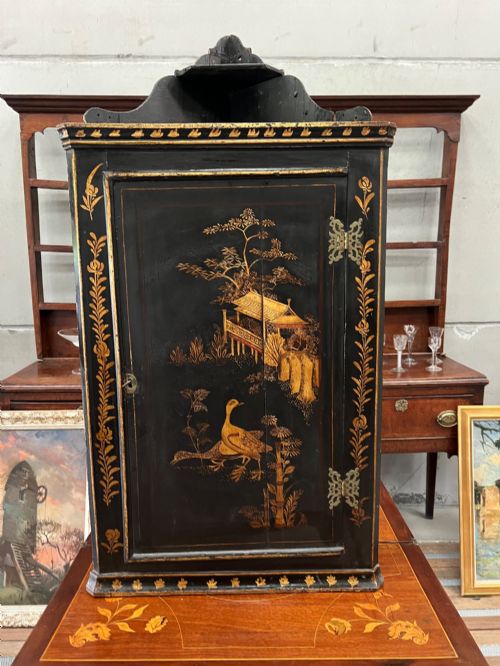
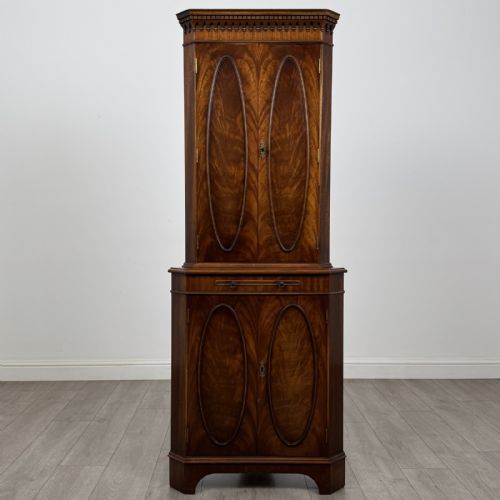
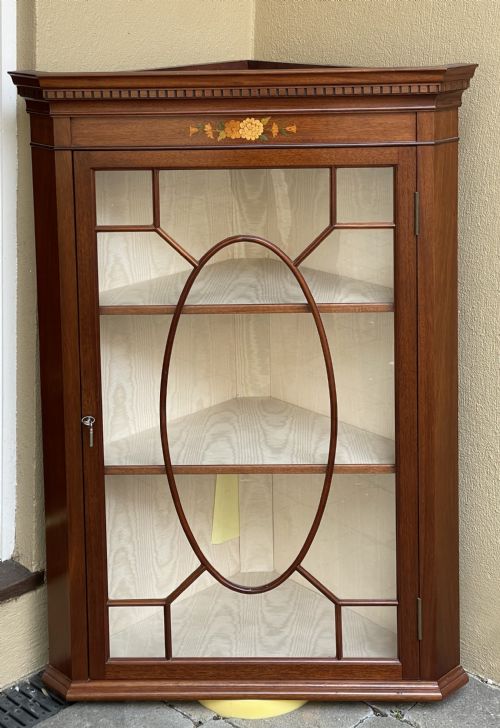
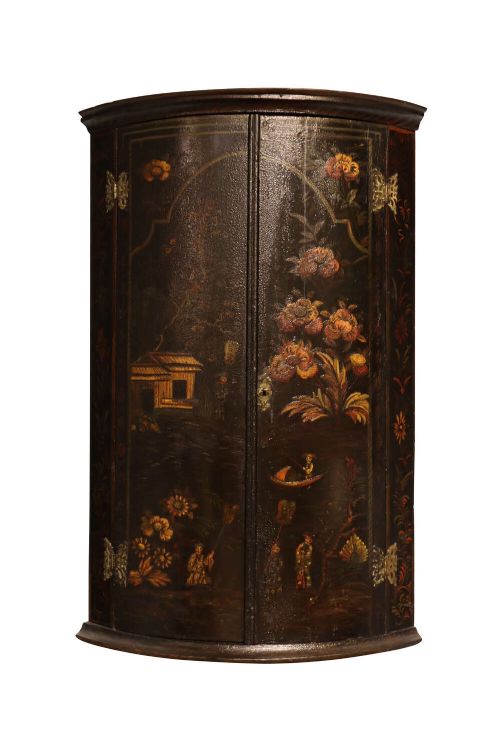
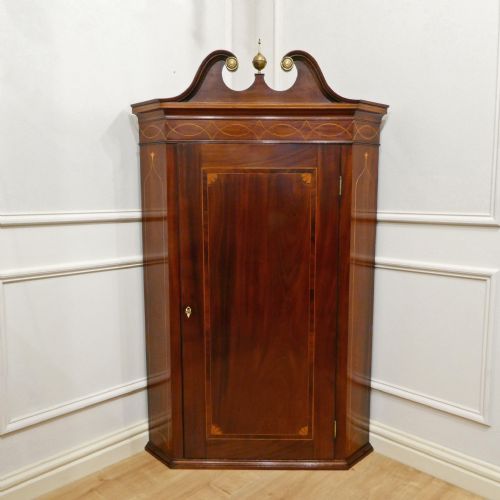
A georgian style corner cupboard is a fitted or freestanding cabinet designed specifically to occupy the ninety degree intersection of two walls, making practical use of domestic floor space that otherwise remains empty. These pieces appear in single-piece hanging formats or as two-piece floor-standing configurations, offering enclosed storage behind timber or glazed doors.
The selections recorded here span periods from the eighteenth century to the mid twentieth century, encompassing genuine antique examples alongside later Edwardian, Sheraton Revival, and mid twentieth-century interpretations. Mahogany dominates the corpus, often enriched with satinwood inlay, marquetry, or flame figuring, alongside instances of oak and walnut.
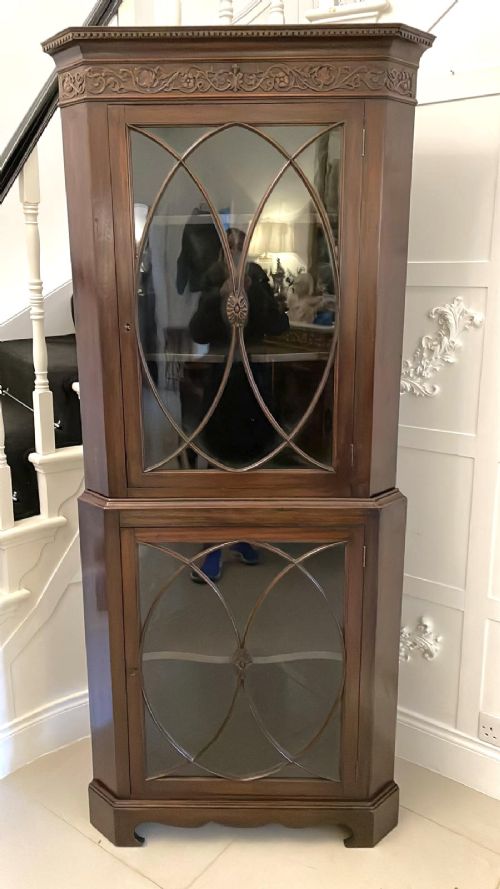
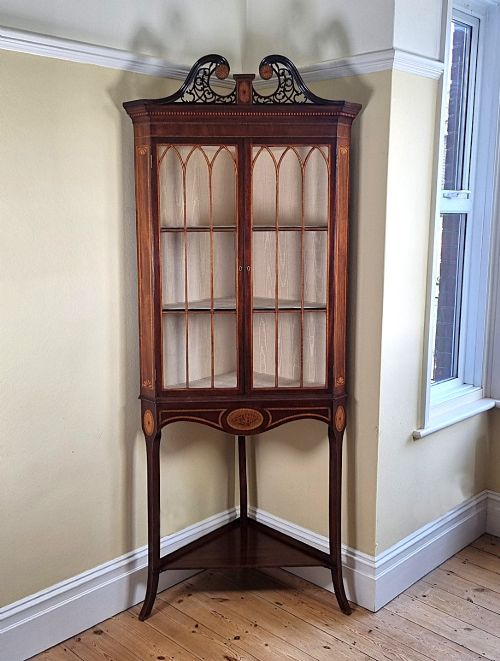
Buyers frequently encounter variations that channel eighteenth-century Dutch or Sheraton aesthetics, featuring bowed fronts or glazed upper sections designed to display contents. Whether hung on a wall to free up floor area or standing tall as a two-piece cabinet, each piece solves a perennial spatial problem with traditional joinery.
How they were made
Cabinet makers utilised dense hardwoods, principally mahogany and oak, building carcasses capable of supporting heavy internal shelving while maintaining rigid right-angle dimensions. Timber selection dictated the visual character, employing flame veneers and contrasting satinwood inlay to create decorative focal points on flat and bow-fronted doors.
Glazing bars divided glass panels in display variations, requiring precise carpentry to hold fragile panes securely within timber frames. Metalwork played a functional and decorative role, with brass hinges and key escutcheons securing doors that swung within constrained angular perimeters.
Georgian Style Corner Cupboard Retail Price Guide 2026
Typical asking prices for georgian style corner cupboard among the pieces listed under this phrase on Sellingantiques today, from the lower quarter to the upper quarter. They describe what is for sale here now, not the wider market.
The listings span multiple centuries, uniting eighteenth-century Dutch walnut with Edwardian satinwood inlay and nineteen-sixties mahogany.
What varies in quality
Quality rests upon the selection and matching of timber veneers, where continuous grain patterns across a bow front or symmetrical marquetry demonstrate superior hand craftsmanship compared to plain surfaces. The integration of fine details such as delicate satinwood stringing and well-cast brass hardware distinguishes finer workshops from standard production.
Structural integrity within the ninety-degree corner joints determines how well a cupboard withstands decades of wall mounting or floor placement without sagging. The precision of the door fit against the rebate and the crispness of applied mouldings separate standard utilitarian cabinets from distinguished decorative examples.
The Georgian Style Corner Cupboard Glossary
- Bow front
- A convex curved cabinet front that projects outward from the corner walls. This technique softens the rigid geometry of the room angle and showcases figured wood grain.
- Marquetry
- Decorative patterns formed by fitting together thin veneers of different coloured woods. Craftsmen apply these intricate designs to door panels and friezes.
- Satinwood inlay
- Contrasting pale yellow timber inserted into recessed channels within a darker primary wood, such as mahogany. It creates crisp linear borders around panels.
- Hanging corner cupboard
- A wall-mounted cabinet supported by internal brackets rather than resting on the floor. This format keeps lower wall space clear.
- Glazed corner cupboard
- A cabinet featuring glass panes within the door frames to display contents. It requires fine timber framing to hold the glass securely.
Georgian Style Corner Cupboard: Frequently Asked Questions
How do I hang a corner cupboard?
Hanging corner cupboards require secure fixing directly into wall studs or masonry using appropriate heavy-duty brackets. The acute angles demand precise leveling to ensure the heavy doors swing true.
Professional installation is recommended due to the combined weight of dense timber carcasses, glass panels, and stored contents acting upon leverage points.
Are these pieces made of solid mahogany?
Many examples combine solid timber frames with decorative mahogany or satinwood veneers applied over stable secondary woods. This construction method prevented warping across wide door panels.
High-grade pieces reserve solid timber for structural elements while utilising figured veneers on display surfaces to achieve striking decorative patterns.
How do I date an Edwardian corner cupboard?
Edwardian interpretations often display Sheraton Revival influences, characterised by light satinwood inlay, marquetry motifs, and bright mahogany tones. Construction techniques from this period typically show machine-cut precision alongside hand-finished details.
Comparing the secondary backboards and hinge types with verified pieces helps confirm whether a cabinet originates from around nineteen hundred or earlier.
Can corner cupboards stand on the floor?
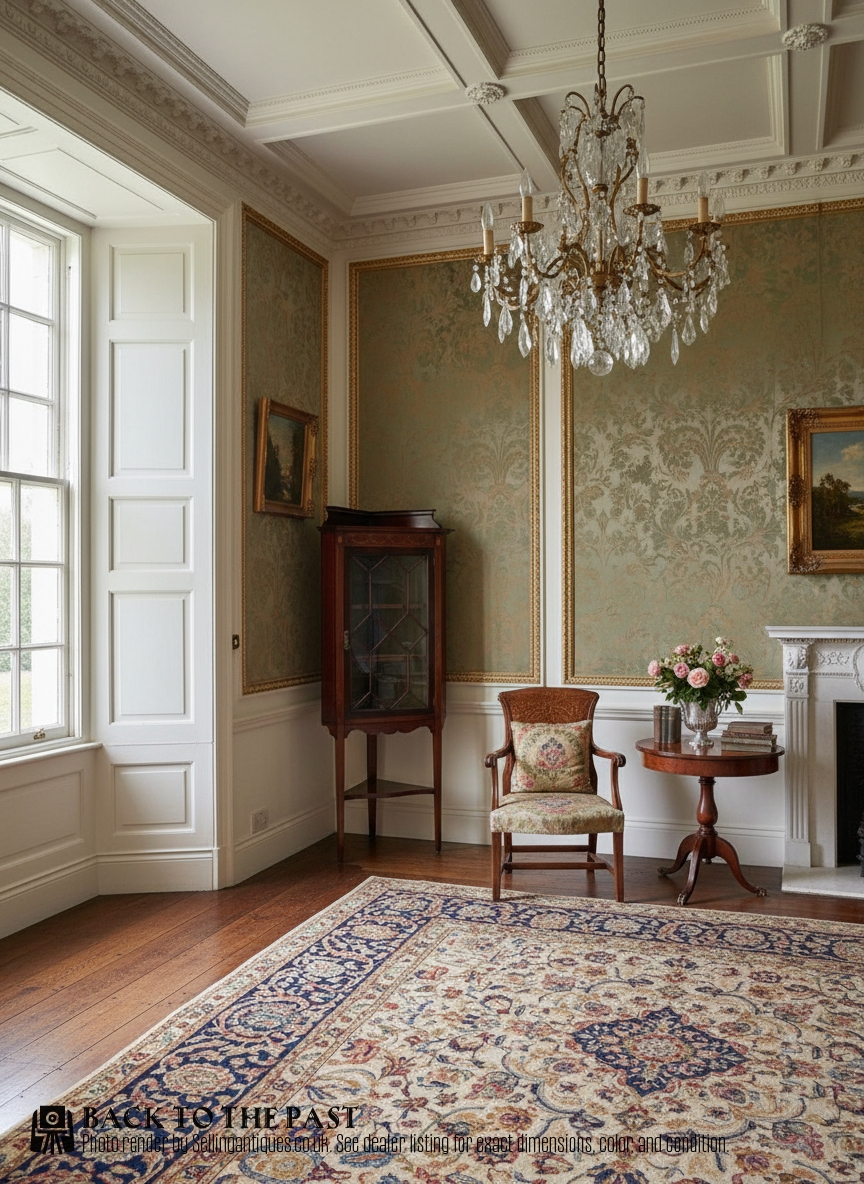
Floor-standing variants often arrive in two-piece configurations, combining a base cabinet with an upper display section to distribute weight safely. These tall units anchor securely against both adjoining walls.
Single-piece floor models offer substantial interior shelf space without requiring wall fixings, making them versatile for rooms with delicate plasterwork.