



Mahogany Corner Unit
A mahogany corner unit solves the perennial problem of awkward room junctions by turning dead angles into display space.
Mahogany Corner Unit
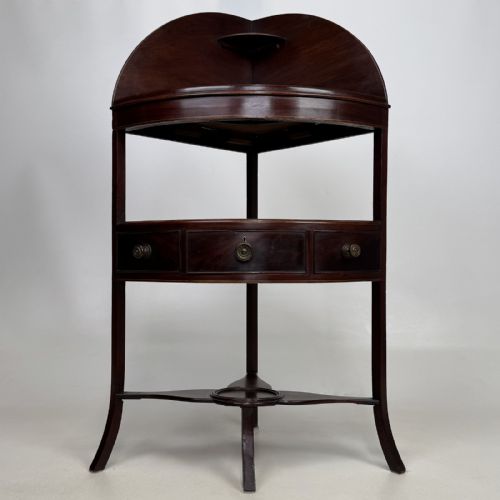
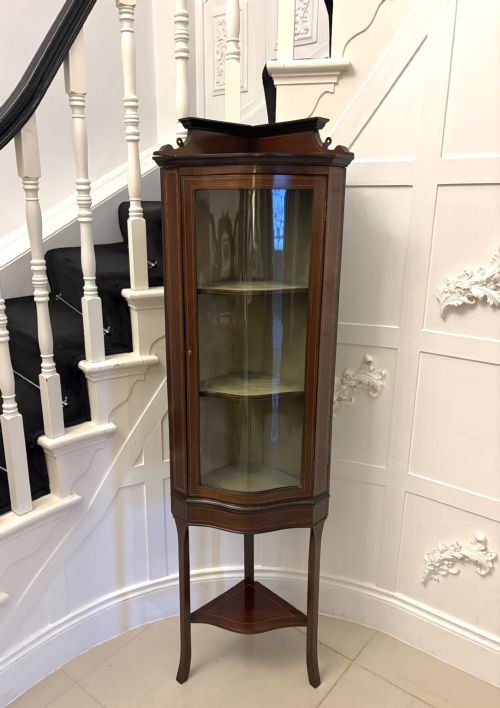
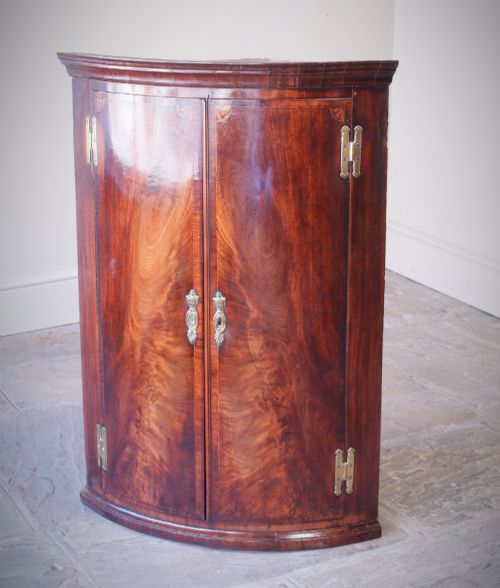
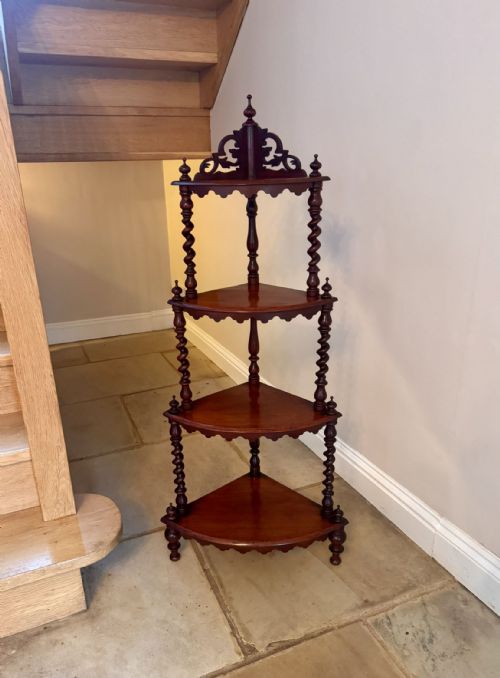
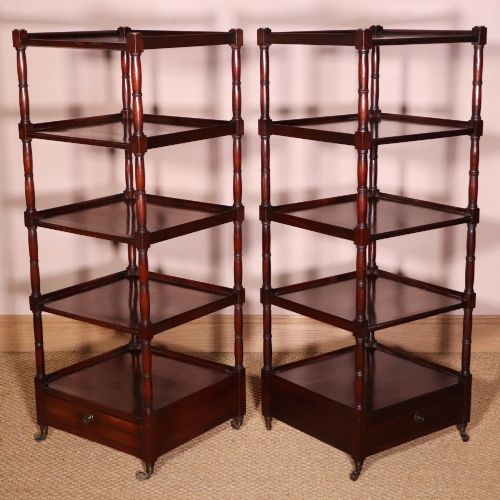
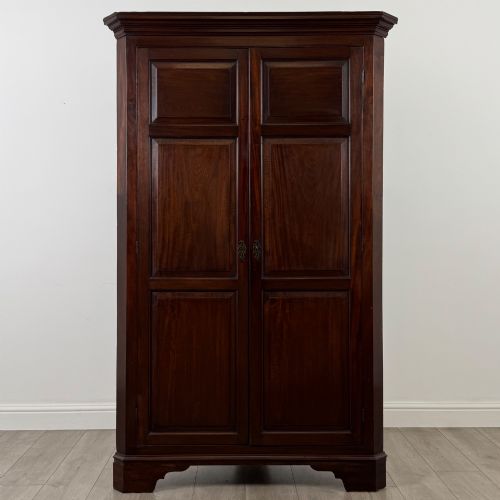
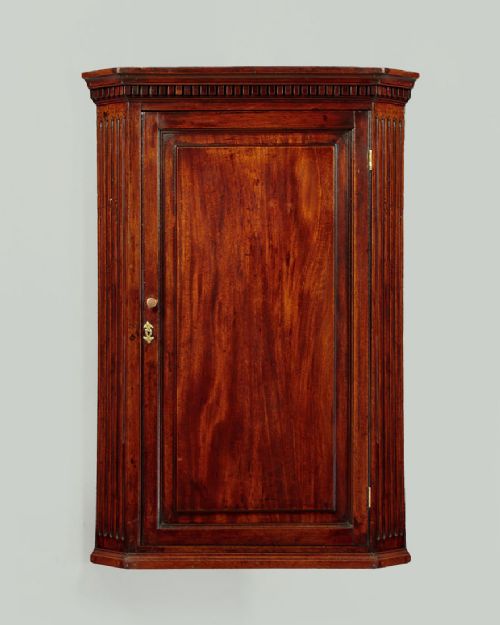
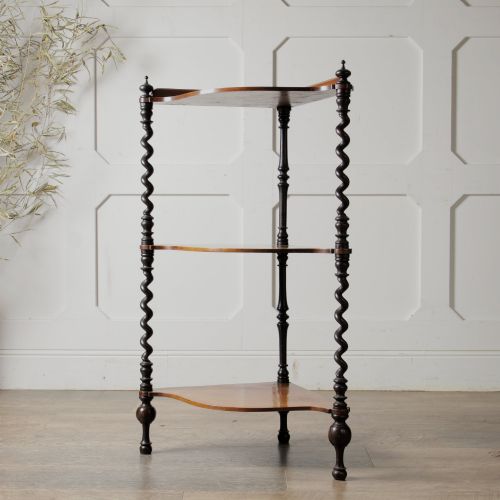
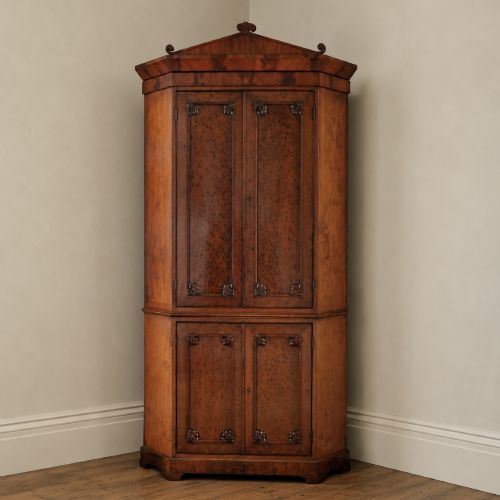
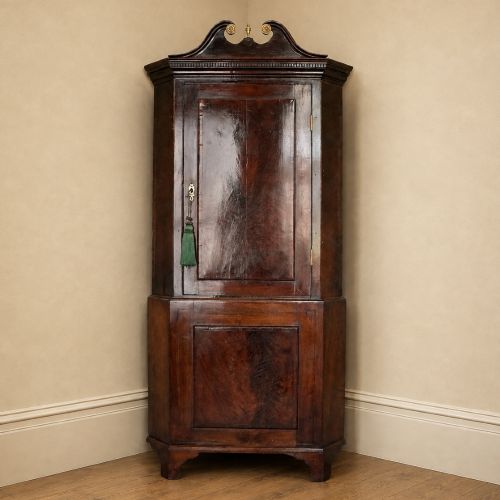
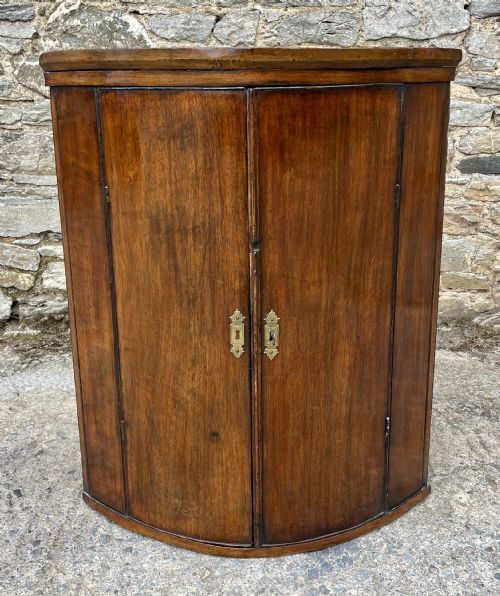
A mahogany corner unit takes the form of wall-hung cupboards, floor-standing cabinets, and multi-tiered whatnots designed to fit squarely into room angles. When searching for a mahogany corner unit, buyers encounter pieces spanning from the eighteenth century through to the Edwardian era and mid-nineteenth century.
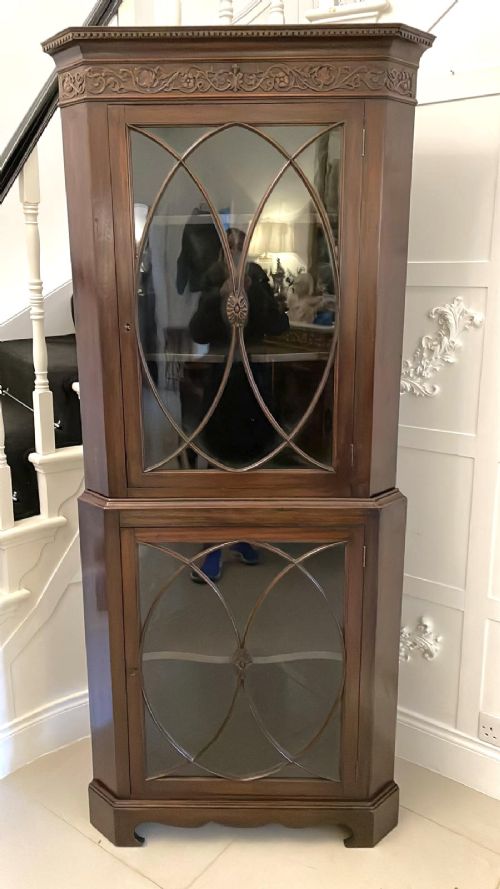
The eighteenth-century examples lean towards substantial Georgian standing cupboards, whilst nineteenth-century workshops produced glazed display cabinets and smaller hanging cupboards. Edwardian interpretations frequently incorporate Sheraton Revival styling with delicate proportions suited to domestic interiors.
Materials and construction
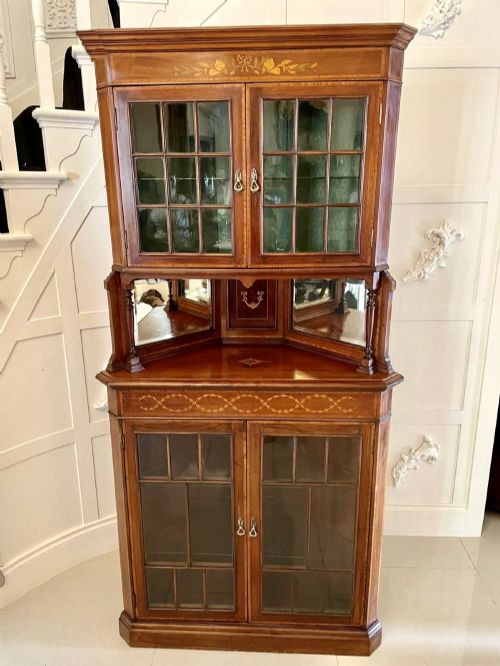
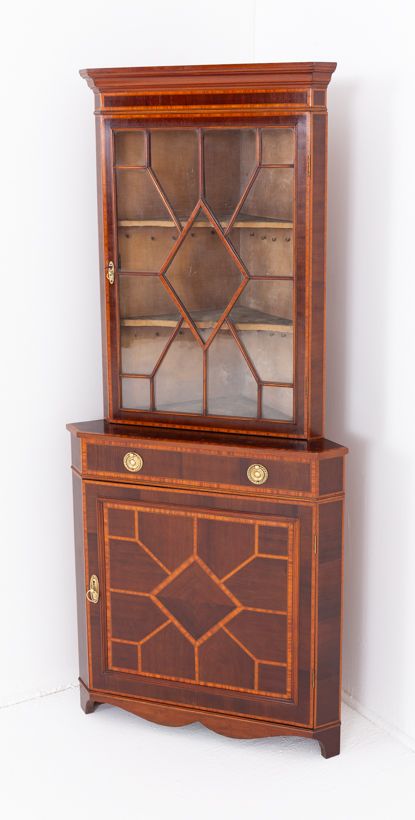
Makers utilised solid mahogany and Cuban mahogany veneers, often enriching the primary timber with contrasting satinwood and boxwood inlay. Secondary timbers such as oak appear in internal linings and drawer construction.
Glazing takes the form of astragal bars dividing glass panes in display sections, whilst structural stability relies on bracket feet, cornices, and brass hardware including operational keys.
Mahogany Corner Unit Retail Price Guide 2026
Typical asking prices for mahogany corner unit among the pieces listed under this phrase on Sellingantiques today, from the lower quarter to the upper quarter. They describe what is for sale here now, not the wider market.
Listings feature pieces spanning from the eighteenth century to the mid-twentieth century, constructed in mahogany, oak, and glass.
Quality differences
The division between standard output and finer pieces rests on the choice of timber figure, such as plum pudding mahogany, and the crispness of carved details like broken arch pediments. Finer examples display meticulous matching of grain patterns across curved bow fronts and precise execution of inlaid borders.
Construction methods also separate workshop tiers, where superior pieces maintain tight dovetail joints in drawers and well-fitted doors with original brass hinges, whereas lesser items show simpler joinery and heavier proportions.
Edwards & Roberts·Goodhall Lamb and Heighway
The Mahogany Corner Unit Glossary
- Astragal
- A moulding profile used to hold glass panes within a frame. These wooden strips divide cabinet doors into geometric patterns characteristic of Georgian and revival pieces.
- Bow front
- A convex curved cabinet front. This curved surface showcases the grain of mahogany timbers effectively.
- Whatnot
- An open set of freestanding shelves used for displaying ornaments. These tiered structures often fit neatly into corners.
- Inlay
- A technique where contrasting woods are inserted into the primary surface. Satinwood and boxwood create pale linear decoration against dark mahogany.
- Pediment
- The decorative structure crowning the top of a cabinet. Georgian pieces frequently utilise architectural forms like the broken arch.
Mahogany Corner Unit: Frequently Asked Questions
How do I hang a wall cabinet?
Hanging corner cupboards require secure fixing to wall studs or masonry using appropriate brackets fitted behind the internal framing. The substantial weight of solid mahogany and glass doors demands robust support.
Ensure the unit is plumbed correctly before loading shelves with heavy ceramics or glassware to prevent structural strain on the historical joints.
Are these cabinets modular?
Antiques of this nature are constructed as singular, unified pieces rather than modular systems. Standing cupboards and floor-standing units arrive as complete items.
Hanging models require direct mounting to a single wall corner and cannot be reconfigured into flat-wall furniture without altering their structural design.
How do I date a Georgian piece?
Dating relies on examining construction techniques, timber characteristics, and stylistic traits such as bracket feet and cornices. Eighteenth-century pieces often feature hand-cut dovetails and solid oak secondary woods.
Later Victorian and Edwardian revivals imitate these styles but frequently incorporate machine-sawn elements and different internal construction methods.