


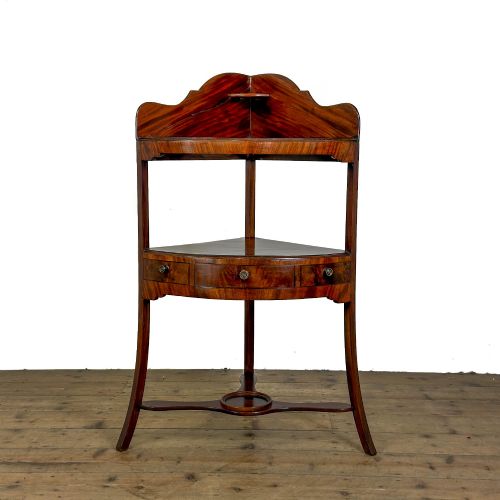
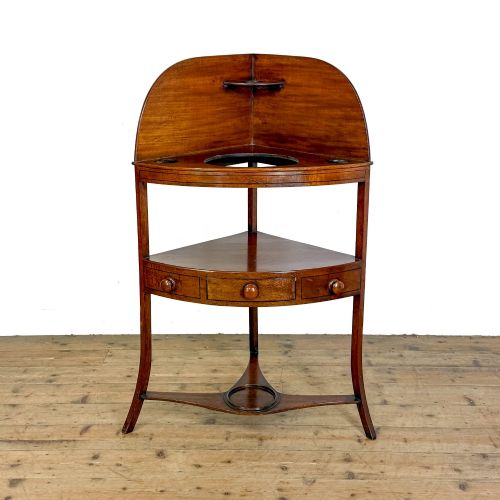


Mahogany Corner Washstand
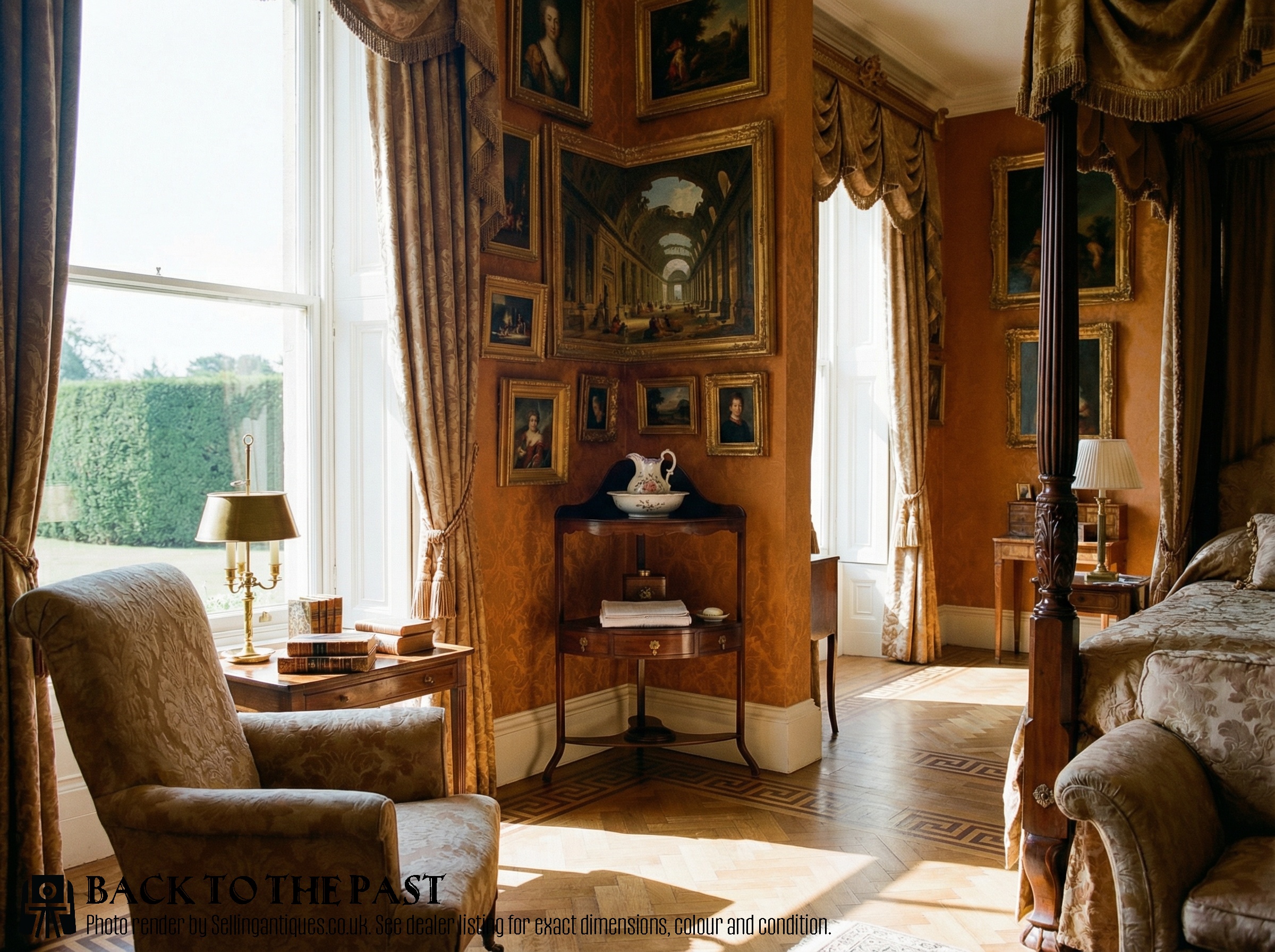
A mahogany corner washstand fits neatly into a room, offering practical surface space rooted in Georgian and Regency design.
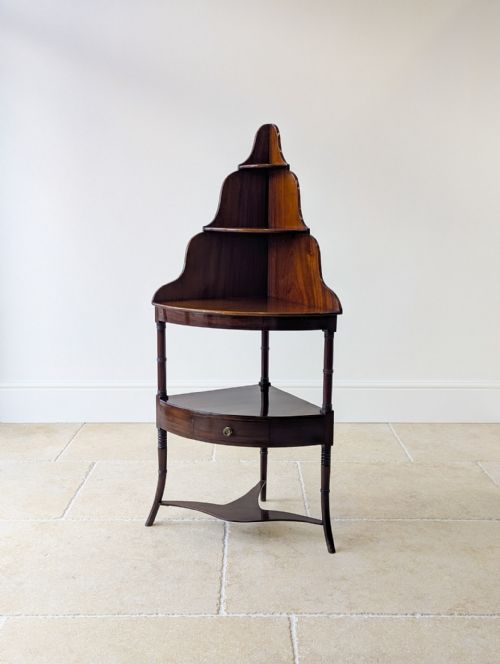
Mahogany Corner Washstand
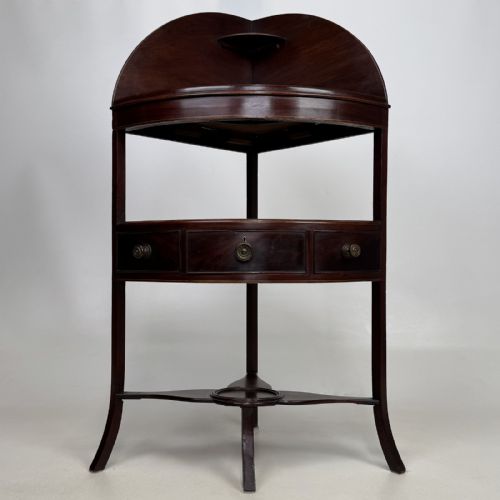
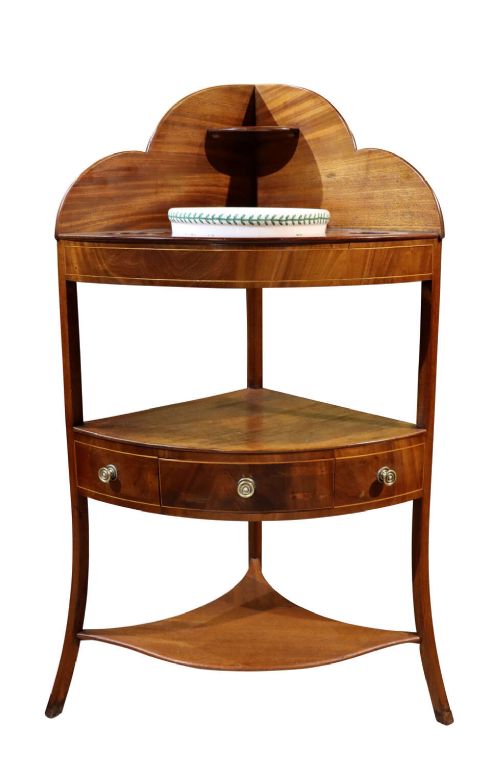
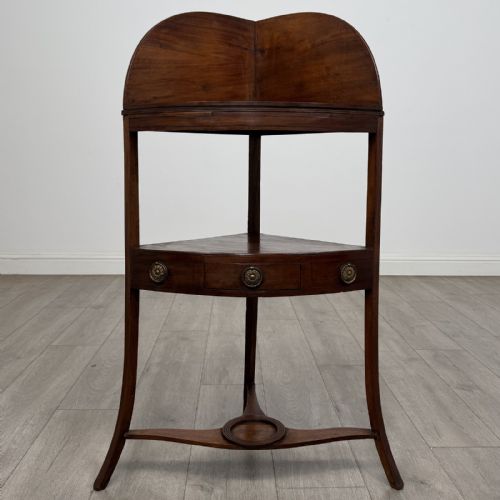
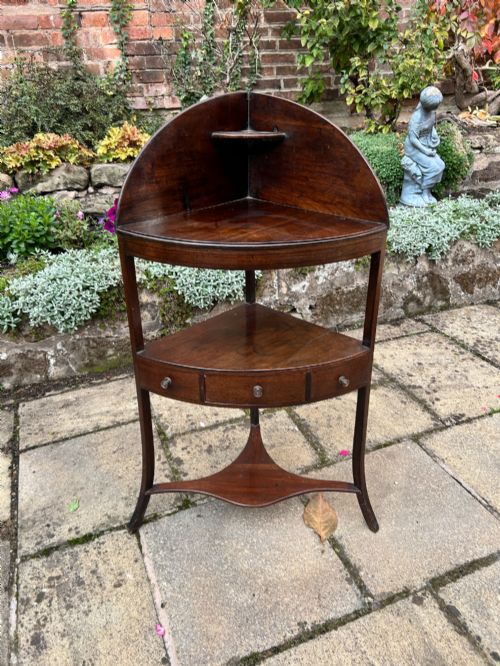
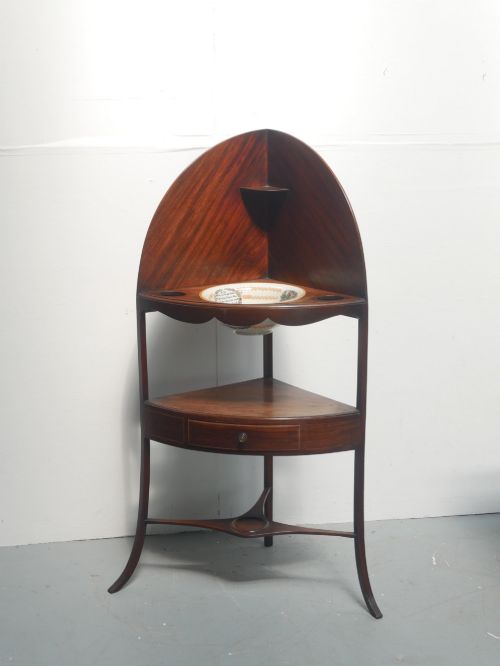
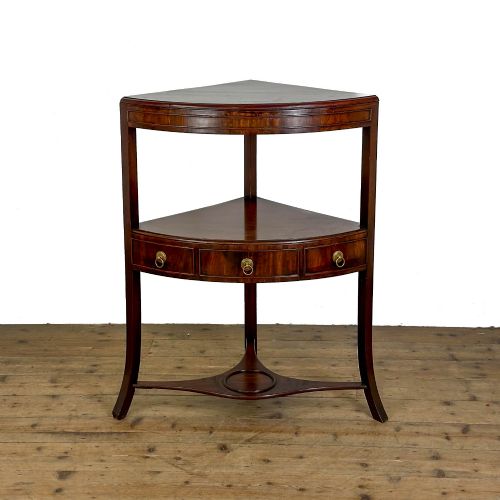
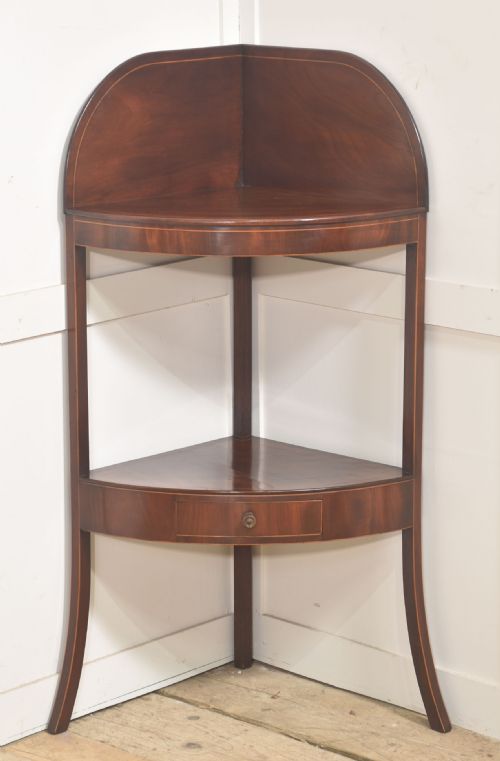
A mahogany corner washstand is a triangular or bow front furniture piece designed to tuck into the corner of a room. Most examples seen here date from the Georgian, George III, and Regency periods, utilising the corner space efficiently.
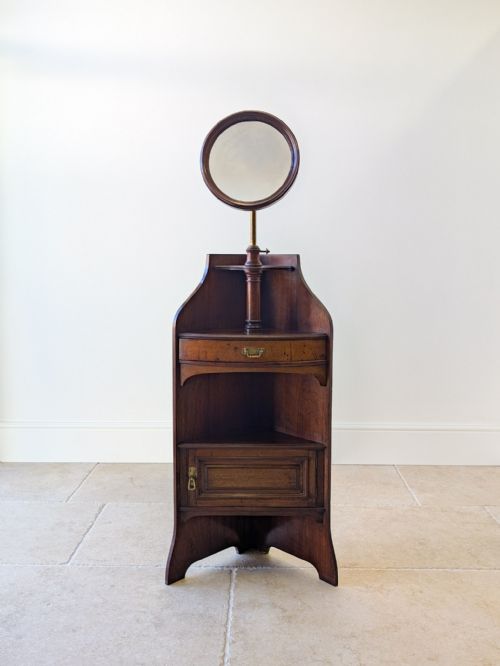
The form typically includes tiers, basins rings, or enclosed cupboards below, reflecting domestic habits of the eighteenth and nineteenth centuries. Alongside standard washstands, the evidence records wig stands, shaving stands, and corner cabinets sharing this footprint.
Buyers are most likely to encounter Georgian and Regency variants constructed from mahogany, occasionally featuring bow fronts or tiered shelving. Later Edwardian interpretations also appear, continuing the compact corner format.
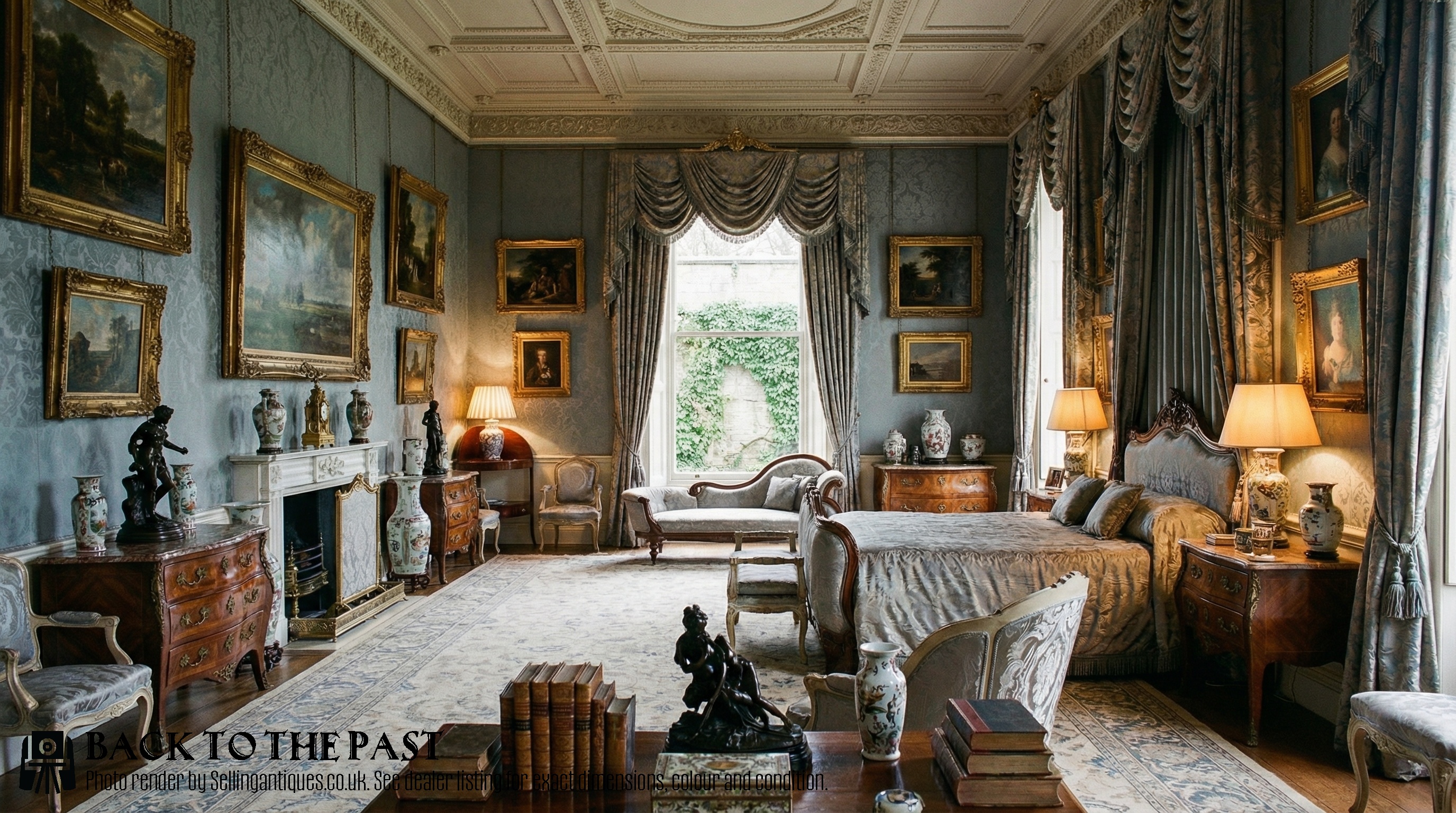
How They Were Made
Cabinet makers constructed these stands primarily using mahogany, selected for its rich grain and structural stability in angled furniture. Secondary woods and framing supported the tiered platforms and basin cutouts.
Detailing often involved boxwood inlay to accent the edges and doors of the corner framework. Brass fittings and ceramic components appear alongside glass elements on specific stands.
Joinery had to accommodate the strict geometry of ninety degree corners while supporting the weight of basins, jugs, and daily washing accessories.
Mahogany Corner Washstand Retail Price Guide 2026
Typical asking prices for mahogany corner washstand among the pieces listed under this phrase on Sellingantiques today, from the lower quarter to the upper quarter. They describe what is for sale here now, not the wider market.
What Varies in Quality
Quality rests in the crispness of the cabinet work, the choice of mahogany figure, and the subtlety of boxwood inlay lines. Pieces bearing maker stamps demonstrate workshop provenance.
Proportion and execution of the bow front or tiered shelves distinguish finer examples from standard utility pieces. Integrated cabinetry, cupboard doors, and original brass hardware elevate the standing of an individual washstand.
Gillows Lancaster
The Mahogany Corner Washstand Glossary
- Bow front
- A convex curved front facade that softens the sharp angles of a corner piece. This shape is frequently found on Georgian and Regency examples.
- Tiered
- Having successive levels or shelves placed one above another. These tiers provide space for basins, jugs, or display.
- Boxwood inlay
- Contrasting light wood inserted into the darker mahogany surface in linear patterns. It frames panels and edges on select period pieces.
- Wig stand
- A specialised form with a small circular platform designed to hold a gentleman's wig. They share the triangular corner footprint of standard washstands.
- George III
- The period of British history spanning from 1760 to 1820, encompassing the height of mahogany corner washstand production.
Mahogany Corner Washstand: Frequently Asked Questions
What is a mahogany corner washstand?
A triangular or bow front wooden stand built to fit into room corners, originally designed to hold washing basins and jugs.
Today these pieces serve as versatile corner tables or display stands in domestic interiors.
How were washstands used originally?
They provided a dedicated space for morning ablutions in bedrooms, holding water bowls, soap, and pitchers within easy reach.
Enclosed cupboards and lower tiers kept personal items tidy out of sight.
How do I identify a Georgian washstand?
Georgian pieces typically feature solid mahogany construction, often with boxwood inlay, tiered shelves, and distinct period proportions.
Makers of this era focused on functional geometry designed to maximise corner spaces.
Can I use a washstand as a regular table?
Yes, their flat top surfaces and sturdy stands make them practical as lamp tables or corner display units.
The triangular shape allows them to occupy unused room corners efficiently.