

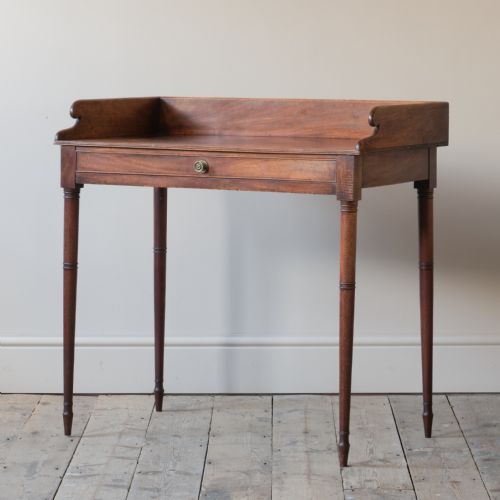
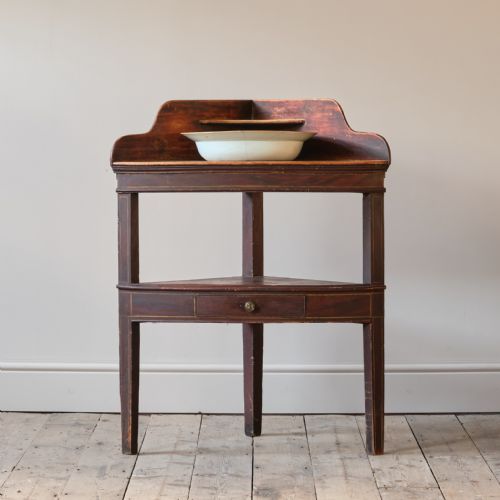
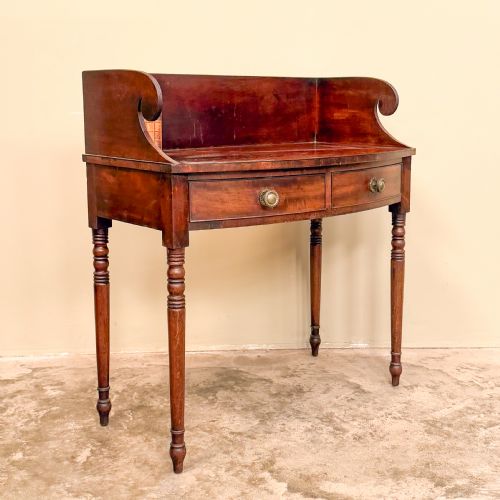
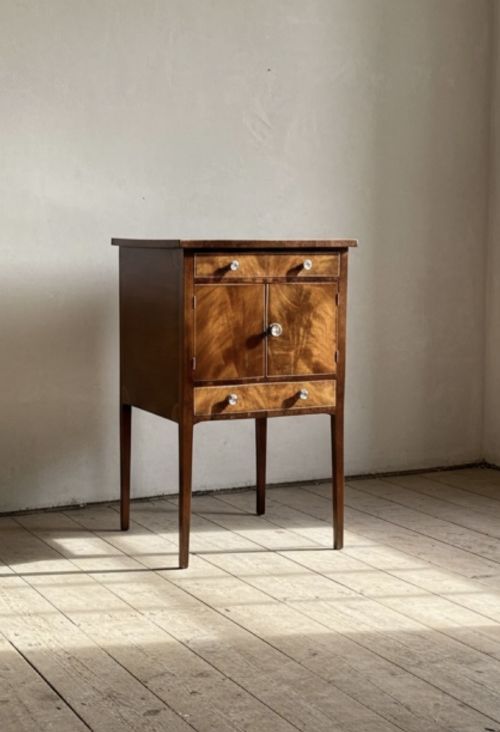
Georgian Washstand
A georgian washstand brings understated utility to the bedroom, combining folding tops and corner basins for daily grooming.
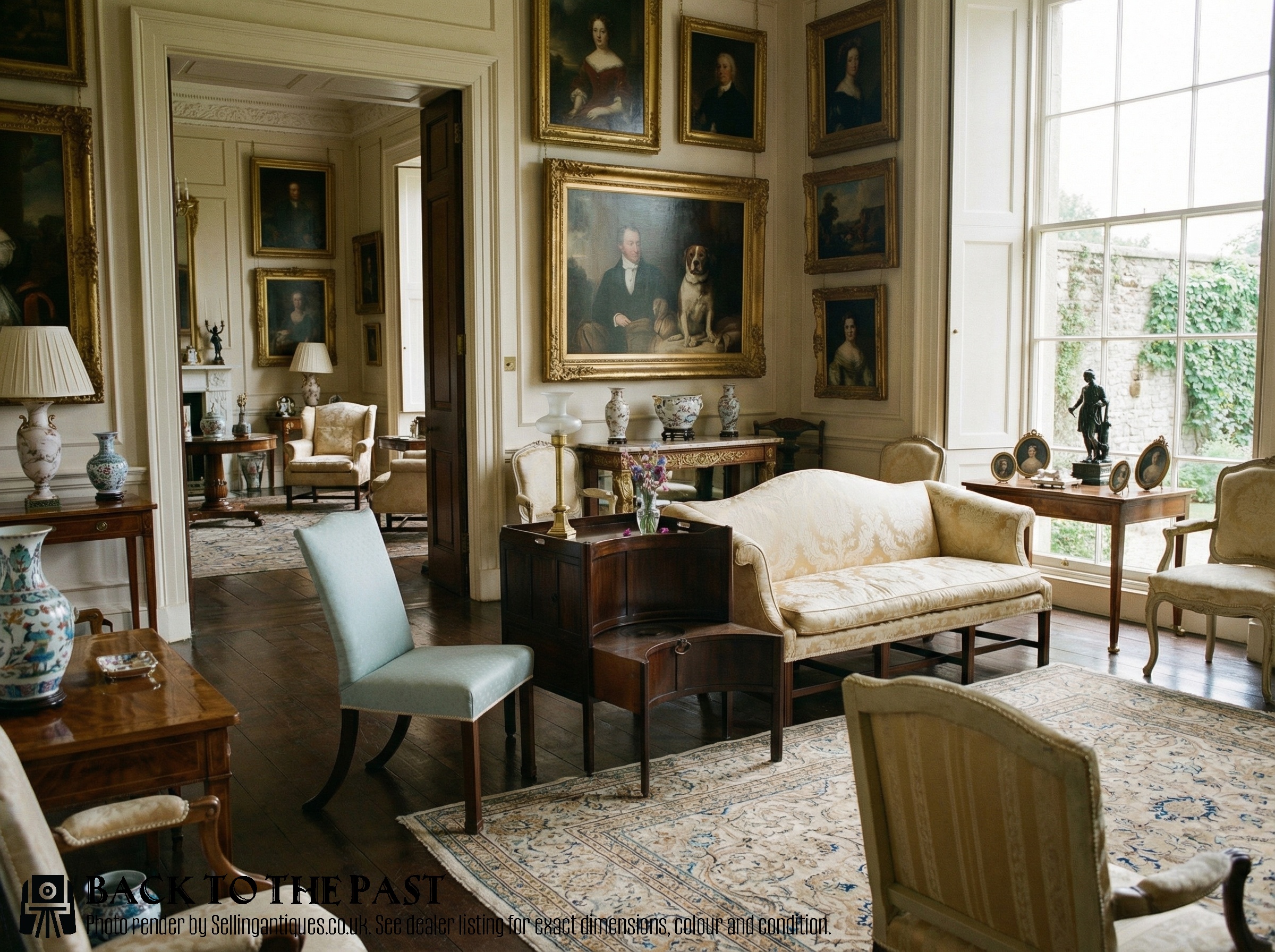
Georgian Washstand
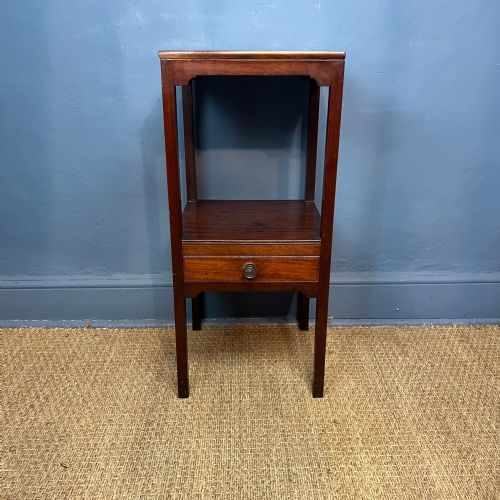
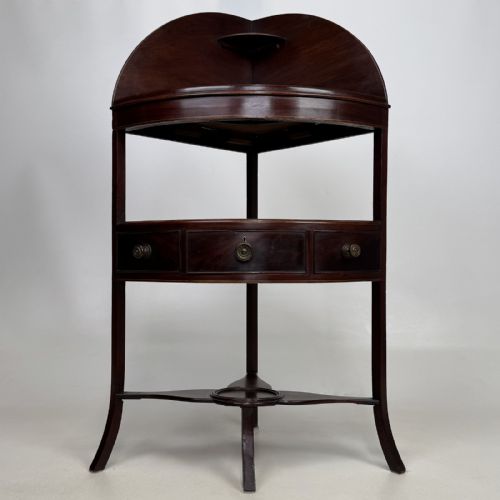
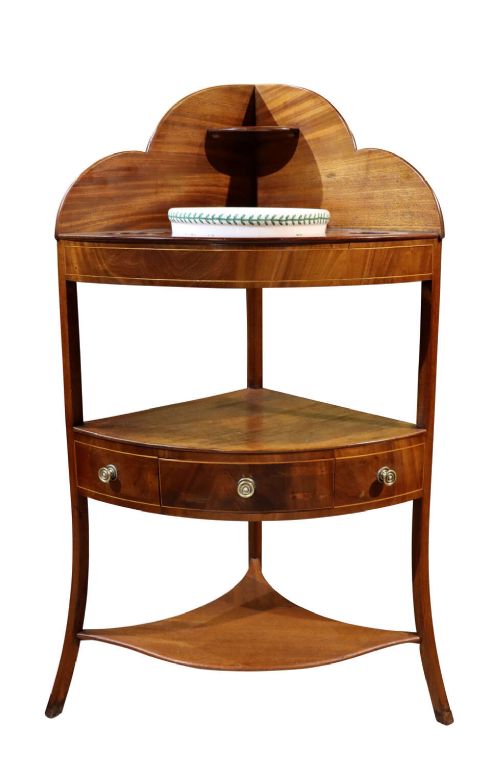
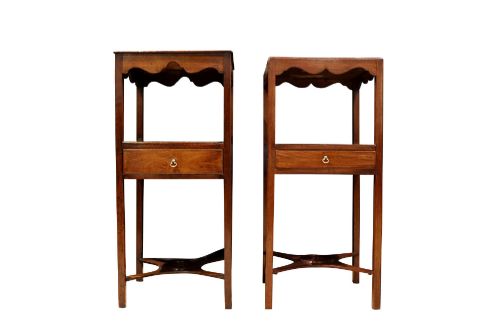
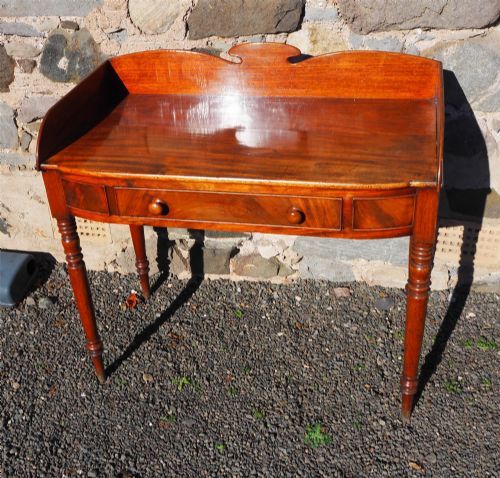
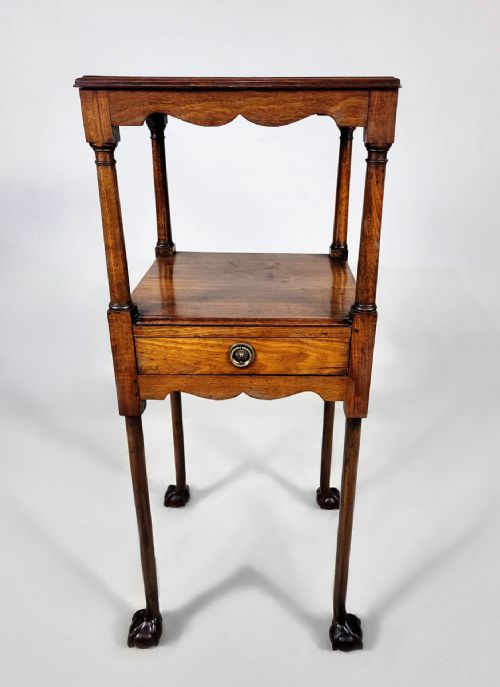
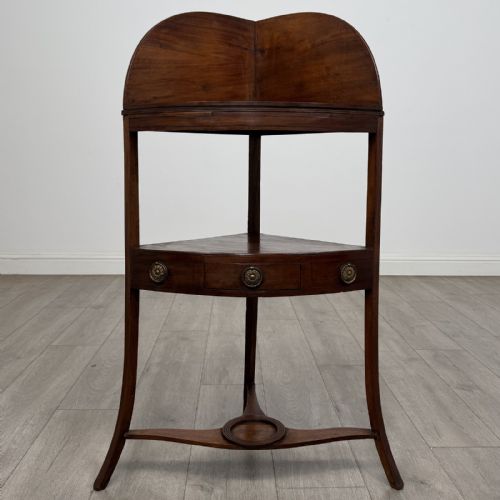
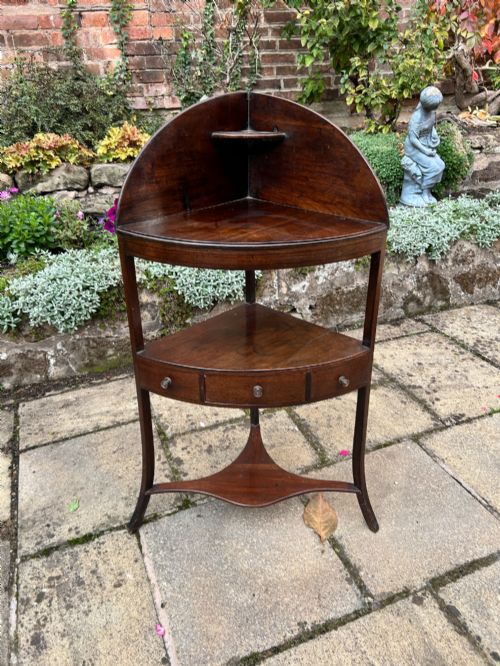
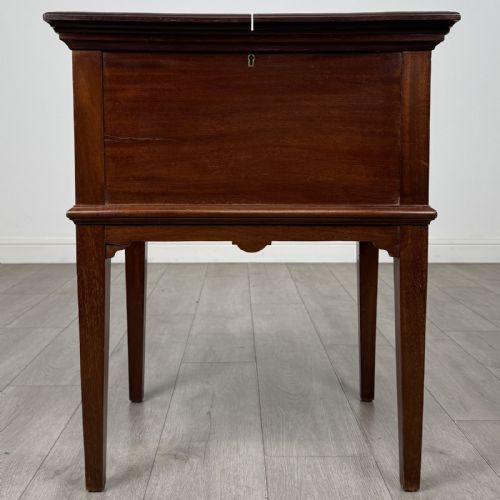
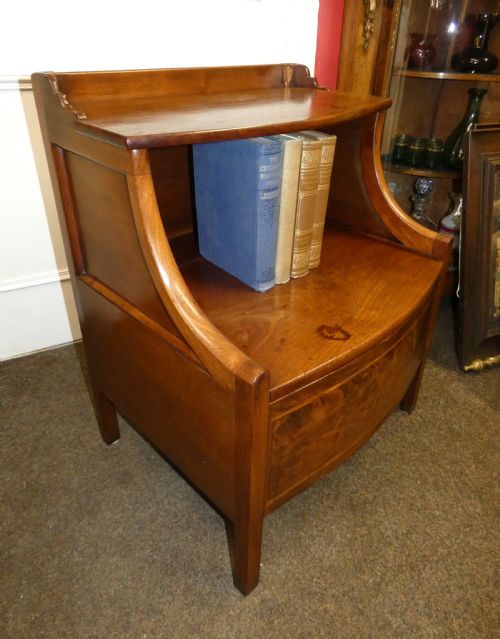
A georgian washstand comprises freestanding pieces designed for personal ablutions in bedrooms and dressing rooms, spanning the eighteenth and nineteenth centuries. The evidence shows these functional forms frequently take the shape of corner washstands, tray top nightstands, and fold-away basin units.
Buyers will most commonly encounter mahogany examples, often built with tiered shelves, cupboards, or drawers for holding ewers and bowls. Variations include campaign variants, bow-front designs, and occasional pieces featuring satinwood or boxwood inlay.
Beyond the standard corner configurations, the listings reveal related furniture such as gentlemen's dressing tables, wig stands, and bedside cupboards. These objects reflect the private domestic rituals of the period, executed in timber forms suited to both grand houses and smaller chambers.
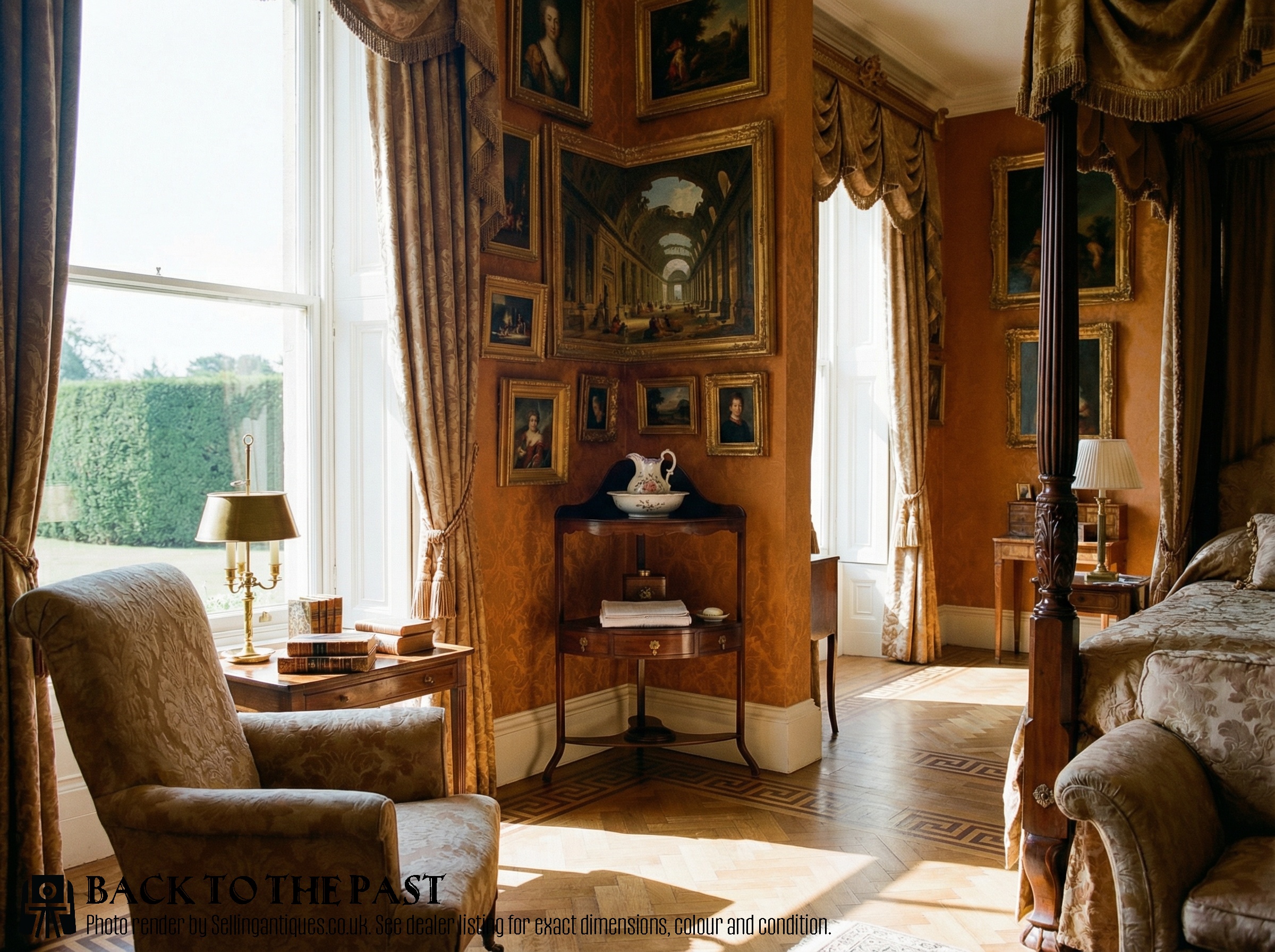
How They Were Made
Makers utilised solid mahogany and pine as the primary structural timbers, frequently pairing Cuban mahogany with contrasting boxwood inlay or satinwood veneers. Brass hardware appears on campaign pieces and internal fittings, while glass and ceramic components complete the washing apparatus.
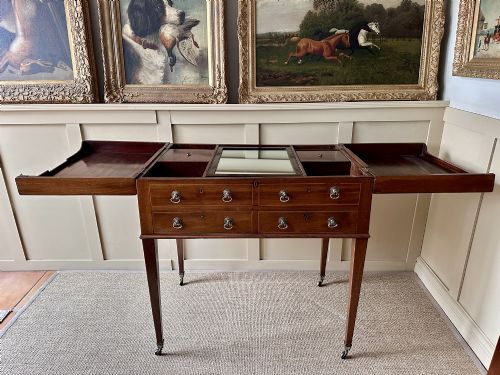
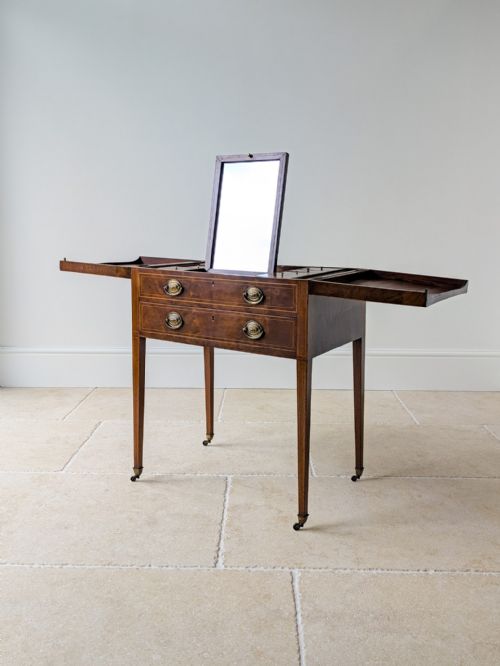
Construction techniques prioritise stability in confined spaces, evident in the clever geometry of corner units and tiered shelving. Joinery involves precise dovetailing for drawers and hinged flaps designed to conceal basins when not in use.
Georgian Washstand Retail Price Guide 2026
Typical asking prices for georgian washstand among the pieces listed under this phrase on Sellingantiques today, from the lower quarter to the upper quarter. They describe what is for sale here now, not the wider market.
Corner configurations and tray-top tables represent the most frequently recurring forms in the archive.
What Varies in Quality
Quality rests upon the selection of timber figures and the crispness of secondary woods like oak and pine used in hidden areas. Superior pieces display refined proportions, tight joints, and well-executed inlay work rather than plain utility construction.
The integrity of folding mechanisms and original surface finishes separates standard utilitarian examples from finer dressing stands. Retaining original brass fittings, intact glass elements, or authentic painted pine surfaces elevates the standing of an individual piece.
Gillows Lancaster·Mason's
The Georgian Washstand Glossary
- Washstand
- A piece of furniture designed to hold a basin and ewer for washing, often fitted with cut-outs in the top tier. These items form the core of the current selection.
- Corner Washstand
- A triangular variant built to fit neatly into a room angle, saving floor space while providing tiered storage. The evidence records numerous mahogany and painted examples in this layout.
- Tray Top
- A raised gallery edging around the top surface to prevent washing equipment from sliding off. This feature is common on bedside tables and nightstands from the period.
- Pot Cupboard
- A small enclosed cabinet positioned below the washing surface to contain chamber pots or related utilities. These are frequently catalogued alongside bedside tables.
- Campaign
- Portable furniture designed for travel, featuring robust construction and recessed brass handles. Such pieces adapt easily to temporary quarters.
Georgian Washstand: Frequently Asked Questions
How do I use a georgian washstand today?
These pieces adapt readily to modern interiors as hallway tables, plant stands, or bathroom storage units where floor space is limited. Their tiered shelves and cupboards offer practical display areas for contemporary items.
Folding tops can remain closed to serve as standard side tables or opened to reveal surface character. They bring period timber texture into bedrooms and living spaces without requiring extensive room.
What is the difference between a washstand and a bedside table?
A washstand specifically incorporates circular cut-outs in the upper surface to support washbasins and water jugs. Bedside tables feature flat tops intended for lighting, books, or night-time requisites.
Many listings combine the terms because makers adapted similar cabinet forms for multiple bedroom functions. Examining the top tier reveals whether the piece was built for washing or general bedside use.
Why are corner washstands so common?
Corner units made efficient use of awkward bedroom angles in Georgian and Regency domestic architecture. Their triangular footprint provided stable storage without obstructing narrow walkways.
Cabinetmakers produced these in large quantities to satisfy the demand for discrete washing facilities in multi-room residences.
How do I identify a George III piece?
George III items typically exhibit dense Cuban mahogany, restrained proportions, and classical decorative details such as subtle stringing or boxwood inlay. Construction methods rely on hand-cut dovetails and solid secondary timbers like pine or oak.
Stylistic markers align with the reigns spanning the late eighteenth and early nineteenth centuries, often showing clean lines before Regency exuberance took hold.