
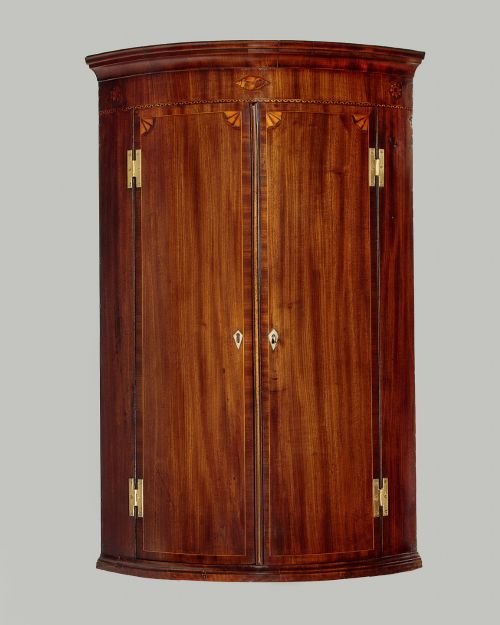
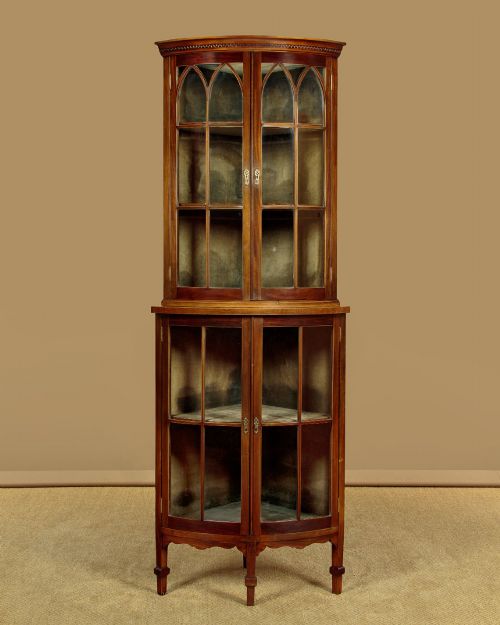
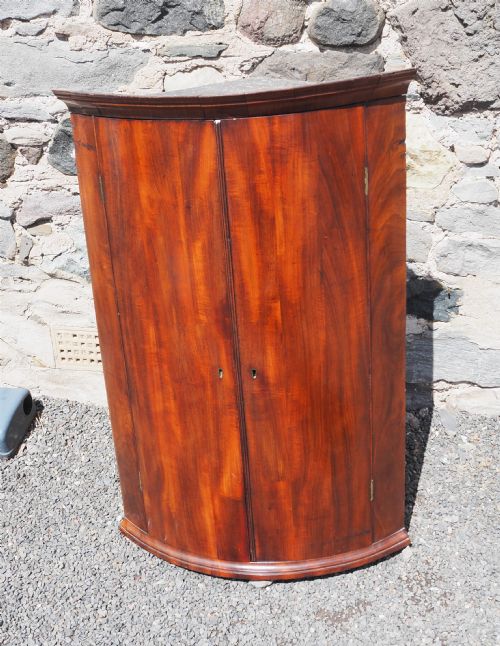


Bow Front Corner Cabinet
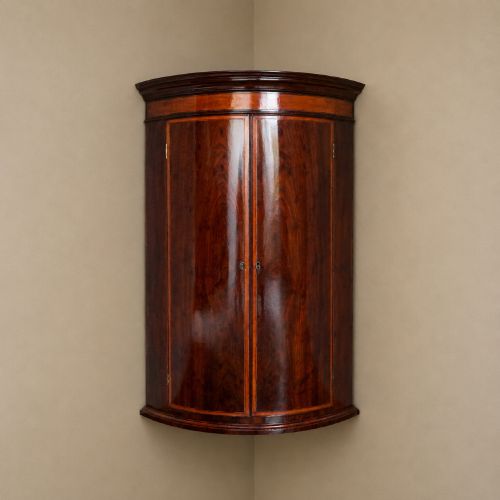
A bow front corner cabinet turns neglected room angles into display space with a curved profile that softens the rigid lines of traditional wall furniture.
Bow Front Corner Cabinet
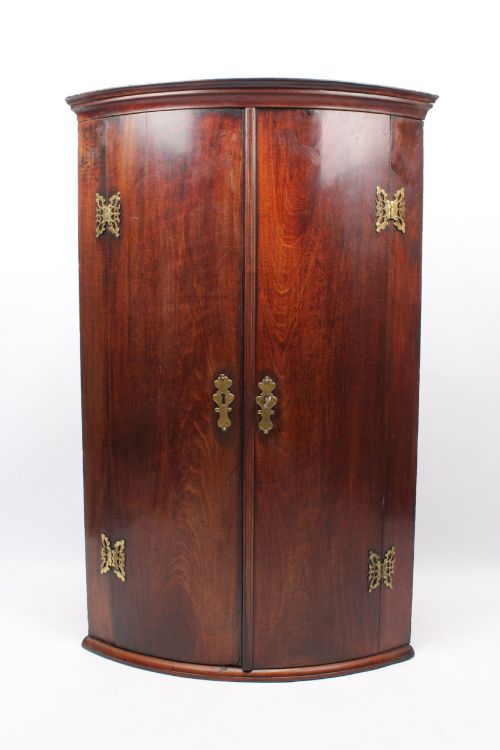
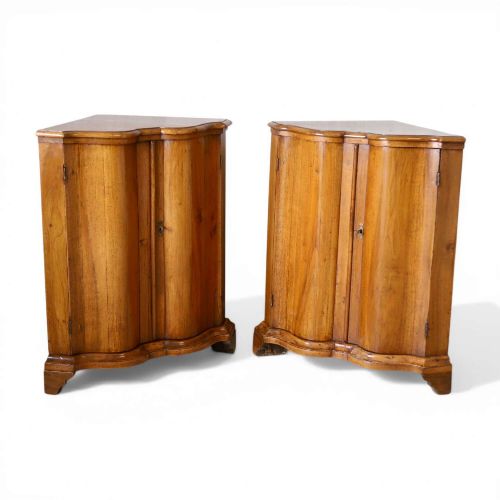
A bow front corner cabinet provides enclosed storage or open display by fitting snugly into the junction of two walls while presenting a convex, rounded front curve to the room. The majority of pieces encountered here date from the Georgian and Victorian eras, alongside Edwardian revivals and later twentieth-century iterations.
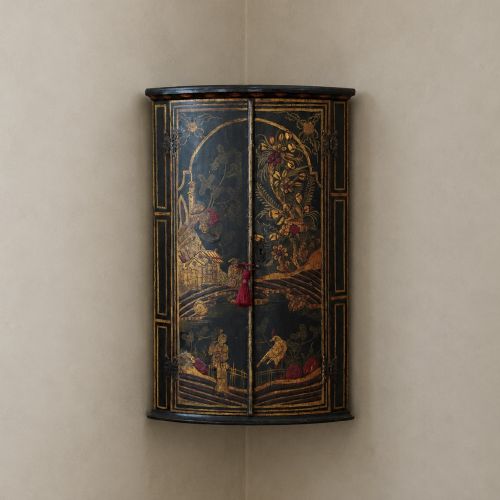
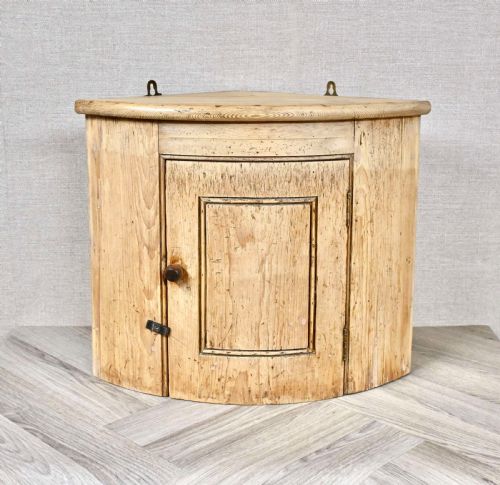
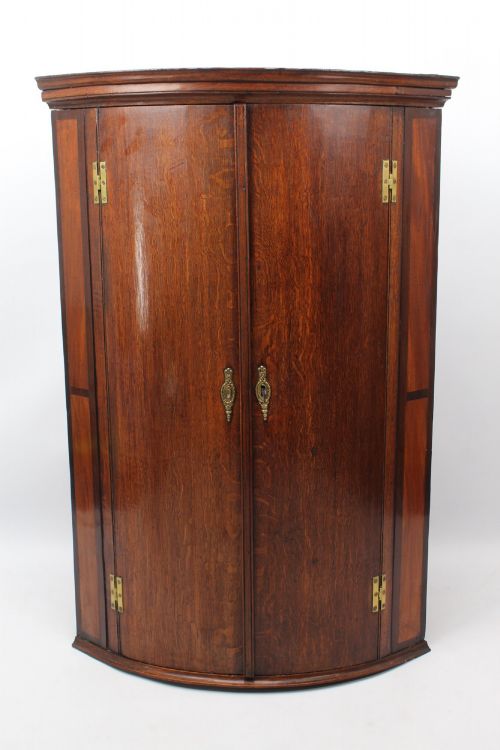
Most examples function as hanging wall cupboards designed to be secured at height, though floor-standing models and tall glazed display variants also appear. Timber choices span traditional British hardwoods like mahogany and oak, supplemented by walnut, pine, and occasional painted finishes.
Buyers select these items to utilise difficult corner spaces effectively while introducing period character. The rounded doors soften room layouts by removing sharp ninety-degree angles from the line of sight.
Materials and Construction
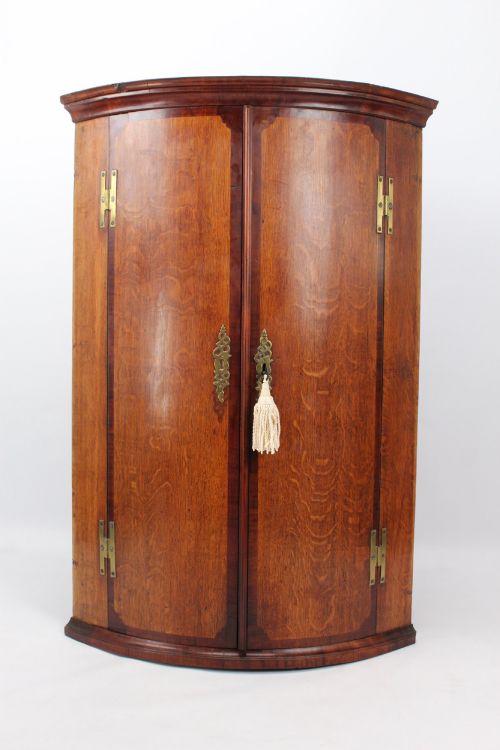
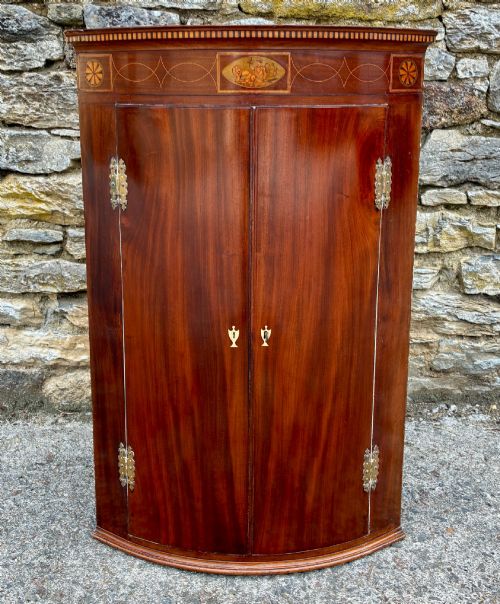
Cabinetmakers constructed the curved front frames using solid mahogany, oak, or walnut, often applying figured veneers such as flame mahogany or burr walnut to the primary surfaces. Crossbanding and delicate boxwood stringing frequently outline the door panels and cornices.
Solid timber planks form the robust carcases and internal shelving, joined with traditional dovetail and mortise-and-tenon methods. Glass doors on display variants utilise wooden astragal bars to hold individual panes securely within the arched framework.
Bow Front Corner Cabinet Retail Price Guide 2026
Typical asking prices for bow front corner cabinet among the pieces listed under this phrase on Sellingantiques today, from the lower quarter to the upper quarter. They describe what is for sale here now, not the wider market.
Listings feature structural timbers including oak, mahogany, and walnut, alongside decorative accents in boxwood and satinwood.
Craftsmanship and Proportion
Superior examples demonstrate meticulous timber selection, where figured veneers are book-matched symmetrically across the curved door panels rather than pieced together at random. Fine inlay work, original brass H-hinges, and working locks with matching keys elevate an individual piece.
Proportion and structural integrity dictate overall worth, with finer pieces maintaining tight door alignment and clean interior shelving without sagging. Pieces retaining their original rich surface patination and uncompromised glazed panels stand apart from later replacements.
The Bow Front Corner Cabinet Glossary
- Bow front
- A convex, outwardly curved front profile that projects forward from the corners of the furniture.
- Astragal
- Moulding profiles used to divide glass panes within a cabinet door into smaller geometric lights.
- Flame mahogany
- A veneer figure resembling flickering flames, sliced from the fork where branches meet the main tree trunk.
- Crossbanding
- A narrow strip of veneer laid perpendicular to the grain of the primary panel for decorative framing.
- Cornice
- The ornamental moulding projecting along the uppermost edge of the cabinet structure.
Bow Front Corner Cabinet: Frequently Asked Questions
How do I hang a wall cabinet safely?
Wall-mounted versions require secure attachment directly into structural timber studs or masonry using appropriate heavy-duty fixings. The weight distribution of solid hardwood demands reliable internal mounting brackets.
Professional installation ensures the convex frame remains square and true once loaded with heavy china or glassware.
Were these made for specific rooms?
Georgian households utilised these cupboards primarily in dining rooms, parlours, and hallways to store porcelain, glassware, or documents out of the way. Their triangular footprint made efficient use of unutilised domestic space.
Contemporary placement follows similar logic, fitting neatly into dead corners in kitchens, studies, and drawing rooms.
How do I tell Georgian from Edwardian pieces?
Georgian versions rely on heavy timber substance, pegged joints, hand-cut dovetails, and simpler internal configurations designed for utility. Mahogany surfaces from this period develop a deep, warm patination over centuries.
Edwardian pieces often display lighter construction, machine-cut elements, satinwood stringing, and revivalist styling cues influenced by eighteenth-century aesthetics.