
Mahogany Bowfront Cabinet
A mahogany bowfront cabinet brings curved elegance and rich timber tones into a room, offering practical storage disguised in graceful lines.
Understanding the mahogany bowfront cabinet
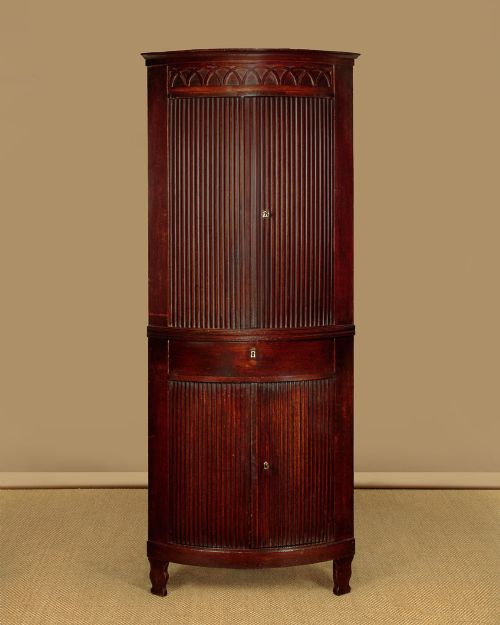
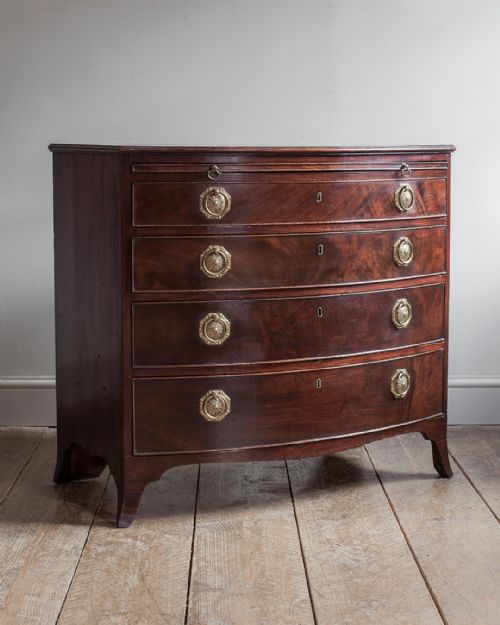
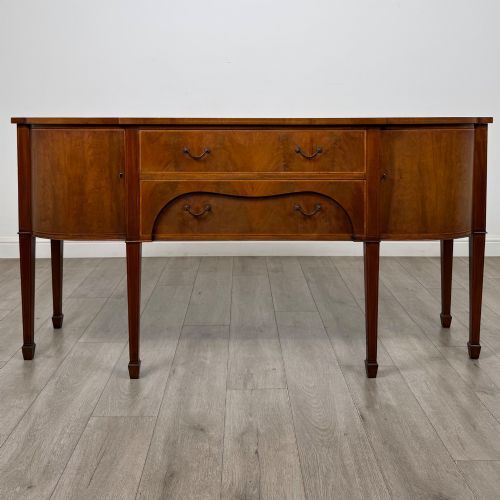
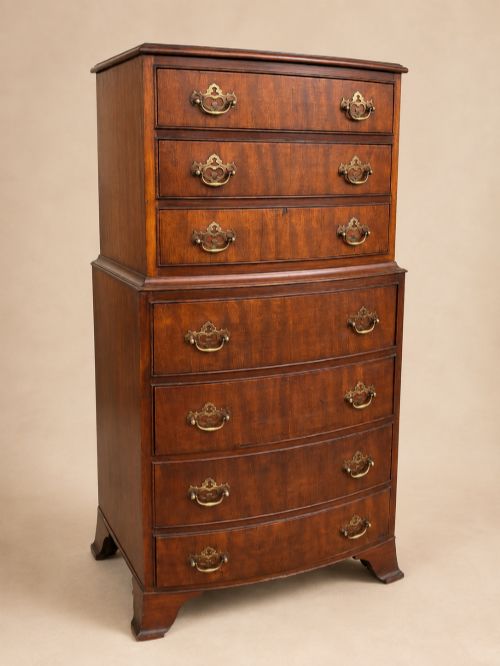
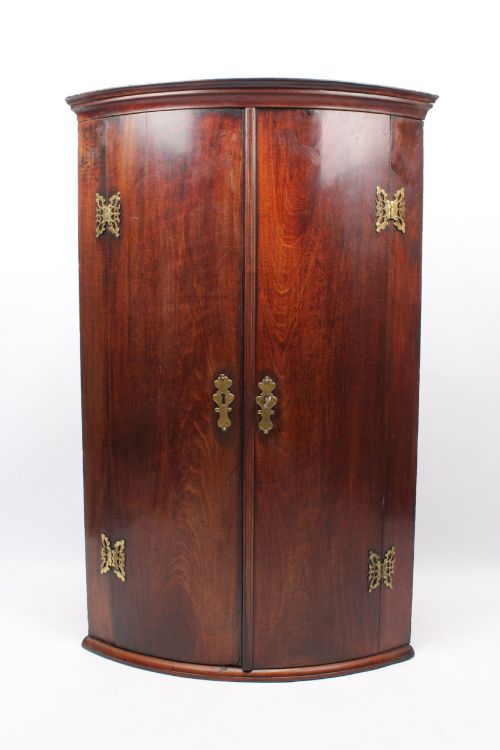
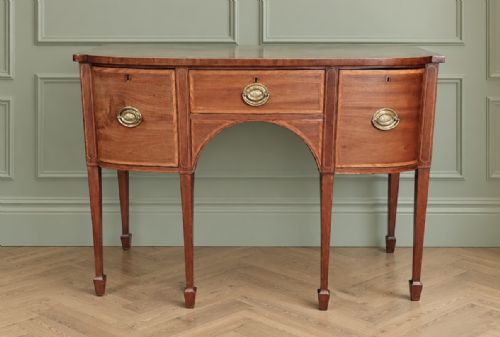
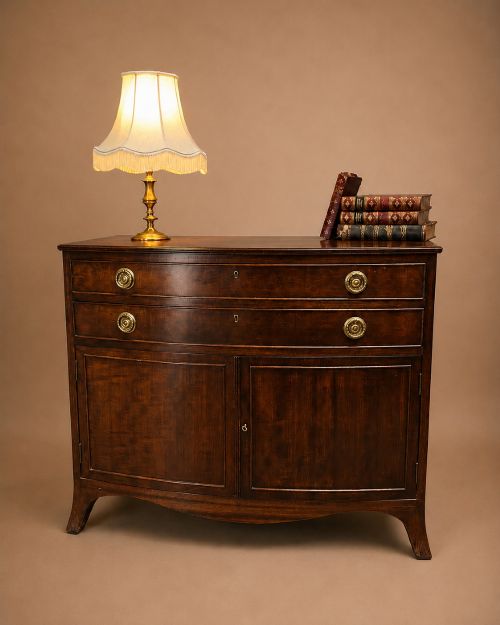
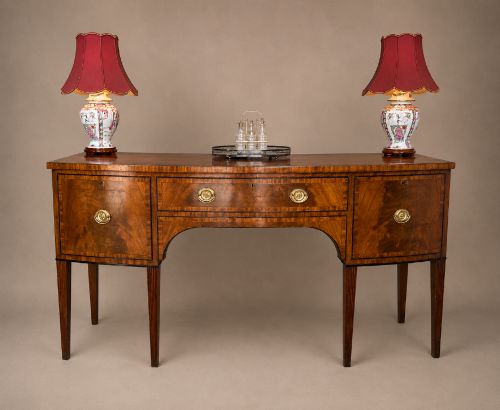
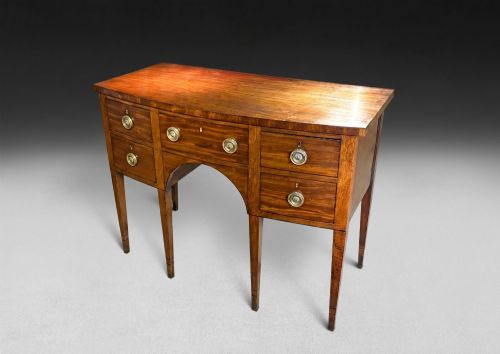
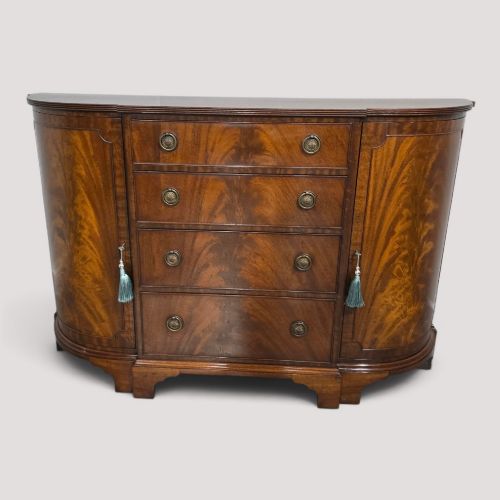
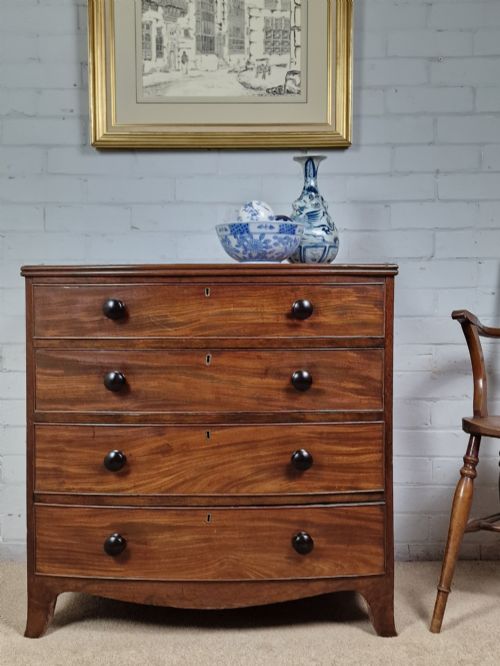
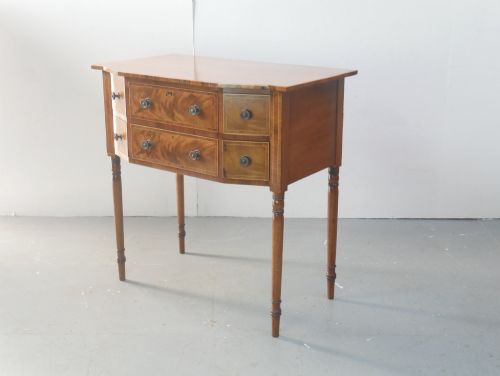
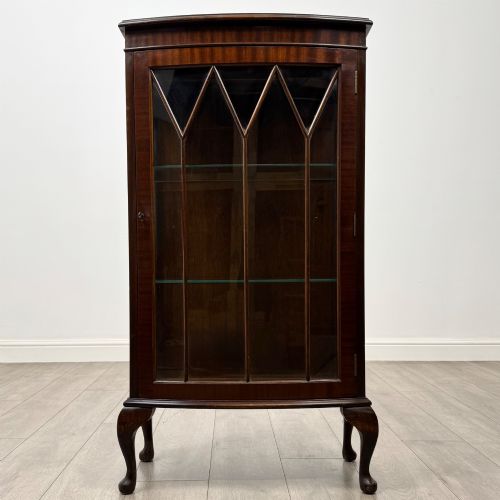
A mahogany bowfront cabinet presents a curved front facade that softens the corners of a room and catches the light across the timber grain. The pieces found here span several distinct forms, from corner cupboards and hanging cabinets to sideboards, console units, and dedicated display furniture.
The periods represented stretch from the Georgian era through the Victorian period, Edwardian years, and into the early twentieth century. Georgian and George III examples share the inventory alongside Victorian pieces, Chippendale Revival interpretations, and Edwardian display cabinets intended for china and music.
Most commonly, buyers encounter corner cabinets designed to utilise vacant wall space efficiently, alongside freestanding side cabinets and sideboards. The combination of the curved bowfront shape and the deep reddish-brown mahogany timber unites these diverse forms across the centuries.
Materials and construction methods
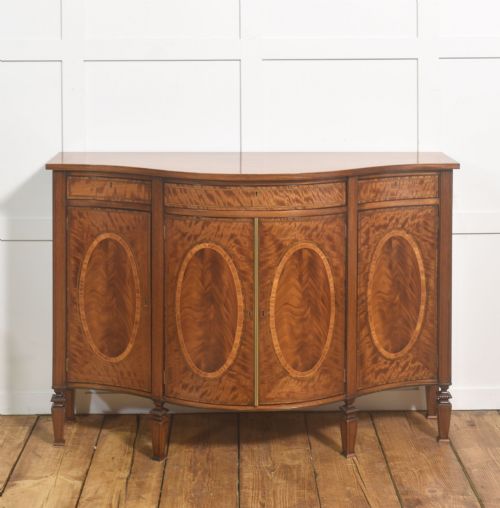
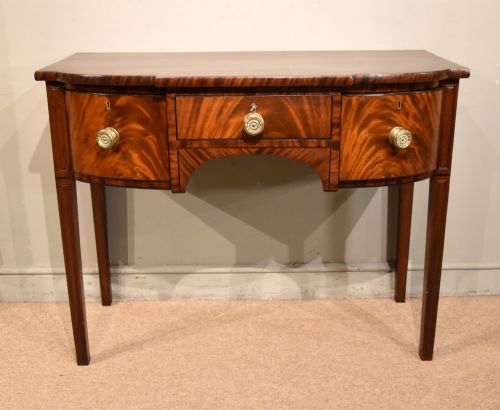
Makers utilised solid mahogany and flame mahogany veneer applied over secondary woods such as oak, building robust carcases designed to endure. Flame mahogany veneer provided striking patterns of figuring across the curved doors and drawer fronts, demanding skilled handling by cabinetmakers.
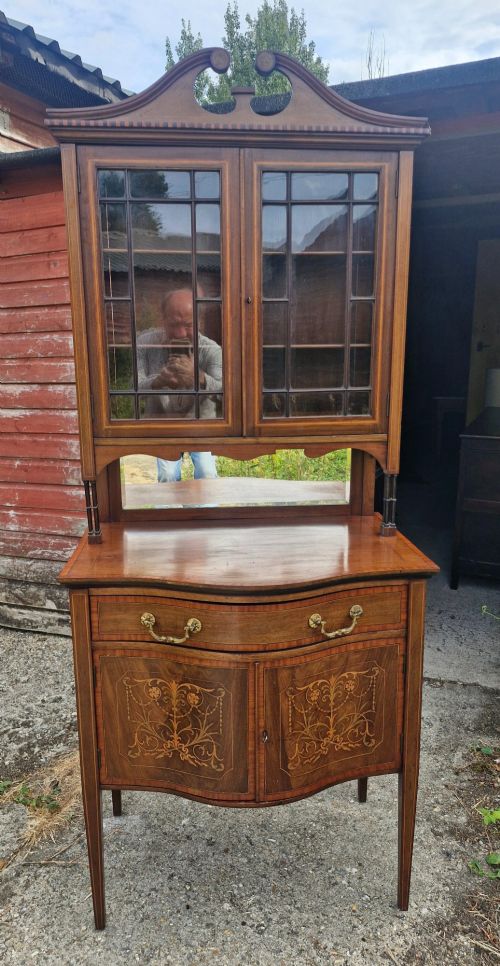
Inlay work added refined detail, employing boxwood and fruitwood to create contrasting stringing, borders, and decorative motifs. Brass hardware, including hinges, escutcheons, and pulls, completed the construction, while internal shelving provided functional storage for tableware, books, or collections.
Retail Price Guide 2026
Typical UK retail prices for mahogany bowfront cabinet, calculated from the Sellingantiques database of over a million retail prices indexed since 2003. This retail price guide relies exclusively on Sellingantiques data; no external sources or auction records are used, so the figures do not describe the wider market.
Music cabinets wait quietly for sheet music that vanished a century ago.
Assessing quality and craftsmanship
The distinction between standard pieces and the finest examples rests upon the choice of timber and the execution of the veneer. Cabinets featuring highly figured flame mahogany display a depth of grain and warmth of tone that elevates the piece far beyond plain timber surfaces.
Detailing in the boxwood and fruitwood inlay also separates the ordinary from the exceptional, with crisp, precise lines indicating superior workshop execution. The harmony of the curved bowfront proportions and the integration of original brass fittings further distinguish the better items in this range.
The Mahogany Bowfront Cabinet Glossary
- Bowfront
- A convex, curved front on a piece of furniture that projects outward. This shape softens rigid angles and enhances the visual movement of the timber.
- Flame mahogany
- A veneer cut from the fork of the mahogany tree where the branch meets the trunk. It produces a distinctive, flame-like pattern prized for its decorative impact.
- Inlay
- A technique where pieces of contrasting wood, such as boxwood or fruitwood, are inserted into recessed portions of the primary timber to form decorative designs.
- Corner cabinet
- A specialised storage piece built with an angled back to fit neatly into the corner of a room, appearing in both hanging and standing formats.
- Chippendale style
- A design aesthetic drawing upon the eighteenth-century patterns associated with Thomas Chippendale, often revived in later periods with characteristic carved details and graceful proportions.
Frequently Asked Questions
What is a mahogany bowfront cabinet used for?
These cabinets serve multiple practical purposes around the home, functioning as corner storage for tableware, display units for collections, or sideboards in living and dining spaces.
Depending on the specific form chosen, they provide enclosed shelving behind curved doors, drawer space for linens or documents, or glass-fronted display areas for porcelain and glassware.
How do I care for mahogany furniture?
Maintaining mahogany requires keeping the timber away from direct sunlight and extreme temperature fluctuations, which can dry out the wood or fade the rich colour.
Regular dusting with a soft cloth and occasional treatment with appropriate furniture wax will preserve the lustre of the polish and protect the veneer.
How can I tell a Georgian cabinet from a later revival piece?
Georgian cabinets originate from the eighteenth or early nineteenth centuries, displaying construction methods, timber maturity, and hardware appropriate to that era.
Revival pieces, such as those from the Edwardian period or Chippendale Revival phases, often utilise machine-sawn elements, different secondary woods, and decorative styles characteristic of later manufacturing.
Are corner cabinets difficult to place in a modern room?
Corner cabinets are designed specifically to occupy unused angles of a room, making them remarkably space-efficient in both compact and expansive interiors.
Their curved bowfront profile projects gracefully outward from the corner, ensuring the piece commands visual interest without obstructing room flow.