
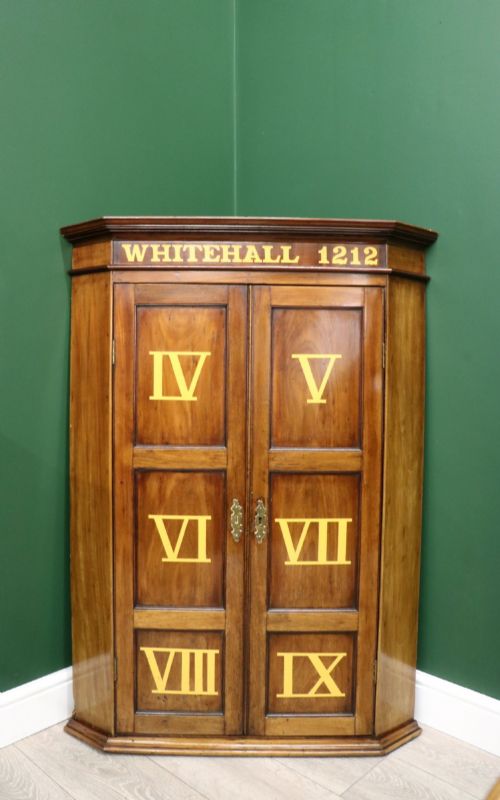
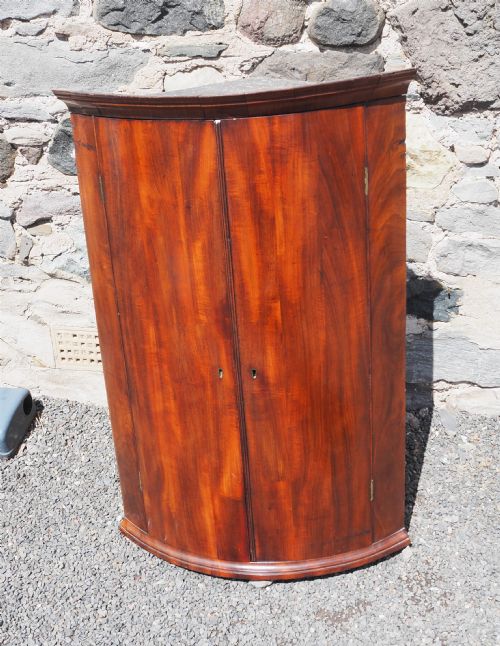
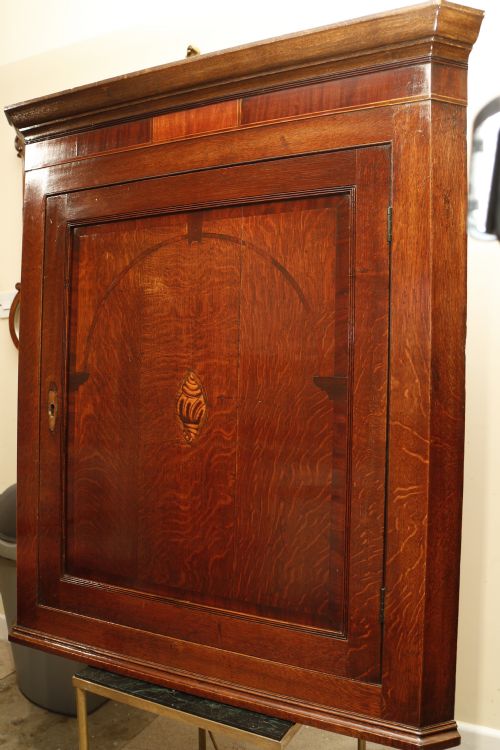

Georgian Mahogany Wall Cupboard
These georgian mahogany wall cupboard examples offer practical period storage, bringing dense timber and intelligent corner design into everyday rooms.
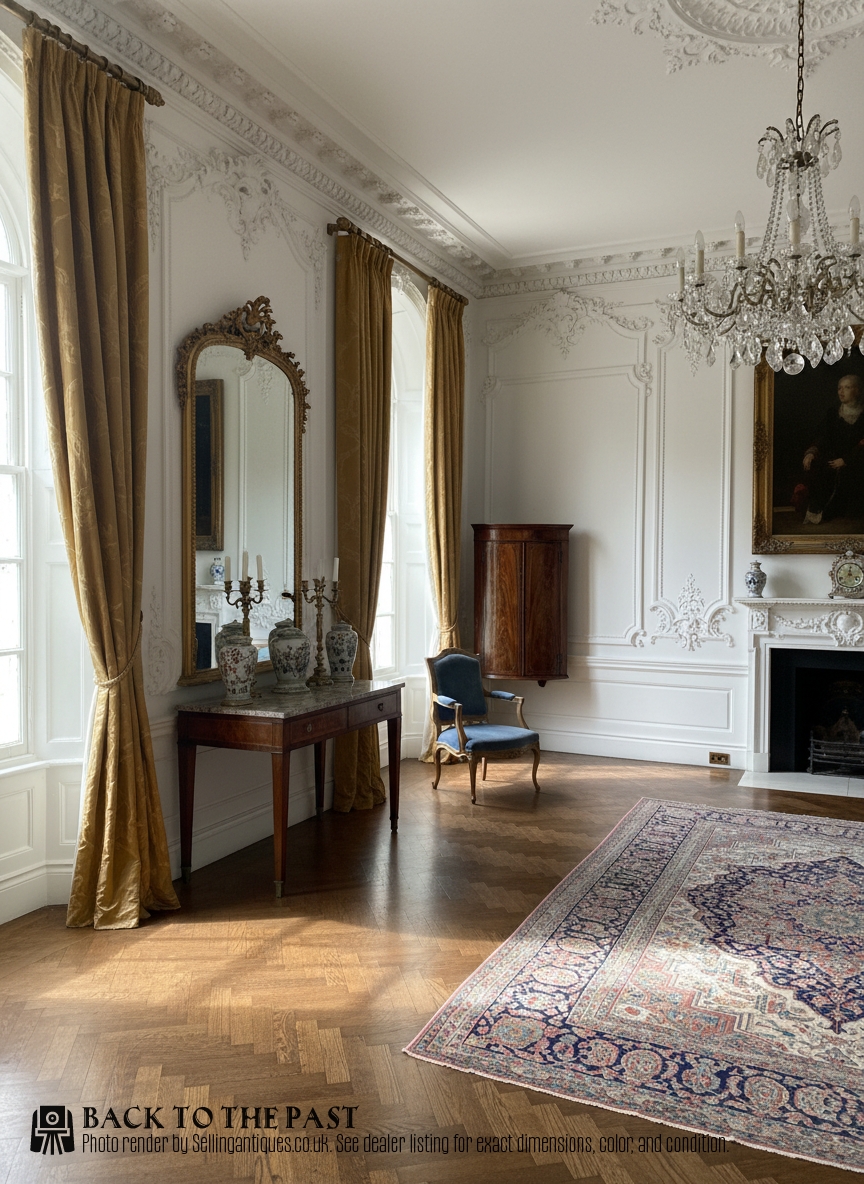
Georgian Mahogany Wall Cupboard
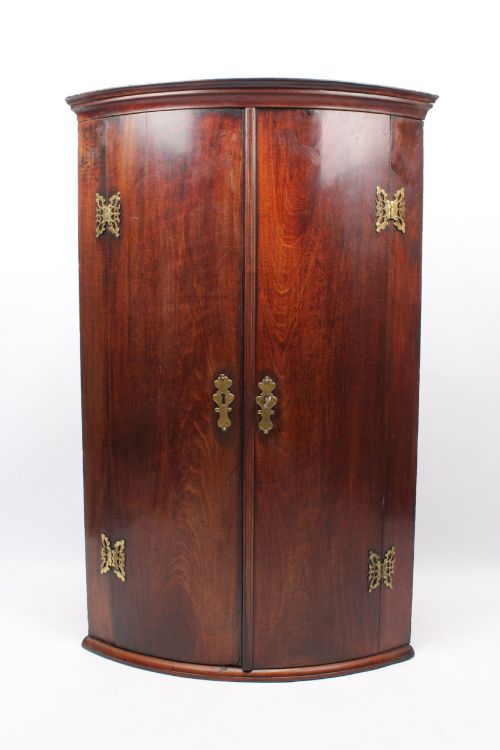
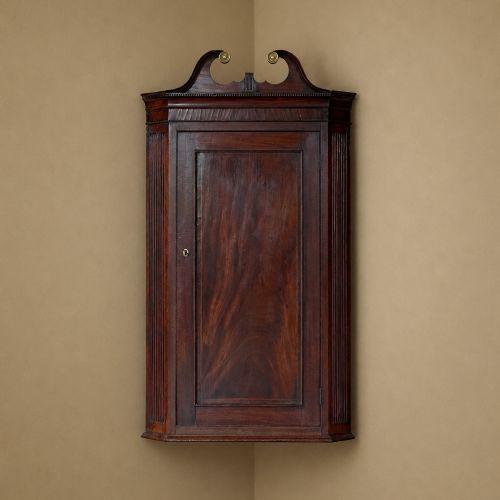
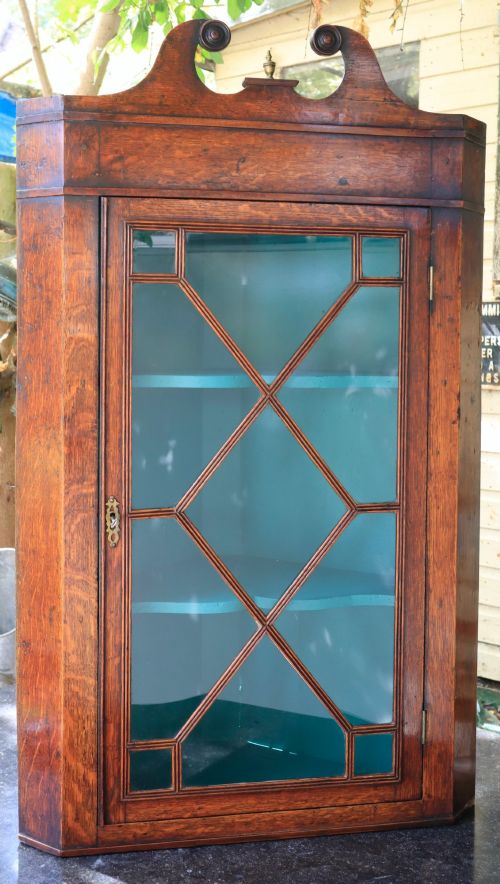
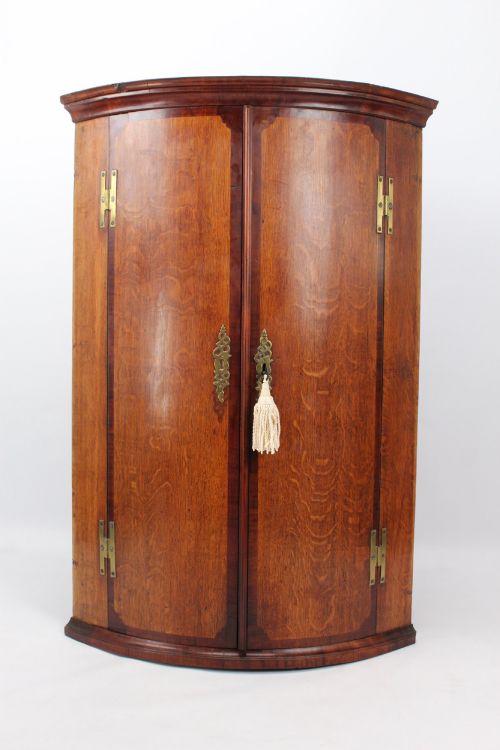
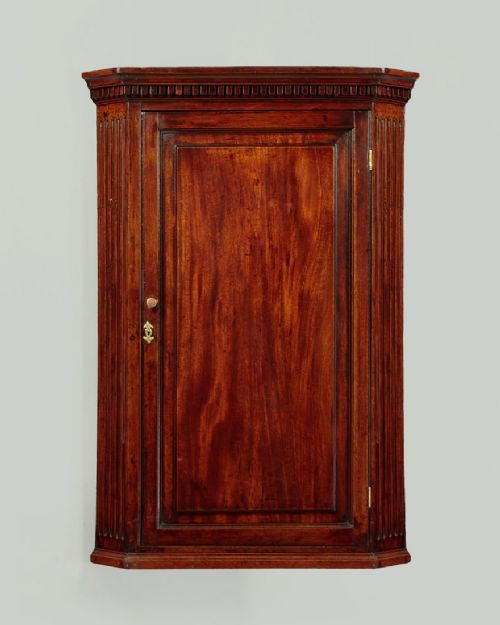
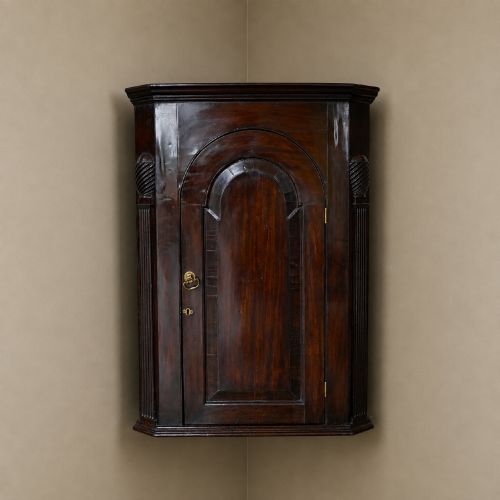
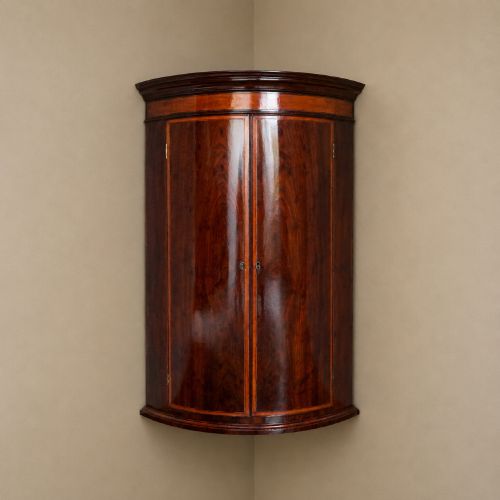
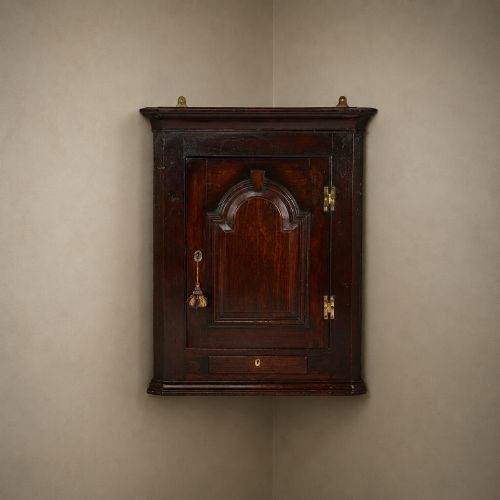
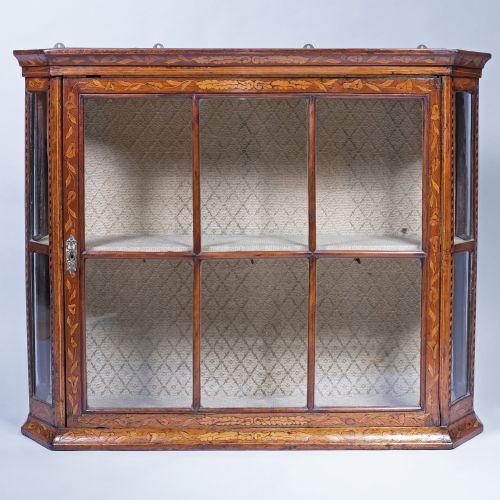
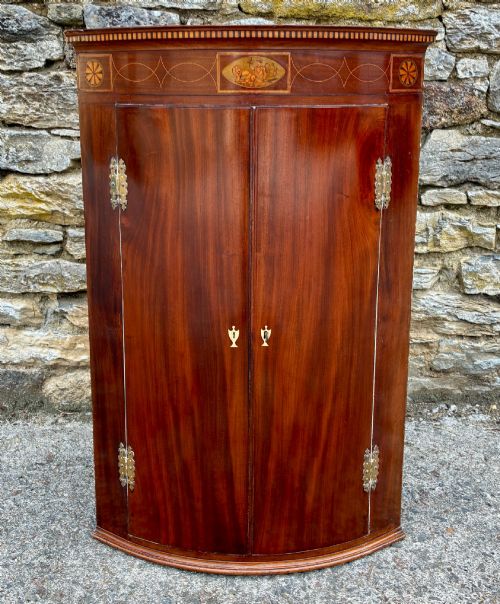
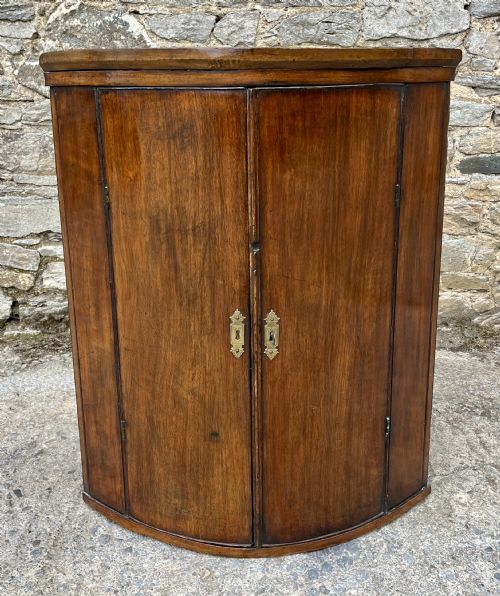
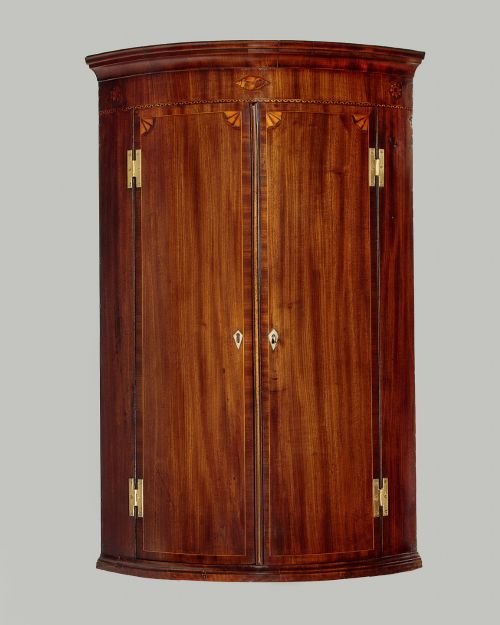
A georgian mahogany wall cupboard is primarily found as a hanging corner cabinet designed to utilise overlooked angles in period rooms. The pieces recorded here span the eighteenth century and the early nineteenth century, featuring distinct George III craftsmanship alongside later revivals.
Most examples present a bow front or flat panelled door, sometimes housing internal shelves or small drawers beneath the main compartment. The selection ranges from plain timber hung configurations to glazed display variants and inlaid decorative schemes.
Evaluating the Build
Superior execution shows in the selection of richly figured mahogany veneers and the precision of crossbanding. The integration of secondary woods and the crispness of inlaid details distinguish standard workshops from finer cabinetmakers.
Georgian Mahogany Wall Cupboard Retail Price Guide 2026
Typical asking prices for georgian mahogany wall cupboard among the pieces listed under this phrase on Sellingantiques today, from the lower quarter to the upper quarter. They describe what is for sale here now, not the wider market.
Several cupboards still retain working keys for their tiny internal drawers.
The Georgian Mahogany Wall Cupboard Glossary
- Bow front
- A convex curved cabinet front that projects outward from the corner walls. This profile softens the angular lines typical of standard corner storage.
- Astragal
- A narrow timber moulding used to hold and divide individual panes of glass within a cabinet door. Fine astragals indicate higher attention to aesthetic proportion.
- Crossbanding
- A decorative border technique where veneer strips are applied with the grain running perpendicular to the main panel. This frames the primary timber surface.
- Escutcheon
- A protective brass plate surrounding the keyhole of a cabinet door. They prevent timber wear around the lock mechanism.
Georgian Mahogany Wall Cupboard: Frequently Asked Questions
Where were these cupboards placed?
These cabinets were hung high in corners to utilise dead space in panelled rooms and parlours.
Their triangular footprint allowed them to fit snugly into room angles without blocking floor area.
Did they store drinks?
Many of these hanging cabinets functioned as bottle or glassware storage for dining rooms.
Internal shelves and secure locks helped protect valuable spirits and serving vessels.
How do I spot an eighteenth century piece?
Look for dense hand-planed mahogany timber and traditional joinery methods inside the carcass.
Secondary woods like oak and hand-cut drawer linings also indicate earlier periods.
Can these hang on modern walls?
Proper wall hanging requires securing the cabinet directly into structural studs or masonry.
The heavy timber weight and contents demand robust fixings to support the antique frame.