
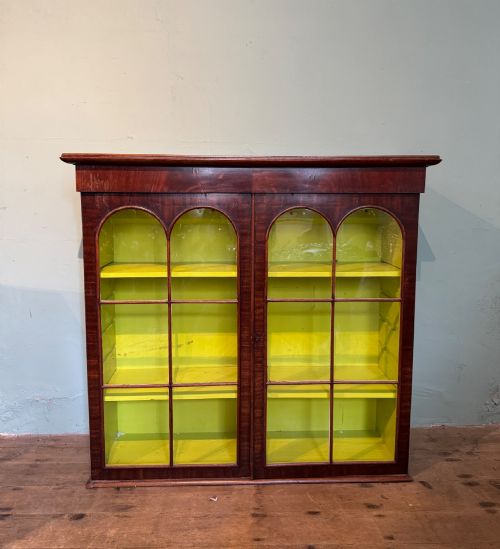
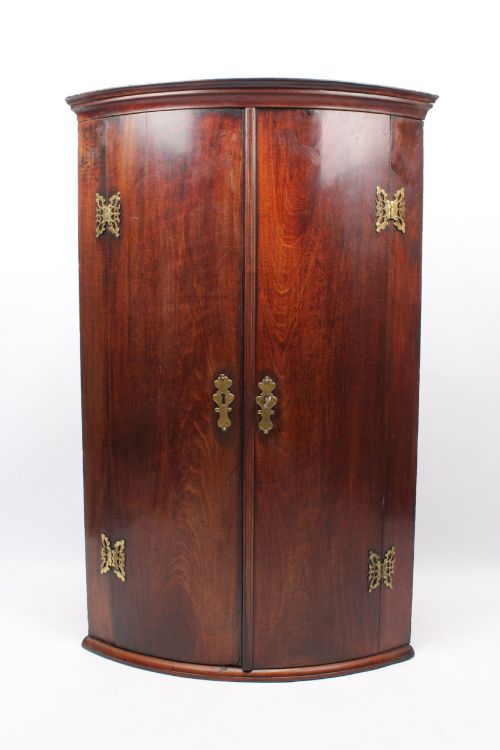
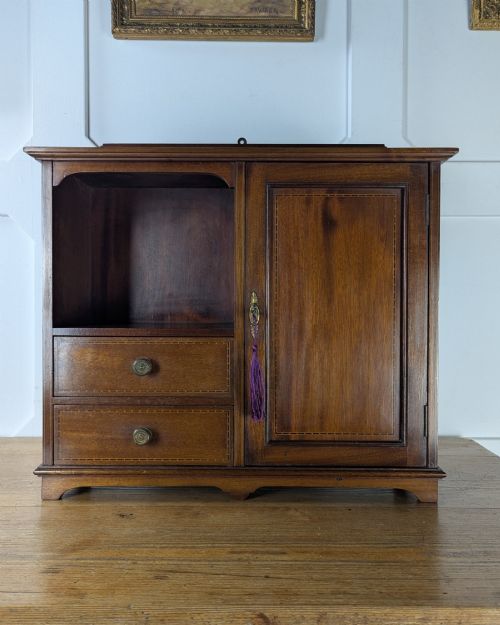
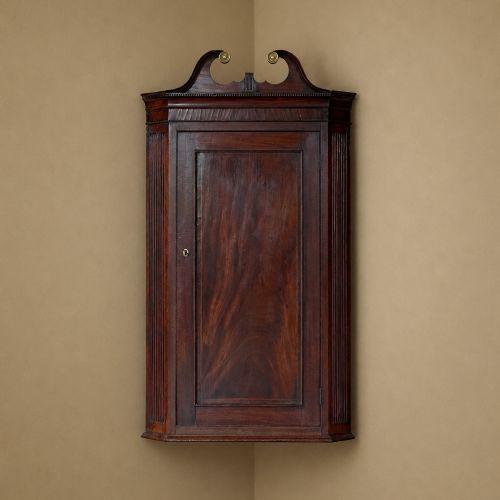
Mahogany Wall Cupboard
A mahogany wall cupboard is a practical hanging storage piece in timber, built to utilise vertical space with architectural presence.
Mahogany wall cupboard forms and periods
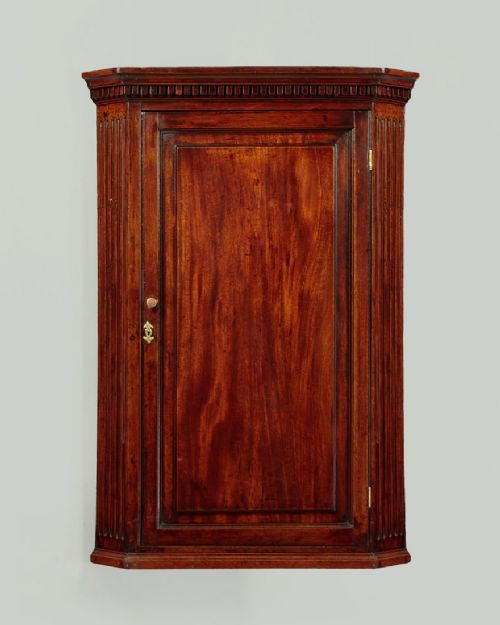
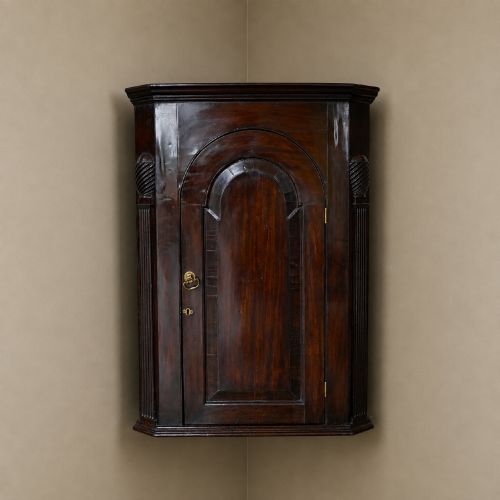
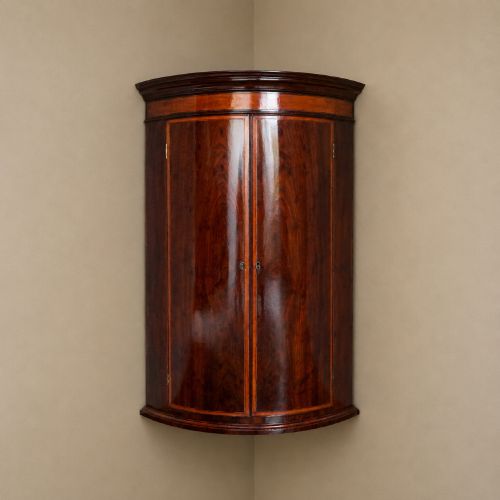
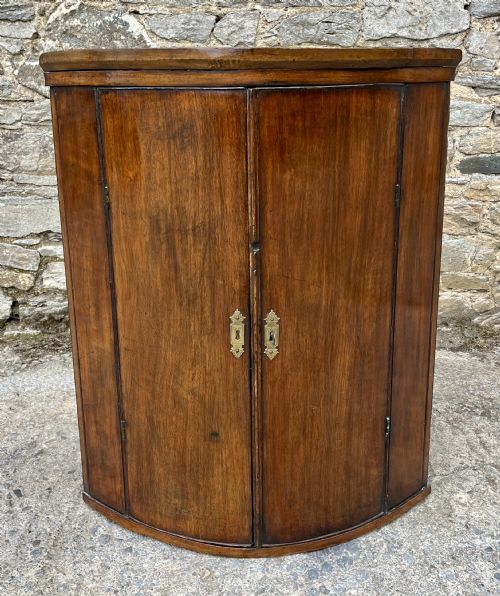
A mahogany wall cupboard is primarily found in Georgian corner formats or later Arts and Crafts and Art Nouveau interpretations.
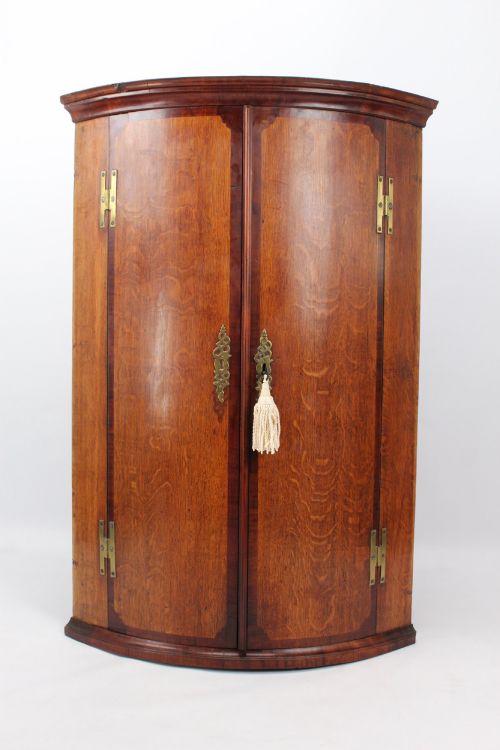
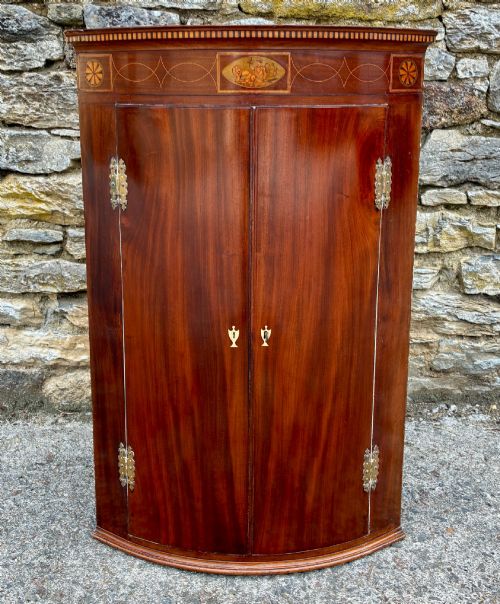
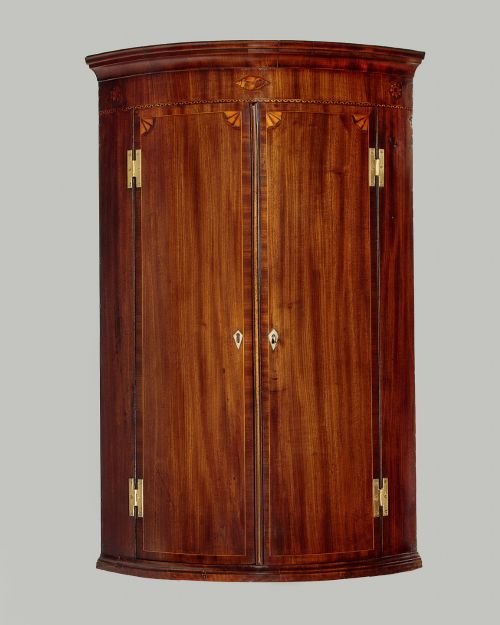
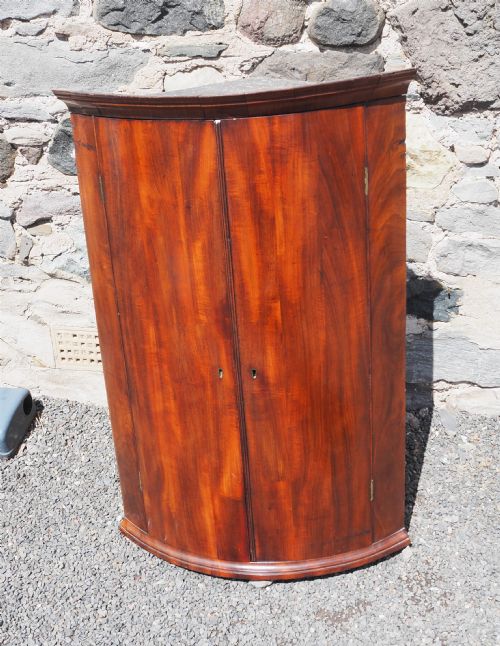
The evidence shows a strong preponderance of Georgian and George III pieces, frequently designed with bow fronts or glazed doors for display.
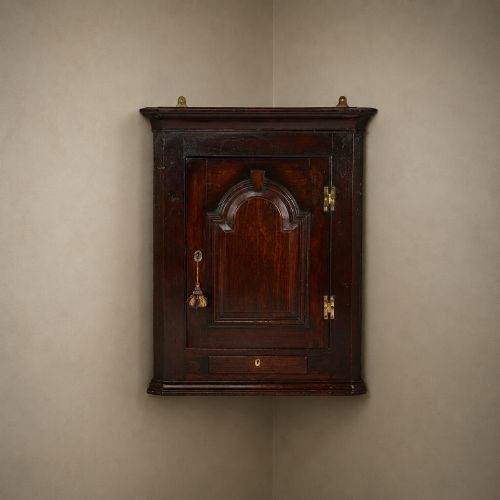
Makers utilised oak as secondary timber in many instances, pairing sturdy structural frames with rich mahogany exterior surfaces.
Materials and construction
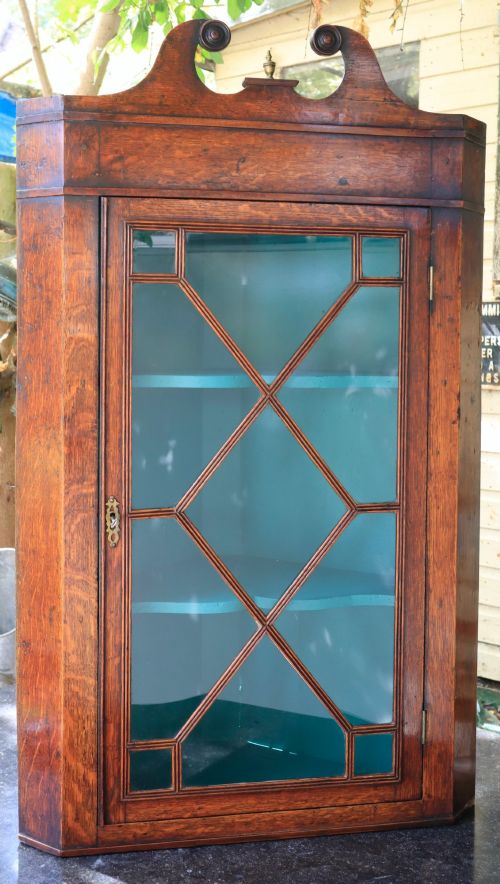
Makers constructed these wall cupboards using solid mahogany and figured veneers, often incorporating wood inlay, brass fittings, and glass panels.
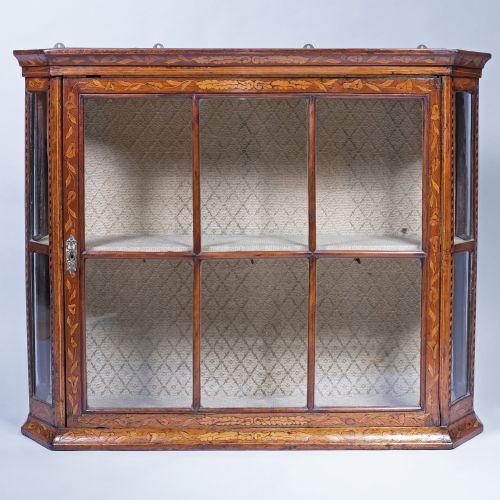
Glazed doors frequently feature astragal bars holding individual panes, while corner variations make efficient use of domestic rooms.
Retail Price Guide 2026
Typical UK retail prices for mahogany wall cupboard, calculated from the Sellingantiques database of over a million retail prices indexed since 2003. This retail price guide relies exclusively on Sellingantiques data; no external sources or auction records are used, so the figures do not describe the wider market.
Distinctions in quality
The tier of a piece depends on the choice of flame mahogany veneers and the precision of the inlaid details rather than sheer size.
Fine examples display thoughtful proportions, original brass or copper hardware, and clean astragal glazing rather than plain utility framing.
The Mahogany Wall Cupboard Glossary
- Astragal glazed
- Glazing bars dividing a glass door into smaller panes. These delicate wooden strips shape the light entering the cabinet.
- Bow front
- A gently curved convex front profile. This stylistic choice softens the angles of a room.
- Flame mahogany
- Timber showing a distinct, fiery grain pattern caused by cutting near the branch junction. High-status pieces display this decorative wood prominently.
- Inlay
- Contrasting woods or materials set into the surface of the primary timber. This technique adds geometric or floral ornamentation.
Frequently Asked Questions
How were mahogany wall cupboards used?
These cabinets served to store china, glass, or small valuables while keeping surfaces clear in compact rooms.
Corner designs fitted neatly into domestic architecture to maximise storage without blocking pathways.
Are most of these cupboards from the Georgian period?
The recorded listings feature a substantial number of Georgian and George III examples alongside later Arts and Crafts pieces.
Craftsmen continued building wall-mounted variants through the nineteenth and into the twentieth century.
What is a bow front corner cabinet?
A bow front corner cabinet has a curved exterior door that projects outward from the corner angles.
This specific form provides extra internal depth while maintaining a streamlined profile on the wall.
Did these cupboards have glass or solid doors?
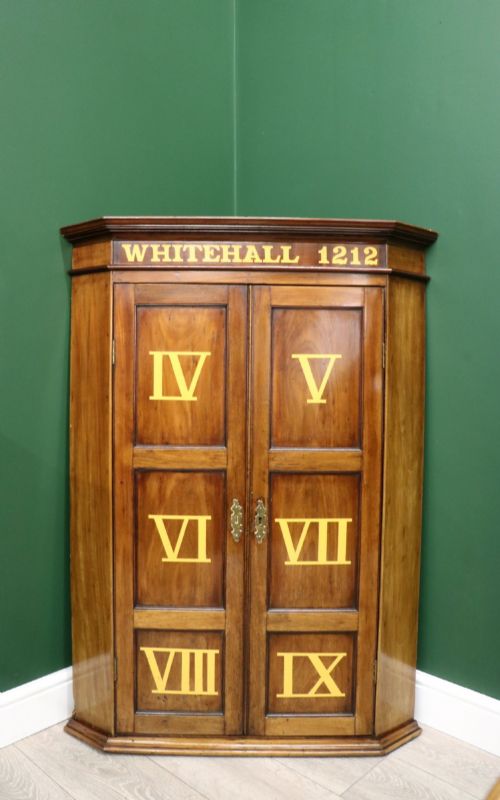
Surviving examples show both glazed viewing panels and solid timber doors, sometimes fitted with original paintings.
Glazed versions often utilised astragal bars to secure multiple panes of glass.