


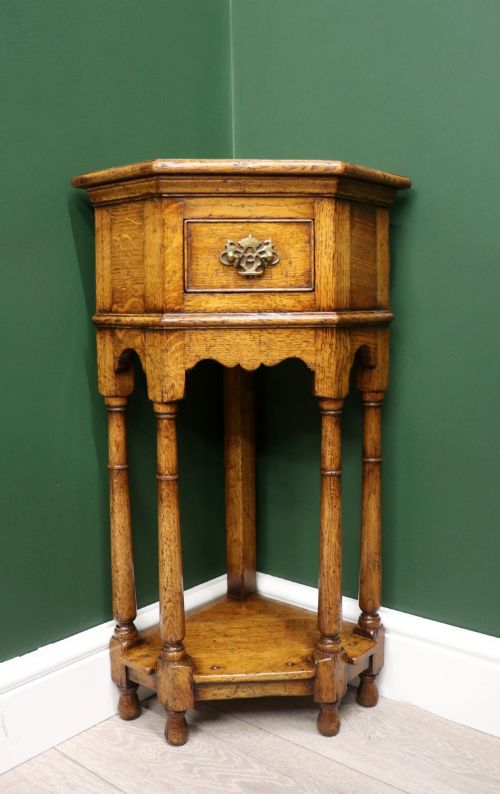
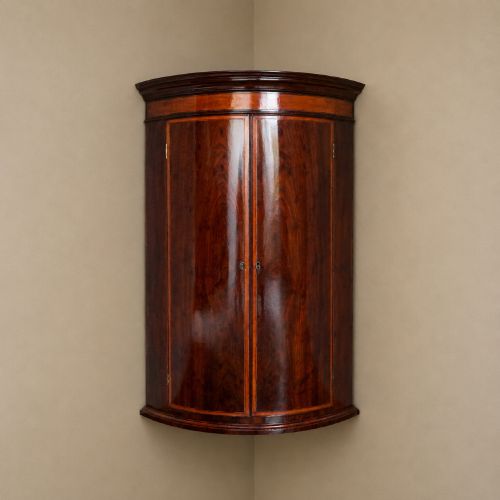
Vintage Corner Cabinet
A vintage corner cabinet turns an awkward room junction into a display point for your pieces.
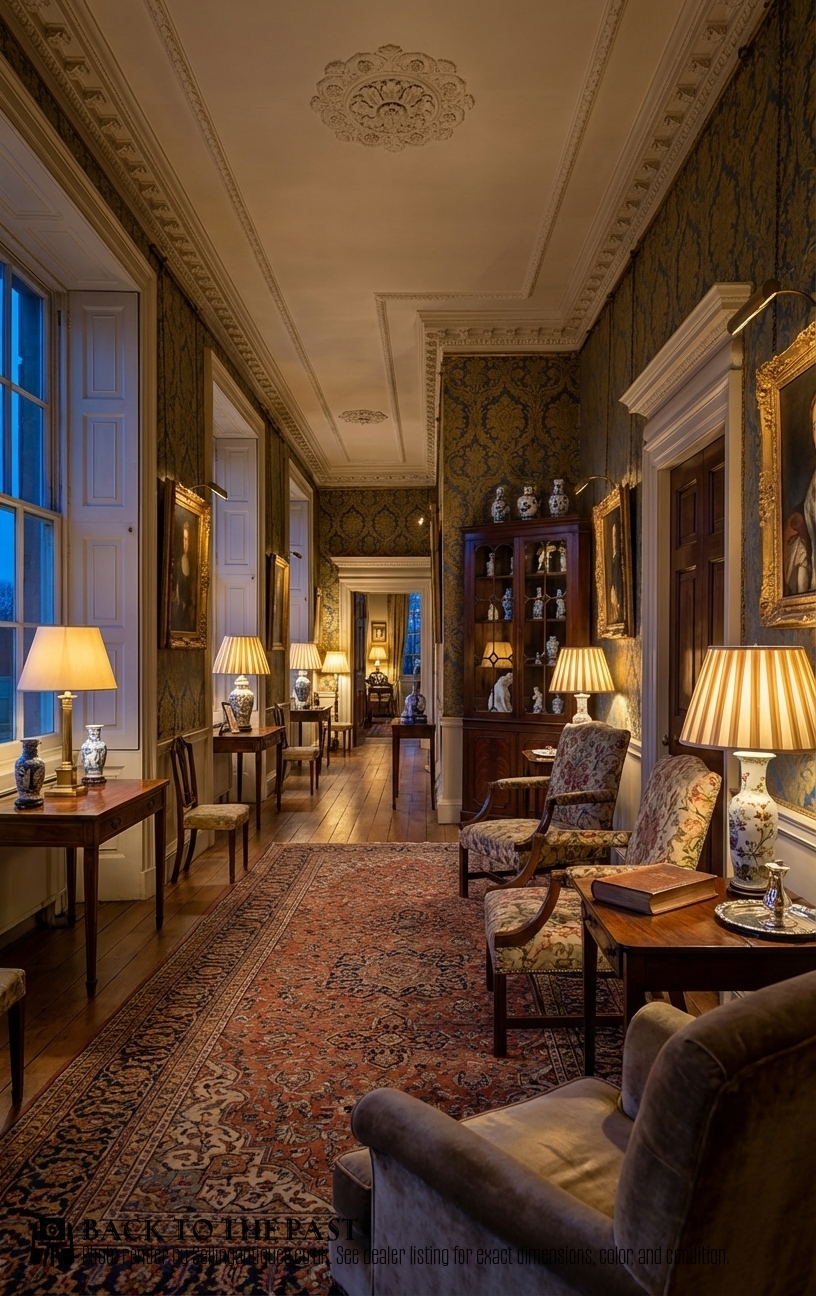
Vintage Corner Cabinet
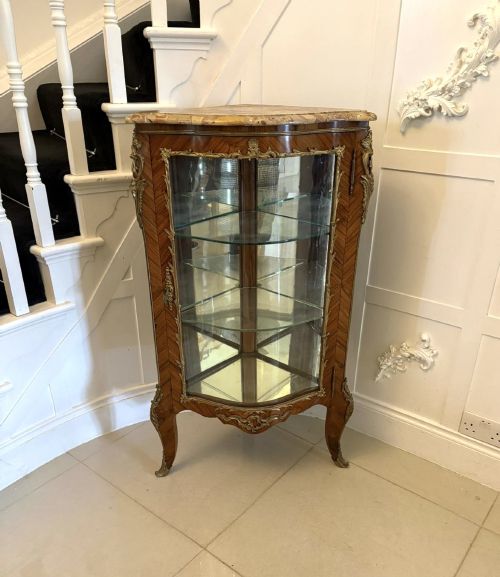
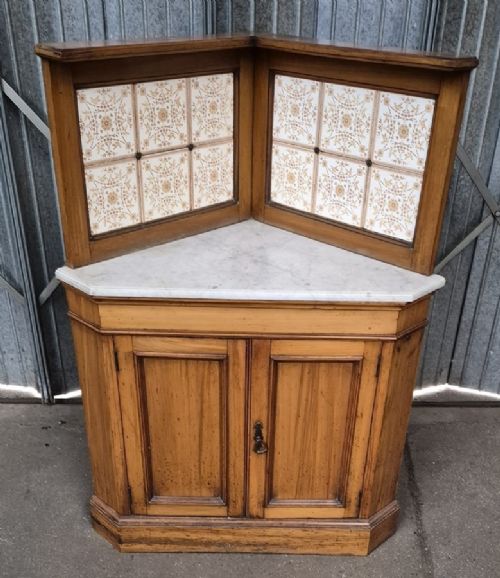
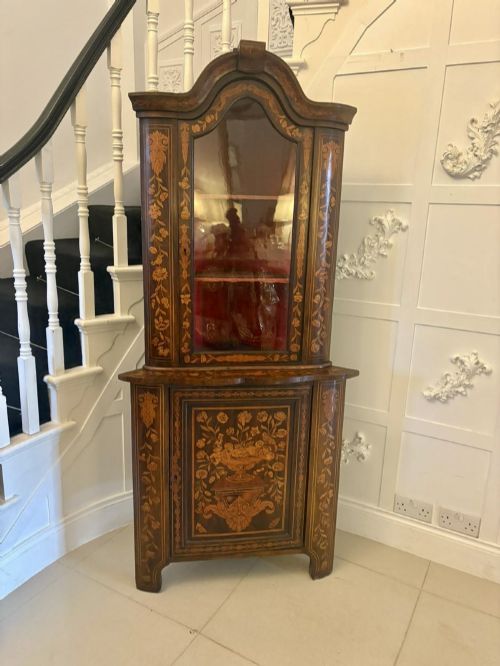
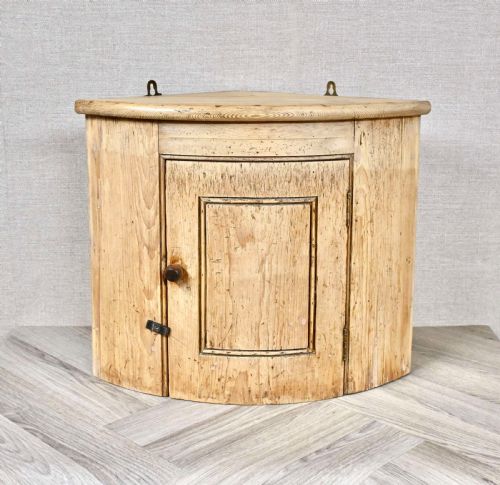
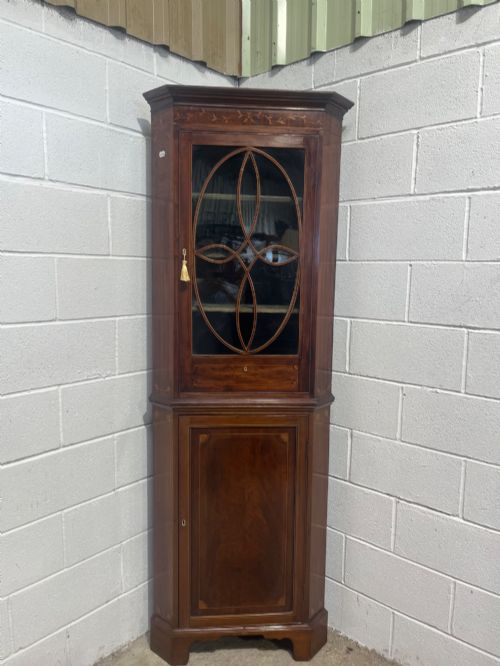
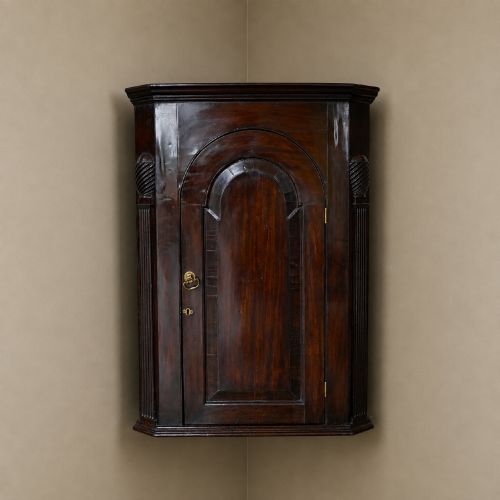
A vintage corner cabinet fits neatly into household angles, designed to make use of otherwise wasted wall junctions. The selections here span hanging wall units and floor-standing pieces from various eras, shaped to suit both compact rooms and larger spaces.
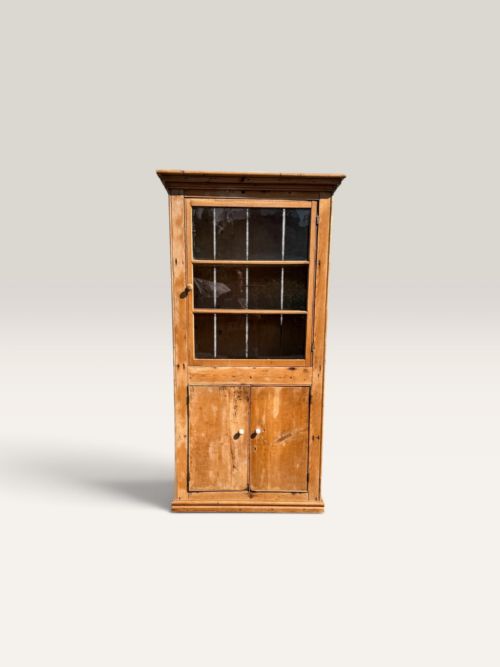
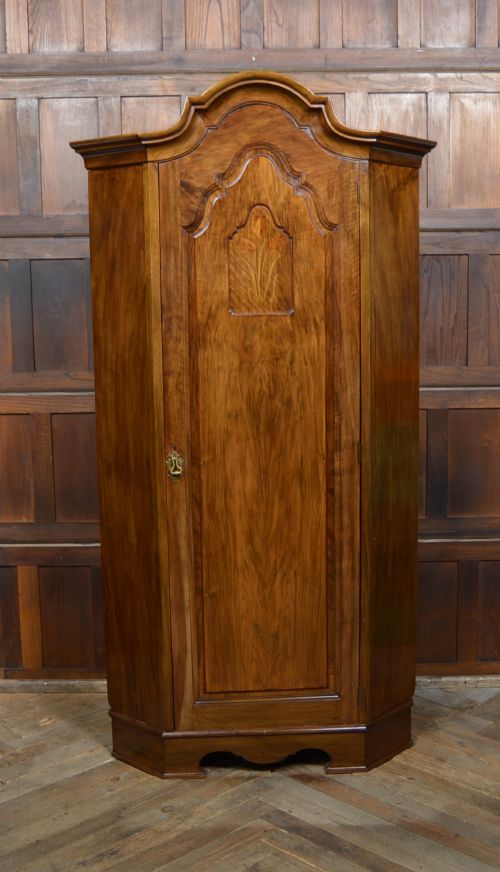
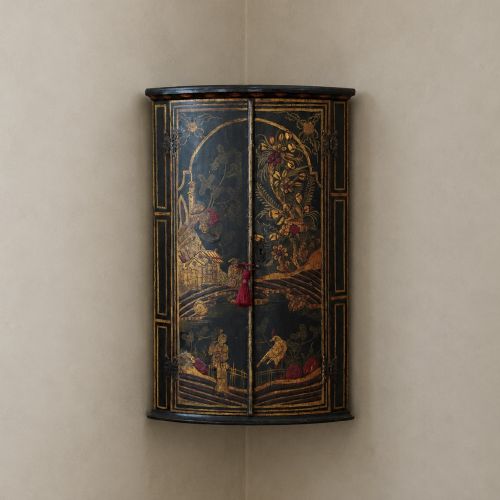
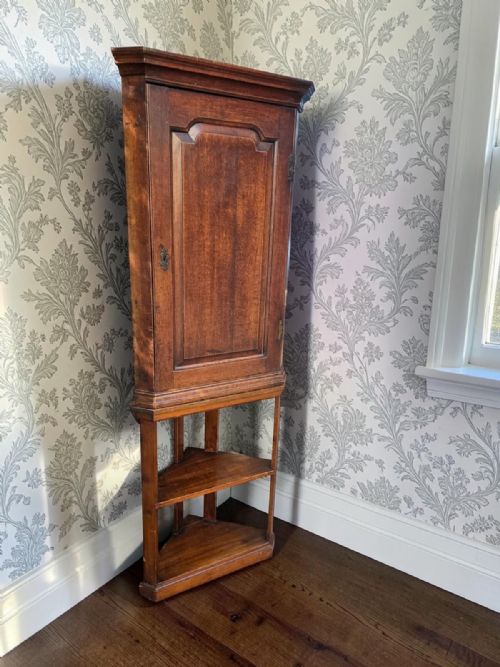
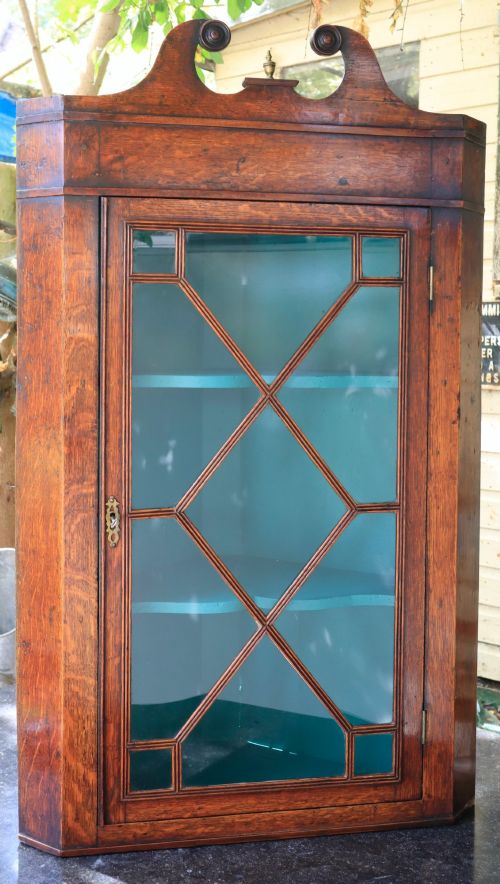
You will encounter mahogany and oak constructions from the Georgian and Victorian periods, alongside later Edwardian inlaid examples and 1930s designs. Many retain original glazed doors, interior shelving, or painted finishes that reveal their age.
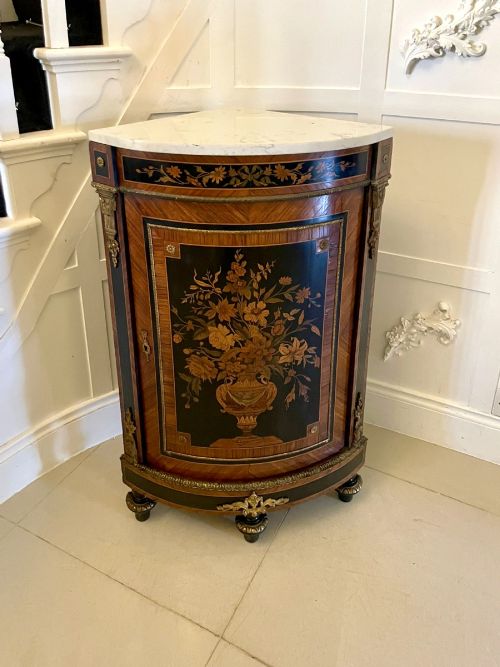
The assortment includes bow front shapes, two-part cupboards, and open display shelves. Whether you need a small wall-hung cupboard or a taller floor-standing unit, these pieces combine storage with architectural interest.
Materials and construction methods
Cabinet makers utilised dense hardwoods such as mahogany, walnut, and oak, often applying marquetry or inlay work in satinwood and other contrasting timbers. Pine and other softer woods appear in painted or stripped finishes, sometimes complemented by brass hardware.
Construction techniques range from traditional dovetail joints on drawers to panelled doors and curved bow fronts formed from solid timber or veneers. Glazed upper sections utilise individual glass panes set within wooden framing bars.
Vintage Corner Cabinet Retail Price Guide 2026
Typical asking prices for vintage corner cabinet among the pieces listed under this phrase on Sellingantiques today, from the lower quarter to the upper quarter. They describe what is for sale here now, not the wider market.
Storage formats include wall-hanging cupboards, floor-standing units, bow front designs, and glazed display cabinets.
Assessing quality and craftsmanship
The standard of a vintage corner cabinet rests on the selection of timber and the precision of its joinery. Better examples display carefully matched grain patterns, particularly on bow front doors, and tight, well-fitted joints that have withstood decades of use.
Detailing such as fine string inlay, original brass key escutcheons, and intact glazed panels elevate a piece. The presence of original backboards, working locks with keys, and undisturbed interior paint or polish indicate higher preservation worth.
The Vintage Corner Cabinet Glossary
- Bow front
- A convex curved cabinet front that projects outward in a smooth arc. This shape requires advanced woodworking skill to construct from solid timber or veneers.
- Marquetry
- Decorative patterns formed by fitting together thin veneers of various coloured woods. It creates elaborate pictorial or geometric designs on cabinet doors.
- Escutcheon
- A protective plate surrounding a keyhole, often cast in brass. It prevents the wood around the lock from becoming worn through repeated use.
- Dovetail
- A traditional joint formed by interlocking wedge-shaped fingers. It provides exceptional tensile strength for drawer corners and cabinet frames.
Vintage Corner Cabinet: Frequently Asked Questions
Where should I place a corner cabinet?
These units suit any unused room angle where standard rectangular furniture will not fit comfortably. They work effectively in dining rooms for tableware or in living spaces to display collections.
Because they draw the eye toward architectural junctions, they help balance the proportions of square or rectangular rooms.
Are hanging or floor models better?
Hanging wall cabinets save floor space and sit well above tables or sideboards. Floor-standing versions offer greater interior volume and often include lower cupboards or drawers for additional storage.
Your choice depends on wall strength, available floor space, and how much capacity you require.
How do I care for polished wood?
Keep wooden surfaces away from direct sunlight and heat sources to prevent the timber from drying or cracking. Regular dusting with a soft cloth maintains the finish without building up residue.
Apply traditional wax polish occasionally to nourish the wood and preserve the depth of the grain.
Can I adjust the internal shelves?
Many older pieces feature fixed wooden shelves set into housings within the carcass. Altering them can disrupt the structural integrity of the cabinet.
Check the interior construction before purchasing if you plan to store items of specific heights.