

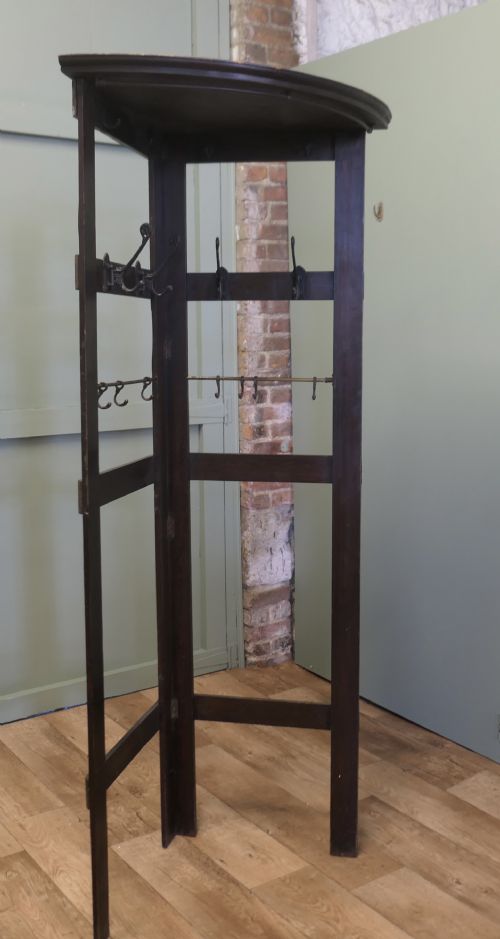
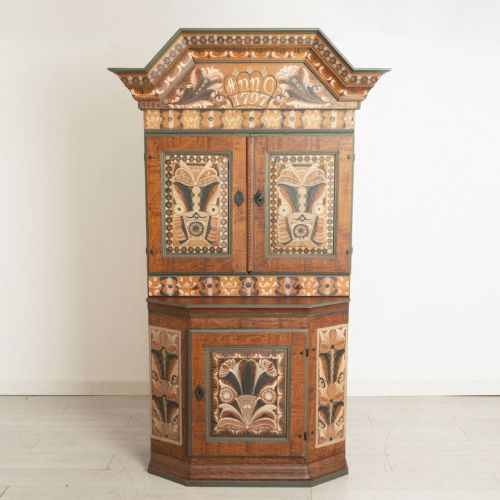
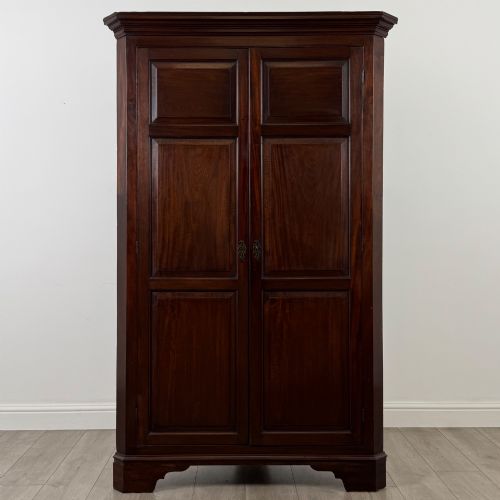
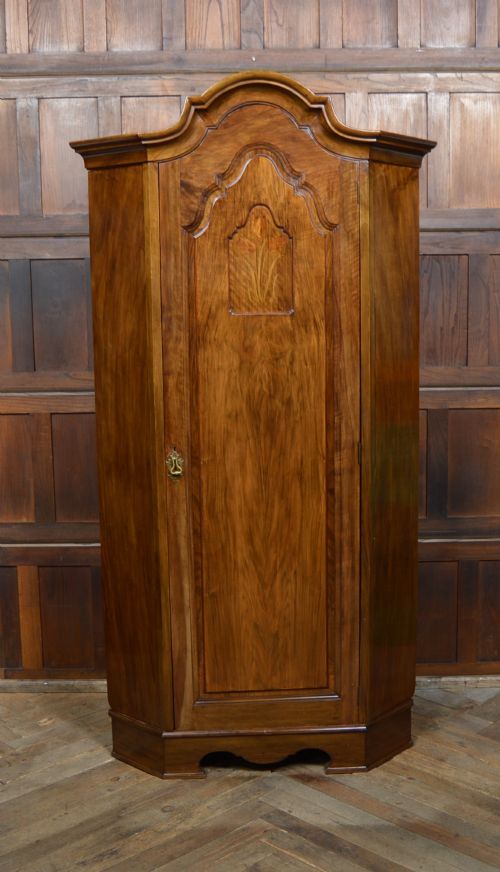
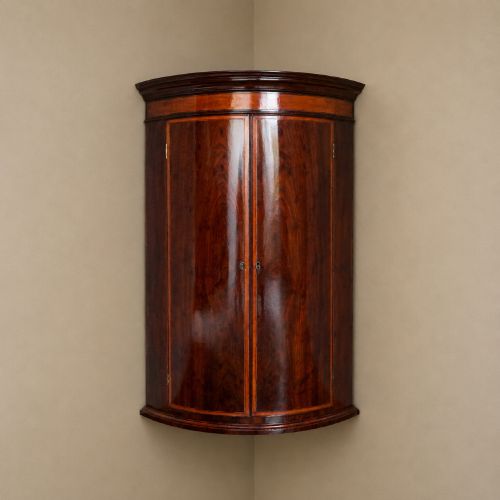

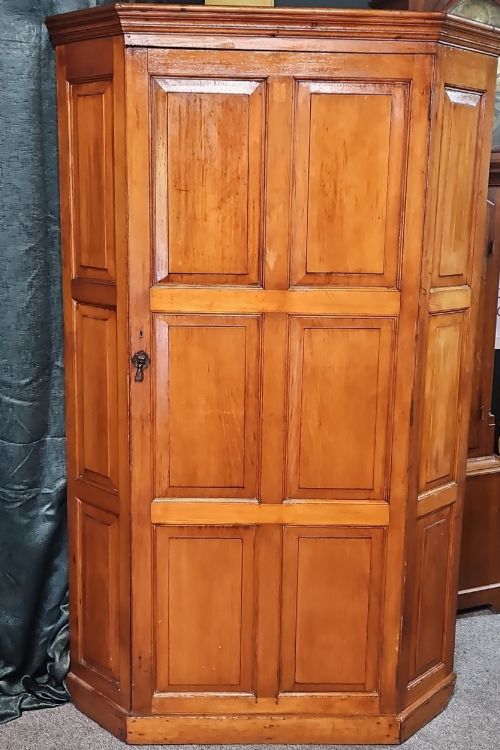
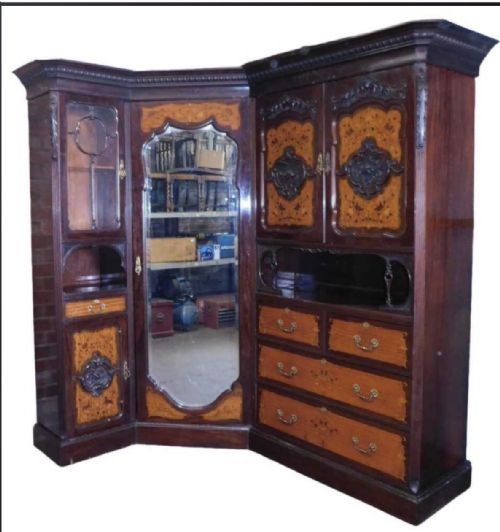
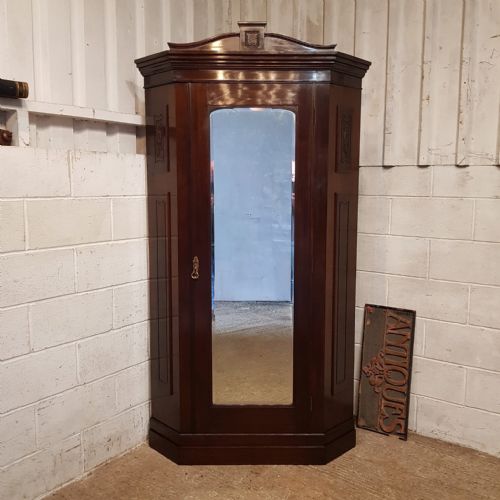
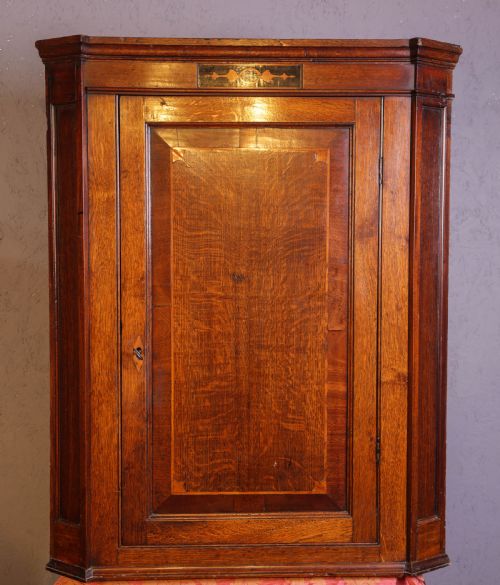
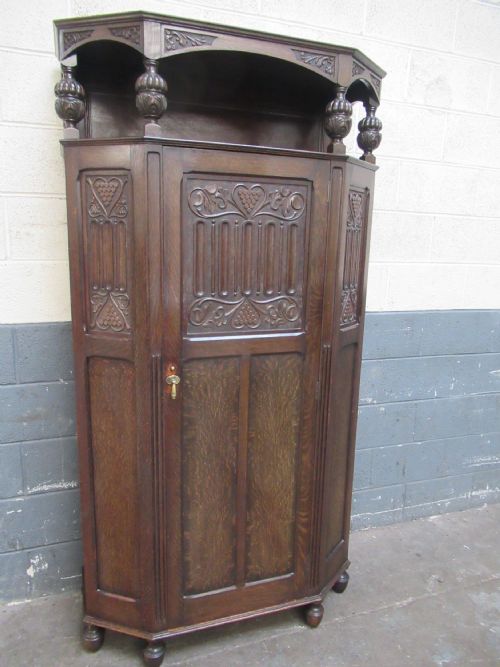


Antique Corner Wardrobe
An antique corner wardrobe makes use of unused room angles while providing generous hanging space.
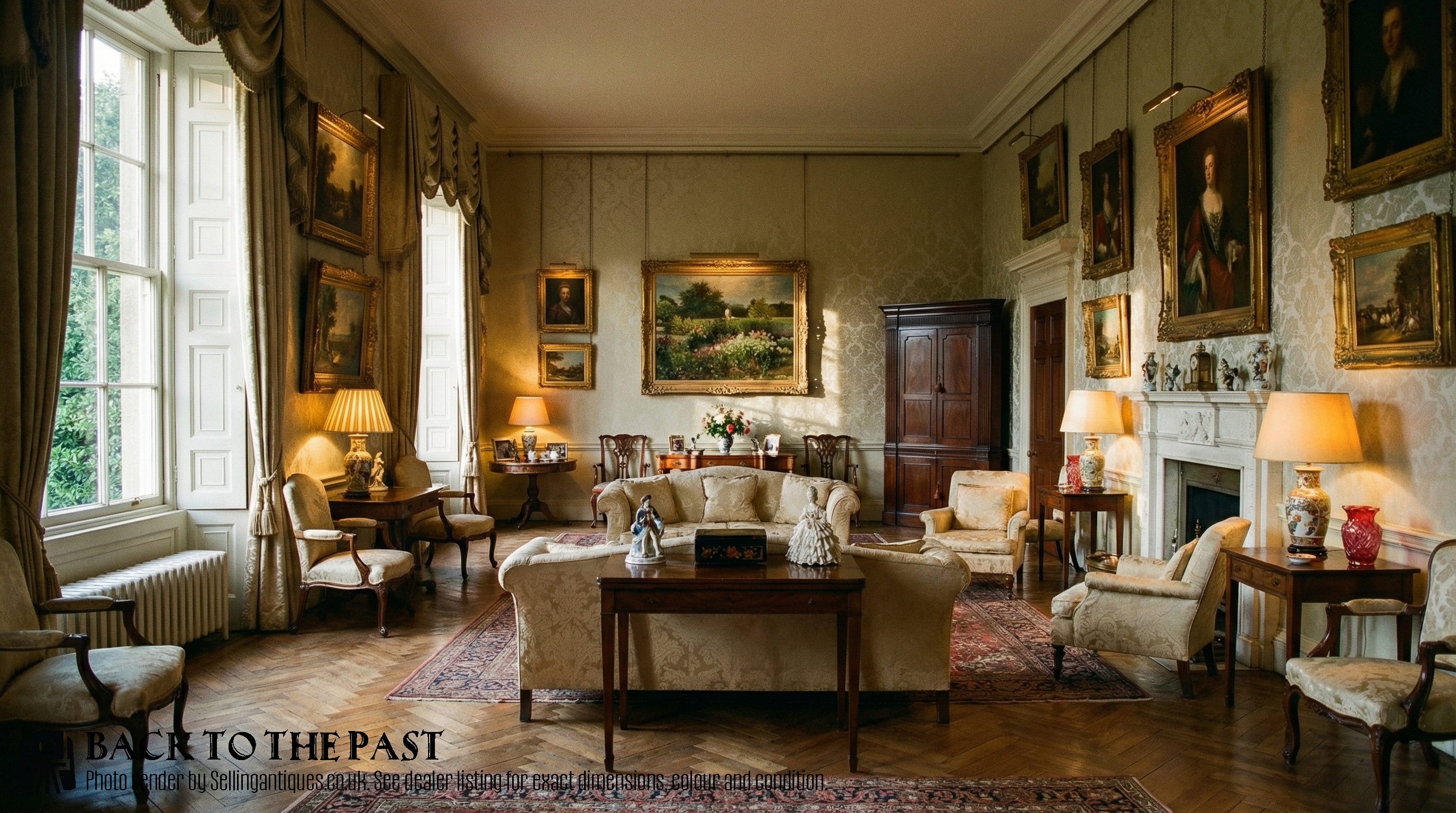
Antique Corner Wardrobe
An antique corner wardrobe is a specialised storage piece designed to fit neatly into the junction of two walls, solving spatial puzzles in period rooms. These items range from compact hall cupboards to full-height bedroom compactums.
The versions met most frequently on this page combine Georgian proportions with Victorian or Edwardian hanging capacities, often utilising mahogany, oak, or pine. Buyers encounter various formats, including single door hanging spaces and sophisticated two-door designs.
Makers from the eighteenth century onwards built these to maximise awkward floor plans without sacrificing internal depth. Their angled backs allow the unit to sit flush against perpendicular walls while projecting outward into the room.
Materials and construction methods
Cabinet makers relied primarily on solid oak, pine, and rich mahogany timbers, frequently applying figured walnut or satinwood veneers to prominent surfaces. Brass hardware, boxwood stringing, and iron hinges secure the structural integrity of these angled frames.
Construction techniques involve sturdy panelled doors, dovetailed joints, and internal framing designed to support heavy garments within a triangular footprint. Master craftsmen shaped cornices and plinths to negotiate the demanding geometry required for proper corner fitting.
Antique Corner Wardrobe Retail Price Guide 2026
Typical asking prices for corner wardrobe among the pieces listed under this phrase on Sellingantiques today, from the lower quarter to the upper quarter. They describe what is for sale here now, not the wider market.
Certain tall corner units include hidden interior compartments originally designed for storing ceremonial wigs or covert ledgers.
Judging the standard of manufacture
Quality rests upon the selection of timber grain, such as plum pudding mahogany or flame veneers, and the crispness of carved details or inlaid boxwood lines. Superior examples maintain unwarped panel doors and original brass fixtures that operate smoothly within the angled frame.
The distinction between standard utility cupboards and finer architectural pieces lies in secondary woods, interior configuration, and the precision of the corner mitres. Retaining original mirrors, hanging rails, and functional locks elevates the standing of any individual item.
Heals·Denby and Spinks·Waring and Gillow
The Antique Corner Wardrobe Glossary
- Compactum
- A fitted wardrobe combining hanging space with drawers, shelves, and sometimes shoe racks. This multi-functional internal arrangement suits smaller footprint furniture.
- Chinoiserie
- European imitation of traditional Chinese artistic motifs, often rendered in lacquer. This decorative style appears on select cabinet doors.
- Bow front
- A convexly curved front surface that projects outward from the corner angles. This shaping softens the hard lines typical of angular furniture.
- Panelled
- Construction method using timber frames inset with floating central panels to accommodate wood movement. This technique prevents cracking as humidity changes.
- Satinwood
- A durable hardwood yielding a yellowish, lustrous grain utilised for decorative inlays. Craftsmen pair it with darker woods for visual contrast.
Antique Corner Wardrobe: Frequently Asked Questions
How do I fit a corner wardrobe?
Measure the wall depth from the exact corner junction outward on both sides to ensure the diagonal front projection clears doors and windows.
Check whether the skirting boards require trimming so the back sits completely flush against the plaster.
Are these pieces difficult to assemble?
Most period examples arrive as single solid units rather than flat-pack kits, meaning they require careful path planning through narrow hallways and stairwells.
Enlist professional handlers for full-height or heavy oak items due to their awkward triangular weight distribution.
How do I care for antique wood?
Keep timber surfaces away from direct heat sources and strong sunlight to prevent the mahogany or oak veneers from drying and splitting.
Apply quality beeswax sparingly and buff with a soft cloth to maintain the natural lustre without building up heavy chemical residues.
How can I date my wardrobe?
Examine the timber species, secondary woods inside drawers, and construction marks like hand-cut dovetails or machine-sawn boards.
Stylistic cues such as Art Nouveau curves, Georgian bracket feet, or Edwardian satinwood stringing provide reliable chronological markers.