

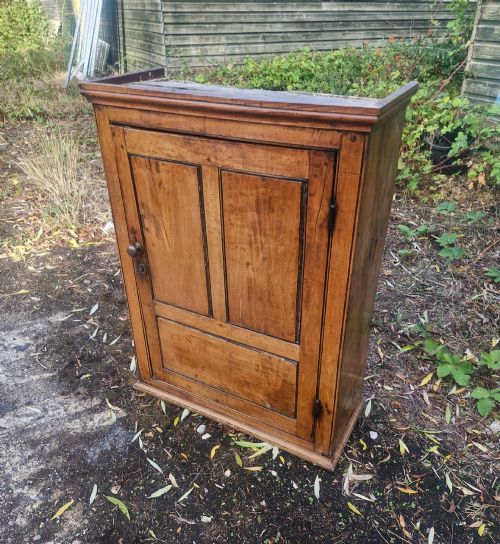
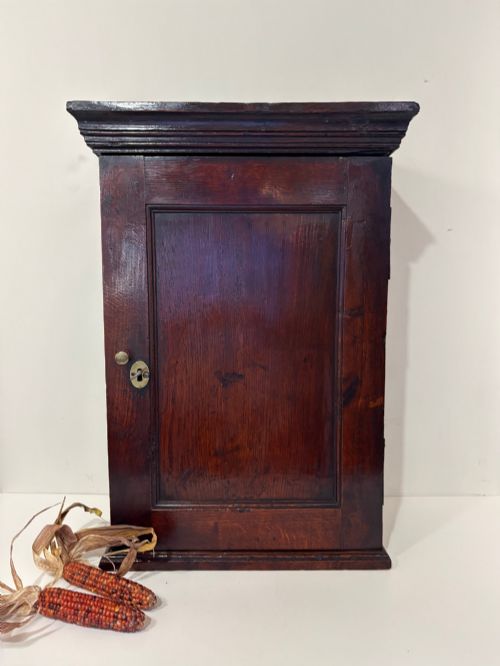
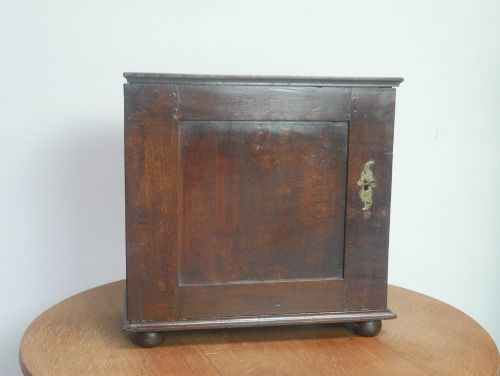
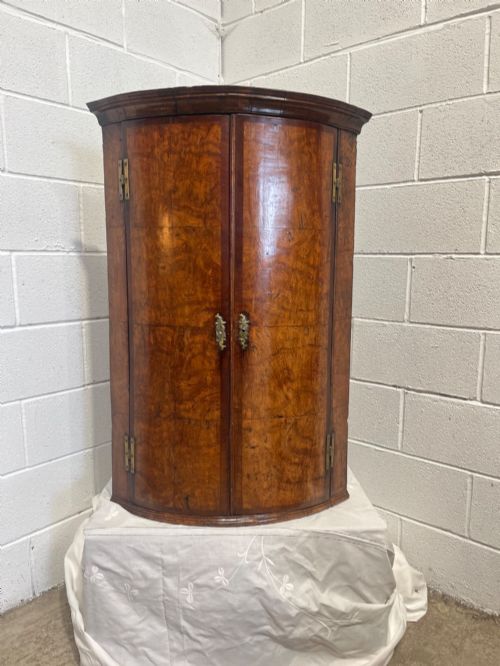
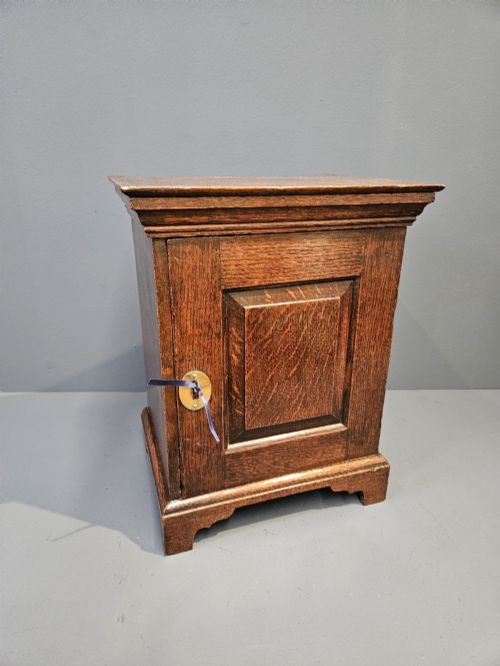
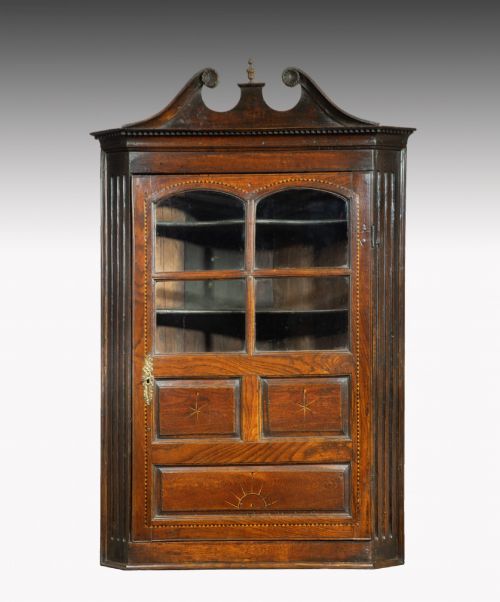
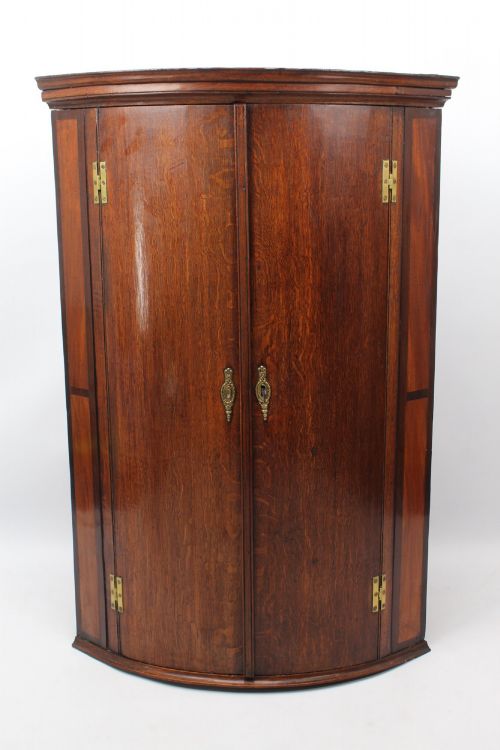
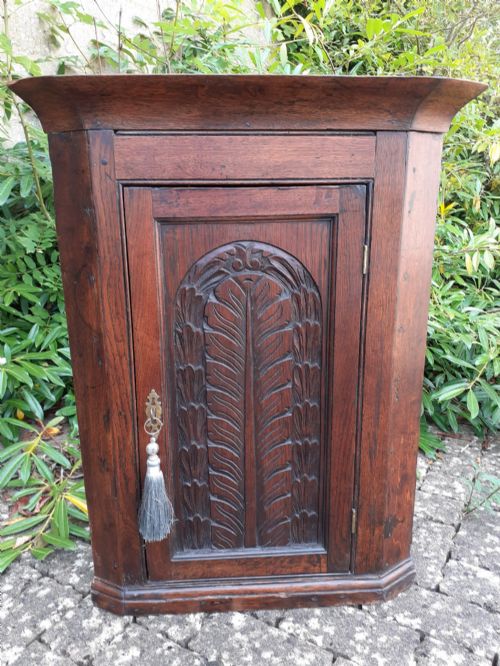
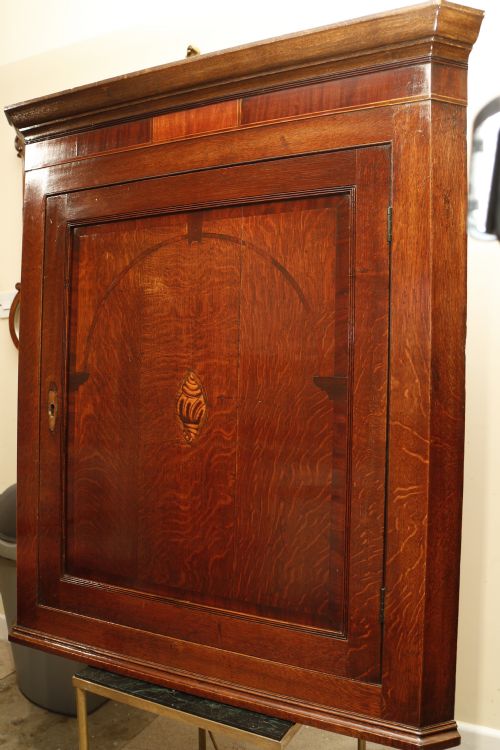


Georgian Oak Hanging Cupboard
Solid timber storage designed to save space, a georgian oak hanging cupboard brings period character directly to plain walls.
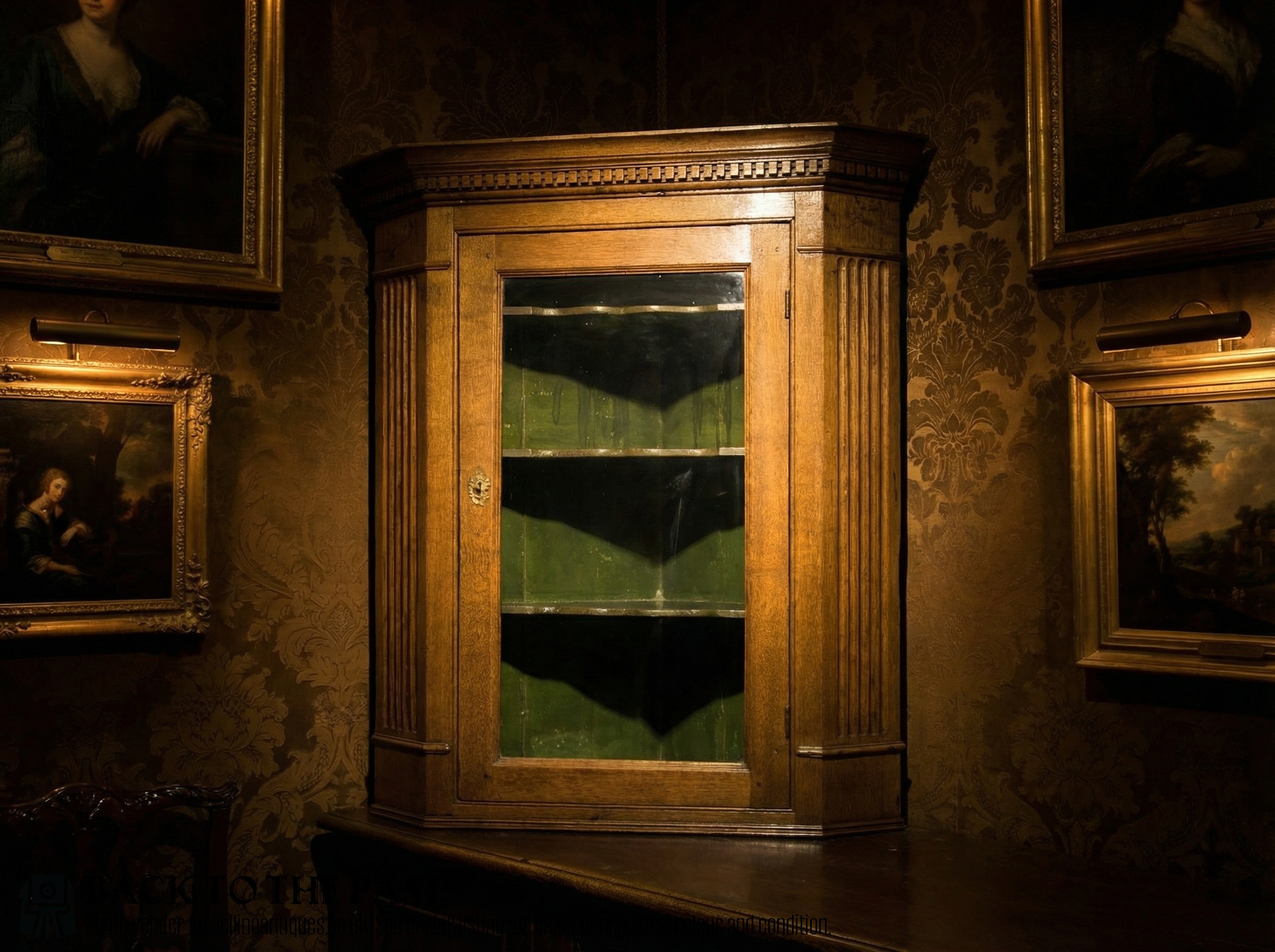
Georgian Oak Hanging Cupboard
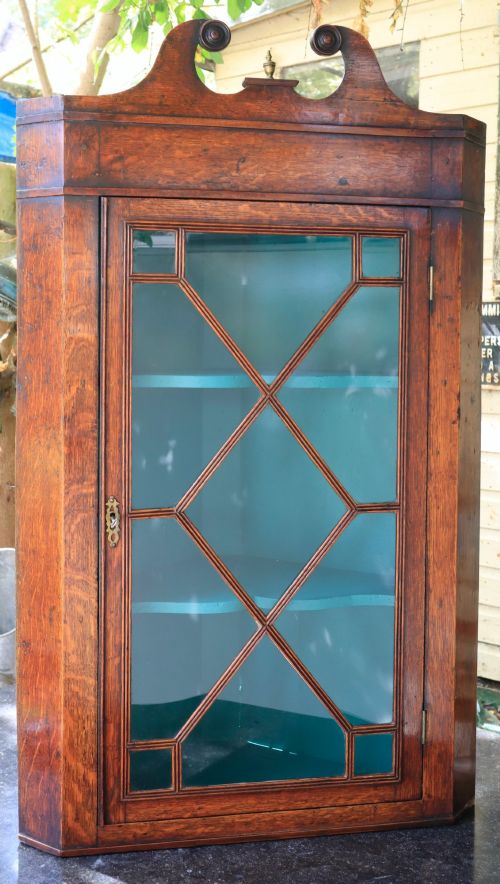
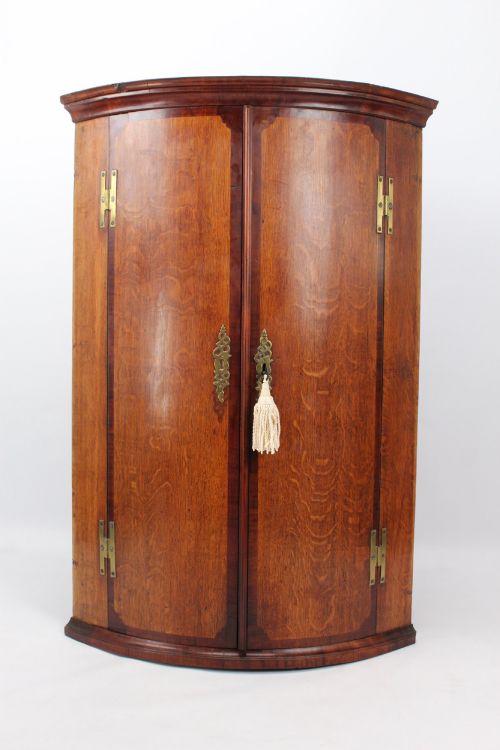
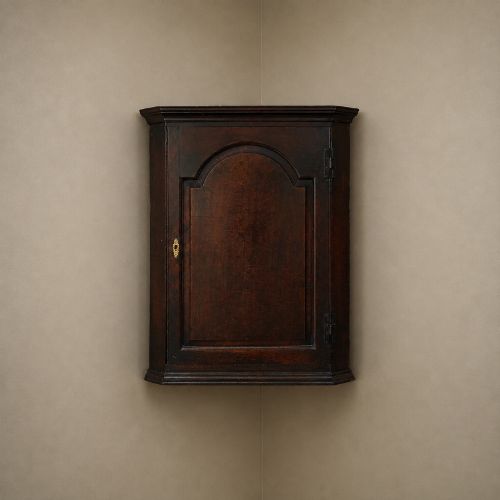
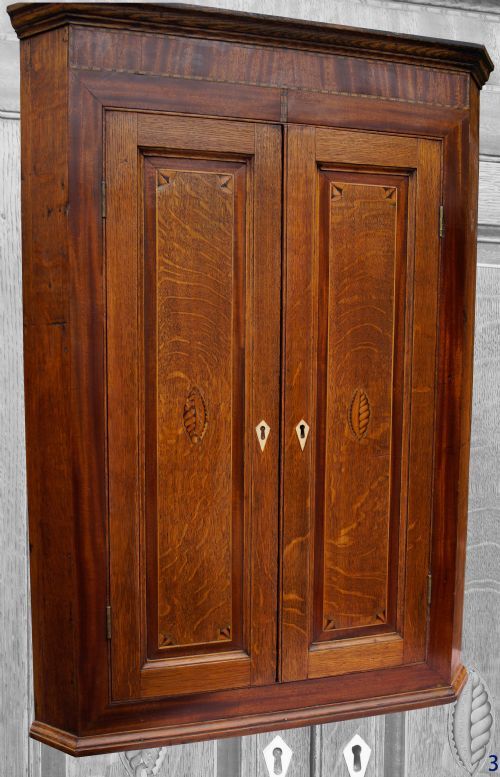
A georgian oak hanging cupboard encompasses wall-mounted storage forms made primarily during the eighteenth and early nineteenth centuries. Buyers encounter diverse regional variations, ranging from modest spice cabinets and food cupboards to large panelled presses and corner cabinets.
Corner cupboards dominate the selection, designed specifically to fit snugly into room angles and utilise otherwise empty domestic space. Flat-wall hanging cupboards and spice cabinets provide smaller alternatives with interior shelving or small drawers.
The majority originate from provincial workshops and vernacular traditions, particularly from Welsh makers and rural English makers working in solid oak.
Materials and construction
Carpenters built these pieces primarily from solid oak, supplementing the primary timber with secondary woods such as pine, mahogany, and walnut. Secondary woods frequently appear in drawer linings, backing boards, and decorative details.
Cabinet makers utilised traditional joinery techniques, combining panelled doors with iron hinges, brass escutcheons, and working locks. Selected examples incorporate decorative wood inlay, burr oak veneers, and mahogany crossbanding to frame the door panels.
Georgian Oak Hanging Cupboard Retail Price Guide 2026
Typical asking prices for georgian oak hanging cupboard among the pieces listed under this phrase on Sellingantiques today, from the lower quarter to the upper quarter. They describe what is for sale here now, not the wider market.
Listings feature eighteenth and nineteenth century periods, with materials spanning oak, mahogany, glass, iron, pine, and burr oak.
Quality distinctions
Superior examples display careful timber selection, showing rich natural grain patterns and deep colour within the oak surfaces. Finer pieces also incorporate refined decorative elements like intricate inlays, crossbanding, and carved detailing rather than plain panels.
Construction integrity dictates overall quality, separating standard utility furniture from finer provincial cabinet work. Original brass hardware, well-fitted doors, and untouched interior shelving elevate the standing of individual items.
The Georgian Oak Hanging Cupboard Glossary
- Corner cupboard
- A cabinet constructed with a triangular plan designed to fit into the corner of a room. These space-saving units represent the most common form found in hanging wall furniture.
- Crossbanding
- A decorative border technique where thin strips of veneer are laid across the grain of the primary wood. This method typically frames drawer fronts and cabinet doors on higher-status pieces.
- Vernacular
- Everyday furniture made by regional carpenters for local domestic use rather than following high London fashions. Welsh vernacular pieces often display distinct local styling and robust construction.
- Spice cupboard
- A small wall-mounted cabinet containing multiple tiny internal drawers used originally for storing valuable provisions. These compact pieces frequently feature panelled doors and brass pulls.
- Escutcheon
- A protective plate surrounding a keyhole, usually fashioned from brass. These functional elements often double as decorative ornaments on cabinet doors.
Georgian Oak Hanging Cupboard: Frequently Asked Questions
Where were these cupboards originally hung?
These cabinets were mounted directly onto walls in domestic spaces, frequently positioned in kitchens, parlours, or bedrooms to store food, spices, or textiles.
Corner versions utilised neglected wall junctions in smaller rooms, keeping valuable provisions off damp floors and safely enclosed.
How do I hang an antique wall cupboard safely?
Due to the heavy weight of solid oak timber, secure mounting requires fixing directly into wall studs or using heavy-duty wall anchors rated for substantial loads.
Professional installation ensures the cabinet supports its own weight plus stored items without pulling away from historic plaster.
What is the difference between a corner cabinet and a wall cupboard?
Corner cabinets feature angled sides built specifically to recess into room corners, maximising floor space while offering interior storage capacity.
Standard wall cupboards present a flat back designed for mounting on straight walls, ranging from wide food presses to narrow spice boxes.
How can I tell the age of an oak cupboard?
Dating relies on examining construction methods, timber characteristics, hardware types, and regional styles associated with the eighteenth and nineteenth centuries.
Hand-cut joints, original brass hinges, and vernacular details provide reliable indicators of Georgian provincial craftsmanship.