


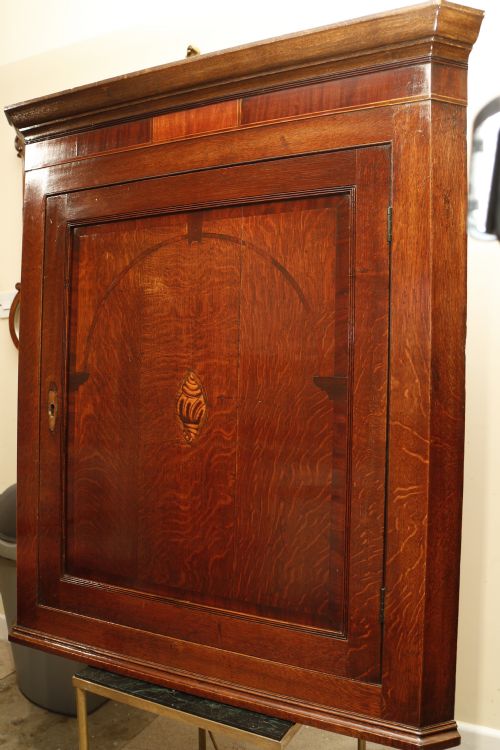

Brown Oak Hanging Cabinet
A brown oak hanging cabinet brings warmth and practical storage to a room, offering compact wall mounting and rich timber grain.

What these brown oak hanging cabinets are
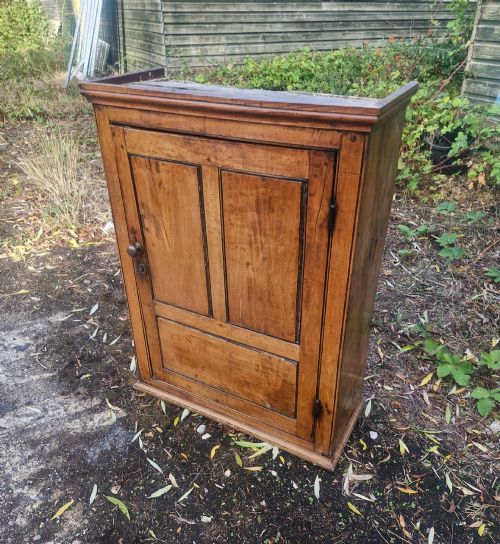
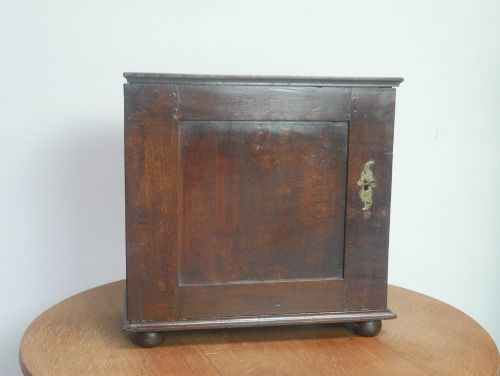
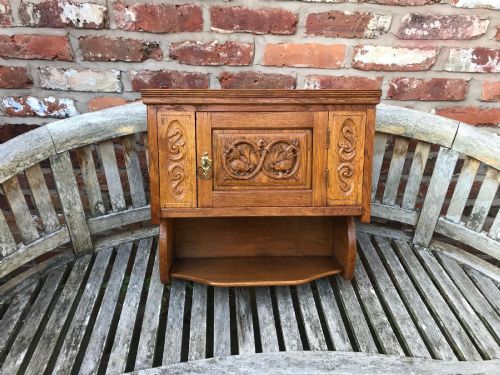
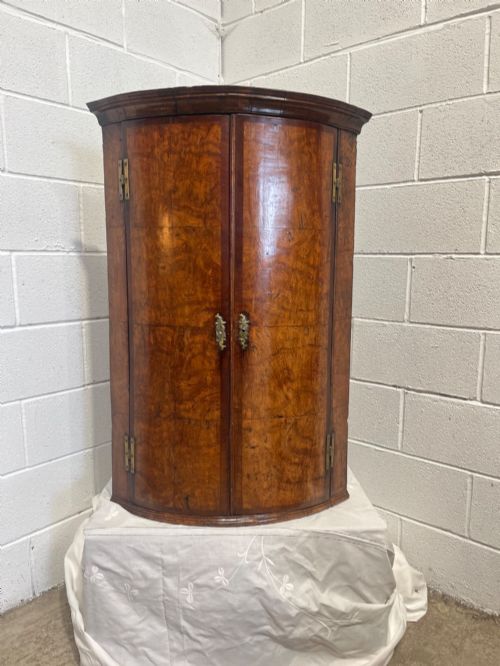
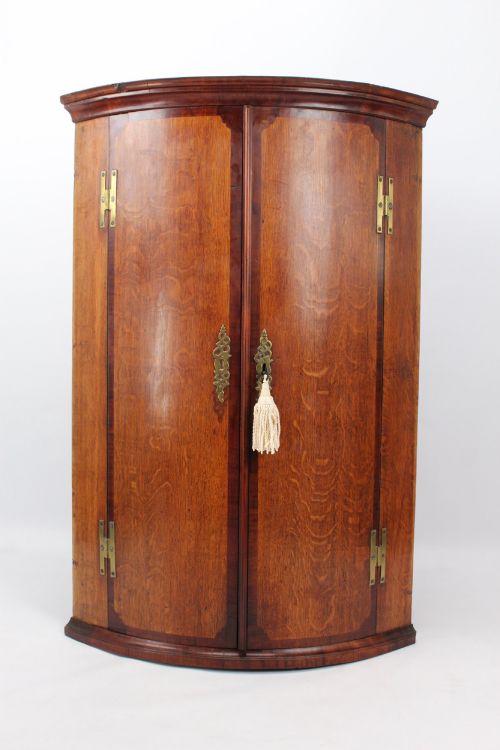
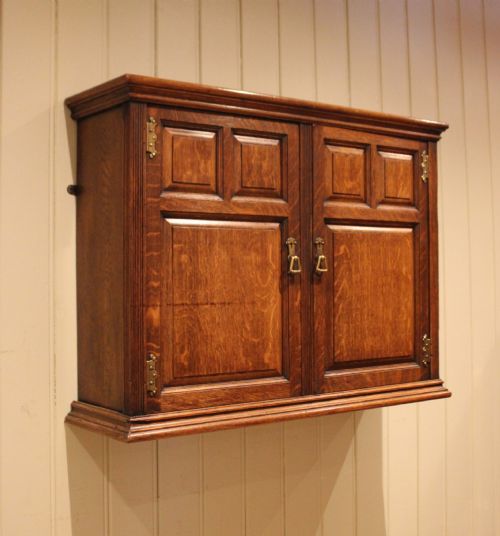
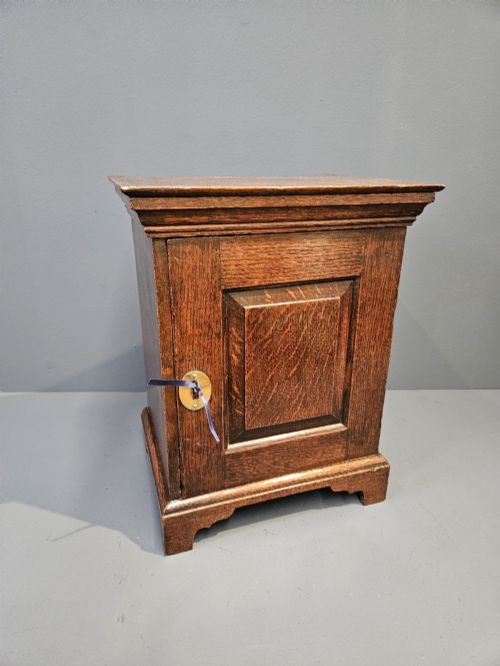
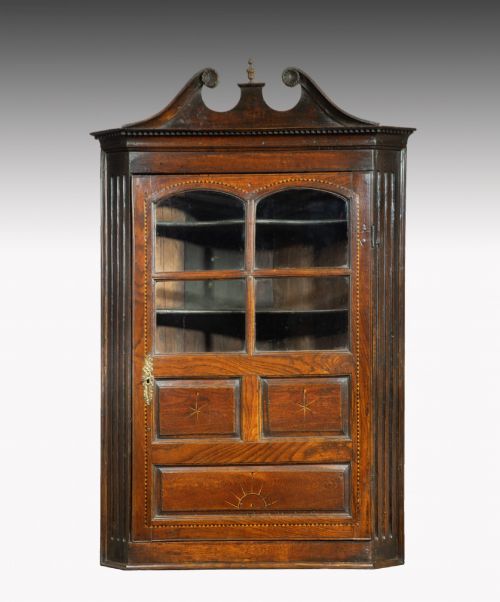
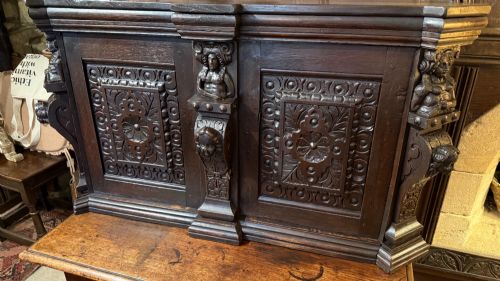
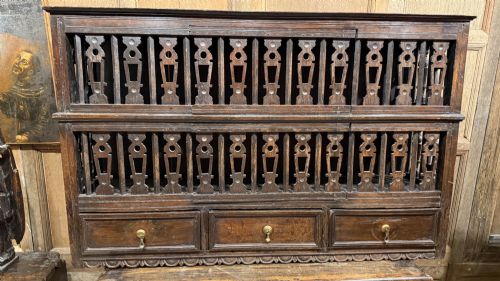
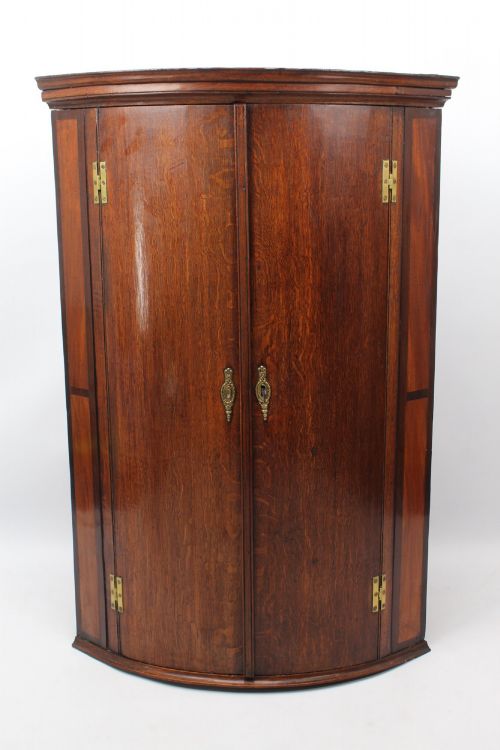
The selections span distinct stylistic traditions including Georgian vernacular, Arts and Crafts, and seventeenth-century Jacobean influences. Regional pieces, such as those from Welsh workshops, appear alongside standard Georgian forms.
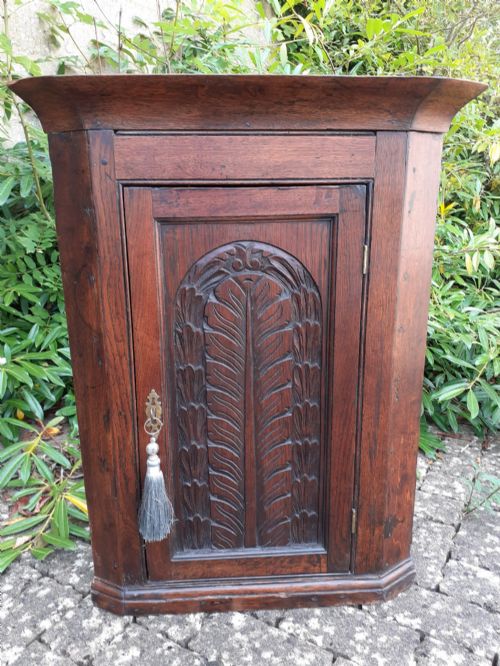
Most examples utilise standard wall-hanging formats with single doors, featuring internal shelving suited to smaller domestic items. The timber displays the deep, warm brown tones characteristic of aged oak exposed to centuries of light and use.
How they were made
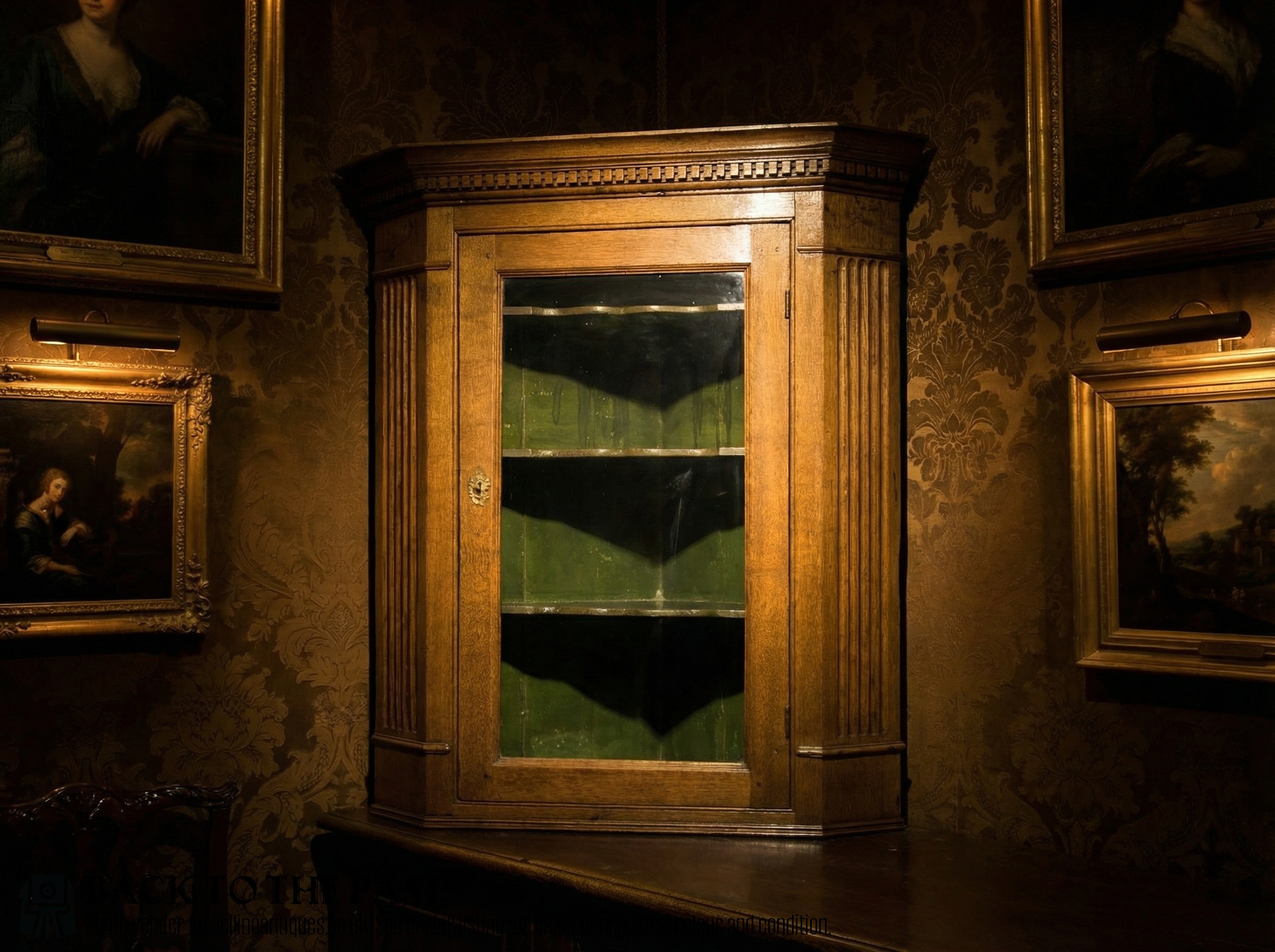
Joiners constructed these cabinets using solid oak panels held together with traditional framing and panel techniques, often incorporating wrought iron or brass hinges and latches. Timber preparation relied on quarter-sawing or plain sawing methods that produced varied grain patterns across the doors and sides.
Surface decoration on seventeenth- and eighteenth-century examples frequently includes hand-carving applied directly to the oak framework. Iron and brass hardware was hand-forged or cast, securing doors and hanging points to withstand daily domestic service.
Retail Price Guide 2026
Typical UK retail prices for brown oak hanging cabinet, calculated from the Sellingantiques database of over a million retail prices indexed since 2003. This retail price guide relies exclusively on Sellingantiques data; no external sources or auction records are used, so the figures do not describe the wider market.
Current listings feature oak wall cabinets spanning the seventeenth to the nineteenth centuries, incorporating brass and iron hardware.
What varies in quality
The distinction between standard domestic items and superior examples lies in the crispness of the hand-carving and the selection of the oak timber itself. Pieces featuring intricate period carving or distinct regional characteristics command greater attention from collectors.
Construction methods also reveal differences, as cabinets utilising pegged mortise and tenon joints demonstrate superior cabinet-making traditions compared to later or simpler iterations. Original brass or wrought iron hardware intact on the doors preserves the integrity of the piece.
The Brown Oak Hanging Cabinet Glossary
- Corner cupboard
- A storage unit specifically built with an angled back to fit neatly into the corner of a room.
- Spice cupboard
- A small wall-mounted cabinet traditionally fitted with multiple internal drawers or compartments for storing culinary ingredients.
- Quarter-sawn
- A method of timber cutting that produces boards with prominent medullary ray figuring across the grain.
- Wrought iron
- Iron that has been heated and hammered into shape by hand, commonly used for period hinges and latches.
Frequently Asked Questions
How were hanging cabinets used historically?
These cabinets provided secure storage for valuable foodstuffs, spices, or household items while keeping them elevated away from damp floors.
In domestic spaces, corner versions utilised awkward angles to maximise storage capacity without cluttering floor space.
How do I hang a heavy oak cabinet safely?
Secure mounting requires fixing the cabinet directly into wall studs or masonry using appropriate weight-bearing brackets.
Given the dense weight of aged oak, professional installation ensures the wall structure supports the load safely.
How do I date an oak wall cabinet?
Dating relies on examining construction marks, timber preparation methods, and the style of hand-carving or hardware present.
Earlier pieces from the seventeenth century often show primitive joinery and deep patination compared to later Georgian iterations.
How do I care for antique oak furniture?
Maintain the timber by applying natural beeswax periodically and avoiding placement near direct heat sources or strong sunlight.
Keeping humidity stable prevents the oak panels from splitting or warping over time.