



Carved Oak Spice Cupboard
These small carved oak spice cupboard examples are compact domestic receptacles designed to secure valuable provisions, bringing genuine period character to modern interiors.
Carved Oak Spice Cupboard
When you search for a carved oak spice cupboard, you encounter small storage pieces created to hold precious commodities within domestic spaces. The listings on this page span several centuries, reaching back to the seventeenth century and moving through the Georgian and Victorian eras.
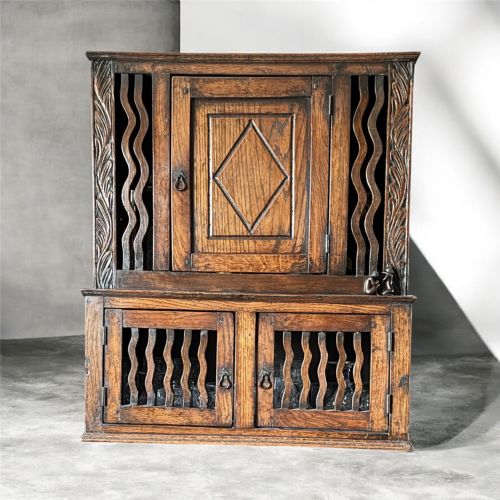
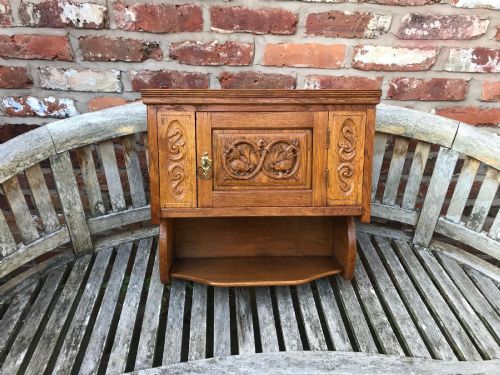
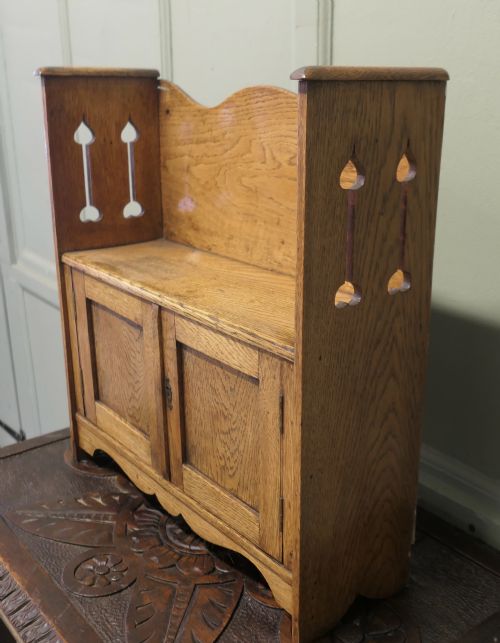
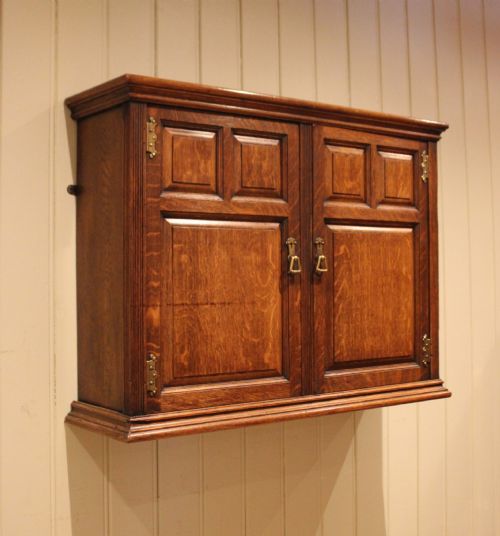
You are most likely to meet wall hanging versions or small tabletop cabinets across these periods. Formats vary from simple hanging food cupboards to miniature court cupboards and corner units, reflecting diverse regional British and continental workshops.
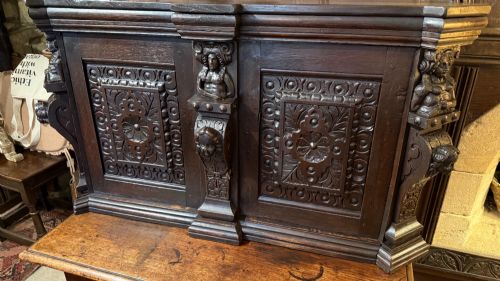
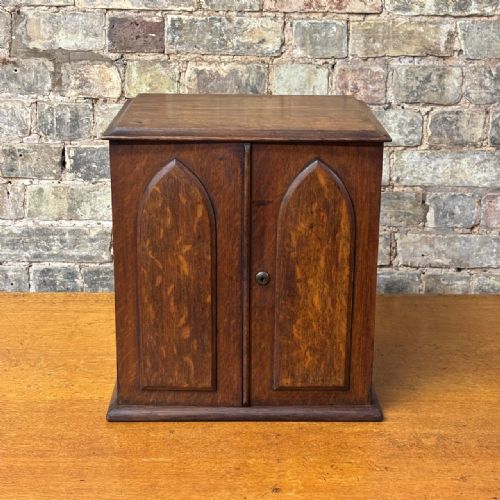
The decorative vocabulary draws upon Jacobean, Gothic Revival, and Arts and Crafts traditions. Many examples feature panel doors and carved surfaces that distinguish them from plain utilitarian boxes.
How they were made
Makers utilised solid oak as the primary structural material, often enhanced by fruitwood inlay or general wood inlay to create surface contrast. These timbers were selected for durability and stability.
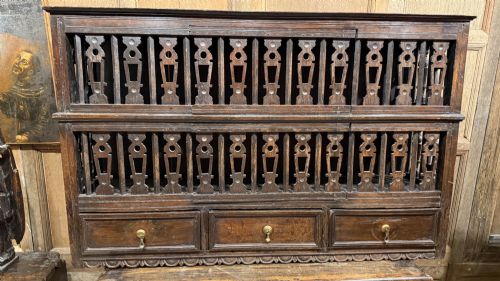
Hardware played an essential functional and decorative role, with brass and iron fixtures securing doors and hanging points. Steel components also appear in specific operational fittings.
Construction techniques relied on traditional joinery methods appropriate for small-scale hanging and table cabinets. Carved ornamentation was applied directly to panels or integrated into the structural framing.
Listings feature oak as the principal material, supplemented by brass, iron, and fruitwood inlay across various centuries.
What varies in quality
The refinement of the carving dictates much of the distinction between standard provincial items and finer workshop productions. Crisp relief work and balanced composition elevate a piece above simpler domestic carpentry.
The integrity of the timber and the preservation of original brass or iron hardware influence the standing of an individual cabinet. Retaining period surfaces without excessive later intervention preserves the integrity of the object.
The Carved Oak Spice Cupboard Glossary
- Court cupboard
- A traditional enclosed piece of furniture used for storing and displaying plate and food. Miniature versions condense this architectural form into compact tabletop proportions.
- Hanging cupboard
- A cabinet equipped with structural provision for mounting directly onto a wall. This format saved valuable floor space in historical domestic interiors.
- Panel door
- A door construction method utilising a floating central panel housed within a grooved frame. This technique accommodates the natural expansion and contraction of solid timber.
- Fruitwood inlay
- The practice of inserting contrasting lighter wood fragments into carved recesses on an oak surface. This decorative technique creates tonal variety and visual depth.
- Gothic Revival
- An architectural and decorative style drawing inspiration from medieval ecclesiastical design. Pieces exhibiting this influence often incorporate pointed arches and tracery motifs.
Carved Oak Spice Cupboard: Frequently Asked Questions
Where were these cupboards placed?
These compact receptacles were typically positioned in domestic kitchens, parlours, or private chambers where valuable provisions or documents required secure storage. Wall hanging examples were secured at convenient heights to keep contents away from damp floors and pests.
Tabletop variants sat upon larger desks, side tables, or hutches within the home. Their modest proportions allowed them to integrate easily into active working and living spaces.
How do I date a cabinet?
Dating relies upon observing construction methods, timber characteristics, and decorative styles visible across the piece. Seventeenth-century examples often display heavier framing and geometric carvings, whereas Georgian and Victorian pieces show evolving stylistic influences.
Hardware styles and tool marks left by makers also provide reliable indicators of period manufacture. Comparing specific panel configurations helps establish the chronological context of an individual item.
Can I hang these on modern walls?
Hanging these historical cabinets requires careful assessment of the original structural fixing points and the weight of the solid oak timber. Professional advice ensures the wall construction can safely support the load without straining antique joints.
Modern concealed brackets should be used cautiously so as not to alter or damage the original woodwork. The primary objective is to maintain the structural stability of the piece while ensuring safety.
What was stored inside them?
Historical contents included costly culinary spices, medicinal ingredients, and precious commodities that required protection from household theft or spoilage. The secure doors and small internal compartments kept valuable items organised and accounted for.
Over time, these versatile cabinets also served as repositories for letters, small valuables, and personal keepsakes. Their secure nature made them ideal for safeguarding any small items of worth.