


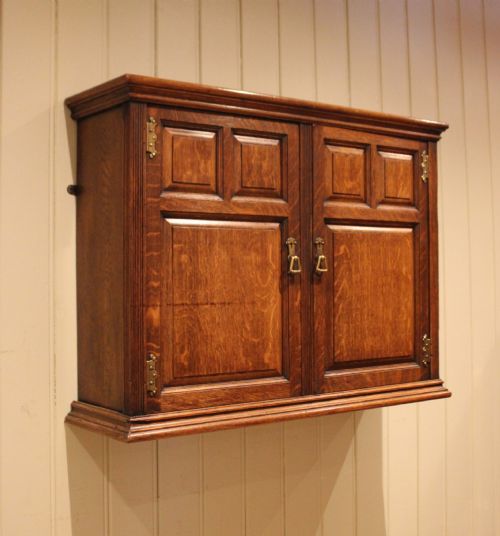
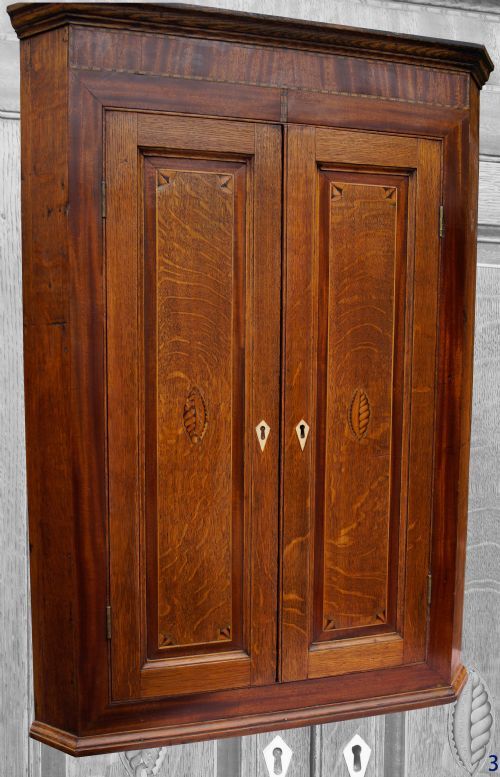
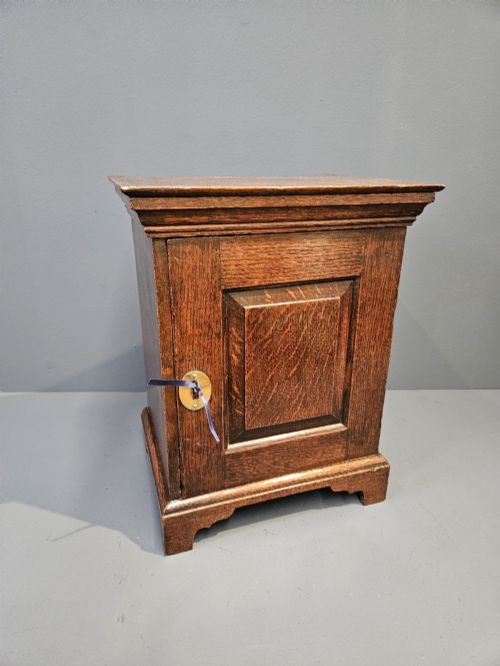
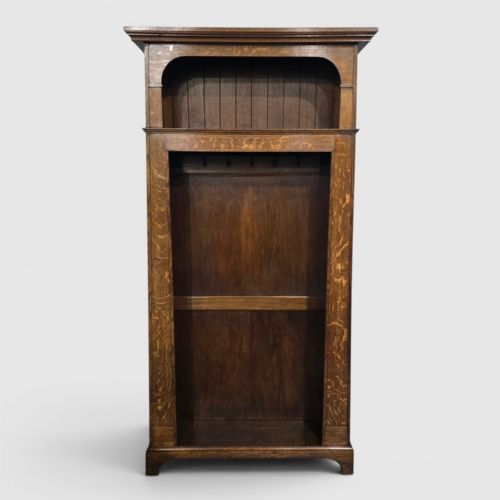
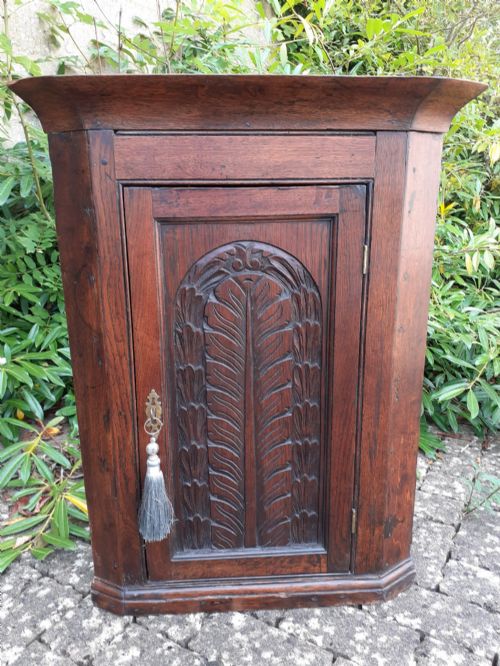

Dark Oak Hanging Cupboard
A dark oak hanging cupboard keeps domestic essentials close at hand while anchoring a wall with rich grain and centuries of character.
Dark Oak Hanging Cupboard
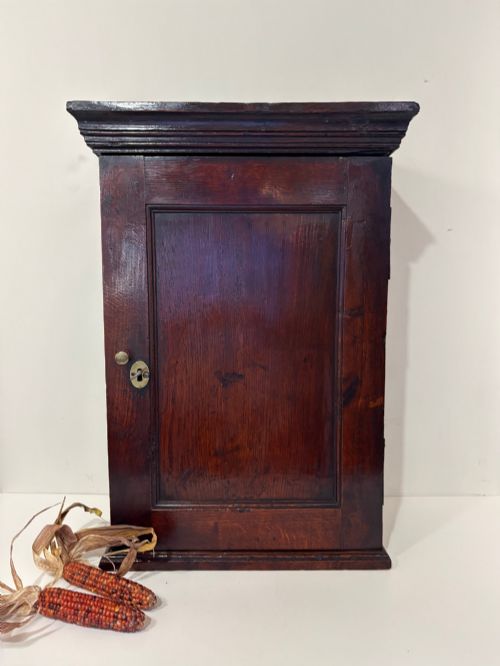
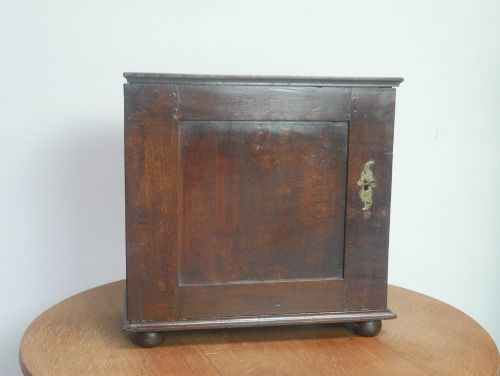
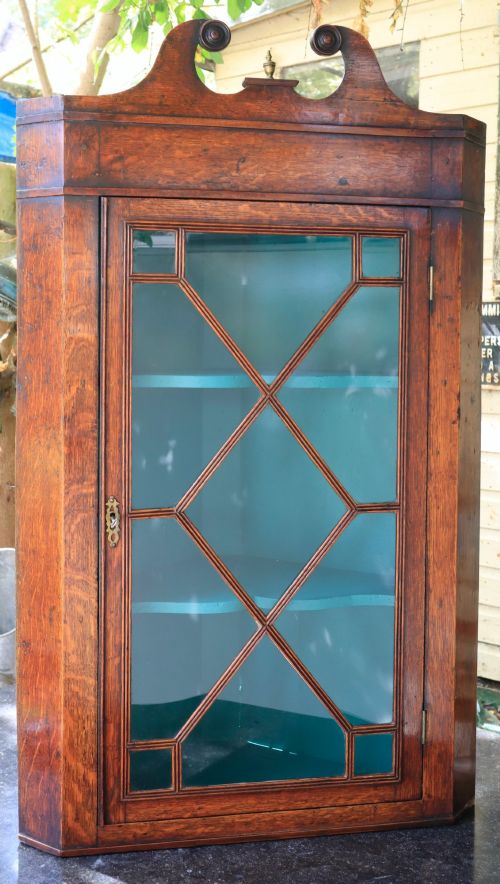
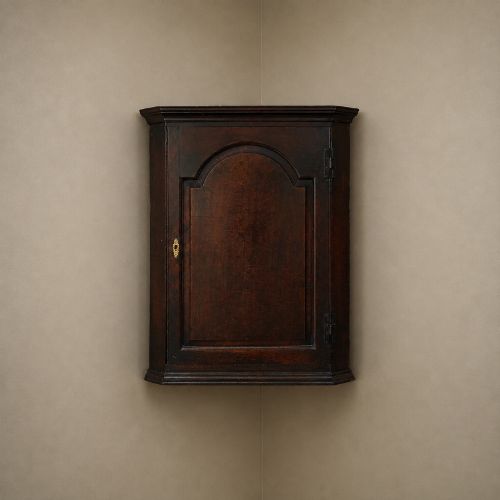
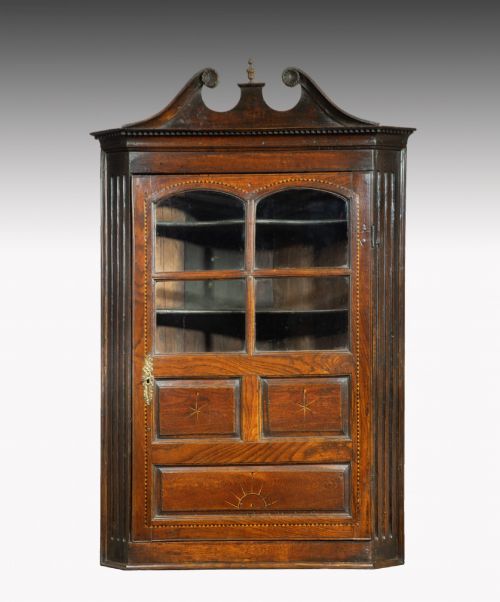
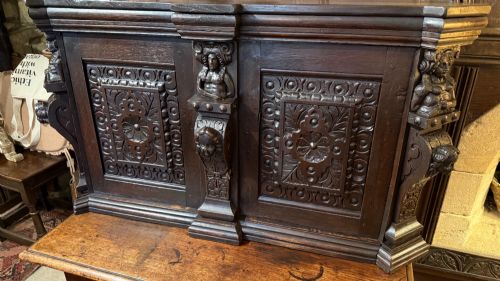
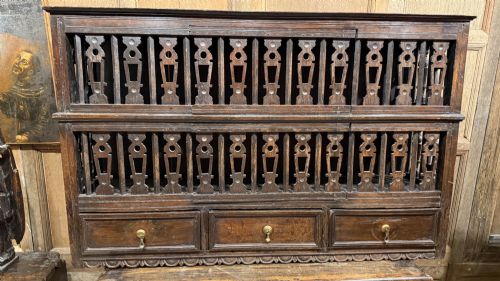
A dark oak hanging cupboard brings functional wall storage into domestic spaces, appearing across periods from the seventeenth century through the Victorian era. These pieces manifest primarily as corner cupboards, spice cupboards, and flat wall cabinets designed to be mounted off the floor.
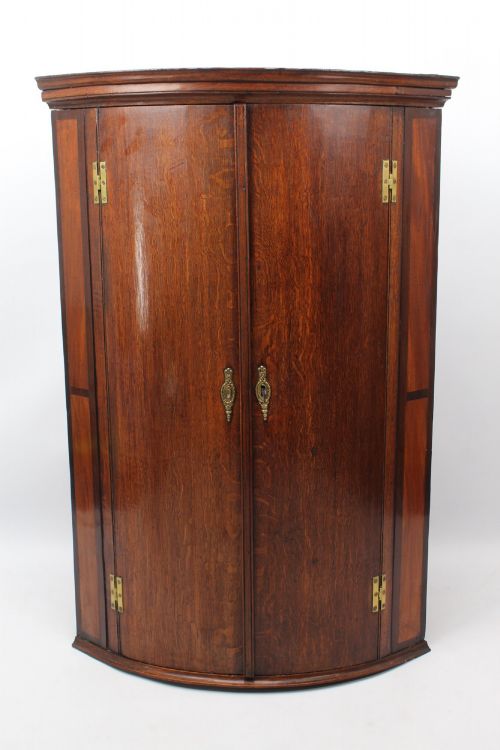
Makers shaped these utilitarian items to fit domestic interiors, utilising corner designs to save space or flat fronts for display and storage. The forms range from simple rustic provincial boxes to refined Georgian bow front examples.
The material palette centres firmly on oak, often enriched with brass hardware, glass panels, and occasional wood inlay. Pieces span centuries of craftsmanship, connecting seventeenth-century mural livery cupboards with later Edwardian and Victorian iterations.
Judging the range
Quality reveals itself in the selection of the timber and the crispness of any carved detailing or inlay work. Finer pieces demonstrate careful proportion, particularly in bow front and corner formats where alignment dictates the visual balance.
The integrity of the original hanging fixings, hinges, and brass hardware marks the difference between standard utilitarian storage and superior cabinet making. Horn or brass escutcheons and well-fitted panel doors elevate the standing of an individual piece.
Dark Oak Hanging Cupboard Retail Price Guide 2026
Typical asking prices for dark oak hanging cupboard among the pieces listed under this phrase on Sellingantiques today, from the lower quarter to the upper quarter. They describe what is for sale here now, not the wider market.
Materials across the selection include solid oak, mahogany, wrought iron, brass, glass, and decorative wood inlay.
John Moyr Smith
The Dark Oak Hanging Cupboard Glossary
- Bow front
- A cabinet front that curves outward in a convex shape. This style gained popularity during the Georgian period to soften corner angles.
- Mural livery cupboard
- A wall-mounted storage unit historically used for rations or provisions. They date to the seventeenth century and earlier.
- Spice cupboard
- A small wall-hanging cabinet fitted with internal drawers for storing valuable dry goods. They often feature detailed panel work.
- Veneer
- A thin layer of finer wood applied to a primary timber base. This technique created decorative surfaces on later cabinets.
Dark Oak Hanging Cupboard: Frequently Asked Questions
Where were these cupboards placed?
These cupboards were traditionally mounted on walls in kitchens, reception rooms, and hallways to maximise floor space.
Corner designs made use of unused angles in smaller rooms, while flat wall cabinets served above desks or counters.
How do I date a piece?
Dating relies on architectural styles, hardware types, and construction methods characteristic of periods like the Georgian era or the seventeenth century.
Details such as carved motifs, bow fronts, and hinge styles help place a cabinet within its historical context.
Can these cabinets hold heavy items?
Wall-mounted oak cabinets are structurally robust, built from solid timber designed to carry weight securely.
Internal shaped shelves accommodate dishware, spices, or books, provided the wall fixings match the substantial weight of the oak.
What is the difference between corner and flat cabinets?
Corner cabinets feature an angled back designed to fit snugly into room junctions, saving floor and wall space.
Flat wall cabinets provide a parallel surface mount, often offering broader display doors or integrated drawers beneath.