

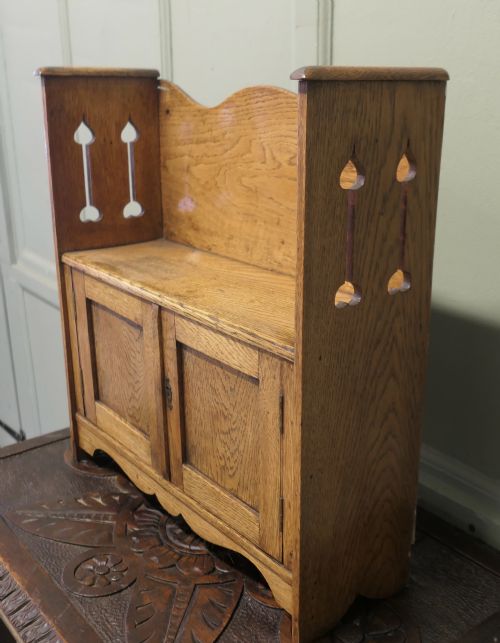
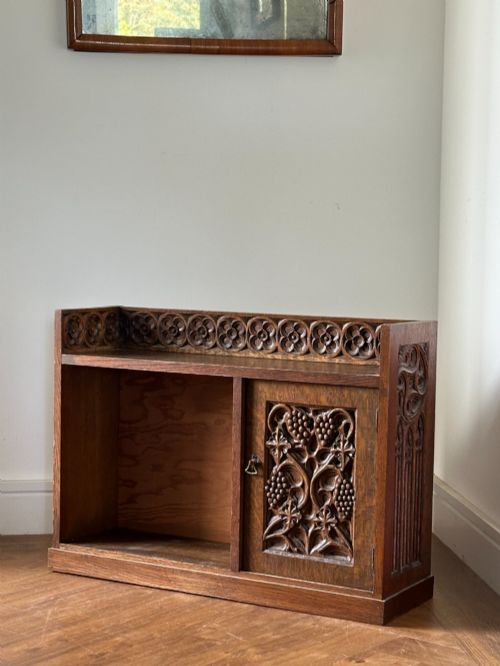
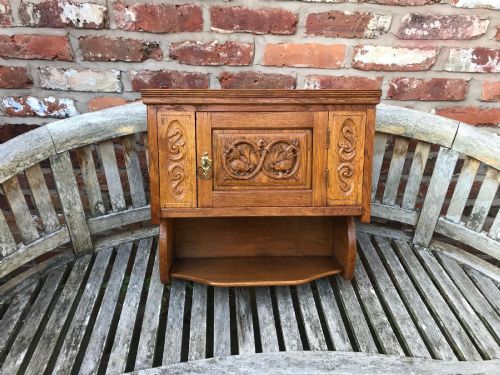
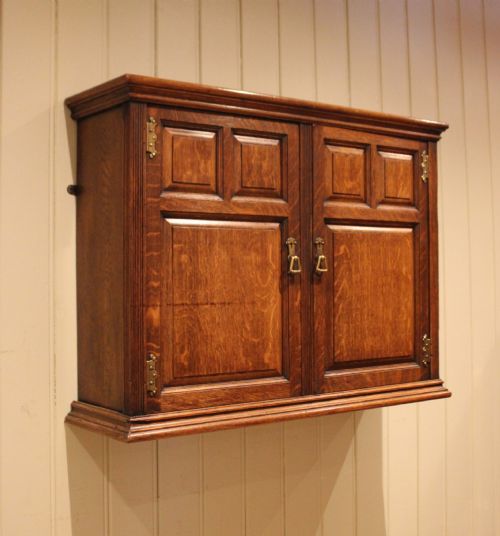

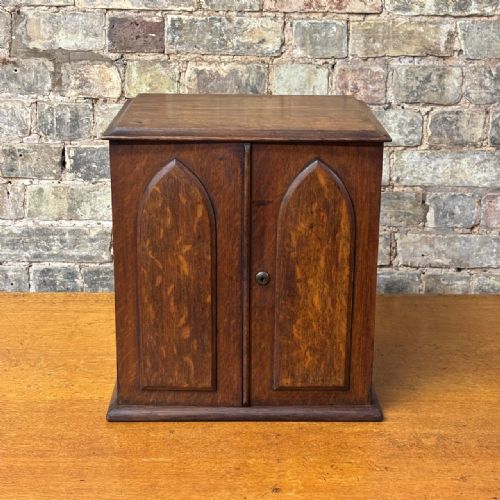


Carved Oak Wall Cabinet
A carved oak wall cabinet is a sturdy timber storage piece designed to hang securely, offering both display space and character.

What a carved oak wall cabinet is
A carved oak wall cabinet brings robust historic utility to interior spaces, combining timber storage with decorative relief work. When searching for a carved oak wall cabinet, buyers encounter diverse regional and stylistic expressions spanning several centuries.
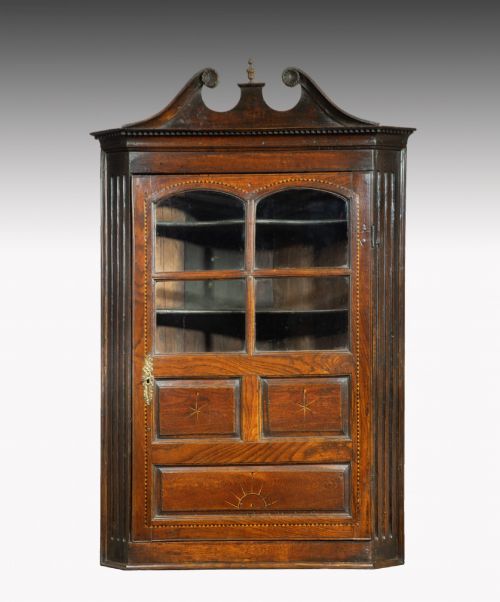
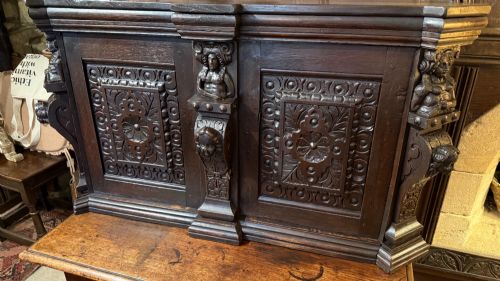
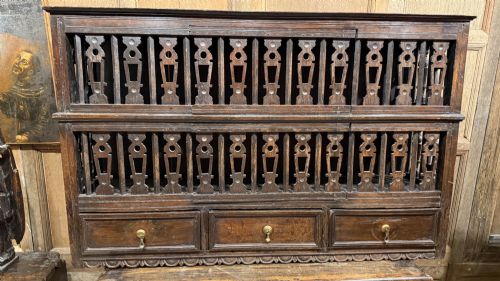
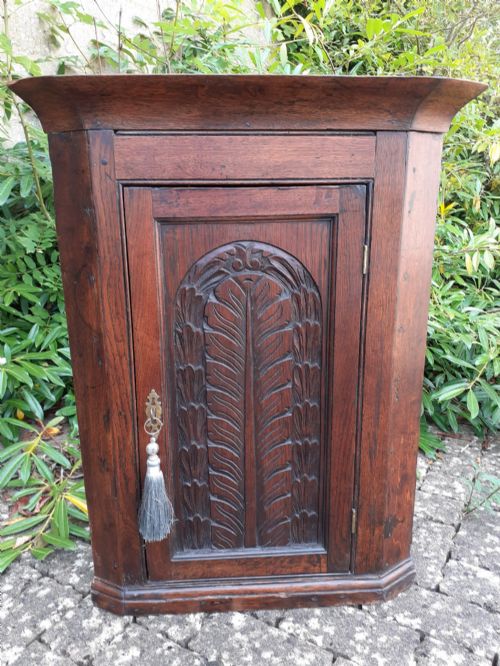
The pieces on this page range from early seventeenth-century mural livery cupboards to eighteenth-century country corner cupboards and nineteenth-century revival styles. Wall cabinets and corner cupboards represent the primary forms, designed to utilise vertical wall space effectively.
Victorian revival pieces, Arts and Crafts interpretations, and Georgian examples appear frequently, demonstrating how cabinetmakers adapted traditional forms across different eras. Solid oak construction unites these items, though their specific decorative vocabulary changes considerably by period.
How they were made
Joiners built these cabinets using solid oak planks, often shaped with hand tools and assembled with traditional joinery methods. Metal hardware such as brass, steel, and iron appears on hinges, latches, and escutcheons.
Carving was executed directly into the timber surface, displaying motifs ranging from geometric strapwork to foliate patterns. Glazed panels feature in specific Arts and Crafts variants, adding transparency to the heavy oak frames.
Retail Price Guide 2026
Typical UK retail prices for carved oak wall cabinet, calculated from the Sellingantiques database of over a million retail prices indexed since 2003. This retail price guide relies exclusively on Sellingantiques data; no external sources or auction records are used, so the figures do not describe the wider market.
Styles represented include Jacobean, Georgian, Arts and Crafts, and French Provincial interpretations.
What varies in quality
Depth and precision of the timber carving distinguish standard production from superior work. Crisp relief work that retains sharp edges demonstrates greater cabinetmaker skill.
Integrity of the structural joints and the original condition of the oak timber determine the longevity of each piece. Finer examples retain their original brass or iron hardware and balanced proportions.
The Carved Oak Wall Cabinet Glossary
- Livery cupboard
- A small storage cabinet traditionally used for food or candles before general domestic use evolved. These early pieces often feature ventilation slats or pierced panels.
- Corner cupboard
- A specialised cabinet built at a right angle to fit neatly into room corners. This form maximises awkward spaces while providing secure enclosed shelving.
- Strapwork
- Flat, interlaced bands carved in low relief to resemble leather or parchment straps. This decorative motif appears frequently on seventeenth-century and revival woodwork.
- Escutcheon
- A protective plate surrounding a keyhole, usually fashioned from brass or iron. These functional elements often contribute to the decorative scheme of the door.
- Foliate
- Carved ornamentation based on leaf and plant motifs. It is a common feature across Jacobean, Victorian, and Arts and Crafts carved woodwork.
Frequently Asked Questions
How do I hang a heavy oak wall cabinet?
These solid timber cabinets require secure attachment directly into wall studs or masonry using appropriate fixings. Professional installation is recommended given the substantial weight of old oak.
Ensure the backboards and hanging brackets are fully sound before mounting any piece at height.
Were these always meant for corners?
Cabinetmakers produced both flat-backed wall cabinets and specialised corner cupboards depending on the intended room layout. Flat cabinets served general storage, while corner units utilised dead space efficiently.
Both formats appear across seventeenth, eighteenth, and nineteenth-century examples.
How do I care for antique oak?
Maintain the timber by applying natural beeswax occasionally to nourish the grain and protect the surface. Avoid placing cabinets near direct heat sources or strong sunlight.
Gentle dusting with a dry cloth keeps the carved details clear without moisture damage.
How do I tell seventeenth-century oak from Victorian revival?
Seventeenth-century work displays hand- cleft timber marks, peg joinery, and simpler tool signatures specific to early joinery. Victorian revival pieces often show machine-sawn elements and heavier, standardised carving.
Comparing the construction technique on the interior panels usually reveals the true period.