


Oak Hanging Cabinet
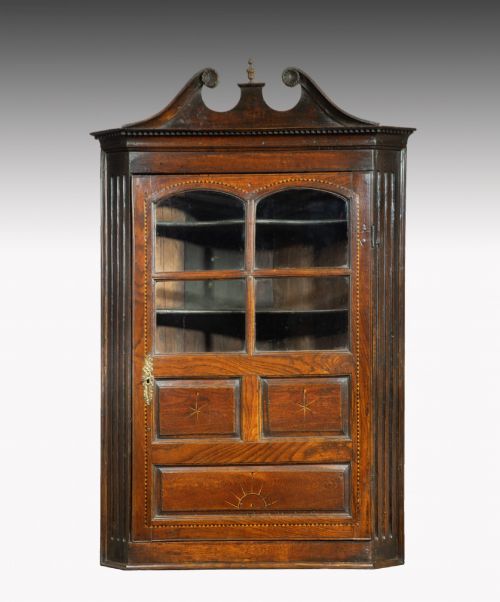
An oak hanging cabinet provides compact wall storage, bringing warm timber grain and period character directly into your interior.
Forms and Origins
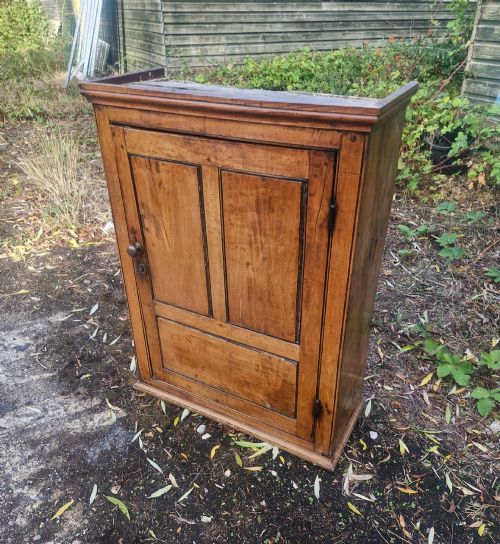
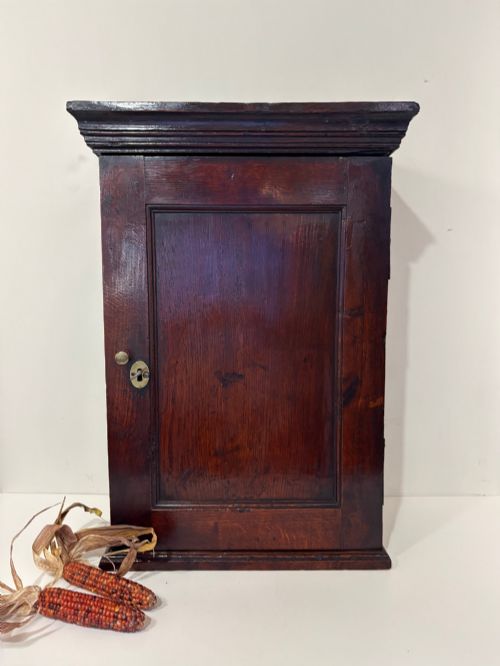
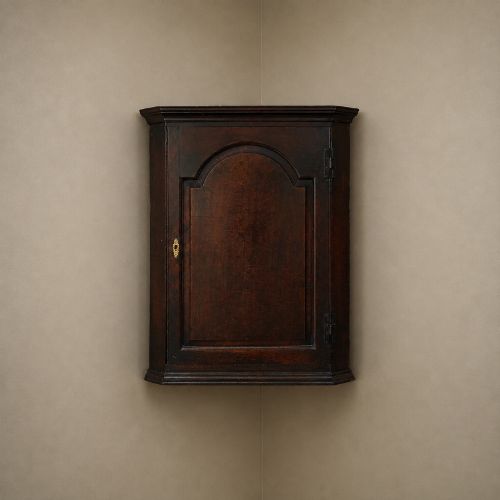
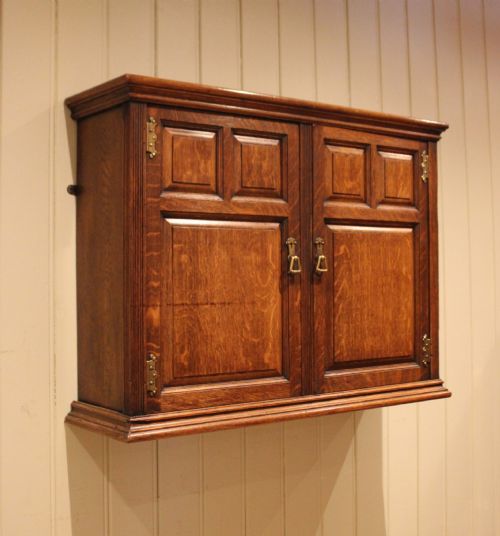
An oak hanging cabinet is a wall-mounted storage piece designed to save floor space while keeping everyday items secure and close to hand. When you search for an oak hanging cabinet, you will find both flat wall-mounted cupboards and angled corner variations built to fit snugly into room junctions.
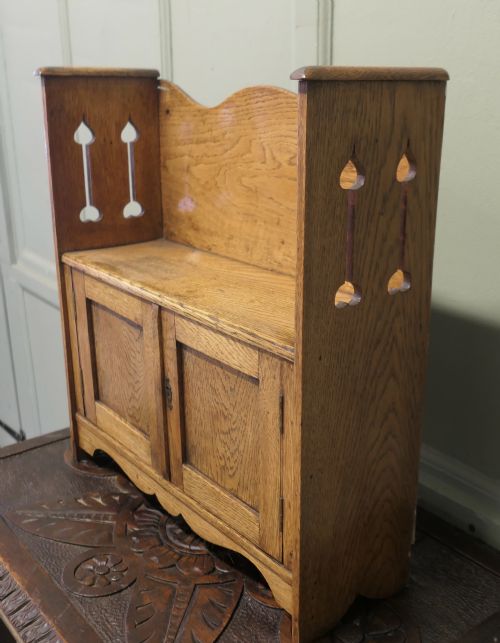
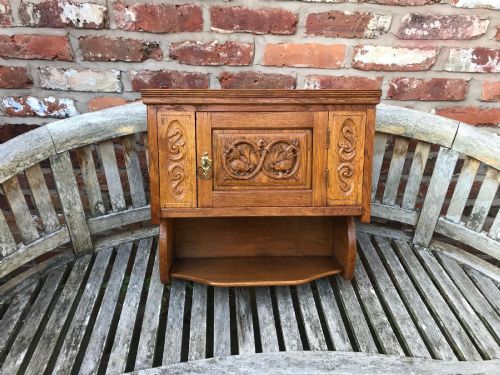
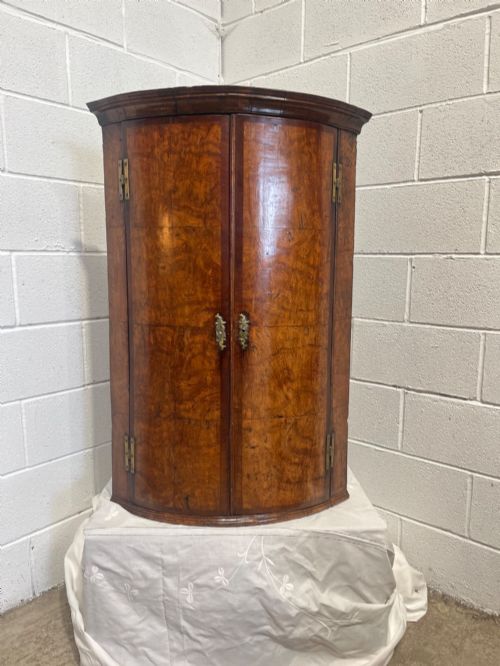
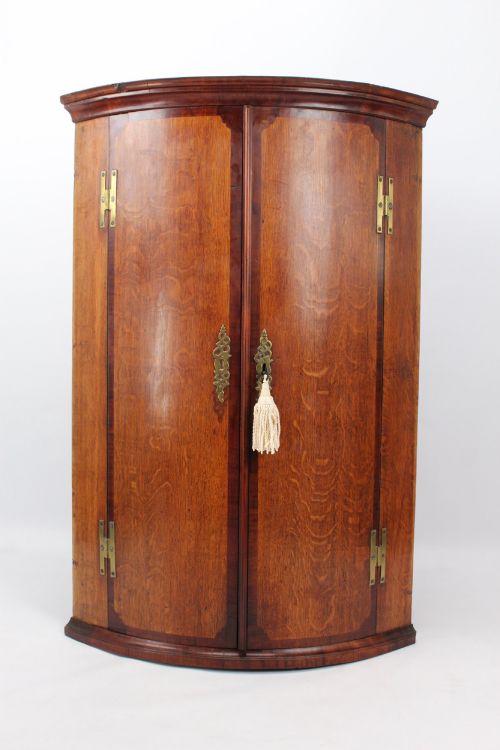
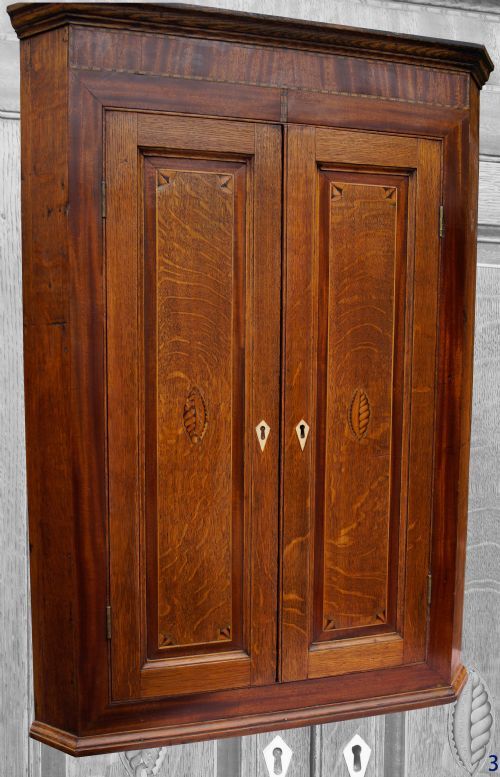
The pieces available on this page lean heavily towards the Georgian period and the later Arts and Crafts style, spanning from the eighteenth century through to the late nineteenth century. You will encounter straightforward rectangular wall cupboards alongside bow front corner cupboards and panelled door formats.
Corner cabinets and standard wall cupboards dominate the selection, reflecting domestic storage needs across multiple centuries. These wall-mounted pieces range from simple utilitarian cupboards to refined glazed display units intended for china or glassware.
Materials and Construction
Solid oak serves as the primary timber for these wall-mounted cupboards, frequently complemented by secondary contrasting details in mahogany and structural brass hinges or escutcheons. Cabinet makers utilised traditional joinery methods, assembling door frames with pegged mortise and tenon joints.
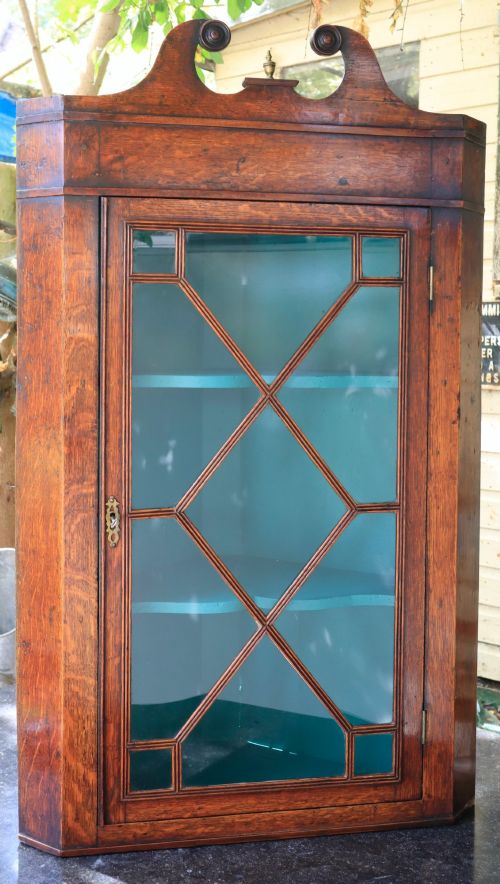
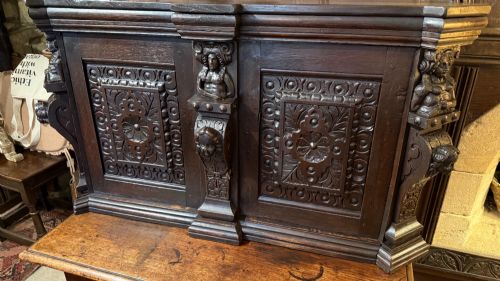
Surfaces often feature shaped raised panels, carved decoration, or inlaid details, particularly on Georgian and Arts and Crafts examples. Glazed doors appear in several variations, utilising timber glazing bars to secure individual panes of glass within the cabinet frame.
Retail Price Guide 2026
Typical UK retail prices for oak hanging cabinet, calculated from the Sellingantiques database of over a million retail prices indexed since 2003. This retail price guide relies exclusively on Sellingantiques data; no external sources or auction records are used, so the figures do not describe the wider market.
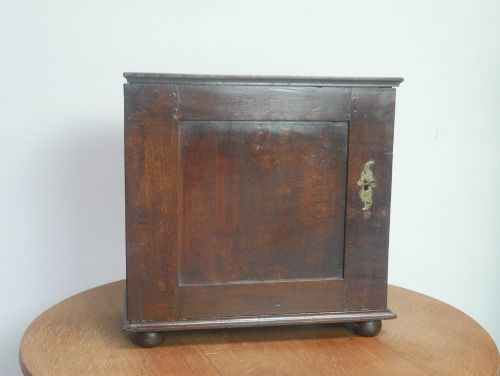
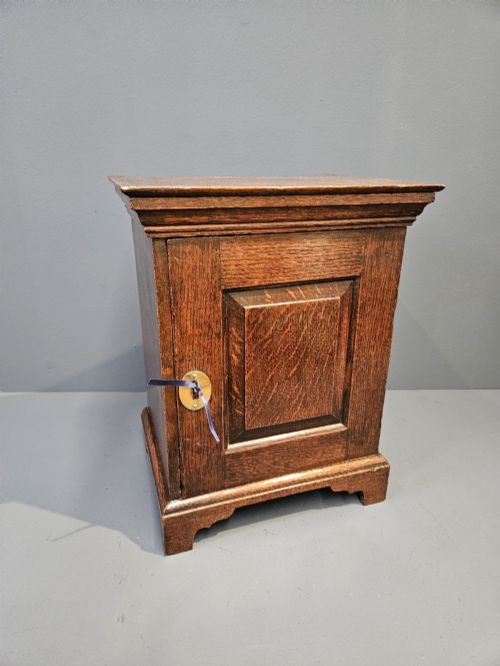
Historic pipe cabinets prove that even smoking accessories once demanded fine architectural housing on the parlour wall.
Standards of Execution
The distinction between standard storage cupboards and superior examples lies in the crispness of the timber moulding and the selection of figured oak grain. Higher quality pieces display careful proportion in their cornices and doors, ensuring the visual weight of the timber suits a wall-mounted format.
Original brass hardware, sound door alignment, and intact timber pegged joints elevate a piece above later assembled or heavily altered alternatives. Refined execution shows in the seamless integration of inlaid crossbanding and the careful retention of aged surface patination.
The Oak Hanging Cabinet Glossary
- Bow front
- A convex curved cabinet front that projects outward from the corners, frequently seen on Georgian corner cupboards. This curved design softens room angles and provides additional internal depth.
- Astragal glazed
- A door construction where slender timber mouldings divide the glass into smaller individual panes. These delicate strips create a grid pattern common on display cabinets.
- Raised panel
- A central wooden insert within a cabinet door whose edges are bevelled to fit into a grooved frame. This technique allows the timber to expand and contract safely with humidity changes.
- Escutcheon
- A protective plate surrounding a keyhole, often cast in brass. It prevents the surrounding wood from wearing down through repeated use of the key.
Frequently Asked Questions
How do I hang a heavy oak cabinet safely?
Wall-mounted oak cupboards require secure fixings into structural wall studs or solid masonry using appropriate heavy-duty brackets. Given the combined weight of dense oak timber and stored contents, reliable load-bearing installation is essential.
Check the internal backboards and hanging points of the cabinet to ensure the wooden structure itself remains sound enough to support the intended weight before mounting it on the wall.
What rooms suit an oak hanging cabinet best?
These compact cupboards suit kitchens, dining rooms, hallways, and bathrooms where floor space is limited but wall storage remains practical. Corner units utilise awkward junction spaces effectively.
In living areas, glazed variants display glassware or collections, while solid door versions keep tableware or everyday clutter neatly concealed out of sight.
How should I clean and maintain antique oak?
Maintain antique oak surfaces by dusting with a dry, soft cloth and occasionally applying a traditional beeswax to nourish the dry timber. Avoid silicone-based polishes that can build up a sticky residue over time.
Keep wall cabinets away from direct heat sources and severe humidity fluctuations to prevent the solid oak panels and mitre joints from warping or splitting.