
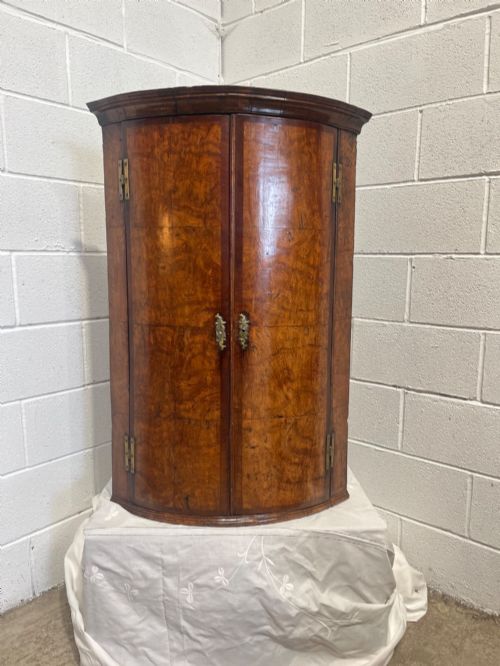
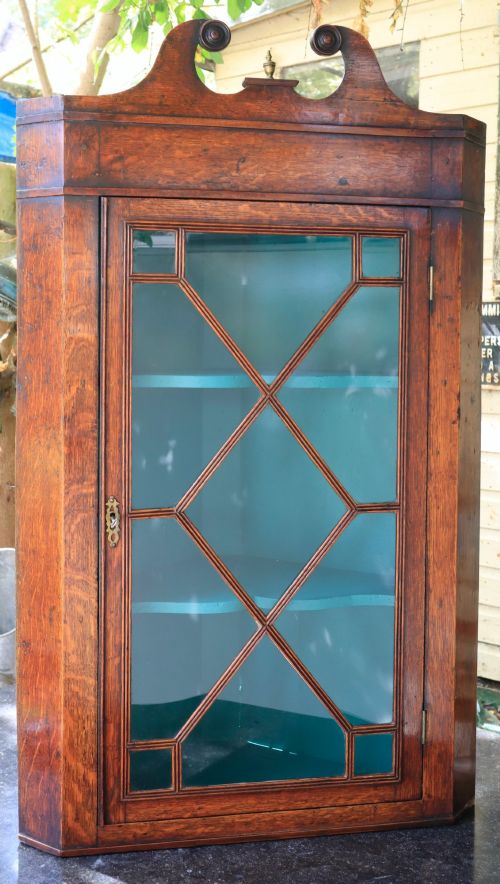
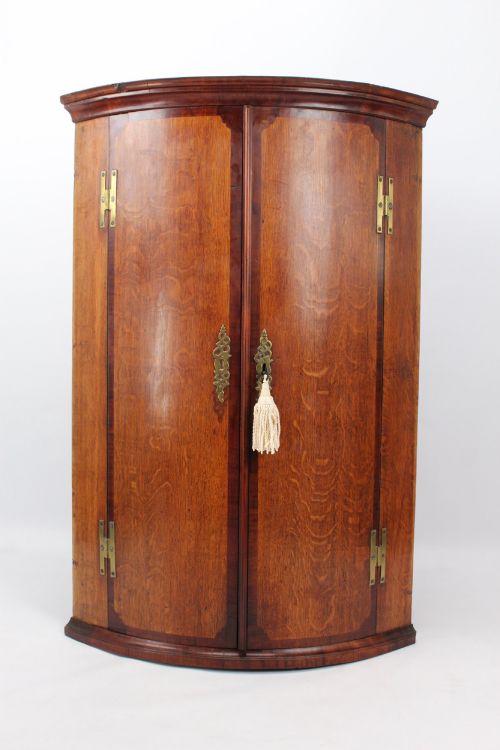
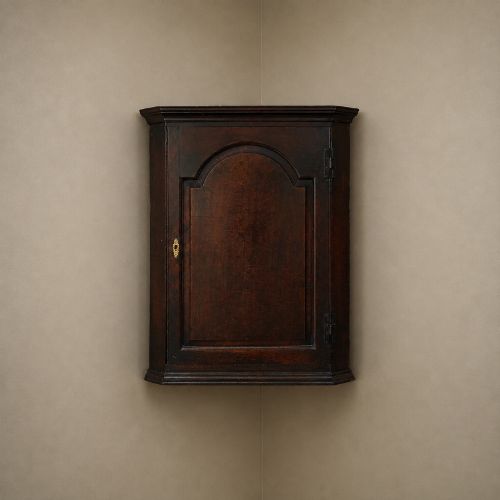



Georgian Oak Corner Cupboard
A georgian oak corner cupboard solves the persistent problem of dead space while bringing solid timber utility and period character to any room.
The Georgian Oak Corner Cupboard
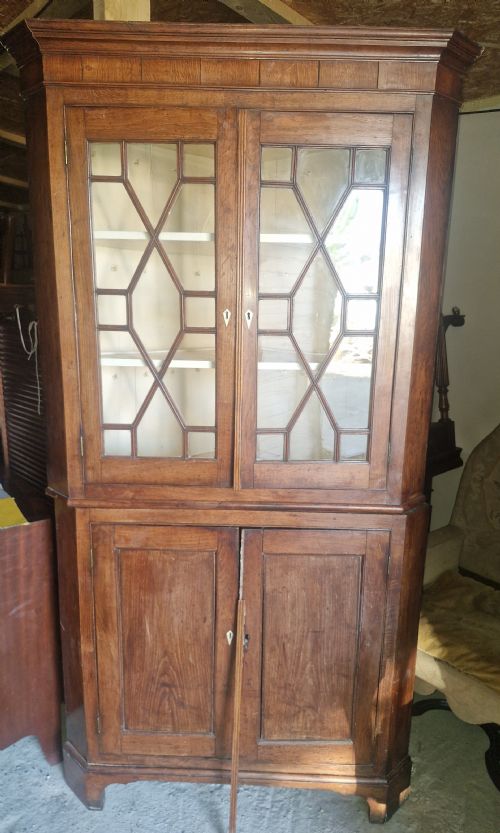
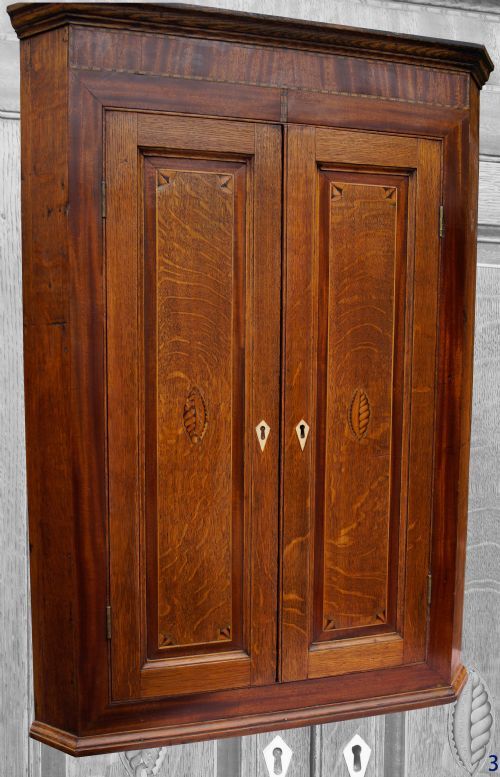
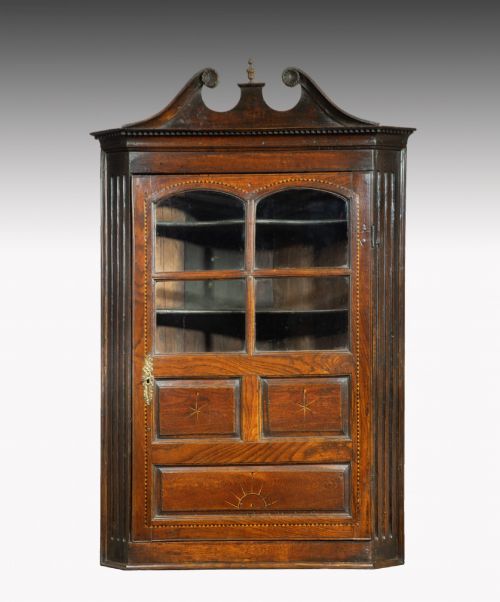
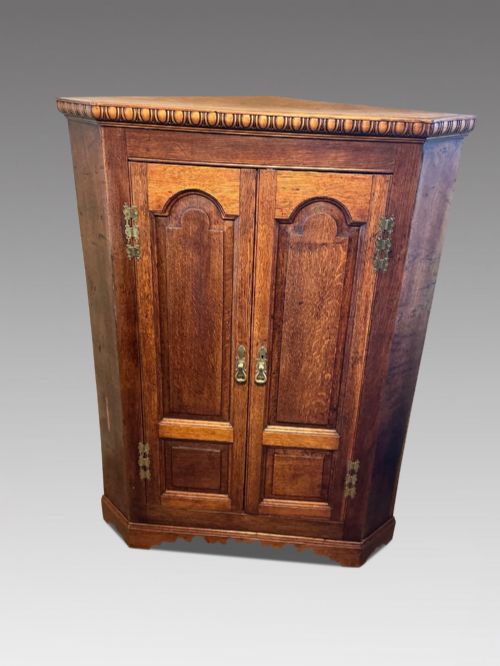
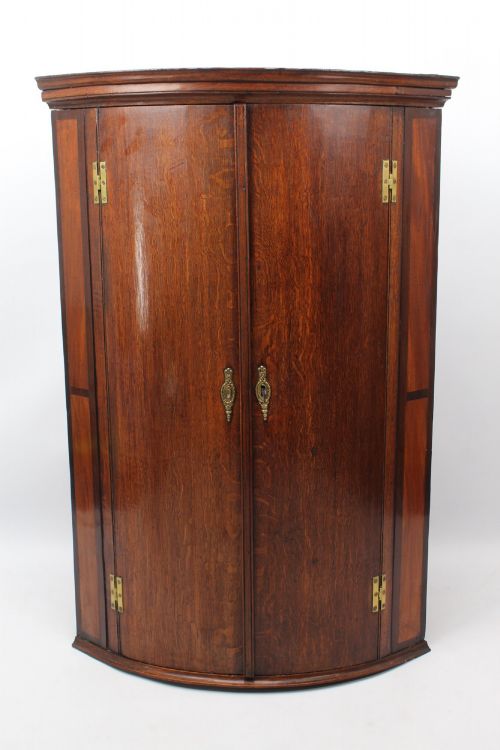
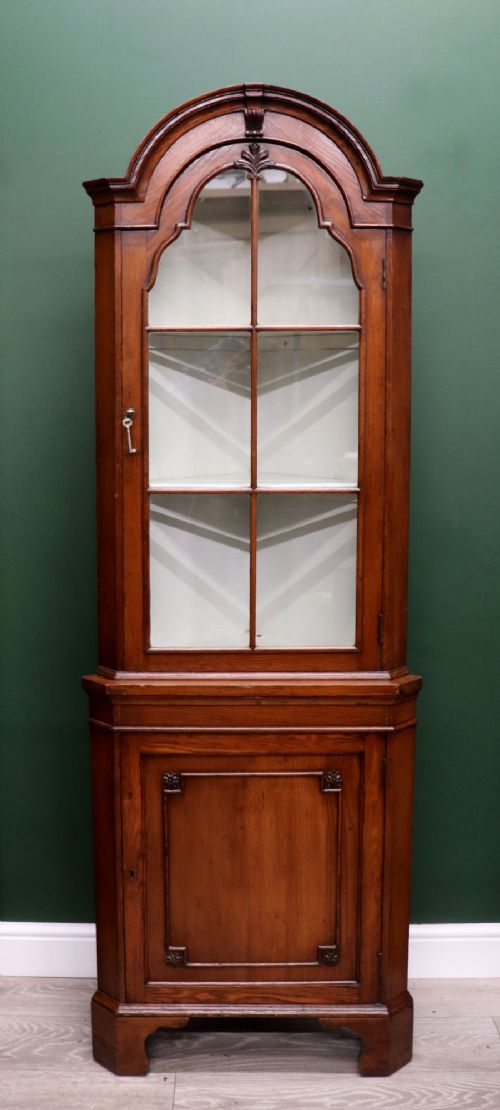
A georgian oak corner cupboard is a fitted or freestanding storage piece designed specifically to fit the intersection of two walls. These cabinets range from small wall-hanging units to tall standing two-part double cupboards, including narrow and slim proportions.
The materials and styles span the eighteenth century and the Regency period, encompassing Welsh and Scottish regional variants alongside English examples. Vernacular and country pieces sit alongside bow front and glazed forms.
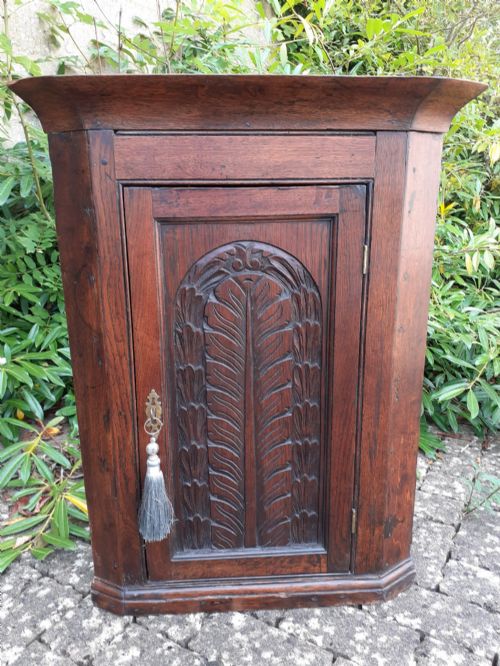
Buyers encounter hanging versions most frequently, often featuring single panelled doors or curved bow fronts designed to soften room angles. Standing cabinets provide more substantial storage with internal shelving across multiple tiers.
Defining Quality
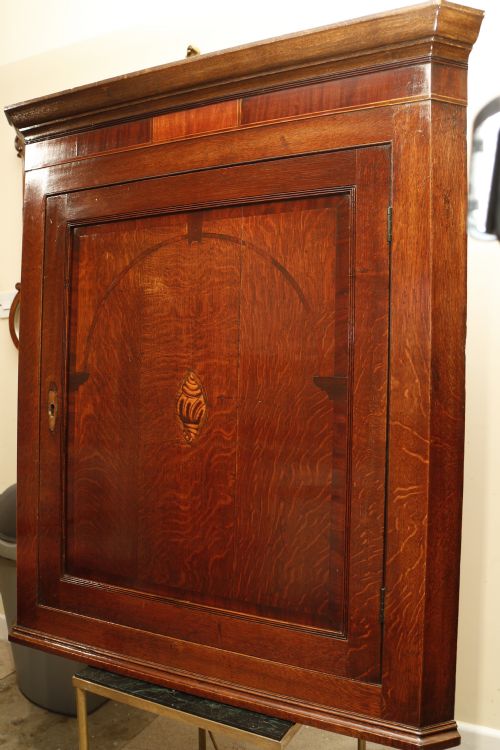
Quality rests in the choice of timber grain, the crispness of panel moulding, and the integrity of regional construction methods. Superior examples show thoughtful integration of secondary woods like mahogany and fine brass escutcheons.
Proportion and scale dictate the visual success of the piece, particularly where curved bow fronts or two-part standing formats demand precise carpentry. The transition from simple country vernacular to refined Georgian proportion marks the upper tiers of the range.
Retail Price Guide 2026
Typical UK retail prices for georgian oak corner cupboard, calculated from the Sellingantiques database of over a million retail prices indexed since 2003. This retail price guide relies exclusively on Sellingantiques data; no external sources or auction records are used, so the figures do not describe the wider market.
Listings feature oak alongside mahogany, brass, glass, and iron, spanning the eighteenth century through to the Regency period.
The Georgian Oak Corner Cupboard Glossary
- Bow front
- A convex curved cabinet face that softens the hard angle of a room corner. This curved profile requires skilled timber shaping.
- Two part
- A standing cabinet constructed in separate upper and lower sections for ease of transport. These tall pieces often feature multiple internal shelves.
- Hanging corner cupboard
- A wall-mounted storage unit secured directly through the backboards or hanging brackets. These save floor space while utilising neglected wall angles.
- Crossbanding
- A decorative border of veneer laid with the grain running perpendicular to the surrounding timber. Mahogany often provides this contrasting border on oak carcases.
- Vernacular
- Furniture made by regional craftsmen using local traditions rather than metropolitan pattern books. These country pieces display robust construction and honest materials.
Frequently Asked Questions
How do I hang a heavy corner cupboard?
Wall-hanging cabinets require secure fixing directly into masonry or substantial timber studs behind the plaster. Because period oak is surprisingly heavy, professional installation using appropriate load-bearing brackets is essential.
Ensure the weight distributes evenly across the backboards before loading the interior shelves with heavy items or glassware.
Where should I place a corner cupboard?
These cabinets suit dining rooms, living spaces, and hallways where standard rectangular furniture leaves awkward gaps. They turn dead architectural angles into functional display areas.
Freestanding standing versions anchor larger rooms, while smaller hanging models fit neatly above sideboards or desks.
How do I tell an 18th century piece from a Regency one?
Earlier eighteenth-century pieces often display simpler panelled oak doors and robust vernacular framing. Regency and later examples frequently introduce bow fronts, mahogany crossbanding, and lighter proportions.
Examine the interior woodwork and hinges for clues about period construction techniques and subsequent alterations.
Can I store heavy items inside?
Historical oak construction is remarkably durable and easily supports everyday dinnerware, books, or drinks collections. The internal fixed or adjustable shelves handle standard domestic loads securely.
Check the condition of the internal shelf supports and backboards before placing exceptionally dense items inside older wall-hung units.