

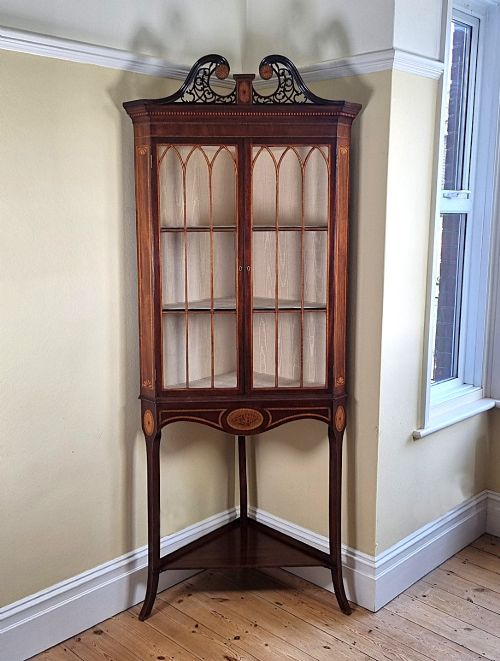
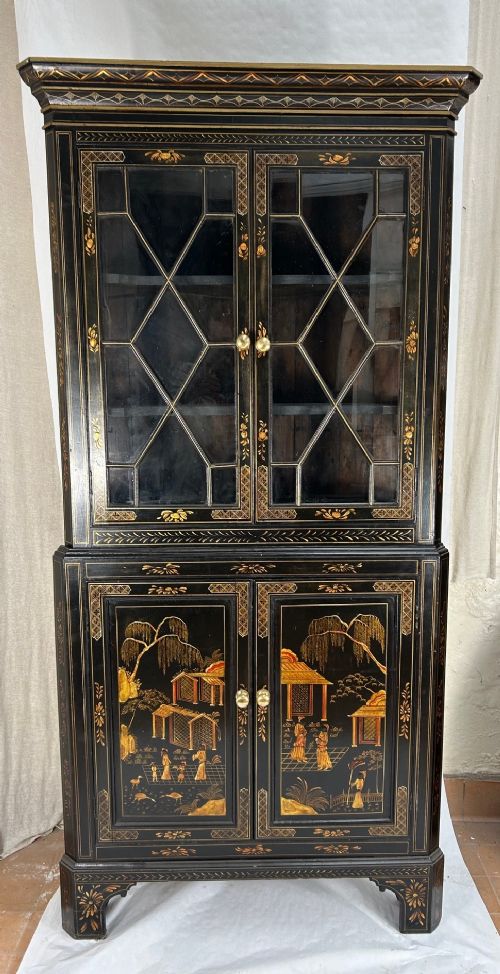
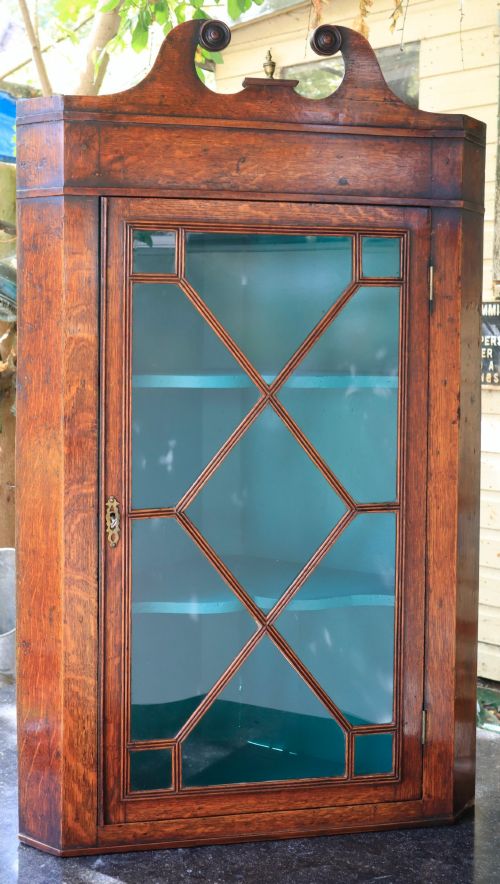
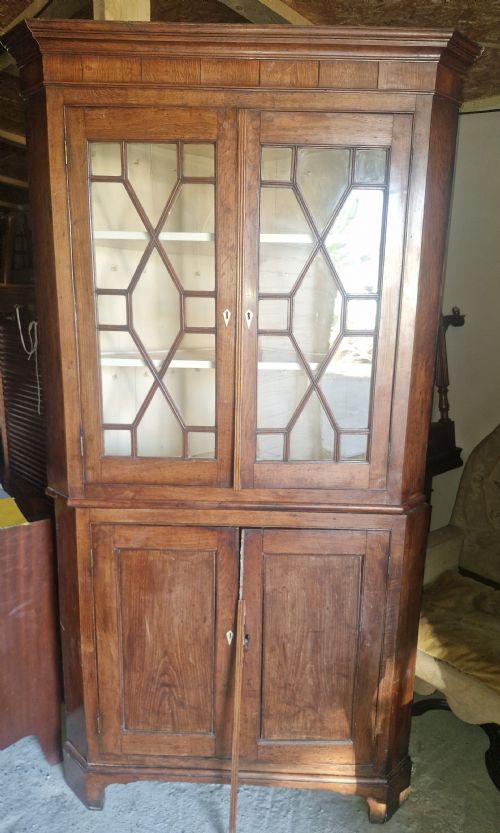
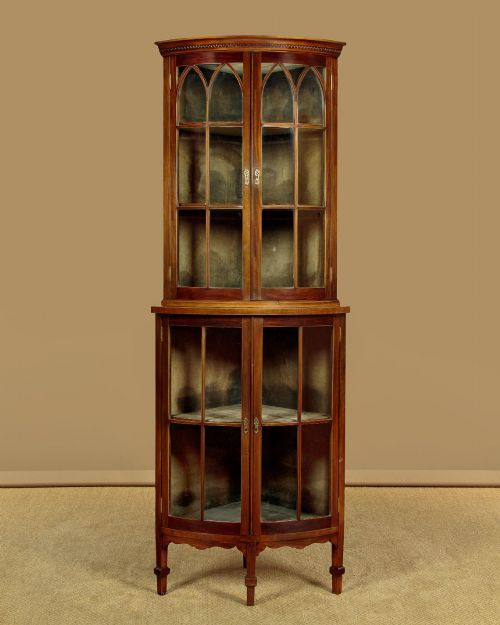


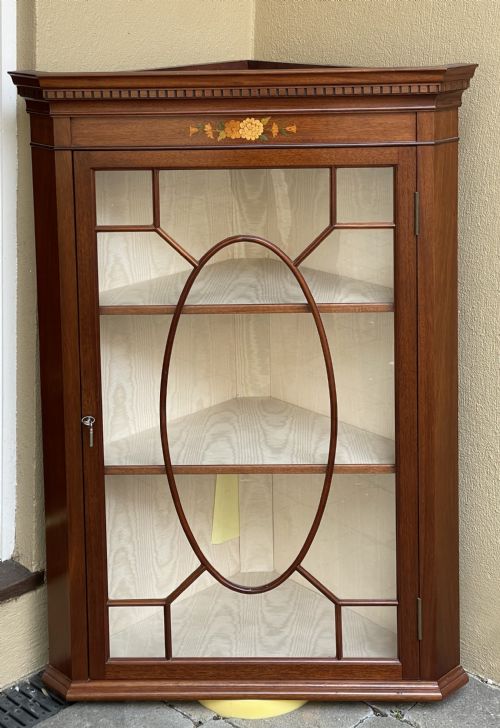
Astragal Glazed Corner Cupboard
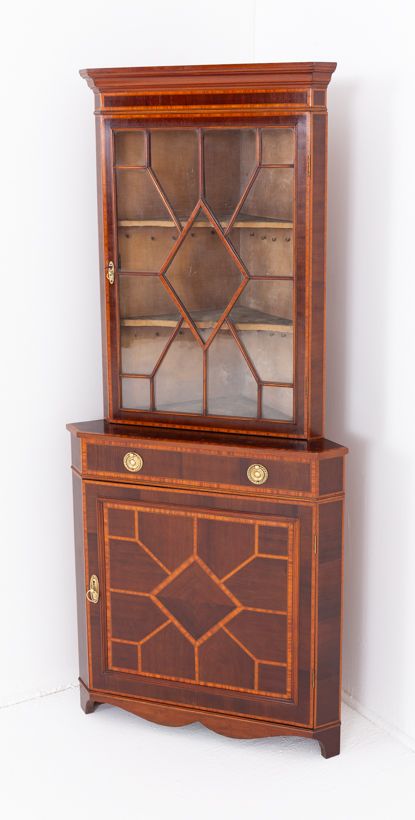
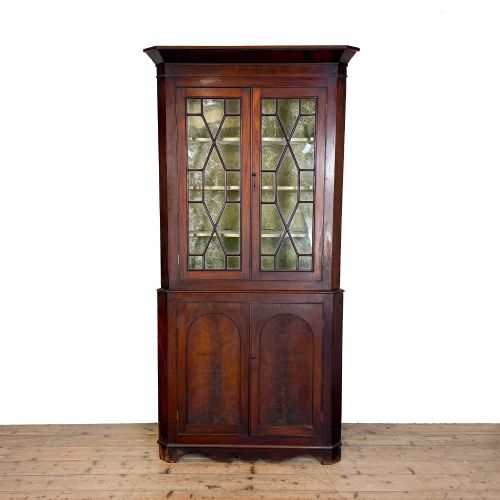
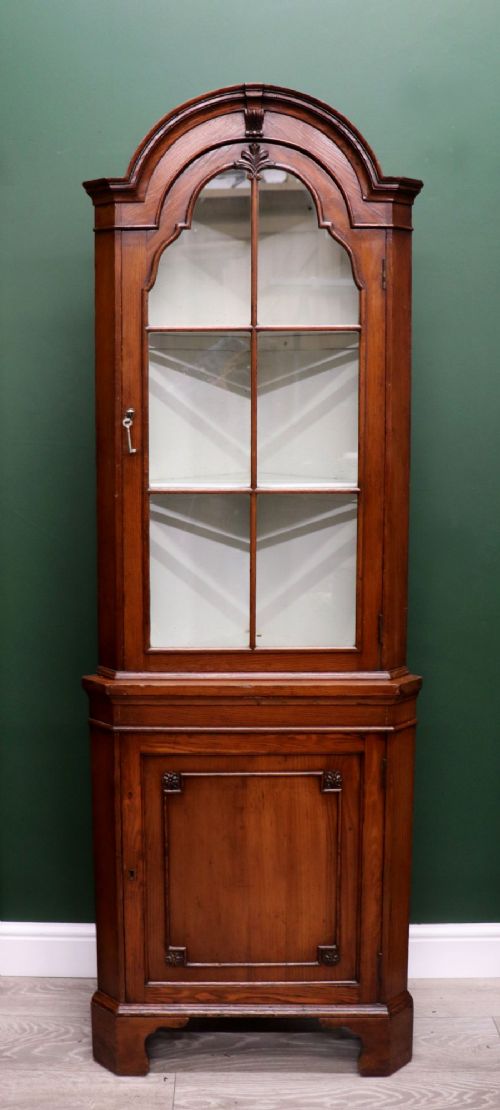
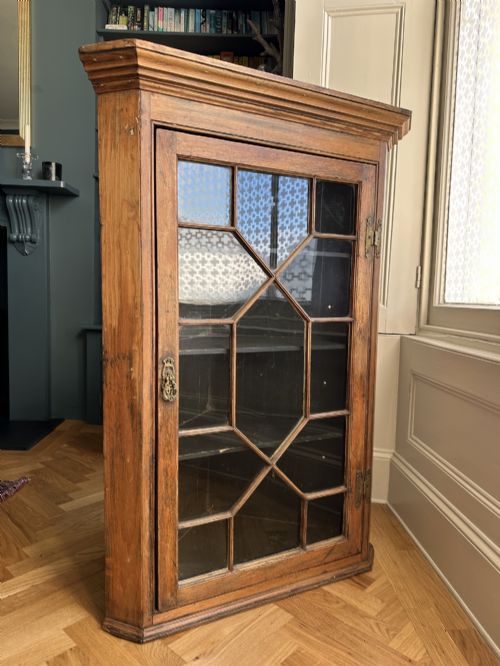
An astragal glazed corner cupboard turns empty angles into display space with delicate wooden glazing bars holding individual glass panes.
Astragal Glazed Corner Cupboard
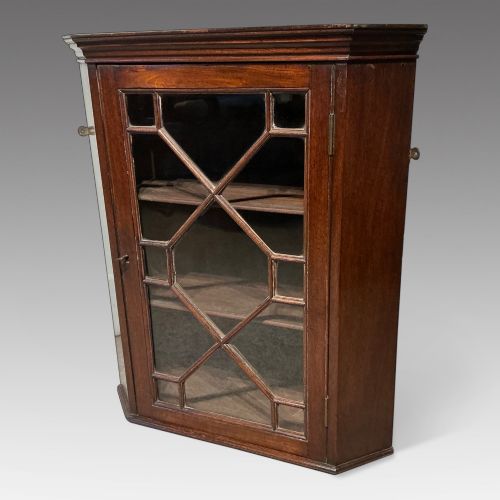
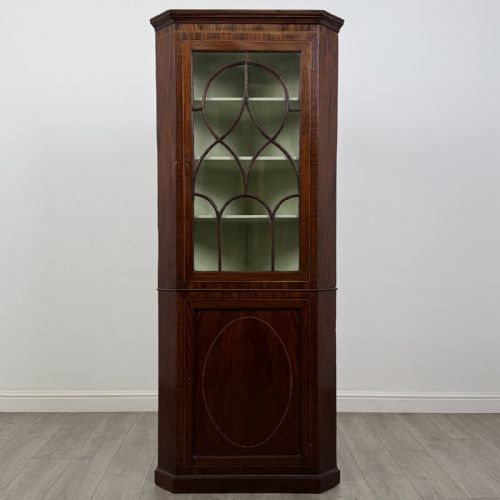
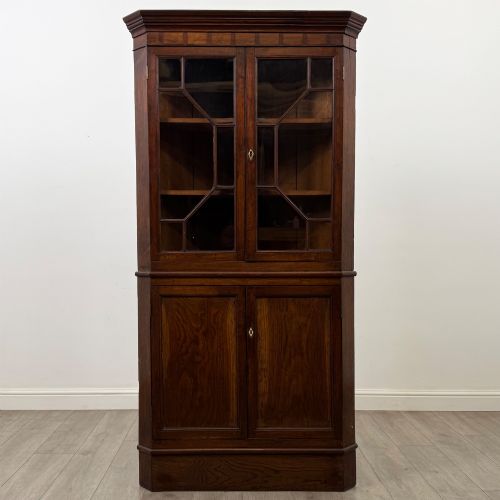
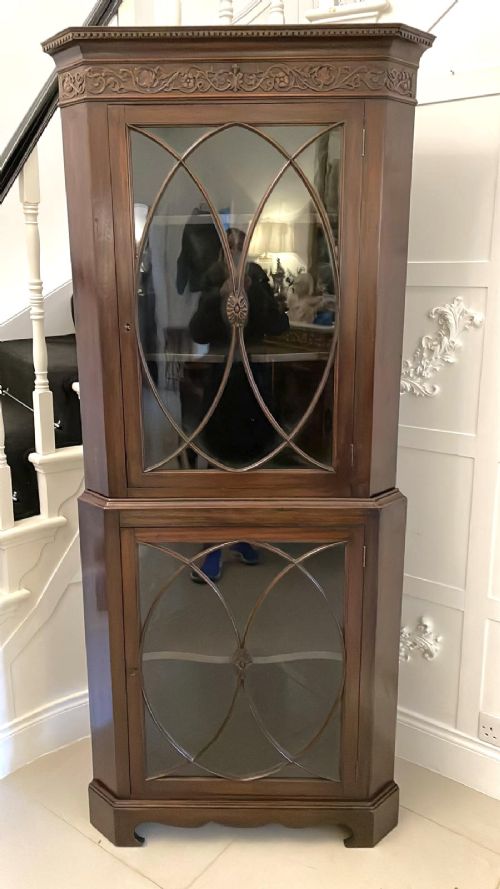
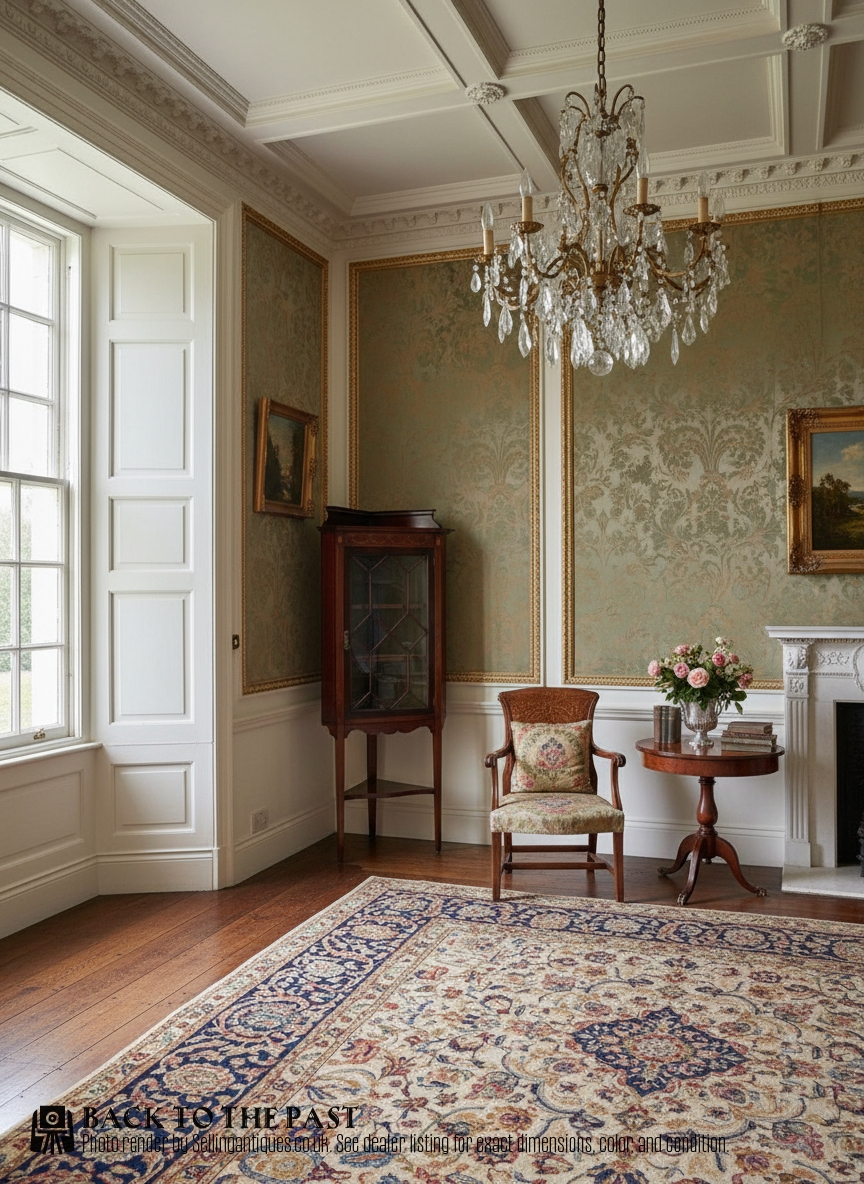
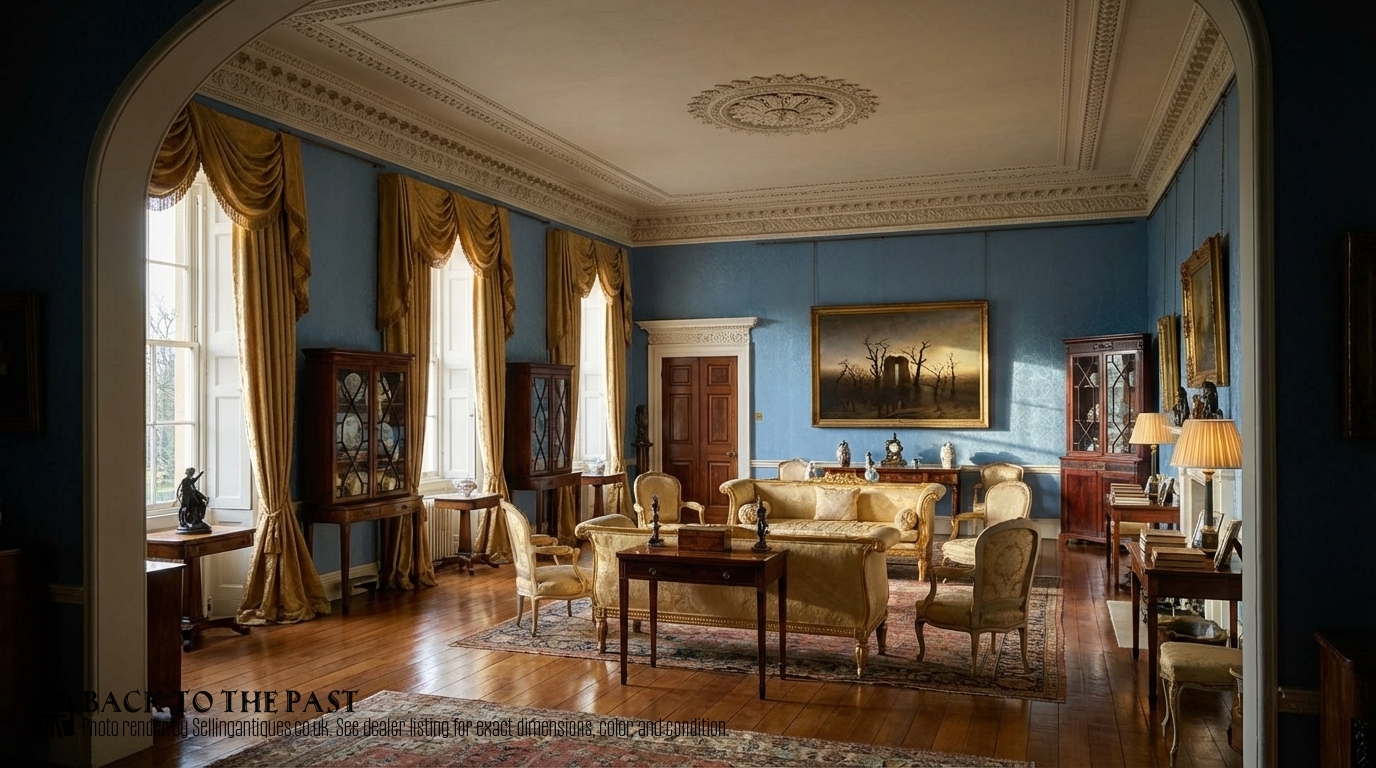
An astragal glazed corner cupboard provides vertical display and storage designed specifically to fit the intersection of two walls. These pieces appear most frequently in mahogany, oak, and pine, taking the form of wall-hanging units, floor-standing cabinets, and taller two-part constructions.
The architectural layout of historical rooms made these corner cabinets essential for saving floor space while showcasing domestic ceramics, glassware, and books. Georgian and Edwardian examples dominate the selection, showing both simple wall-mounted configurations and elaborate tall cabinets with glazed upper doors.
How They Were Made
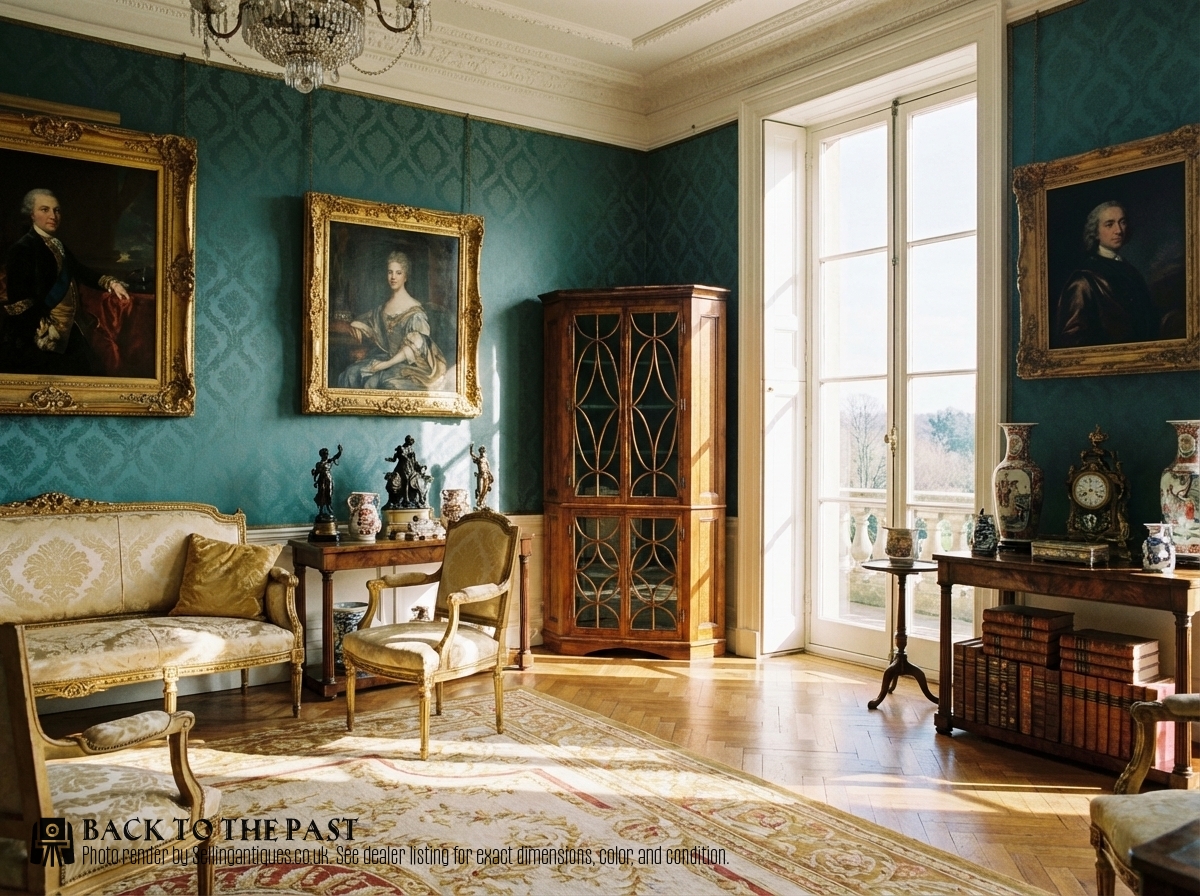
Cabinet makers utilised solid timbers like mahogany, oak, and pine for the primary carcass and shelving, frequently applying decorative veneers and satinwood inlay to the exterior surfaces. The characteristic glass doors rely on wooden glazing bars, known as astragals, shaped into geometric or tracery patterns to hold multiple small panes.
Hinges and key escutcheons are typically forged from brass, providing functional contrast to the dark timber or painted pine finishes. Interiors often retain original painted surfaces or fabric linings behind the glazed sections to frame the contents.
Astragal Glazed Corner Cupboard Retail Price Guide 2026
Typical asking prices for astragal glazed corner cupboard among the pieces listed under this phrase on Sellingantiques today, from the lower quarter to the upper quarter. They describe what is for sale here now, not the wider market.
Listings feature periods spanning from the eighteenth century through the Georgian, Victorian, and Edwardian eras up to the nineteen-thirties.
What Varies in Quality
The refinement of the timber and the complexity of the glazing bar assembly dictate the distinction between standard storage and superior cabinet work. Slender, precisely jointed astragals demonstrate greater artisan skill than heavy, thick wooden frames holding large single glass sheets.
Surface treatments also set examples apart, ranging from plain stripped pine to intricate marquetry, satinwood inlay, and lacquered finishes. The presence of original brass hardware, working locks with keys, and balanced proportions across two-part floor-standing units elevate the execution.
The Astragal Glazed Corner Cupboard Glossary
- Astragal
- A moulding profile used on cabinet doors to hold glass panes in place. These narrow wooden bars form grid patterns across the window.
- Corner Cupboard
- A storage unit built with a triangular footprint designed to fit snugly into room angles. These range from small hanging cabinets to tall floor-standing furniture.
- Satinwood Inlay
- Decorative contrasting wood veneer inserted into the primary timber surface. This technique creates geometric borders and decorative motifs.
- Two-Part Cabinet
- A piece constructed from a separate upper display section resting upon a lower cupboard base. This modular form makes movement and placement manageable.
- Bow Front
- A convex curved cabinet front that projects outward from the corner walls. This curved profile softens the hard angles of the room.
Astragal Glazed Corner Cupboard: Frequently Asked Questions
Where should I hang a wall cabinet?
Wall-hanging corner cupboards require secure fixing to solid wall studs or masonry to support the weight of timber and glass. Placing them at eye level ensures the glazed door and interior contents remain easily visible.
Because they occupy room corners, they utilise neglected angles without interrupting the main floor area or pathway of a room.
How do I identify a Georgian piece?
Georgian cabinets often display rich mahogany timber, fine astragal glazing bars, and classical proportions dating from the eighteenth century. Details like brass H-hinges and original working locks with keys frequently accompany these earlier examples.
Later Edwardian and revival pieces occasionally replicate these traditional forms using lighter construction methods and different interior fittings.
Can these hold heavy items?
Interior shelves in these cupboards suit the display of ceramics, glassware, and decorative objects rather than heavy book collections. The triangular internal layout provides stable support across fixed wooden tiers.
Checking the stability of the shelf supports inside the carcass helps determine the appropriate weight for stored items.