
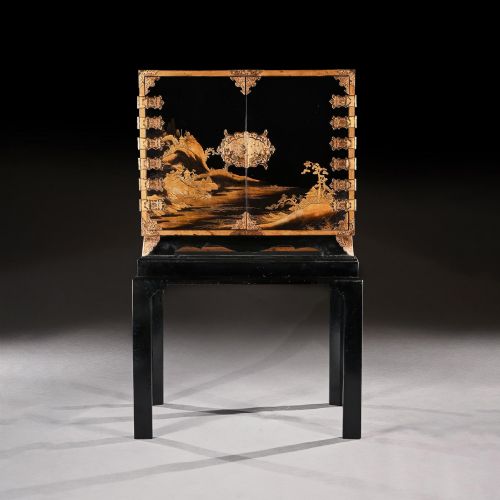
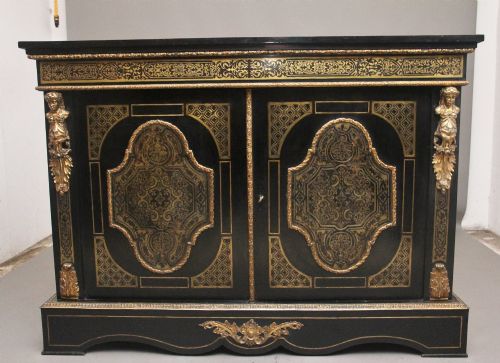
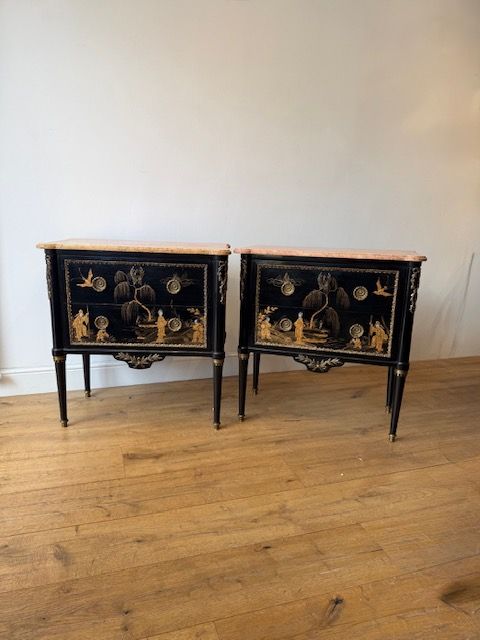


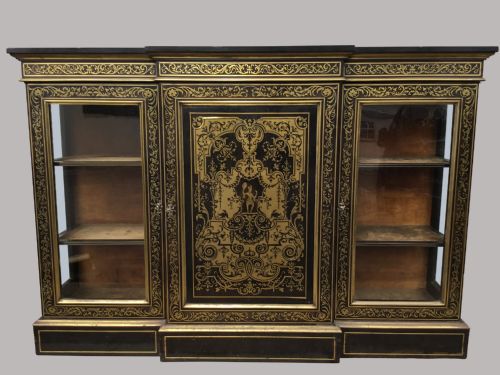

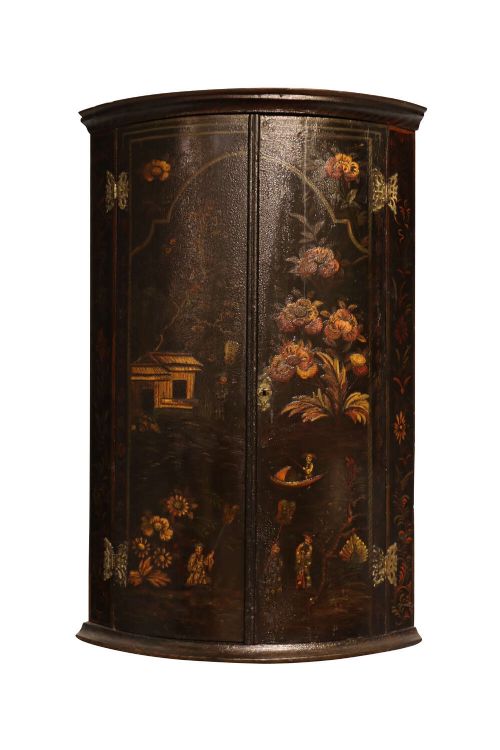


Black and Gold Cabinet
A black and gold cabinet brings a striking monochrome richness to a room, offering both display and concealed storage.
The Nature of a Black and Gold Cabinet
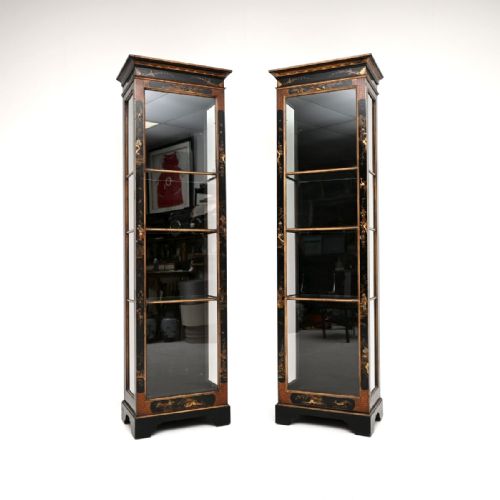
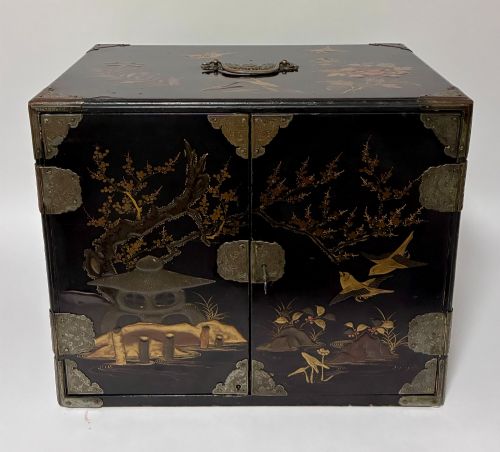
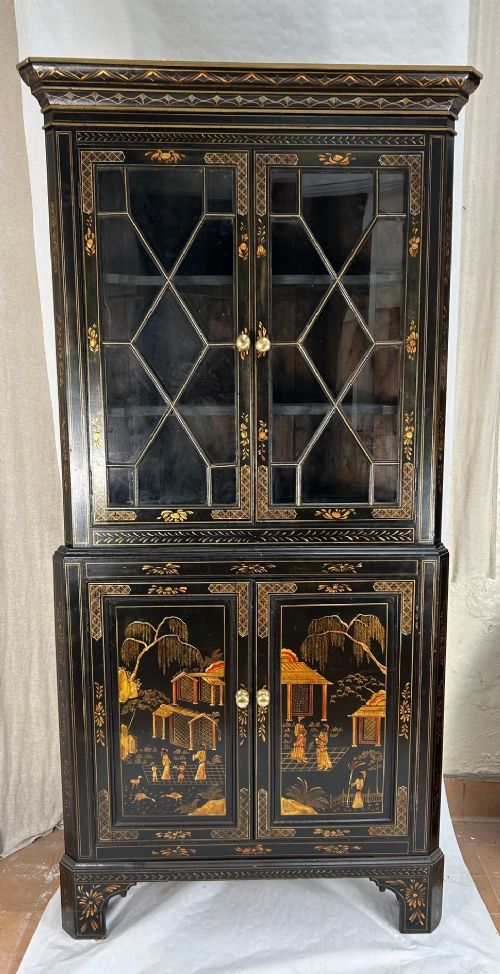
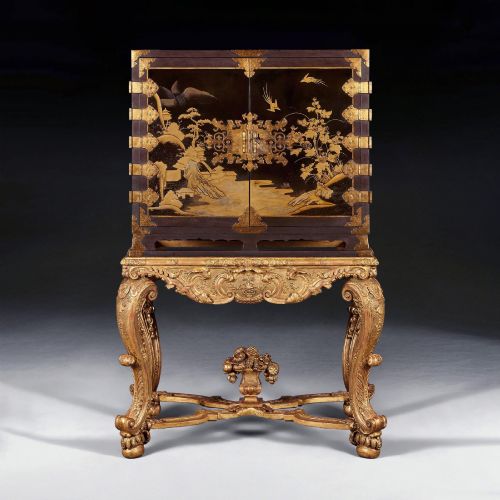
When you search for a black and gold cabinet, you are looking at statement storage pieces that combine dark surfaces with luminous metallic decoration. These items range from corner cupboards and pier cabinets to elaborate cabinets on stands.
The versions you are most likely to encounter on this page span several distinct periods including the nineteenth century, Edwardian era, seventeenth century, Victorian period, and Regency times.
Makers drew upon diverse design traditions, producing French Napoleon III examples, Chinoiserie works, Edo period pieces, and Regency items. Forms include side cabinets, breakfront side cabinets, and collectors cabinets on stands.
Materials and Construction
Craftsmen utilised wood, ebonised wood, and lacquer as the primary foundational materials for these dark-hued carcasses. Surfaces were frequently embellished with contrasting decorative elements.
Gilt bronze, gilt brass, and brass fixtures provide structural mounts, hinges, and detailed highlights. Artisans also incorporated glass and tortoiseshell to add texture and depth to the design.
Retail Price Guide 2026
Typical UK retail prices for black and gold cabinet, calculated from the Sellingantiques database of over a million retail prices indexed since 2003. This retail price guide relies exclusively on Sellingantiques data; no external sources or auction records are used, so the figures do not describe the wider market.
Listings feature wood, lacquer, ebonised wood, and tortoiseshell combined with brass, gilt brass, and gilt bronze.
Assessing Quality and Execution
The distinction between standard examples and exceptional pieces lies in the precision of the surface decoration and the execution of the contrasting metallic details. Superior items display meticulous attention to the application of lacquer, ebonised finishes, and boulle work.
The refinement of the mounts, whether cast in gilt bronze or brass, dictates the overall sophistication of the piece. Integration of delicate materials like tortoiseshell further elevates the refinement of the construction.
The Black and Gold Cabinet Glossary
- Boulle
- A form of marquetry using tortoiseshell and brass inlay, named after the famed French cabinetmaker. It creates a shimmering pattern across ebonised surfaces.
- Chinoiserie
- European interpretations of Chinese and East Asian artistic traditions. These designs typically feature painted or lacquered motifs of figures, landscapes, and flora.
- Ebonised
- Wood treated with a dark stain or finish to imitate ebony. This technique provides the dense black background characteristic of these dark cabinets.
- Pier Cabinet
- A narrow display cabinet designed specifically to fit the wall space between windows. They often feature glass doors to showcase collections.
- Cabinet on Stand
- A primary storage box elevated upon a separate supporting framework or table base. This form lifts the decorative surface closer to eye level.
Frequently Asked Questions
What is a black and gold cabinet used for?
These cabinets serve as focal points in a room while providing functional storage for precious objects, books, or tableware. Collectors often utilise specific variations to display small treasures behind glass doors.
Their striking visual contrast allows them to anchor a room's interior design scheme effectively. They function as both practical furniture and significant decorative statements.
How do I care for ebonised and lacquered surfaces?
Maintain these dark finishes by dusting gently with a soft, dry cloth to prevent surface scratching. Avoid placing them in direct sunlight or near heat sources to protect the lacquer and inlays.
Keep humidity levels in the room stable to prevent the wood from expanding or contracting. This protects delicate brass mounts and tortoiseshell elements from loosening over time.
What distinguishes Regency Chinoiserie from Victorian Boulle?
Regency Chinoiserie pieces often rely on penwork and painted Orientalist motifs reflecting eighteenth and early nineteenth-century tastes. They emphasise illustrative detail and exotic landscapes.
Victorian Boulle work incorporates metallic brass and tortoiseshell marquetry set into ebonised wood, following French Napoleon III revivals. The visual effect relies on reflective metallic patterns rather than painted scenes.
Where should I place a pier cabinet?
Pier cabinets fit well against narrow wall spaces, particularly the architectural sections situated between windows. Their slender proportions ensure they do not overwhelm smaller wall areas.
They also work effectively in hallways or reception rooms where floor space is limited. The glass panels allow light to pass around the piece while displaying contents.