

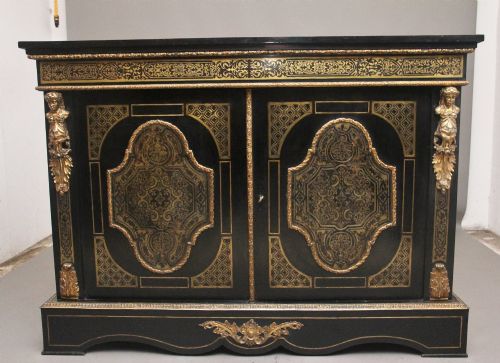
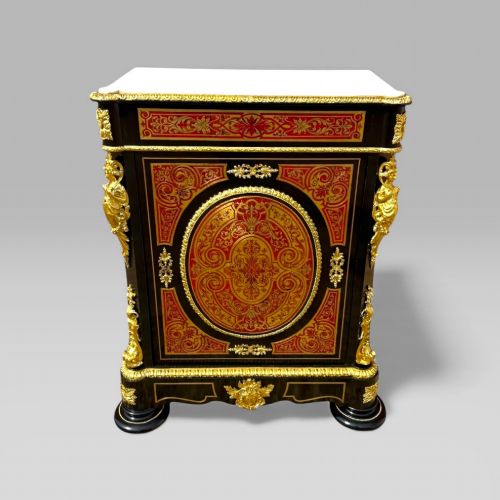


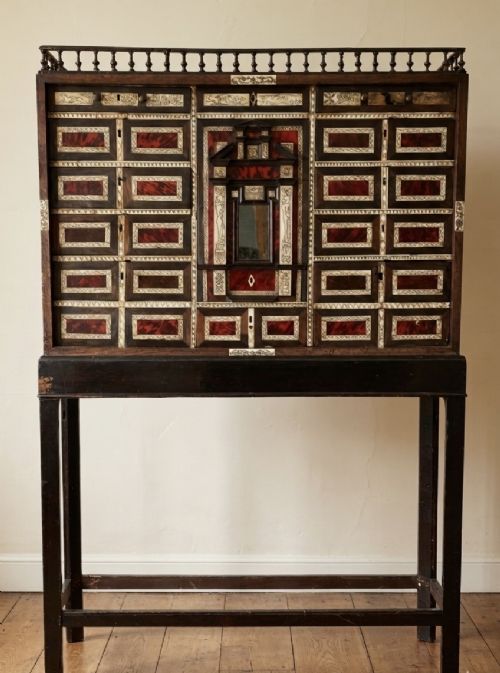


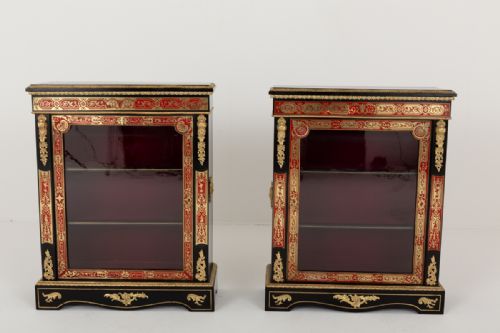


Tortoiseshell Inlay Cabinet
A tortoiseshell inlay cabinet brings the dark, warm glow of tortoiseshell and brass marquetry into a room, offering both history and striking visual depth.
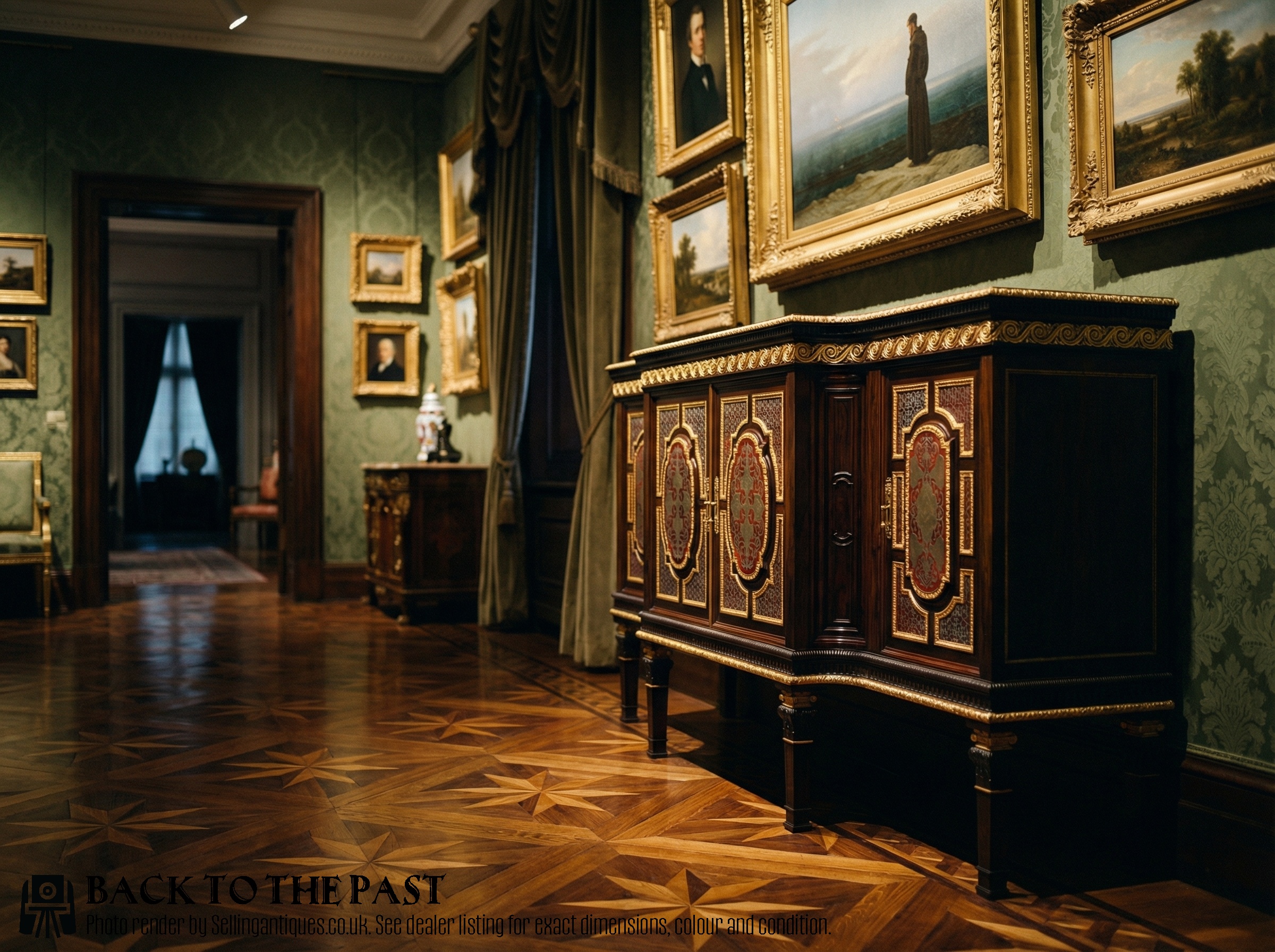
Tortoiseshell Inlay Cabinet
A tortoiseshell inlay cabinet is a storage or display piece featuring intricate decorative work set into a dark wooden carcass, most frequently seen in nineteenth century French designs. These pieces range from compact pier cabinets and side cabinets to grand credenzas, display vitrines, and writing desks.
The materials span ebonised wood, ebony, and rosewood, paired with contrasting metalwork and marble tops. Most examples draw upon nineteenth century revivals, notably the Napoleon III style and Victorian Boulle revivals, alongside seventeenth century Flemish and Portuguese Baroque influences.
Buyers seeking a tortoiseshell inlay cabinet will find that the selection centres heavily on French side cabinets and pier cabinets from the eighteen-fifties and sixties. These works utilise traditional marquetry techniques to create rich patterns that catch the light in domestic interiors.
Materials and construction methods
The construction relies on contrasting dark timber carcases, typically ebonised wood or ebony, inlaid with sheets of tortoiseshell and chased brass. Artisans cut these materials together using a fine fretsaw to create interlocking patterns of metal and shell known as Boulle marquetry.
Finished surfaces receive mounts of ormolu or gilt bronze to accent the corners, doors, and borders of the cabinet. Many examples incorporate polished marble tops and glazed doors backed by velvet or fitted with internal shelving for display.
Tortoiseshell Inlay Cabinet Retail Price Guide 2026
Typical asking prices for tortoiseshell inlay cabinet among the pieces listed under this phrase on Sellingantiques today, from the lower quarter to the upper quarter. They describe what is for sale here now, not the wider market.
Even miniature writing desks were given full tortoiseshell treatment, proving that small scaled furniture deserved grand decorative ambitions.
Elements of quality and execution
The distinction between tiers of quality rests in the crispness of the brass and tortoiseshell cutting and the precision of the marquetry fit. Finer pieces demonstrate meticulous hand-chasing on the ormolu mounts and seamless integration of the inlay across curved serpentine forms.
Overall structural integrity and the richness of the underlying timber ground dictate the standing of a piece. Subtleties in the engraving of the brass work and the depth of the tortoiseshell colour separate standard production from exceptional examples.
The Tortoiseshell Inlay Cabinet Glossary
- Boulle marquetry
- A decorative technique of inlaying brass and tortoiseshell together, named after the master cabinetmaker André-Charles Boulle. This method creates mirrored patterns where one panel uses brass on tortoiseshell and the counter-panel reverses the scheme.
- Pier cabinet
- A low freestanding cabinet designed specifically to fit against the wall space between windows. These pieces often feature a single glazed door and a marble top.
- Credenza
- A long, low sideboard or cabinet used for storage and display, frequently fitted with central doors flanked by curved glass panels. Nineteenth century versions often display elaborate ormolu mounts.
- Ormolu
- Gilded bronze used for decorative furniture mounts and feet. The technique involves applying a mercury and gold amalgam to bronze before firing.
- Bonheur du jour
- A light ladies writing desk featuring a small cabinet or set of drawers superstructure on the top. These compact writing pieces often incorporate detailed inlay work.
Tortoiseshell Inlay Cabinet: Frequently Asked Questions
What is a boulle cabinet?
A boulle cabinet is a piece of furniture decorated with tortoiseshell and brass marquetry, developed in seventeenth century France and revived during the nineteenth century. The technique creates intricate metallic patterns set against a dark background.
These cabinets were built as status symbols for grand interiors, designed to catch candlelight and reflect the wealth of the owner. Today they serve as statement storage and display furniture.
How do I care for tortoiseshell inlay?
Caring for tortoiseshell involves keeping the cabinet away from direct sunlight and maintaining stable room humidity. Excessive heat can dry out the shell and loosen the historic adhesive beneath the inlay.
Dust the surface gently with a soft dry cloth and avoid chemical polishes or water. Protecting the natural shell and brass components preserves the integrity of the marquetry.
Where were these cabinets placed?
These cabinets found their places in formal drawing rooms, parlours, and reception spaces. Pier cabinets stood between windows, while larger credenzas anchored the main walls of the room.
Display cabinets and vitrines were utilised to showcase porcelain and curiosities. Their decorative fronts ensured they remained focal points from every angle.
How do I distinguish nineteenth century revivals?
Nineteenth century revival pieces exhibit machine-sawn precision and specific nineteenth century framing techniques that differ from seventeenth century prototypes. The use of ebonised wood foundations and standard Victorian carcass construction helps identify the later dates.
Examining the internal timbers, backboards, and fastener types clarifies the period of manufacture. Most examples available date from the nineteenth century Napoleon III and Victorian eras.