



Victorian Boulle Cabinet
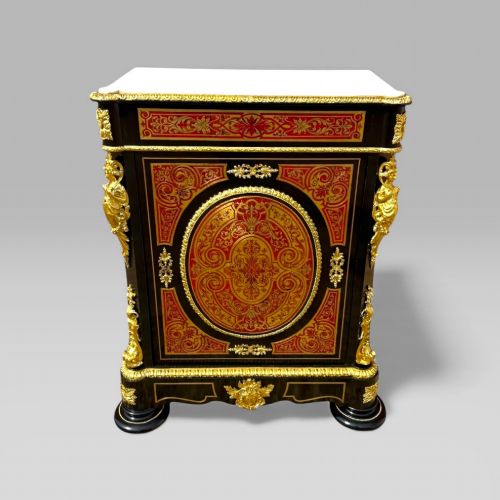
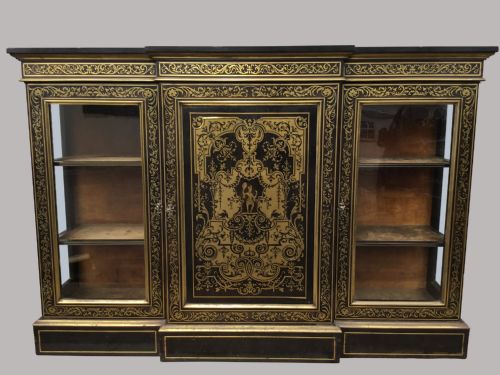
A Victorian boulle cabinet brings together tortoiseshell, brass and ebonised wood to catch the light in a formal drawing room.
Victorian Boulle Cabinet
A victorian boulle cabinet is a statement piece of nineteenth century furniture designed to anchor a formal interior with rich surface pattern. These items typically take the form of side cabinets, pier cabinets, credenzas and display cabinets that offer glazed or enclosed storage for treasured objects.
The aesthetic draws heavily on French Napoleon III and French Revival designs, reflecting continental taste imported into Victorian homes. You will most frequently encounter pier cabinets and credenzas featuring distinct tortoiseshell and brass inlay set into dark timber carcasses.
How they were made
Cabinet makers utilised ebonised wood, ebony and rosewood to form the main structure, often shaping timber into serpentine or breakfront profiles. Ormolu mounts cast in bronze provide heavy decorative borders and corner accents that frame the central marquetry panels.
The distinctive boulle technique involves cutting interlocking patterns from thin sheets of brass and tortoiseshell, pressing them into the wood backing. Glass panels and marble tops are integrated into many pieces to complete the mixed-media construction characteristic of the period.
Victorian Boulle Cabinet Retail Price Guide 2026
Typical asking prices for victorian boulle cabinet among the pieces listed under this phrase on Sellingantiques today, from the lower quarter to the upper quarter. They describe what is for sale here now, not the wider market.
Some nineteenth-century makers built miniature child-sized credenzas, proving that even Victorian toddlers needed a proper place to store their heavy brass inlay.
What varies in quality
Quality rests primarily on the crispness of the brass and tortoiseshell marquetry and how tightly the individual pieces fit together within the ground. Finer examples display intricate engraving across the brass surface, adding fine detail to the scrolling foliage and geometric patterns.
The casting and fire-gilding of the ormolu mounts dictate the upper tier of execution, where heavy bronze details show sharp relief rather than soft edges. Structural choice also separates standard production from superior work, seen in the selection of dense timbers like ebony and the use of substantial marble tops.
The Victorian Boulle Cabinet Glossary
- Boulle
- A marquetry technique using brass and tortoiseshell inlaid into wood, named after the royal cabinet maker André-Charles Boulle. It creates a contrasting metallic and organic surface pattern.
- Ormolu
- Gilded bronze mounts applied to furniture for decoration and edge protection. The metal is cast and then treated with gold to achieve a bright, durable finish.
- Pier Cabinet
- A narrow display or storage cabinet designed specifically to fit the wall space between windows. These tall, slender units often feature glass doors and velvet-lined interiors.
- Credenza
- A low, wide cabinet used for storage or display, frequently fitted with multiple doors and ornate side sections. In nineteenth century interiors, this form served as a grand focal point.
- Ebonised Wood
- Timber treated with a dark stain or finish to imitate expensive solid ebony. This process provides a uniform black background that makes the brass inlay stand out.
Victorian Boulle Cabinet: Frequently Asked Questions
What is a boulle cabinet?
A boulle cabinet is a nineteenth-century storage or display piece decorated with tortoiseshell and brass marquetry inlay. These items were built to display status and taste in formal reception rooms.
They combine French design influences with English cabinet making traditions, often featuring rich timber surfaces and gilt bronze mounts. Their distinctive patterned fronts catch candle or gas light effectively.
Where were they placed?
These cabinets typically stood against primary walls in drawing rooms or formal dining spaces where guests gathered. Pier cabinets were specifically scaled to occupy the wall space between large windows.
Larger credenzas served as sideboards or display platforms for porcelain and silver collections. Their finished backs and detailed sides allowed them to command attention from multiple angles in a room.
How do I care for the surface?
Keep these cabinets away from direct sunlight and strong heat sources to prevent the tortoiseshell and wood from drying out. Consistent indoor humidity helps protect the delicate brass and shell inlay from lifting.
Dust gently with a soft dry cloth and avoid modern chemical polishes that can damage the French polish and metal. Treat the marble tops with standard stone care to avoid staining.
How can I tell the period?
Nineteenth-century pieces show construction methods typical of the Victorian era, including hand-cut dovetails and traditional timber framing. The presence of Napoleon III style markers indicates mid to late nineteenth-century French influence.
Materials like ebonised wood, cast ormolu and genuine tortoiseshell point directly to mid-Victorian manufacturing practices between eighteen fifty and eighteen eighty.