

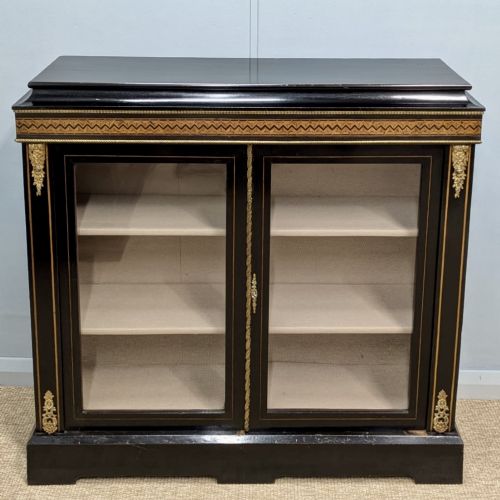
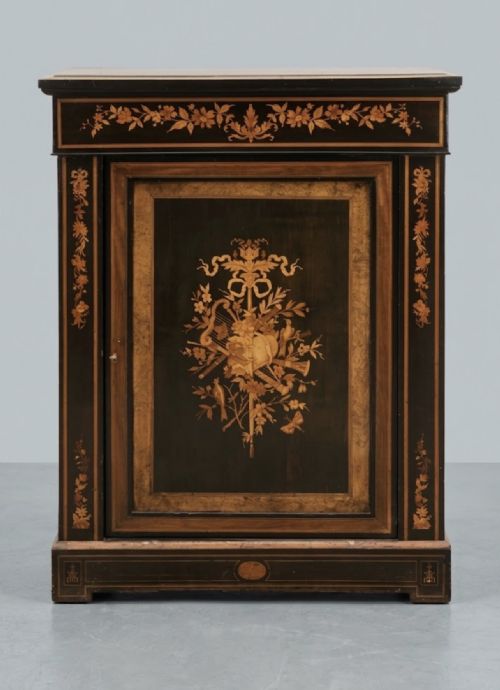
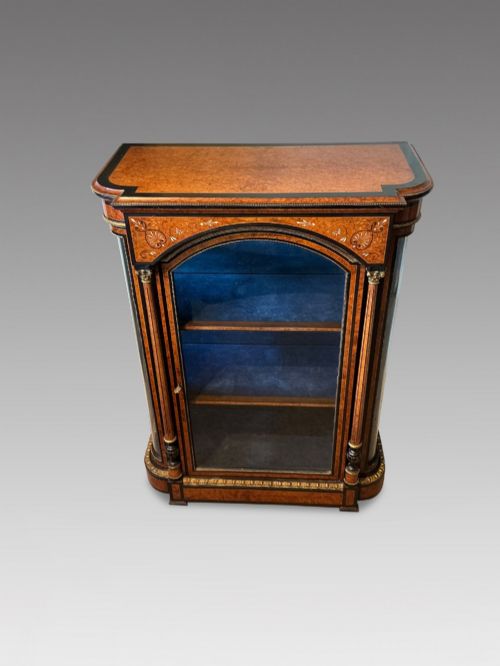
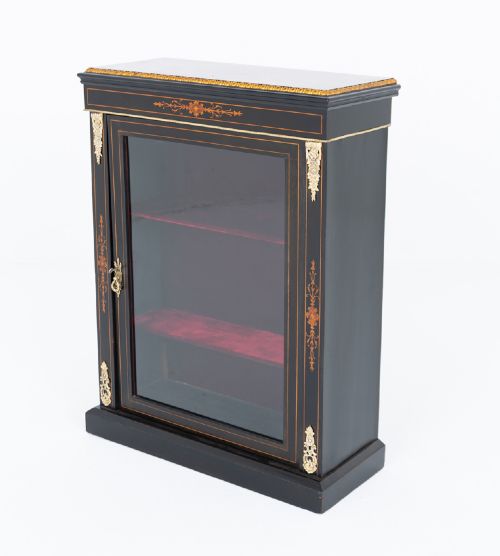




Ebonised Pier Cabinet
An ebonised pier cabinet brings nineteenth-century drawing-room elegance into a modern room with its dark finish and glass display space.
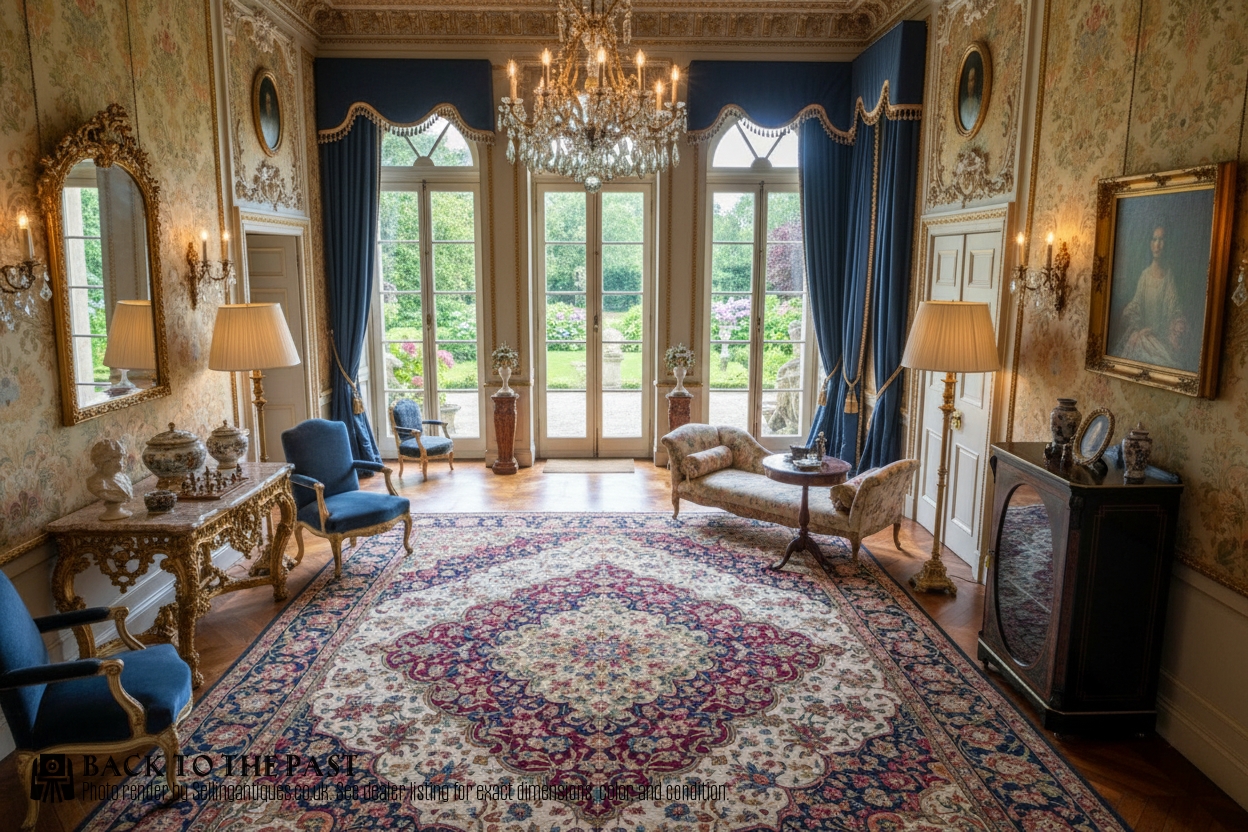
Ebonised Pier Cabinet
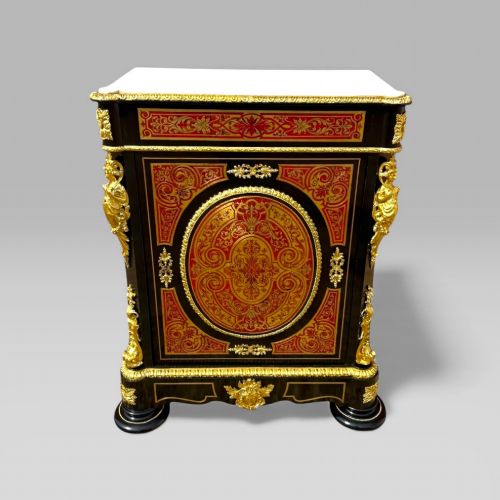
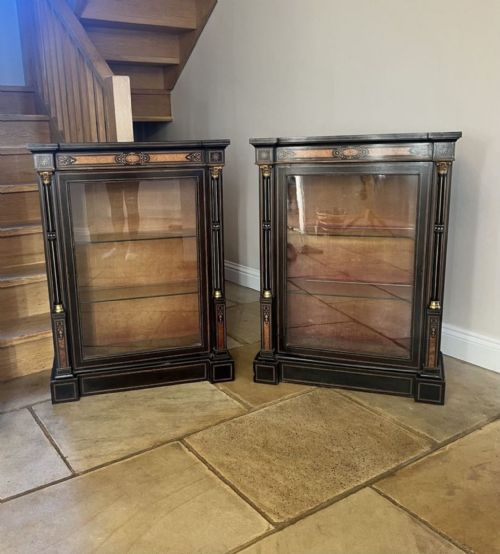
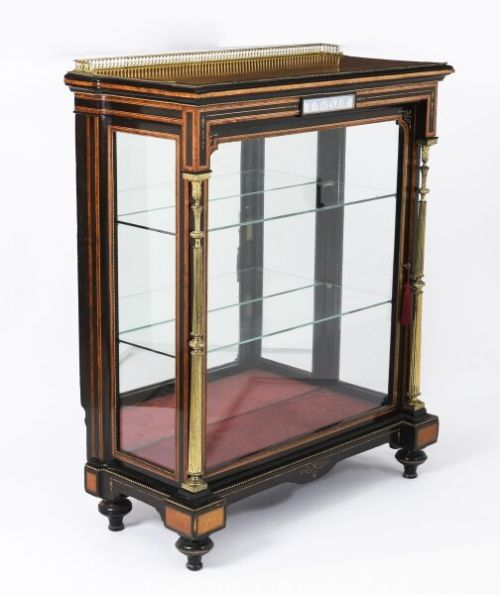
When you search for an ebonised pier cabinet, you find low nineteenth-century display furniture designed to stand against the narrow wall space between windows. The Victorian and Napoleon III versions dominate this selection, frequently featuring glazed single doors to house ceramics and decorative objects.
Makers of these nineteenth-century pieces utilised dark wood finishes to imitate expensive ebony, often pairing the blackened surfaces with contrasting timber inlays. Forms range from simple glazed display units to elaborate music cabinets and side cabinets with serpentine fronts.
The archive and current listings show strong representation from English Victorian workshops and French Napoleon III cabinet makers. Buyers encounter rectangular formats, tiered shelving interiors, and sometimes marble tops finished with gilt-metal mounts.

How they were made
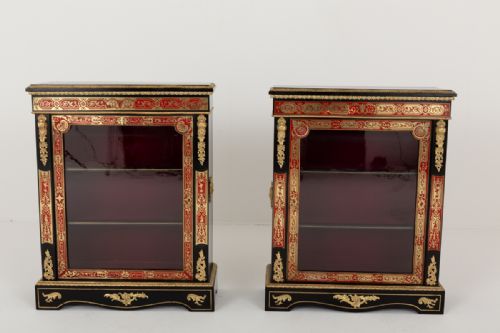
Cabinet makers constructed these pieces using solid timbers like walnut or amboyna, applying a heavy dark stain or paint finish to achieve the desired ebonised appearance. Surfaces frequently incorporate intricate brass and tortoiseshell Boullework, mother-of-pearl, or fine wood stringing.
Ormolu mounts, gilt-metal edgings, and cast bronze details were screwed onto corners, friezes, and feet to accent the dark timber. Glazed front doors utilised bevelled glass panes, whilst interiors often housed velvet-lined shelves for holding porcelain plaques and small collections.
Ebonised Pier Cabinet Retail Price Guide 2026
Typical asking prices for ebonised pier cabinet among the pieces listed under this phrase on Sellingantiques today, from the lower quarter to the upper quarter. They describe what is for sale here now, not the wider market.
Some nineteenth-century makers doubled up their output by crafting matching pairs, ensuring drawing rooms achieved perfect symmetrical harmony around the fireplace.
What varies in quality
The standard of an ebonised pier cabinet rests upon the precision of its decorative inlays and the crispness of its metal mounts. Superior examples display tightly fitted brass marquetry and hand-chased ormolu rather than simple stamped sheet metal.
Finer pieces incorporate high-grade secondary timbers like amboyna or burr walnut beneath the ebonised finish, alongside Sevres-style porcelain plaques or pietra dura panels. The structural integrity of the glazed door frame and the original condition of the polished surface also dictate the standing of the piece.
The Ebonised Pier Cabinet Glossary
- Ebonised
- Wood treated with a dark stain, polish, or paint to simulate solid ebony. This dark finish became immensely popular during the Victorian and Napoleon III eras.
- Pier cabinet
- A narrow display cabinet designed to fit the wall space between two windows. These pieces typically feature a single glazed door and flat sides.
- Boullework
- Marquetry created from tortoiseshell and brass inlay, developed in France and revived during the nineteenth century. The technique creates rich contrasting patterns across the cabinet door.
- Ormolu
- Gilded bronze mounts applied to furniture for decorative effect. High-quality examples feature hand-chased details that catch the light against the dark wood.
Ebonised Pier Cabinet: Frequently Asked Questions
Where did they place pier cabinets?
These cabinets originally stood against the narrow wall sections between drawing-room windows, known as piers. Their shallow depth allowed them to fit into tight architectural spaces without obstructing pathways.
Today, they function well in hallways, alcoves, or living rooms where floor space is limited but display shelving is desired.
What went inside a pier cabinet?
Victorian households utilised these glazed display units to exhibit prized porcelain collections, decorative glass, and small curiosities. The enclosed shelving protected delicate ornaments from dust.
Modern owners continue to use the velvet-lined or wood-shelved interiors to showcase ceramics, books, and small personal collections.
How do I spot a French piece?
French Napoleon III examples frequently showcase elaborate Boullework, intricate tortoiseshell inlays, and heavier ormolu mounts. They often feature marble tops and serpentine or bowed fronts.
English Victorian pieces tend towards straighter architectural lines, relying on amboyna cross-banding, simple gilt stringing, and porcelain plaques.
Are the shelves adjustable?
Many nineteenth-century cabinets feature fixed internal wooden shelves set into grooved interior sides. Certain taller side cabinets and bookcases include adjustable shelving systems supported on wooden ratchets or metal pins.
Buyers should examine specific interior descriptions to determine whether shelf heights can be altered for larger items.