


Victorian Ebonised Credenza
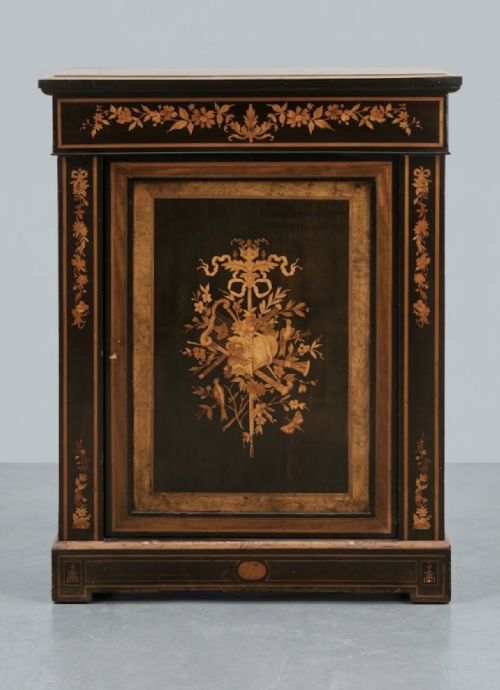
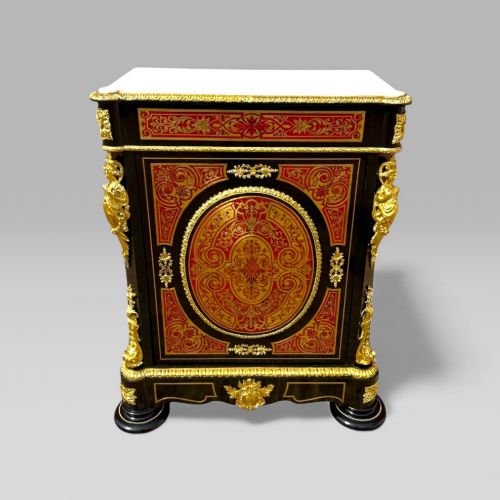
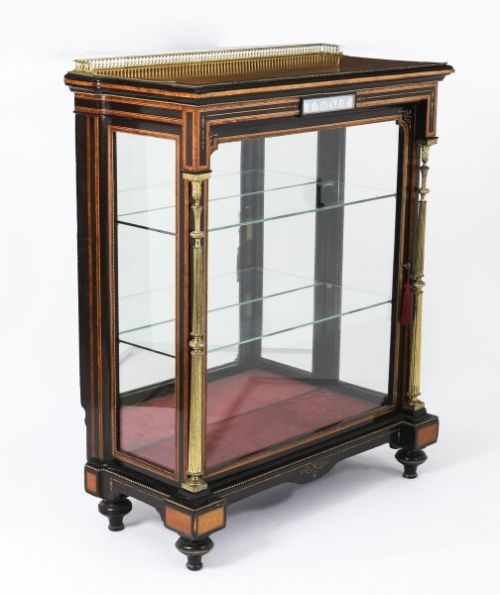
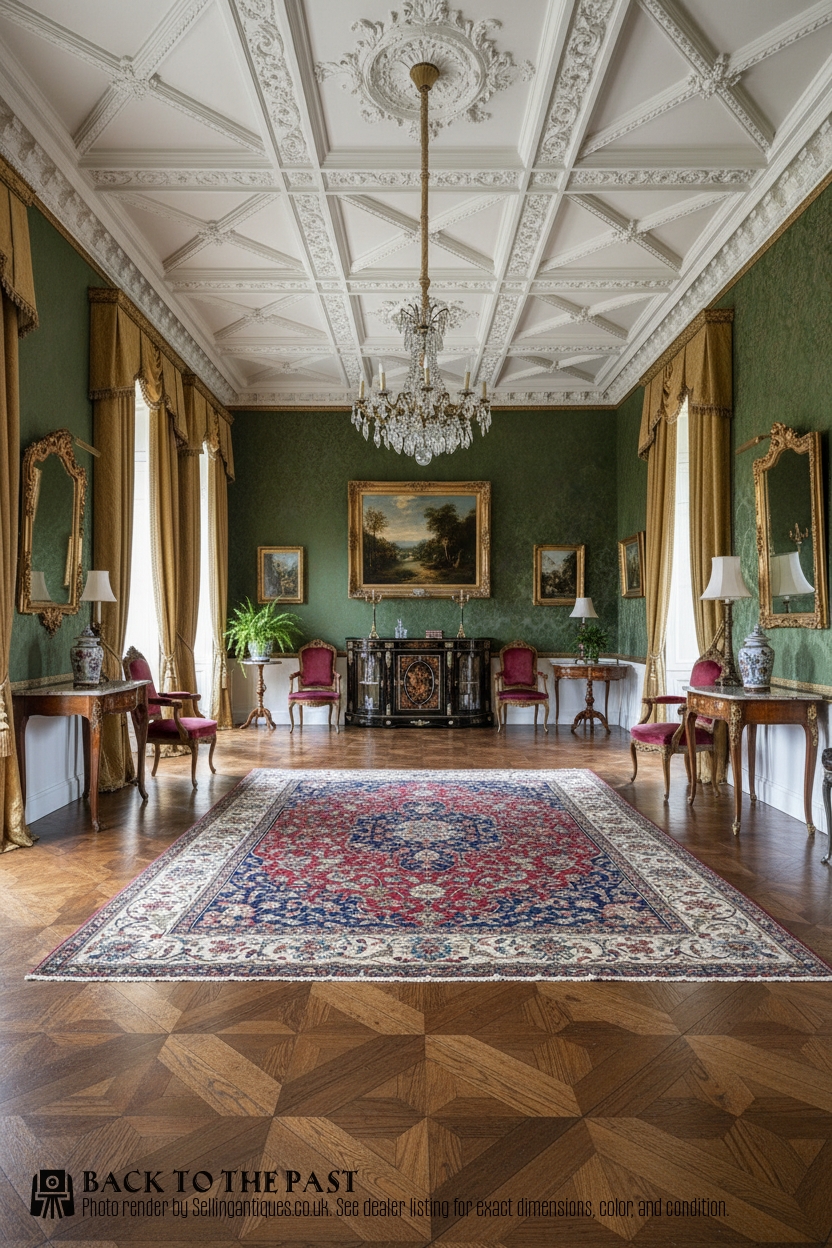
A victorian ebonised credenza brings dark polish and meticulous brass or floral inlay into a drawing room as a commanding display piece.
Victorian Ebonised Credenza
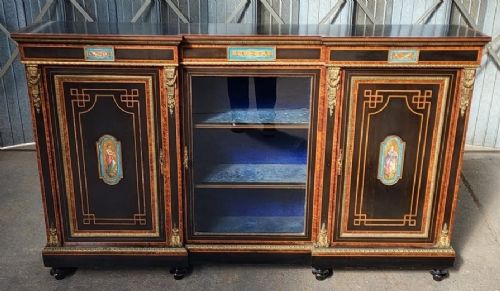
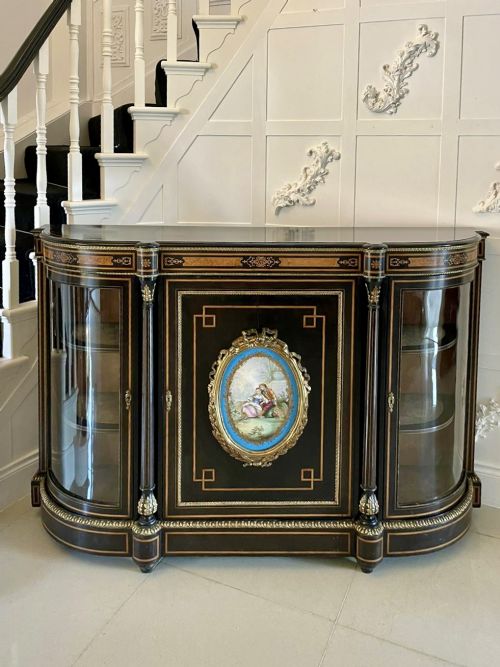
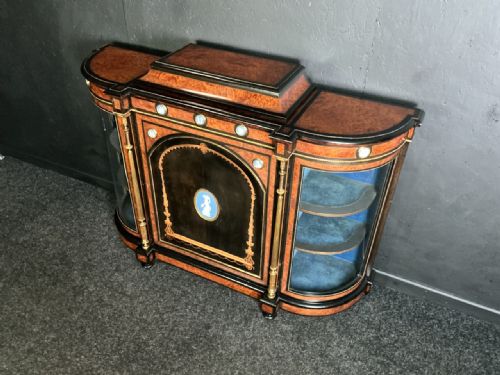
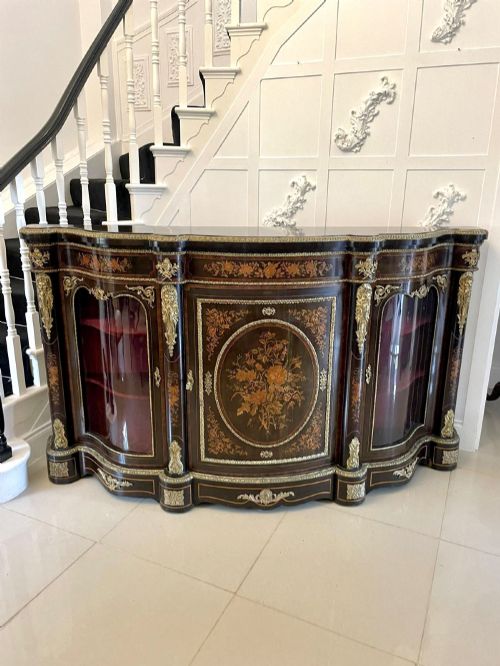
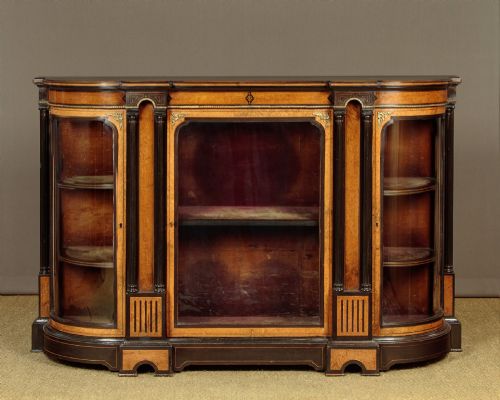
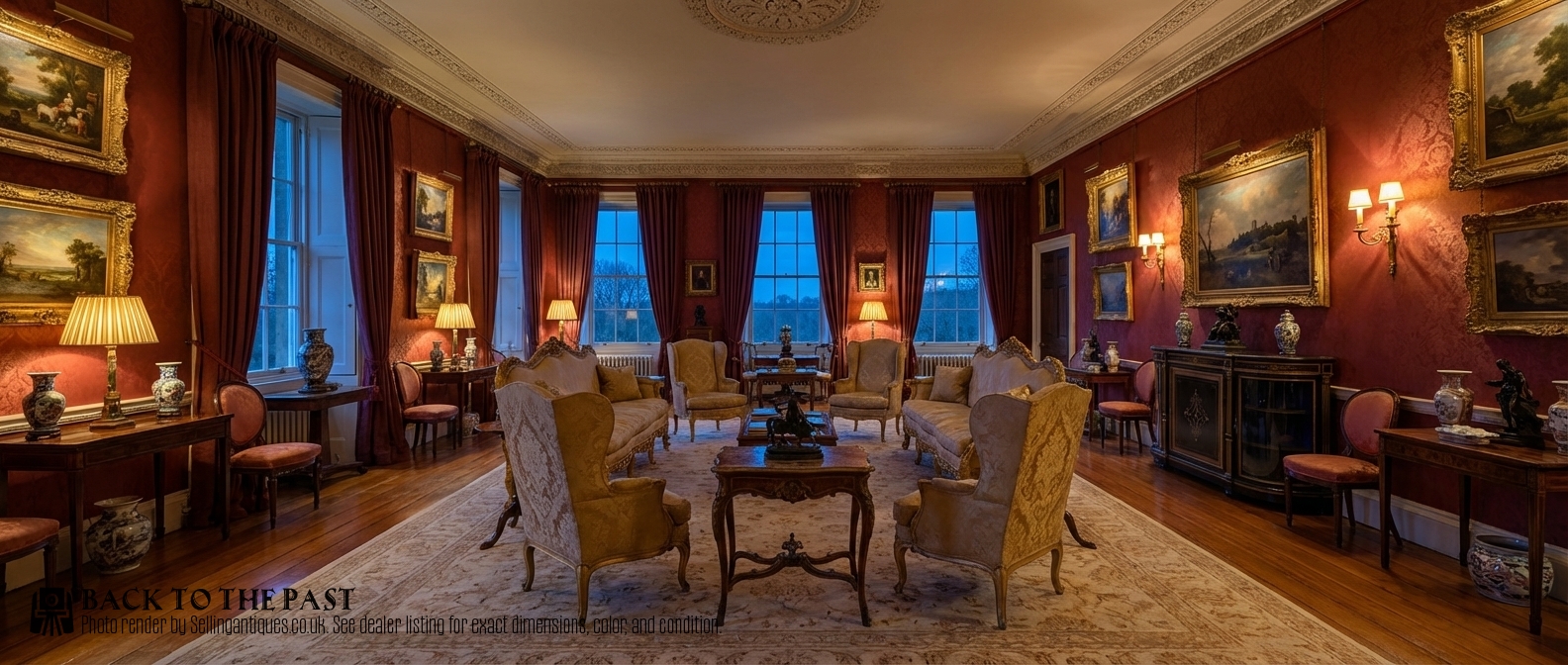
A victorian ebonised credenza is a low freestanding cabinet designed for nineteenth-century reception rooms to display porcelain and ornaments behind glass doors. The most common form on this page is the three-door breakfront or serpentine sideboard, often flanked by glazed side compartments.
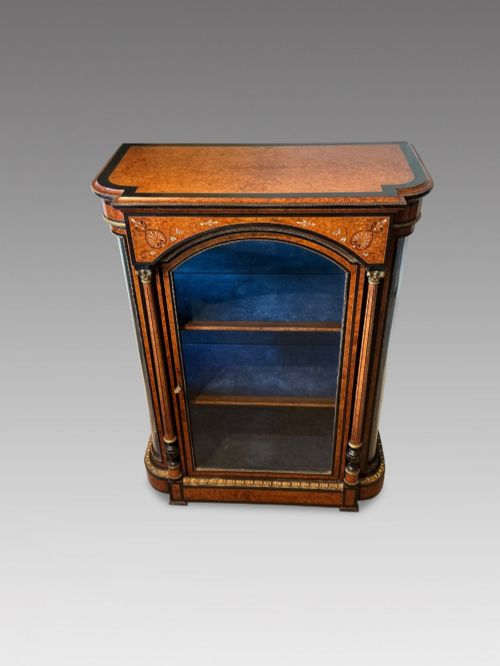
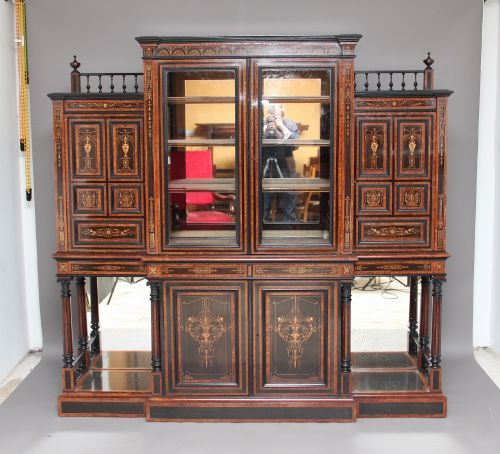
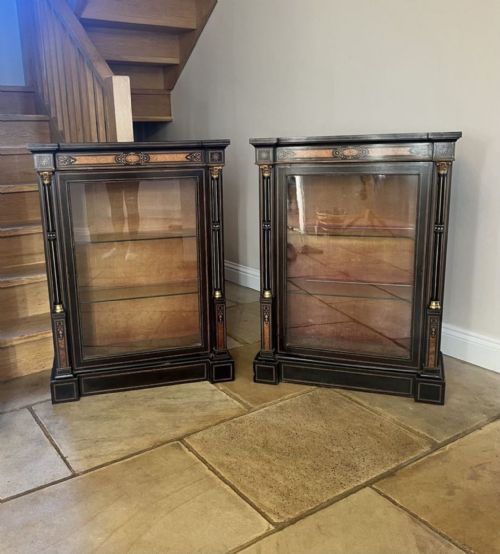
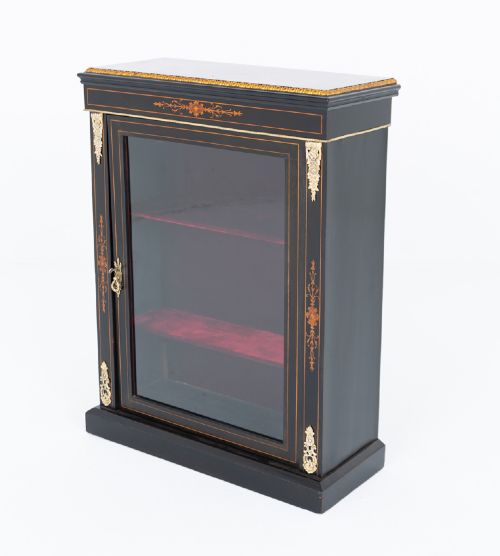
Makers of the period also produced narrower pier cabinets and side cabinets that shared the same blackened finish and inlaid surface decoration. These pieces served both decorative and storage functions, anchoring formal interiors with architectural symmetry.
Materials and Construction
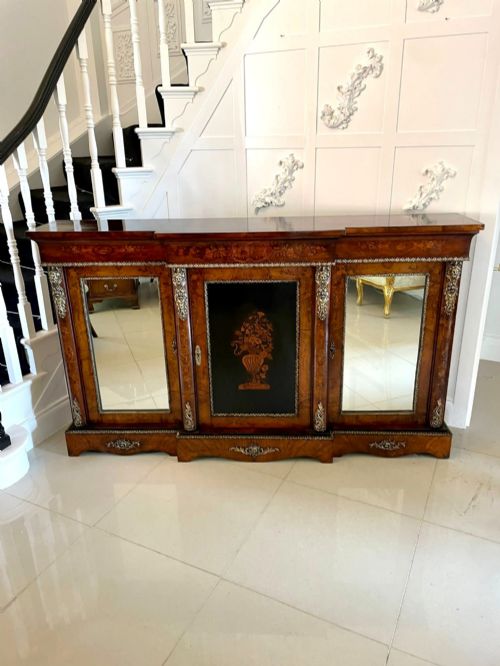
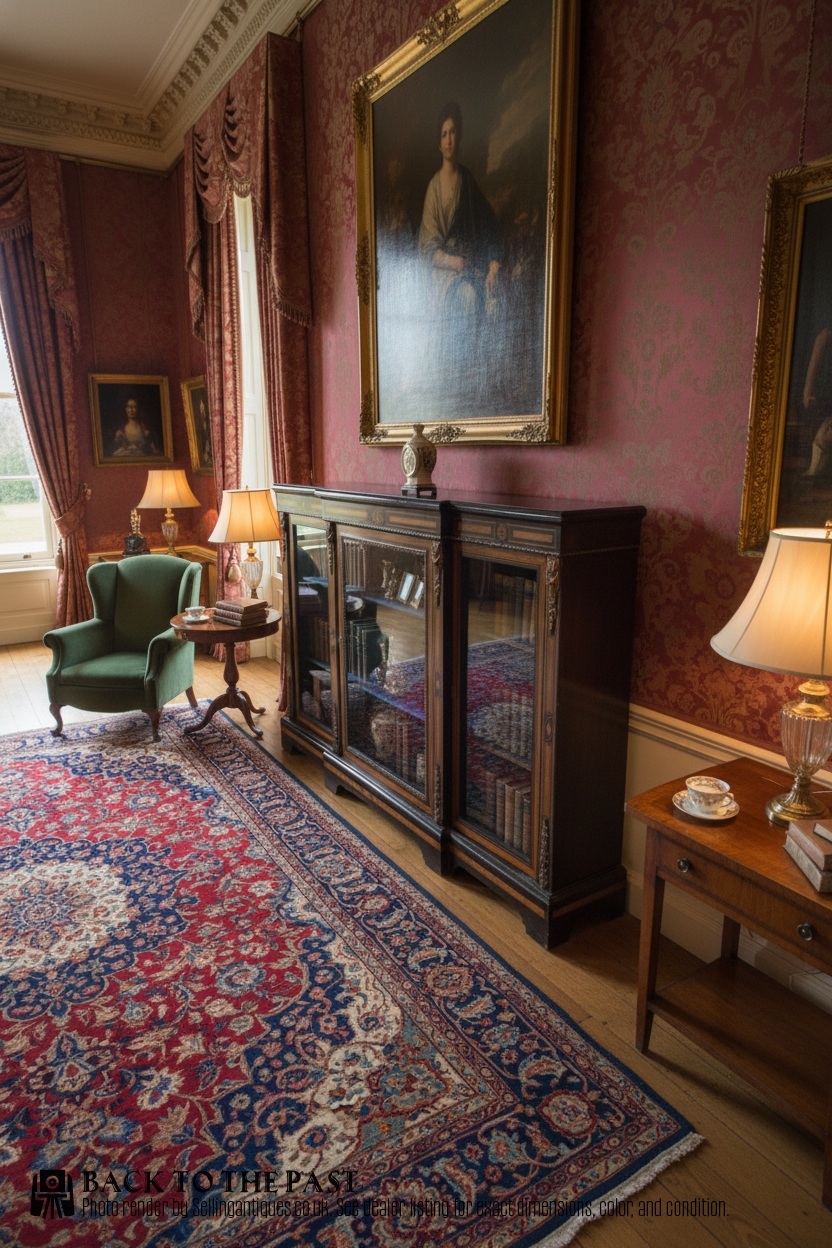
Cabinets are constructed from a hardwood carcass, frequently fruitwood or pine, which receives a deep black ebonised finish to mimic costly ebony. Surfaces are then enriched with contrasting veneers of amboyna, burr walnut, and satinwood.
Gilded bronze or brass mounts, known as ormolu, edge the panels and frame doors alongside intricate marquetry and inlaid brass lines. Original glass panels are frequently curved or bowed, demanding advanced glazing techniques.
Victorian Ebonised Credenza Retail Price Guide 2026
Typical asking prices for victorian ebonised credenza among the pieces listed under this phrase on Sellingantiques today, from the lower quarter to the upper quarter. They describe what is for sale here now, not the wider market.
Some nineteenth-century apprentices practiced their trade by building miniature cabinets with the same mouldings as full-sized credenzas.
Assessing Craftsmanship
The distinction between standard cabinetwork and exceptional pieces rests on the precision of the marquetry and the weight of the cast ormolu mounts. Finer examples display hand-chased gilt bronze and tightly detailed floral or tortoiseshell boulle work rather than stamped metal replacements.
Structural harmony also marks the top tier, where serpentine fronts and breakfront cornices align seamlessly with matched veneer grains. The depth and durability of the polished ebonised finish indicate the amount of hand-rubbing applied in the workshop.
Lamb of Manchester·Garnett and Sons·Gillow
The Victorian Ebonised Credenza Glossary
- Ebonised
- Wood treated with stain or paint to achieve the dense black appearance of genuine ebony. This finish was widely utilised during the nineteenth century to highlight gilded mounts and contrasting veneers.
- Ormolu
- Gilded bronze mounts cast in decorative scrollwork or floral motifs and applied to furniture. High-quality mounts exhibit sharp chisel work after casting.
- Marquetry
- Inlaid patterns of wood veneers, shell, or ivory assembled to form pictorial or geometric designs. Artisans carefully selected contrasting grain directions to create depth.
- Boulle
- A technique of inlaying brass and tortoiseshell developed in France and adopted into Victorian revival furniture. The contrasting materials create elaborate scrolling patterns across cabinet doors.
- Breakfront
- A cabinet design where the central section projects forward from the flanking sides. This architectural arrangement creates shadow and visual weight.
- Pier Cabinet
- A narrow display cabinet built to fit the wall space between windows. These units usually feature a single glazed door and mirrored backs.
Victorian Ebonised Credenza: Frequently Asked Questions
Where should I place a credenza?
These low cabinets suit formal reception rooms or dining spaces where wall length allows the piece to sit unobstructed. Placing them away from direct sunlight protects delicate amboyna veneers and ebonised finishes from fading.
Because many feature glass doors and mirrored backs, positioning them opposite a light source brightens the interior display shelves.
How do I care for ebonised wood?
Maintenance requires dusting with a soft, dry cloth and avoiding modern silicone-based polishes that build up over time. Natural wax applied sparingly preserves the deep black sheen without clouding the surface.
Keeping the furniture away from direct heat sources prevents timber shrinkage and subsequent warping of the veneered panels.
How do I identify Napoleon III influence?
French Napoleon III pieces show heavier reliance on boulle work, combining tortoiseshell and brass with elaborate ormolu caryatids. The aesthetic leans towards opulent revivalism inspired by earlier French royal courts.
British interpretations often adapted these continental motifs onto sturdier walnut or ebonised carcasses.