

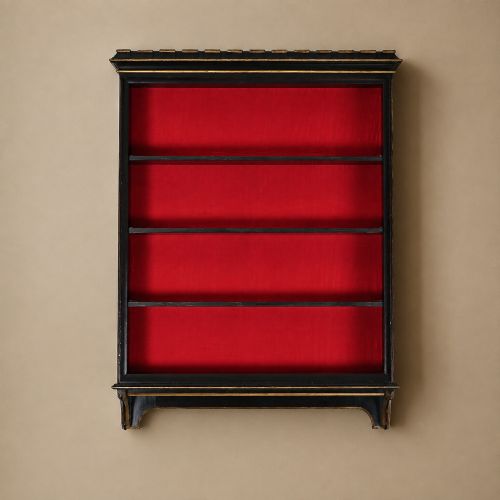
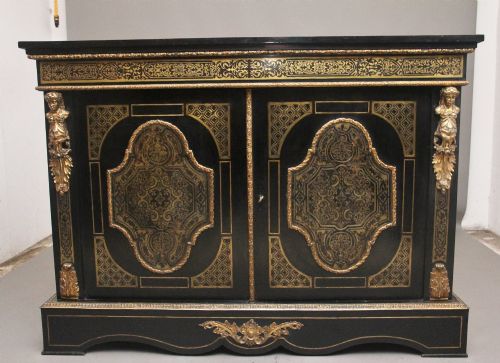
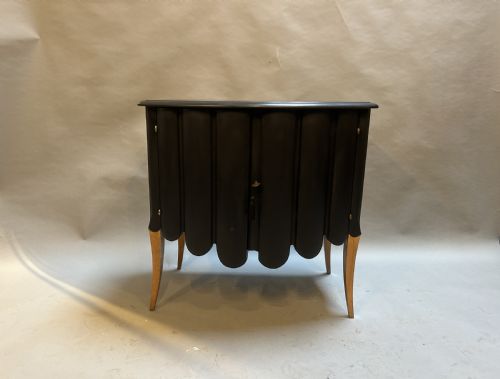
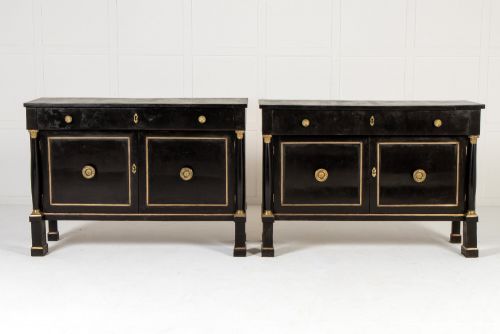
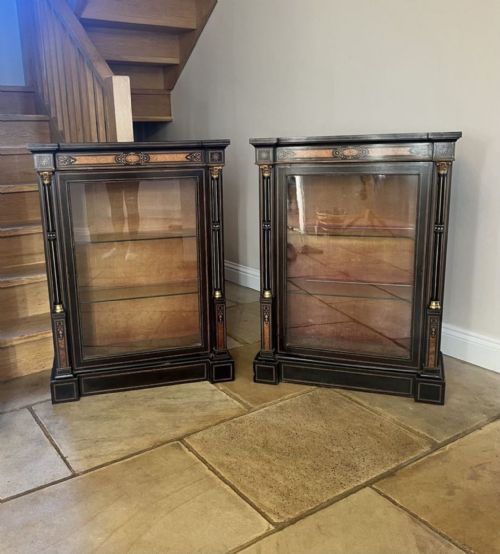
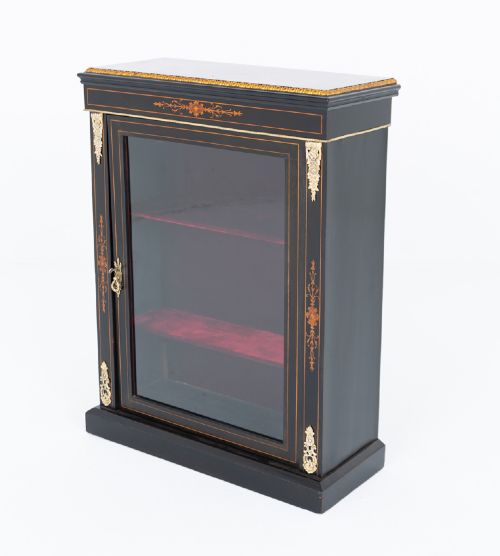
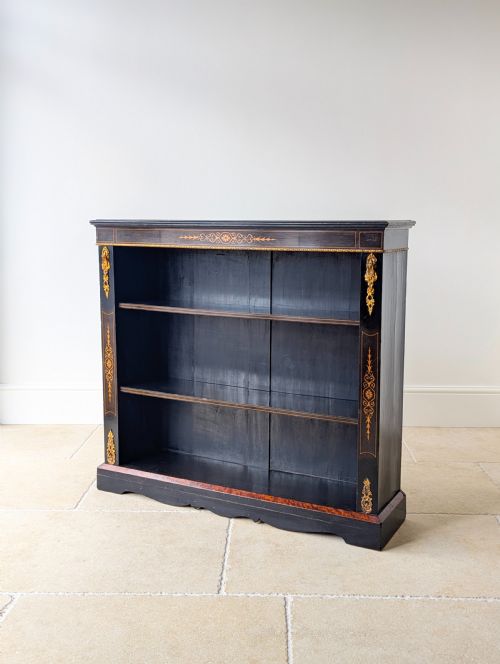


Black Ebonised Cabinet
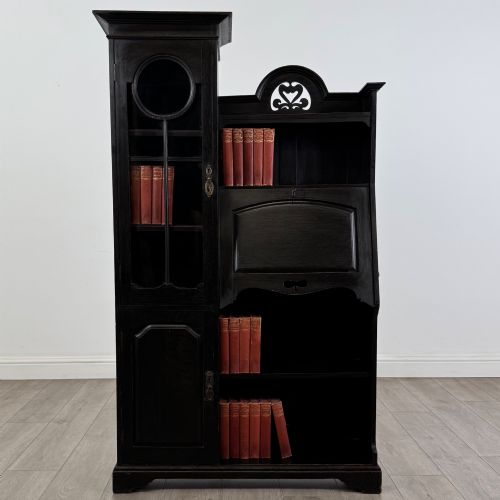
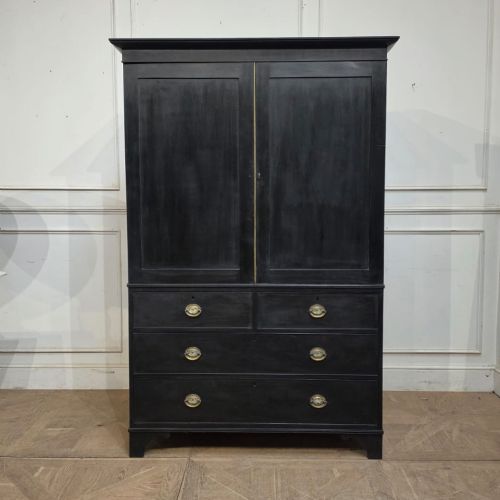
A black ebonised cabinet brings deep colour and striking contrast to a room, offering both display and storage within Victorian design.
Understanding the black ebonised cabinet
When you search for a black ebonised cabinet, you encounter nineteenth-century pieces that range from glazed credenzas to mirrored display cabinets. These items originate from the Victorian era, spanning specific dates such as eighteen-fifty, eighteen-seventy, and eighteen-ninety, as well as the broader nineteenth century. The Aesthetic Movement and Victorian Boulle Revival shape the visual character of these dark, polished forms.
The credenza and the side cabinet dominate the available selection, often featuring breakfront shapes or mirrored backs. Walnut and amboyna woods appear beneath the dark finish, providing rich underpinnings for the surface treatment. Makers such as Garnett and Sons produced these pieces during the later Victorian decades, combining dark timber with fine mounts.
Materials and construction
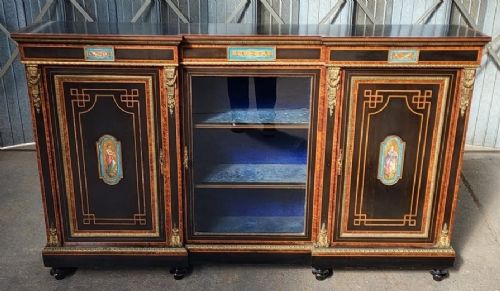
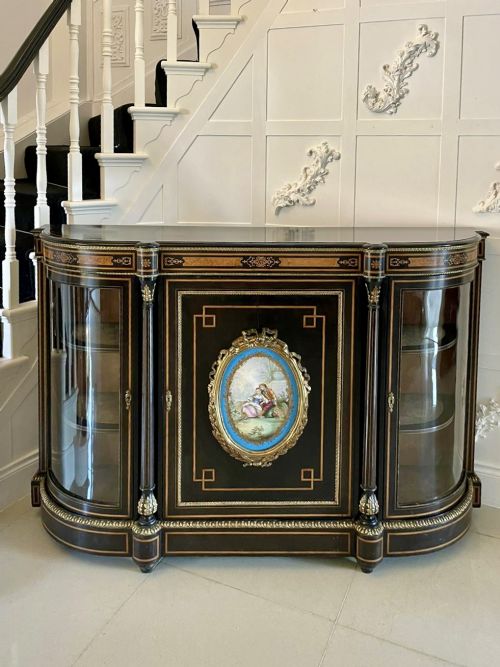
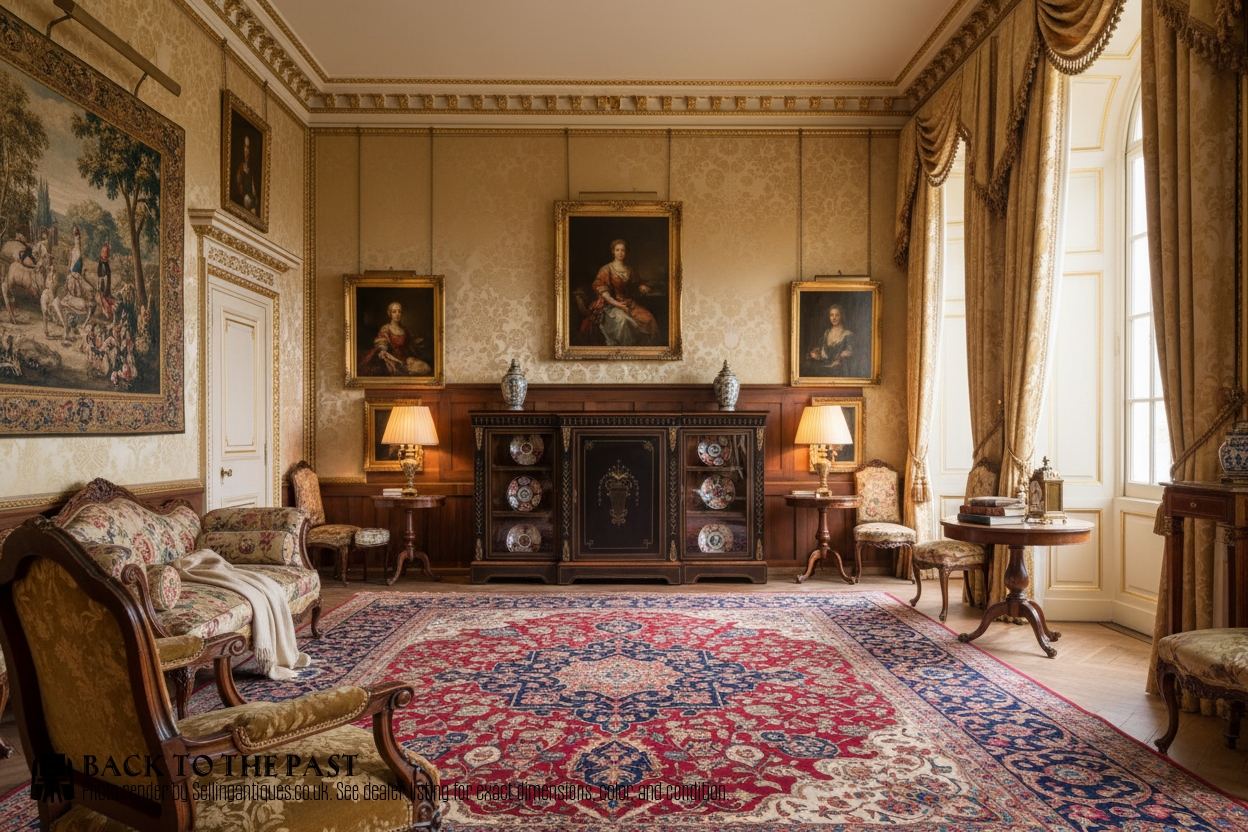
Craftsmen built these cabinets using pine, burr walnut, and amboyna veneer, applying a dark ebonised finish to imitate costly ebony wood. Glass panels, brass details, and gilt metal mounts accent the dark surfaces, while pietra dura and jasperware inserts add colourful focal points to specific credenzas. Hand-painted floral decoration also appears on selected pine surfaces within the archive records.
The Boulle Revival pieces incorporate tortoiseshell and brass marquetry in intricate patterns across the dark ground. Gilt bronze mounts secure the structural corners and frame the central doors, requiring precise metalwork and joinery. Glazed compartments rely on fitted wooden frames designed to showcase porcelain and decorative objects.
Retail Price Guide 2026
Typical UK retail prices for black ebonised cabinet, calculated from the Sellingantiques database of over a million retail prices indexed since 2003. This retail price guide relies exclusively on Sellingantiques data; no external sources or auction records are used, so the figures do not describe the wider market.
Materials recorded on this site include ebonised wood, glass, brass, gilt metal, burr walnut, amboyna veneer, jasperware, and gilt bronze.
Distinguishing quality
Quality in these dark cabinets rests upon the depth of the ebonised finish and the preservation of the underlying timber veneers. Superior examples integrate complex decorative elements like pietra dura plaques or fine amboyna panels rather than relying on plain ebonised wood alone. The crispness of the gilt bronze mounts and the precision of the Boulle marquetry separate standard production from exceptional workshop output.
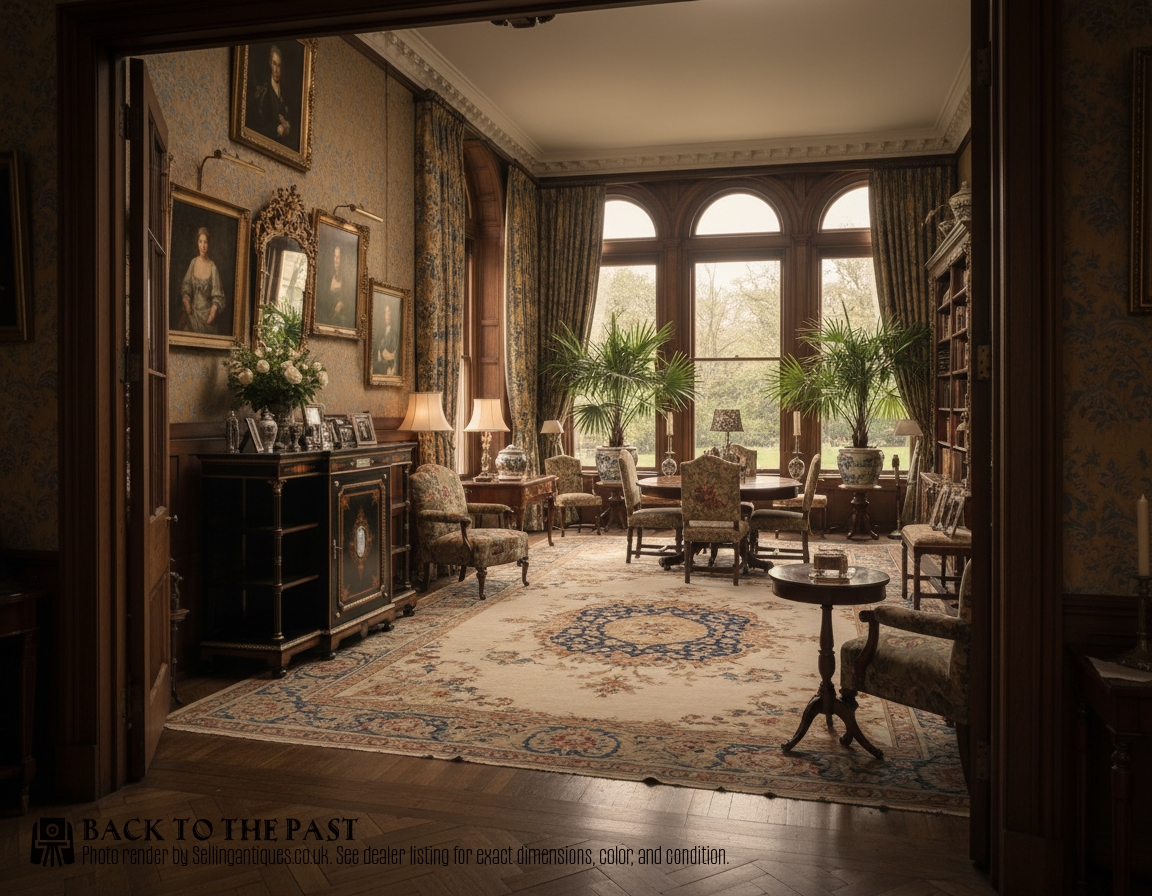
The integration of structural elements, such as fitted mirrored backs and breakfront proportions, dictates the architectural presence of the piece. Cabinets bearing documented maker attributions, such as Garnett and Sons, demonstrate a higher tier of Victorian cabinet-making. The condition of hand-painted floral details and the stability of glass door frames further influence the standing of an individual credenza.
Garnett and Sons
The Black Ebonised Cabinet Glossary
- Ebonised
- Wood treated with a dark stain or finish to resemble genuine ebony. This technique gained immense popularity during the Victorian period for creating dramatic contrast with gilt mounts.
- Credenza
- A low cabinet or sideboard, frequently featuring glass doors for display. Victorian versions often include breakfront shapes and mirrored backs.
- Pietra Dura
- Inlay work using polished, cut coloured stones to form pictorial designs. These hardstone plaques appear as decorative panels on nineteenth-century credenzas.
- Boulle
- Marquetry technique involving tortoiseshell and brass cut in intricate scrollwork patterns. The Victorian Boulle Revival brought this seventeenth-century French style back into fashionable interiors.
Frequently Asked Questions
What is a black ebonised cabinet?
A black ebonised cabinet is a nineteenth-century Victorian storage and display piece made from wood treated with a dark finish to mimic costly ebony. These items often incorporate glass doors, mirrored backs, and decorative mounts of brass or gilt bronze.
Such cabinets served as formal reception room furniture designed to display ceramics and decorative works of art. Their dark surfaces provided a stark, fashionable contrast against brightly coloured Victorian interiors.
How do I identify a Victorian ebonized credenza?
Victorian ebonized credenzas typically present a low, breakfront profile with central glass-fronted display compartments flanked by side cupboards. They frequently feature materials like amboyna veneer, pietra dura plaques, or gilt metal mounts characteristic of the eighteen-fifties through the eighteen-nineties.
Many examples reflect the Aesthetic Movement or the Boulle Revival style through their specific ornamentation. Examining the interior construction and the quality of the dark surface finish helps confirm the nineteenth-century origin.
Where were these cabinets placed in a home?
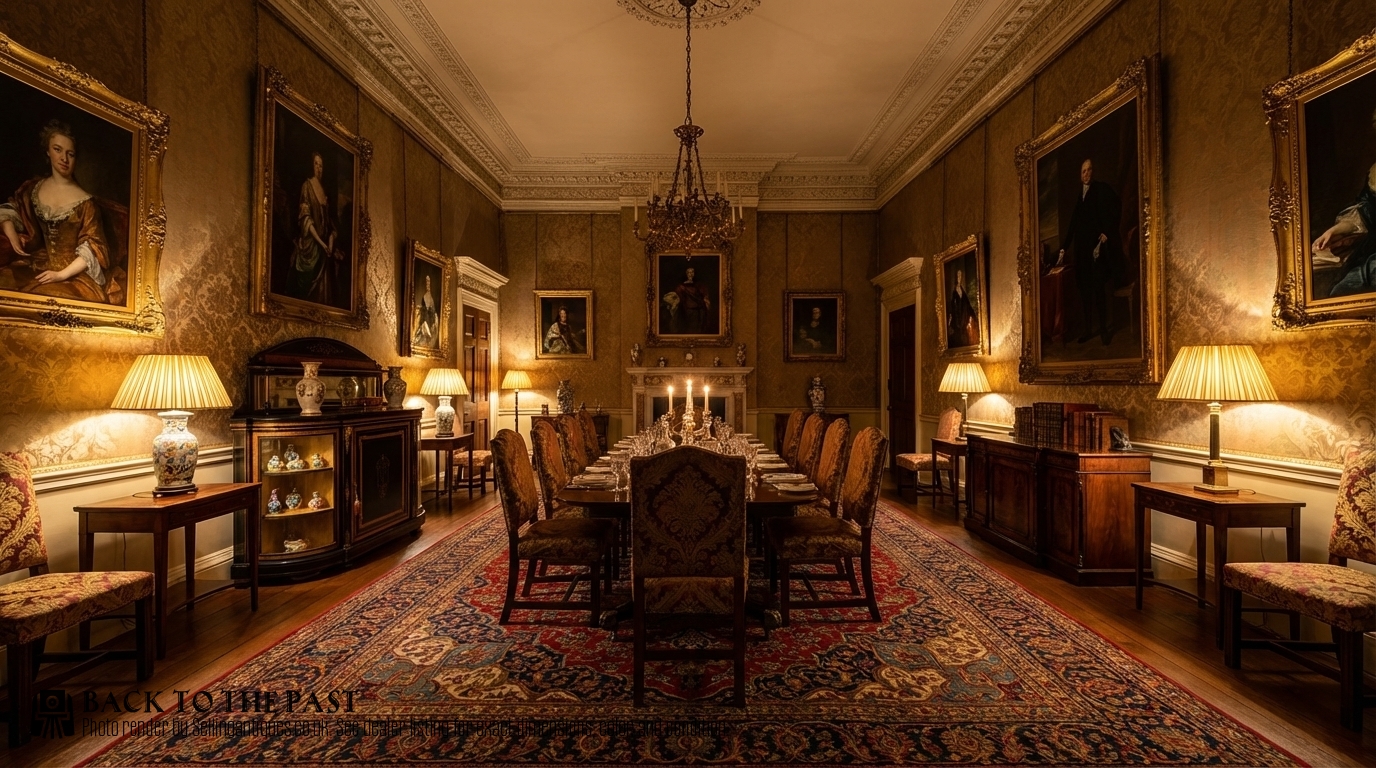
These cabinets traditionally stood in formal drawing rooms, parlours, or dining rooms as central display and storage pieces. Their low profile allowed owners to place decorative objects, clocks, or lamps on the top surface.
Credenzas with mirrored backs reflected light and the surrounding room, making them effective for brightening Victorian reception spaces despite their dark ebonised finish.
How should I care for an ebonised wood surface?
Maintaining an ebonised wood surface requires gentle dusting with a soft, dry cloth to prevent micro-scratching on the dark polish. Avoid placing these cabinets in direct sunlight or near heat sources, which can dry out nineteenth-century timber and crack the finish.
Applying specialised furniture wax sparingly helps preserve the sheen of the ebonised wood and protects the underlying veneer from moisture and atmospheric changes.