

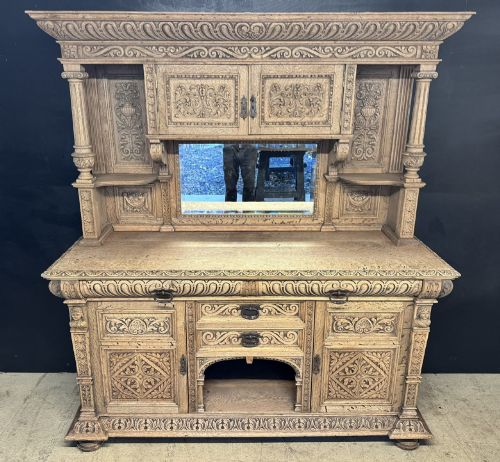
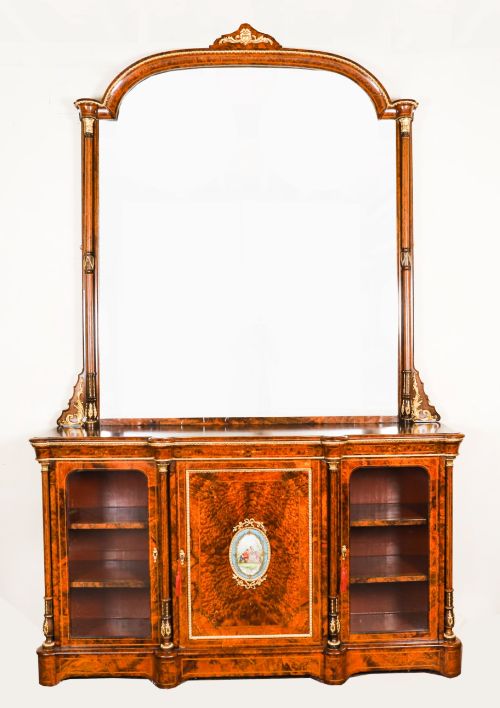
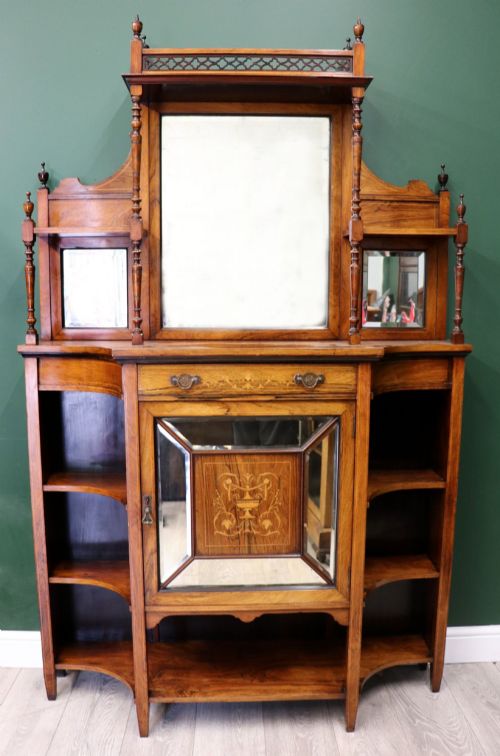
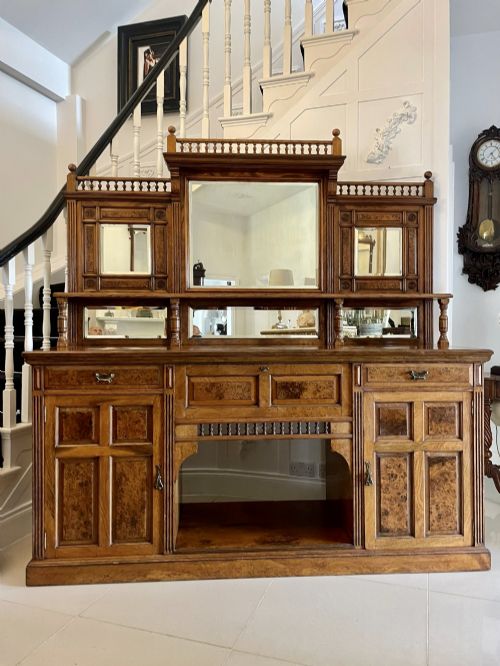
Antique Mirror Back Sideboard
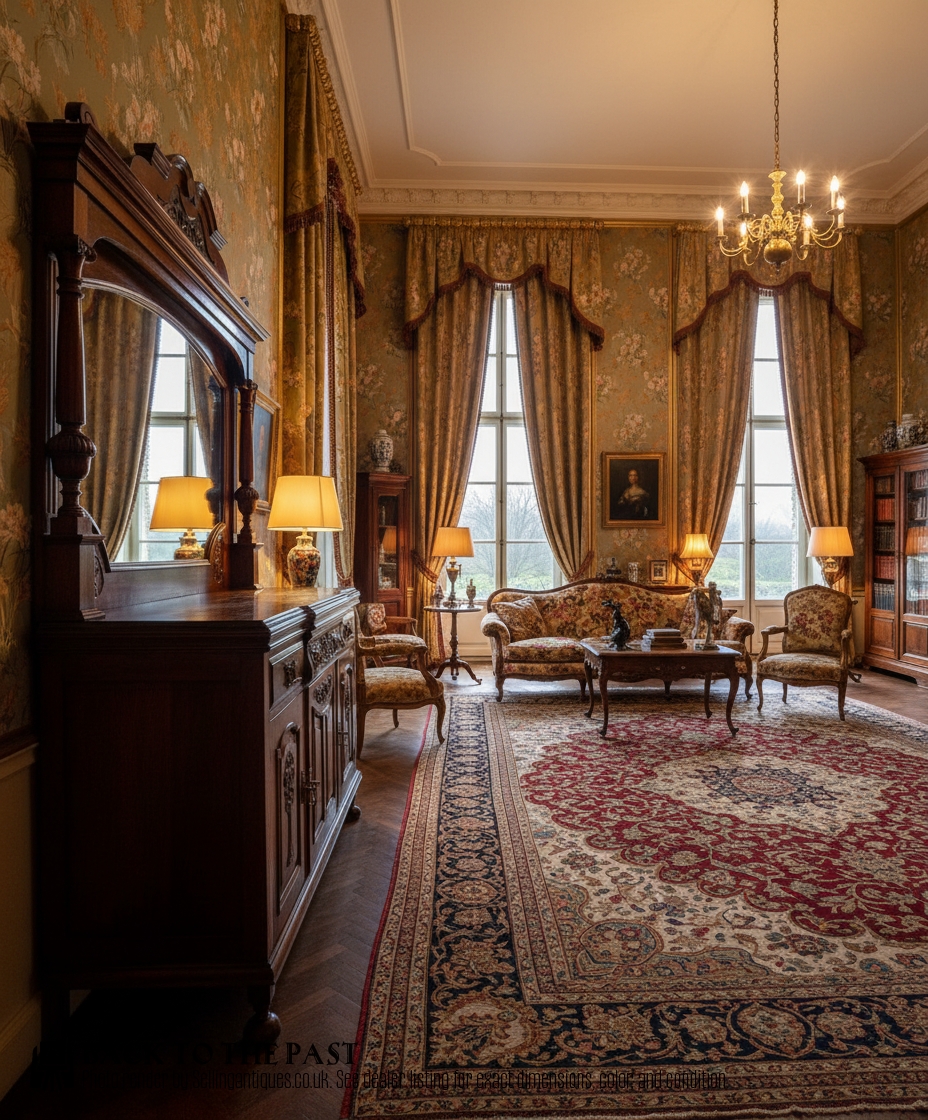
An antique mirror back sideboard combines generous dining room storage with an integrated glass panel, bringing light and presence to period interiors.
Antique Mirror Back Sideboard
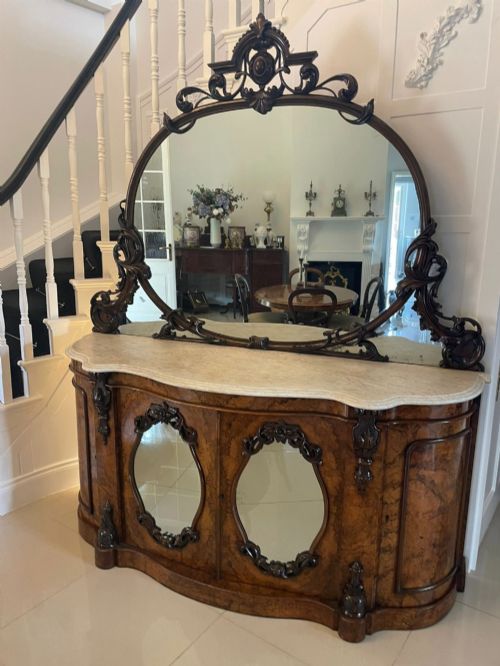
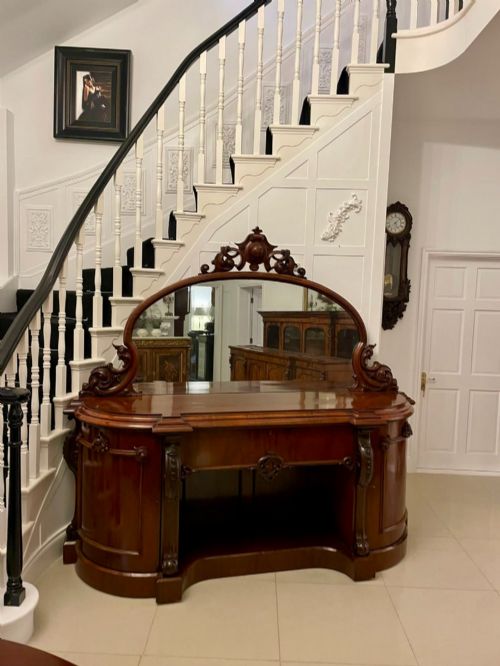
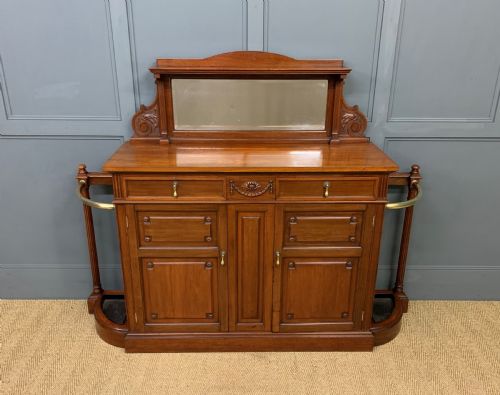
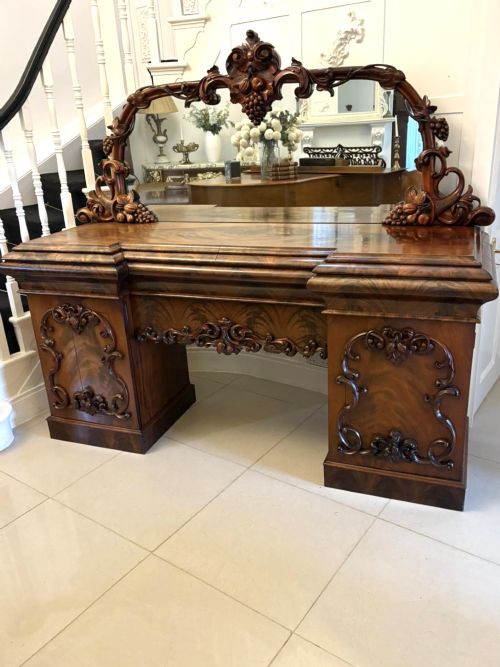
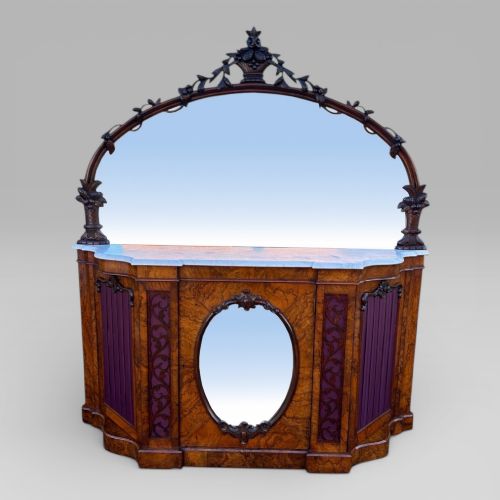
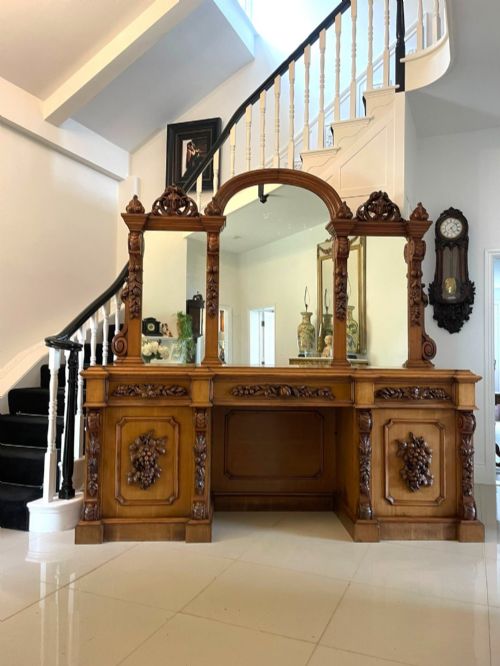
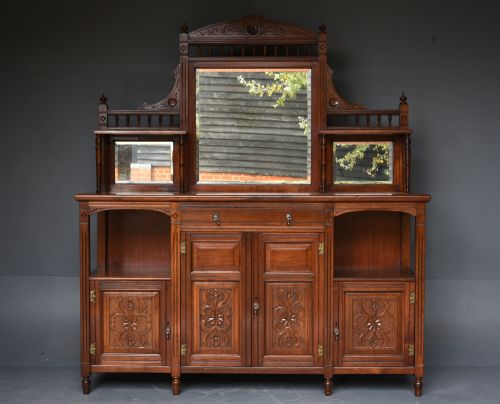
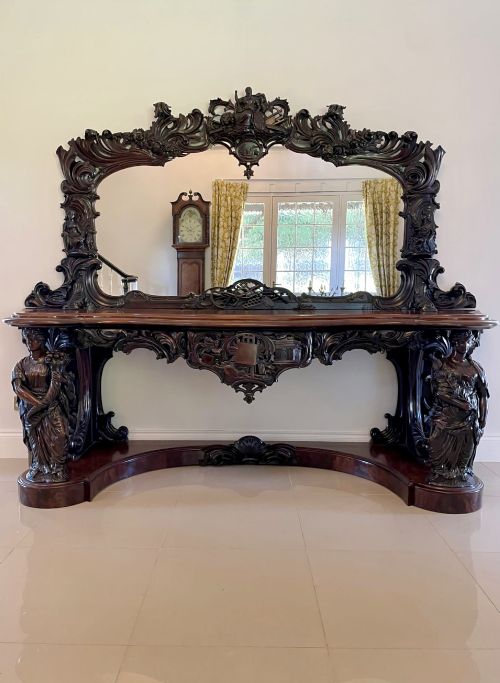
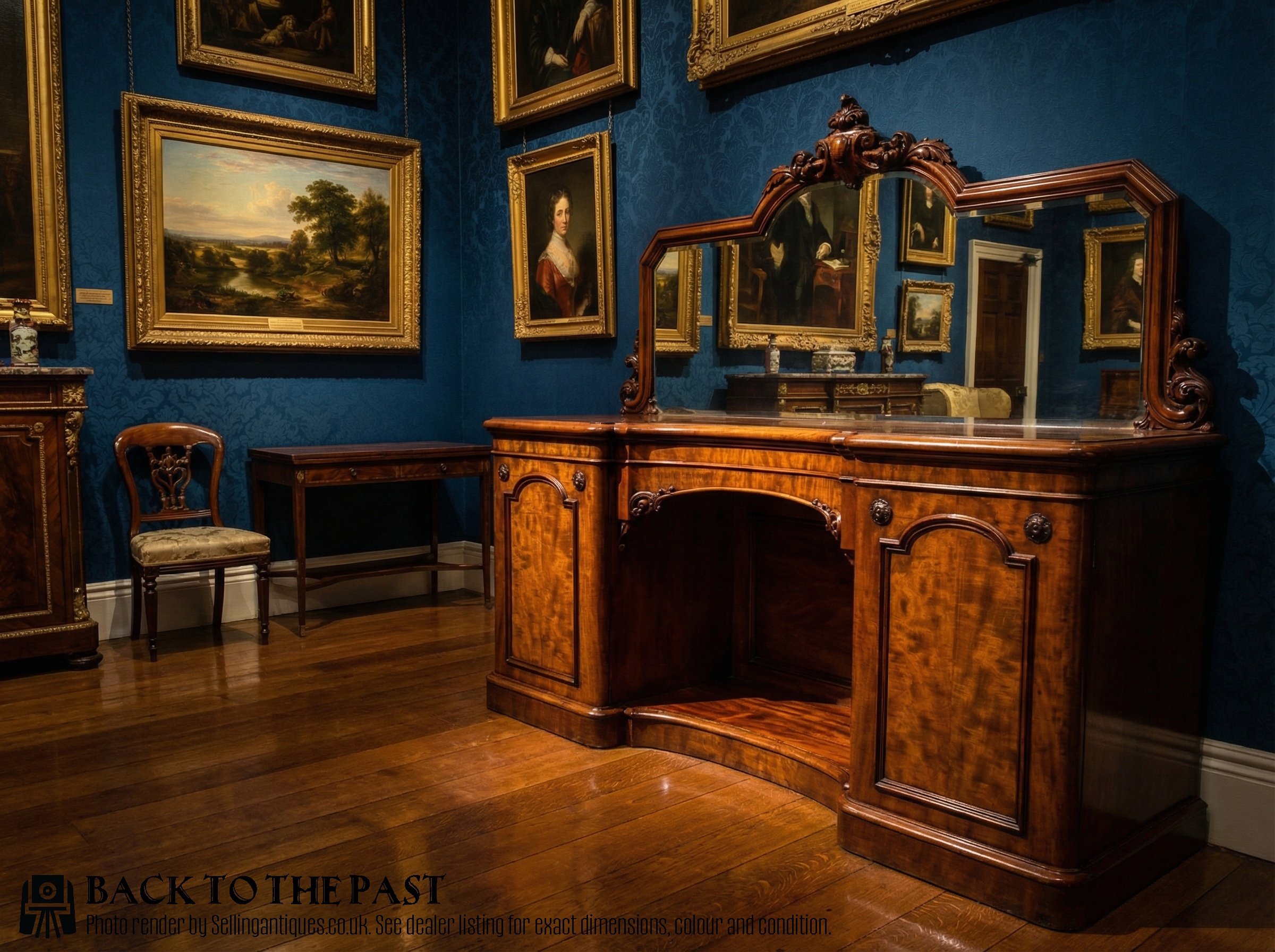
The pieces grouped under the search for an antique mirror back sideboard are substantial dining and reception room furnishings produced during the nineteenth and early twentieth centuries. These forms combine a low pedestal base or cabinet with an upright superstructure framing a glass plate, reflecting light and displaying silver or glassware.
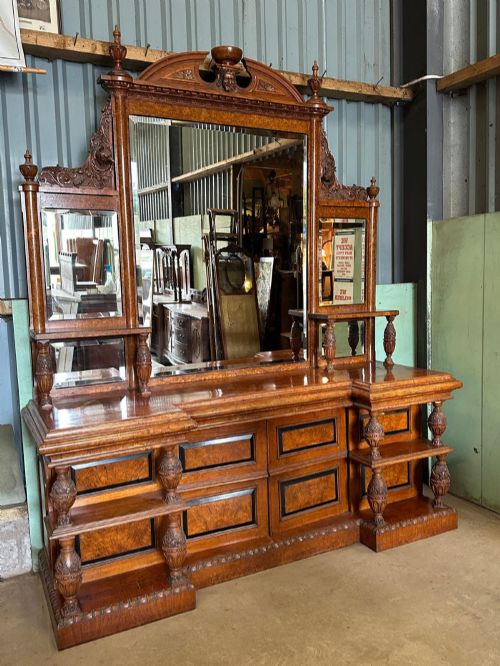
Victorian examples dominate the material record, frequently constructed from dense timbers such as mahogany, burr walnut, and carved oak. Many of these pieces integrate marble tops, open shelving, and enclosed cupboards beneath the defining mirror plate.
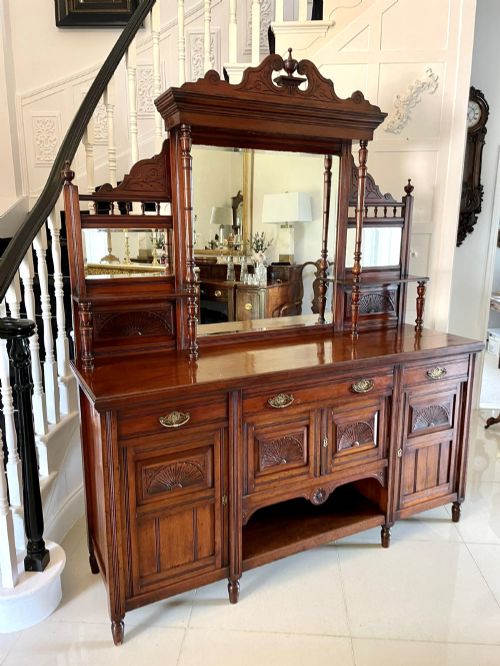
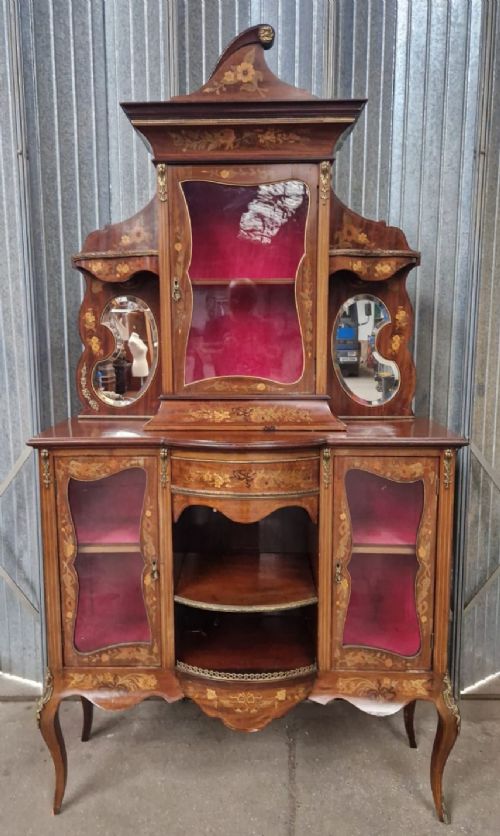
Later Edwardian and Arts and Crafts iterations shift towards simpler linear forms in oak and mahogany, sometimes incorporating inlaid motifs or copper hardware. These variations bridge the gap between formal nineteenth-century dining furniture and lighter domestic requirements of the early twentieth century.
Materials and construction methods
Cabinetmakers utilised dense hardwoods including mahogany, rosewood, and oak as the structural foundation, often applying figured veneers like burr walnut or pollard oak to prominent door panels and friezes. These timbers were selected for stability and grain movement, providing durable carcases capable of supporting heavy marble tops and substantial timber superstructures.
Mirror glass was bevelled and silvered by hand, then housed securely within carved or moulded wooden frames attached firmly to the rear of the sideboard base. Brass handles, hinges, and occasional cast iron mounts complete the hardware assembly, fixed with traditional slotted screws.
Antique Mirror Back Sideboard Retail Price Guide 2026
Typical asking prices for mirror back sideboard among the pieces listed under this phrase on Sellingantiques today, from the lower quarter to the upper quarter. They describe what is for sale here now, not the wider market.
Listings feature Victorian, Edwardian, and Regency periods, using materials like mahogany, rosewood, oak, burr walnut, and mirror glass.
Distinctions in construction and design
The grade of an antique mirror back sideboard depends upon the selection of timber veneers and the depth of hand carving on the mouldings and pilasters. Pieces featuring figured burr walnut, pollard oak, or solid rosewood sit at the upper end of the scale compared to plainer mahogany or standard oak iterations.
Architectural ambition separates standard workshop output from exhibition grade pieces attributed to notable makers. Elaborate pediments, integrated display shelves, marble surfaces, and original bevelled mirror glass indicate higher standards of period craftsmanship.
Shoolbred & Co.·Collinson & Lock·Holland & Sons·Gillows·James Simpson & Sons
The Antique Mirror Back Sideboard Glossary
- Mirror Back
- An upright timber frame holding a glass plate attached to the rear of a sideboard. This element reflects room light and provides a decorative backdrop.
- Burr Walnut
- A figured timber veneer obtained from the knot growths of walnut trees. It exhibits intricate swirling grain patterns highly prized by Victorian cabinetmakers.
- Pollard Oak
- Timber harvested from pollarded oak trees, producing dense and clustered growth rings. This material creates a distinct mottled surface pattern on nineteenth-century furniture.
- Credenza
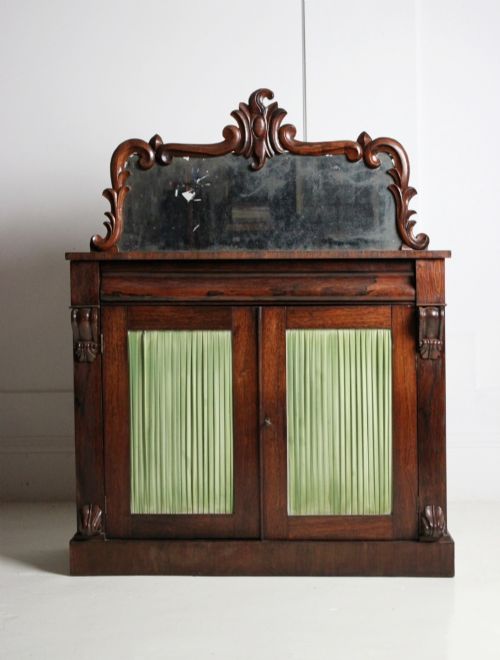
- A low dining room cabinet or sideboard, frequently fitted with glass doors or open central shelving. The form evolved during the Victorian period to display ceramics and silver.
- Chiffonier
- A compact sideboard or cabinet featuring a raised shelf or mirror back. These pieces were designed for smaller nineteenth-century reception rooms.
Antique Mirror Back Sideboard: Frequently Asked Questions
What rooms suit a mirror back sideboard?
These large timber cabinets function naturally in dining rooms, large hallways, or spacious living areas where floor space allows for deep proportions.
The reflective glass panel opens up dim corners and bounces natural daylight across the room, mimicking the effect of a wall-hung looking glass while providing concealed cupboard storage.
How do I care for antique mirror glass?
Maintenance requires gentle dusting with a dry microfiber cloth and avoiding harsh chemical cleaning agents that might seep behind the wooden frame.
Moisture ingress damages the historic silvering on the rear of the glass plate, so the piece should stay away from damp walls and direct sunlight.
How do I distinguish Victorian from Edwardian examples?
Victorian iterations tend to feature heavy carved mahogany, burr walnut, marble tops, and ornate architectural pediments with deep mouldings.
Edwardian and Arts and Crafts versions are lighter in scale, favouring plain or quarter-sawn oak, subtle line inlay, and simplified geometric framing.
Can the mirror back be detached?
Most mirror superstructures attach to the lower sideboard base using concealed screws and sturdy timber dowels inserted from behind.
Dismantling the upper frame from the pedestal base simplifies transport through narrow doorways, though the operation requires two people to avoid straining the joints.