
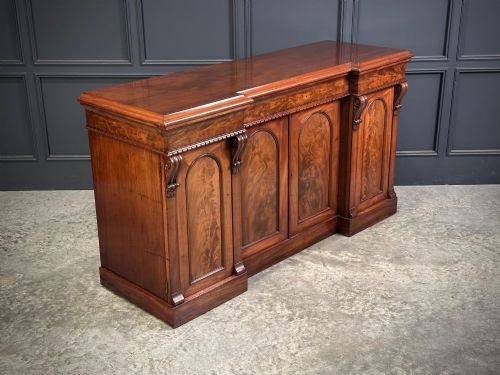
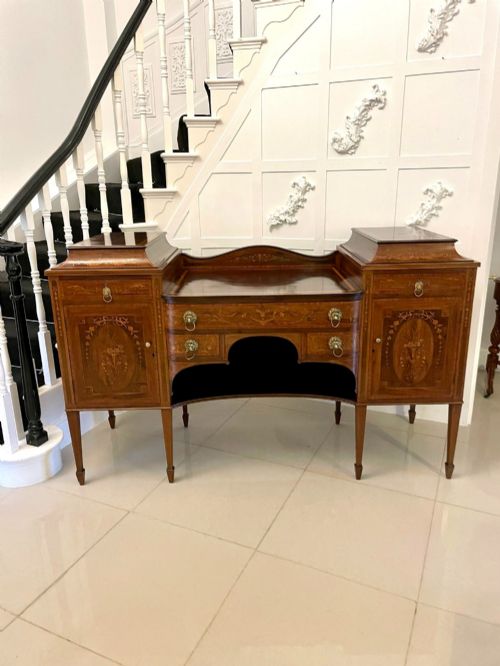
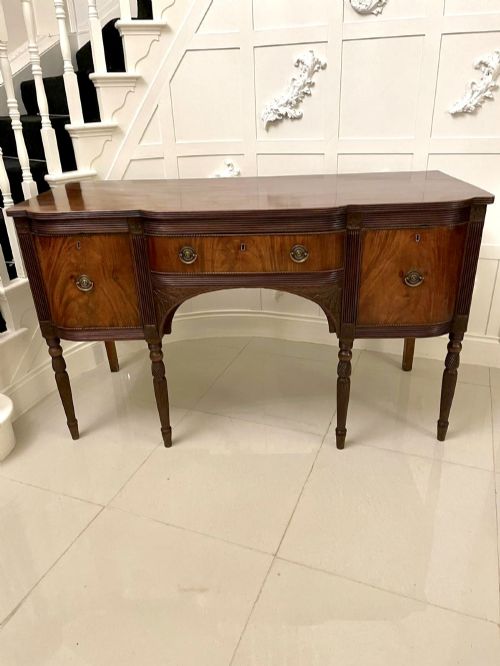
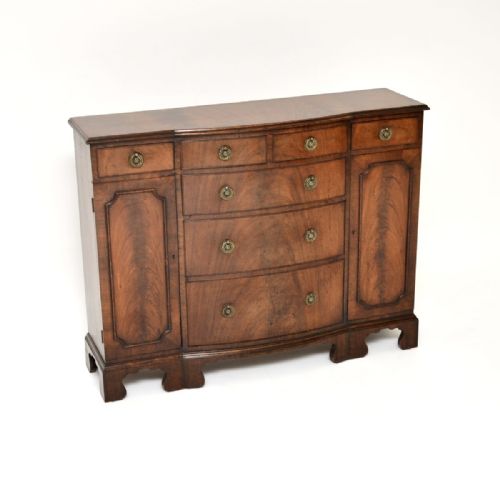
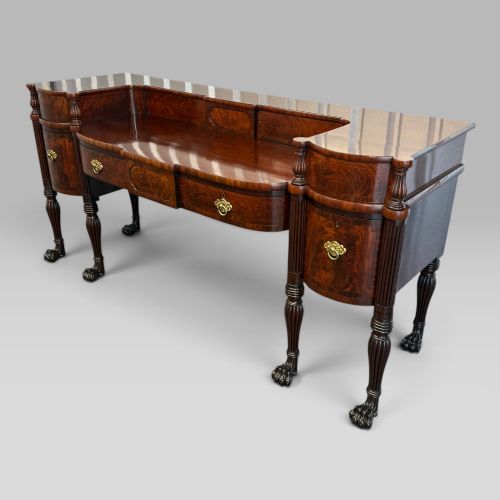
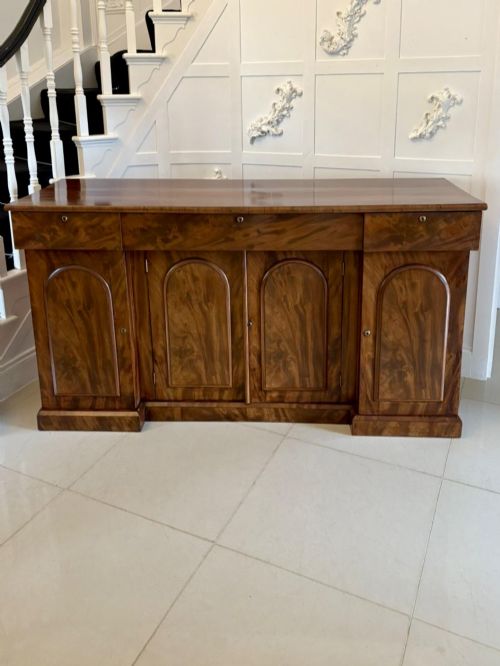
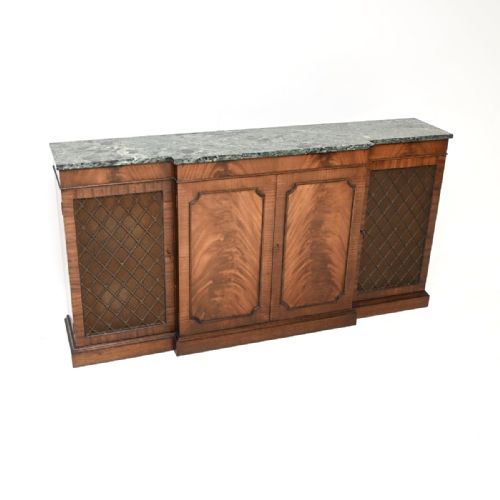
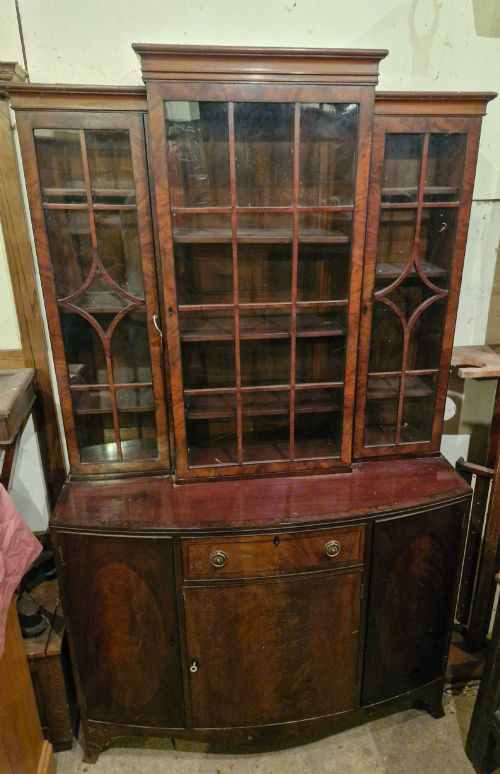
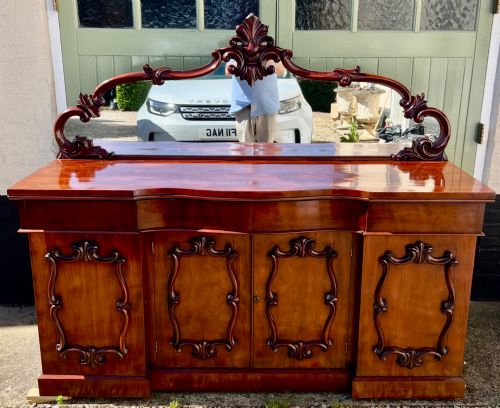
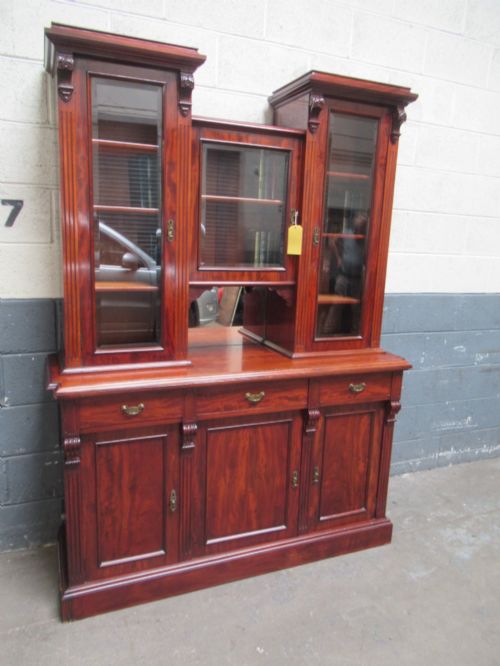
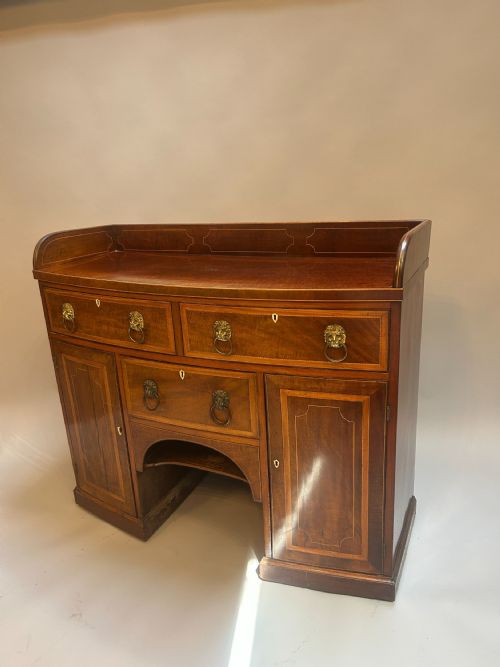
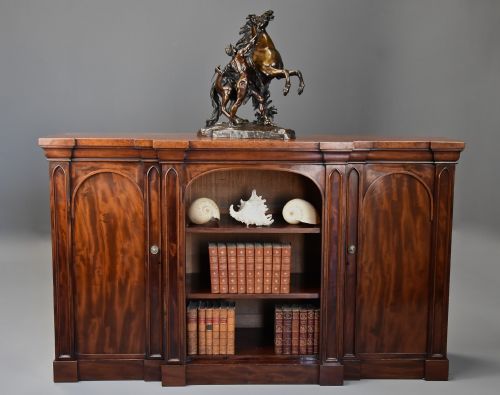
Mahogany Breakfront Sideboard
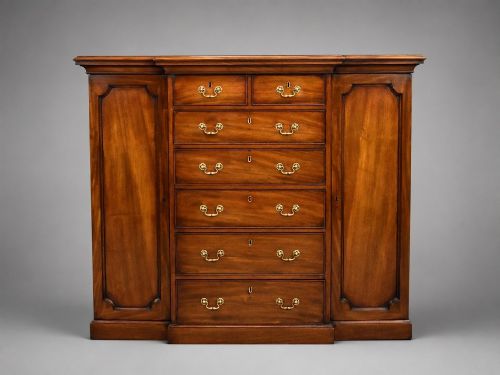
When choosing a mahogany breakfront sideboard, you select a substantial dining room piece featuring a central section flanked by slightly projecting wings.
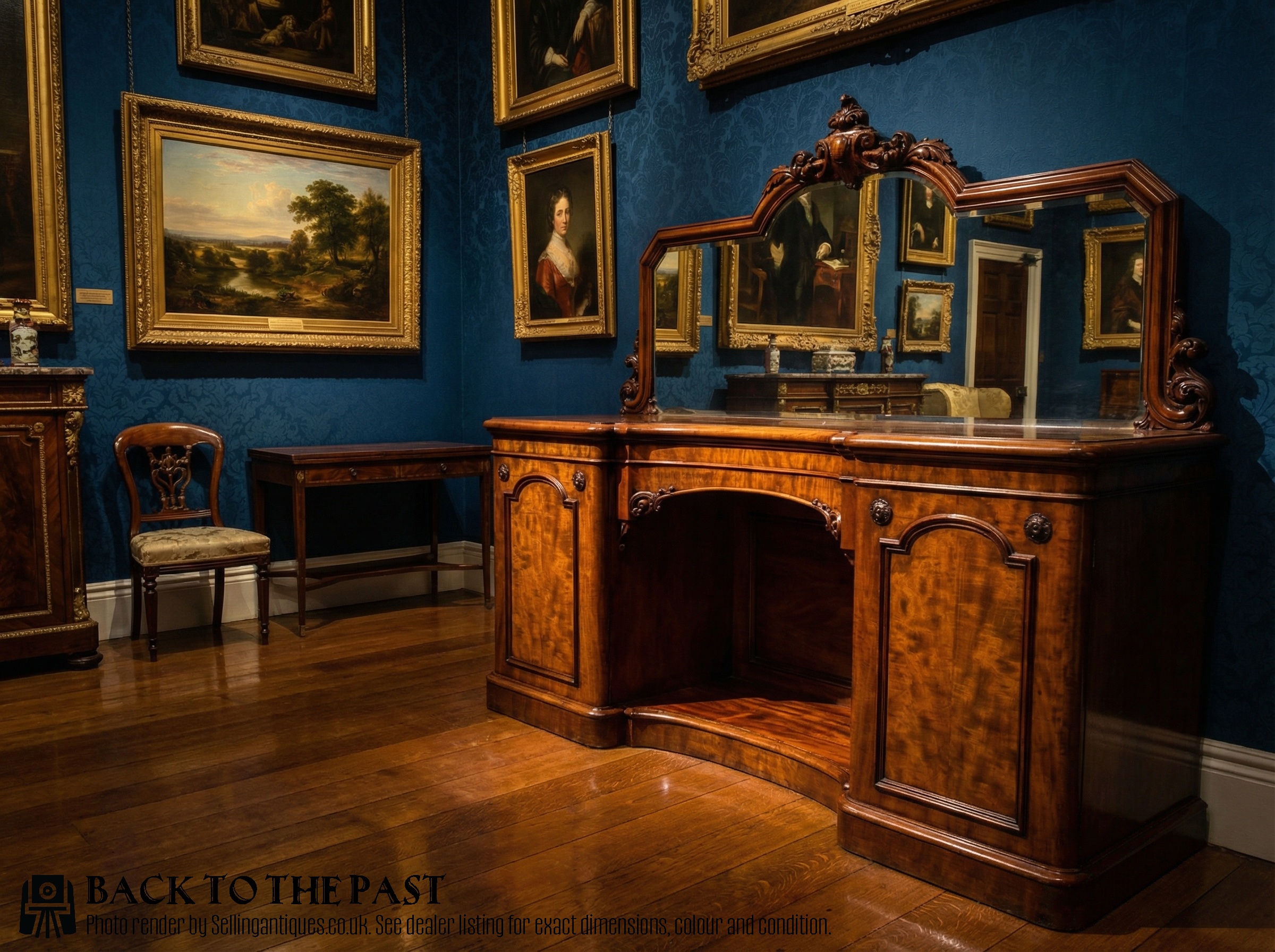
Mahogany Breakfront Sideboard
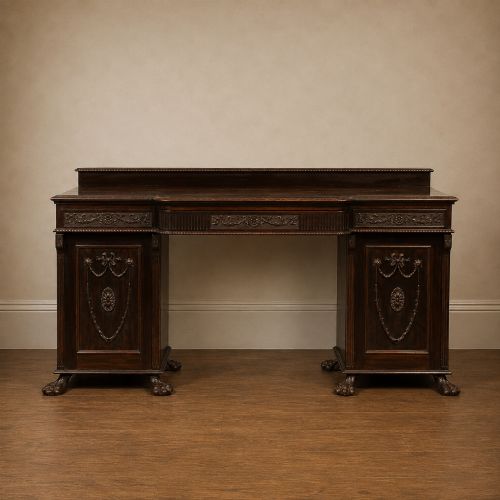
A mahogany breakfront sideboard serves as a commanding dining room storage unit, distinguished by its stepped or recessed central cabinet doors positioned between forward-projecting outer sections. These large serving and storage surfaces appear frequently across George III, Regency, and Victorian periods.
Makers designed these items to anchor formal dining spaces, offering generous internal capacity behind three or four doors. Examples span from strict Georgian proportioning to heavier Victorian interpretations and Edwardian revival pieces.
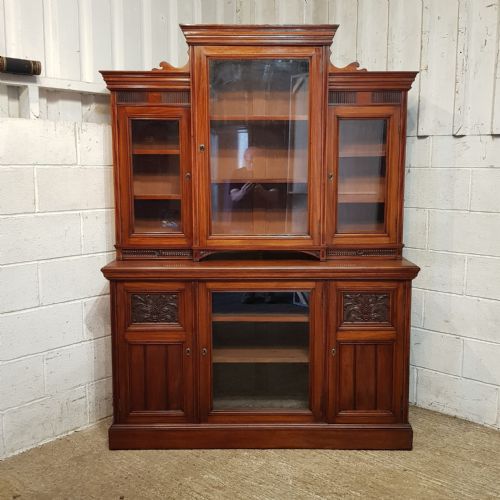
Surviving items often display multi-door configurations, occasionally paired with mirror backs or marble tops. Buyers encounter both original eighteenth and nineteenth-century examples alongside later revival iterations.
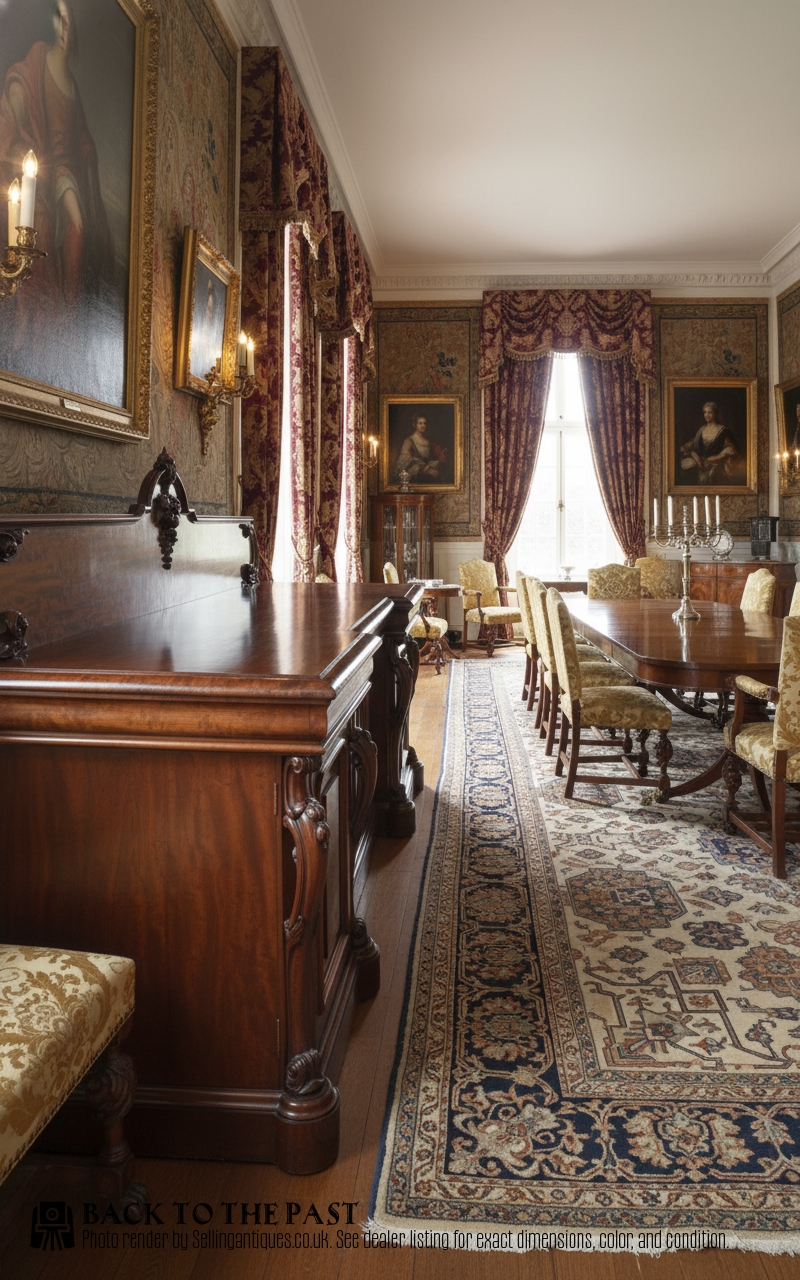
Materials and Construction
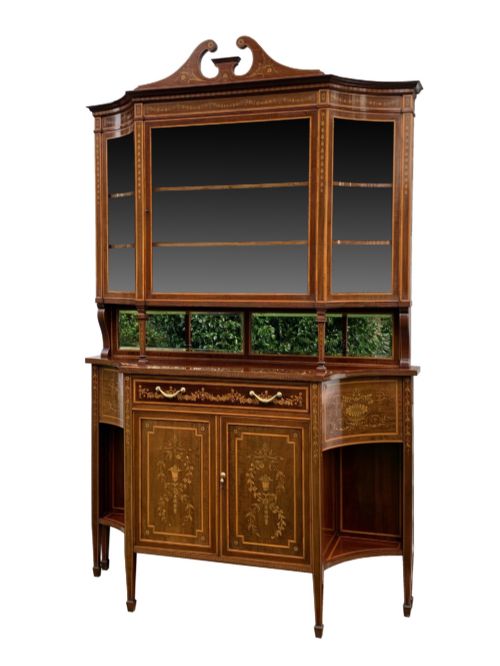
Cabinetmakers constructed carcass frames from solid timber before applying figured flame mahogany veneers to door panels and drawer fronts to create striking grain patterns. Selected pieces incorporate contrasting satinwood stringing, ebony details, or inlaid marquetry.
Regency and Victorian iterations frequently incorporate cast brass inlay, lion paw feet, and architectural mouldings. Glass doors appear on specific glazed variations while marble tops provide durable serving surfaces on selected formats.
Mahogany Breakfront Sideboard Retail Price Guide 2026
Typical asking prices for mahogany breakfront sideboard among the pieces listed under this phrase on Sellingantiques today, from the lower quarter to the upper quarter. They describe what is for sale here now, not the wider market.
Listings feature mahogany breakfront sideboards spanning the George III, Regency, Victorian, and Edwardian periods, alongside later revival interpretations.
Judging the Standard
Construction quality reveals itself through timber selection, where book-matched flame veneers show symmetrical grain alignment across every door and drawer front. Heavy carcases rely on precise joinery to ensure doors hang flush without sagging across wide spans.
Detailing differentiates workshop output, with crisp carved paw feet, refined brass stringing, and well-executed marquetry inlay marking superior production. Secondary woods used for drawer linings and internal shelving reflect the underlying grade of manufacture.
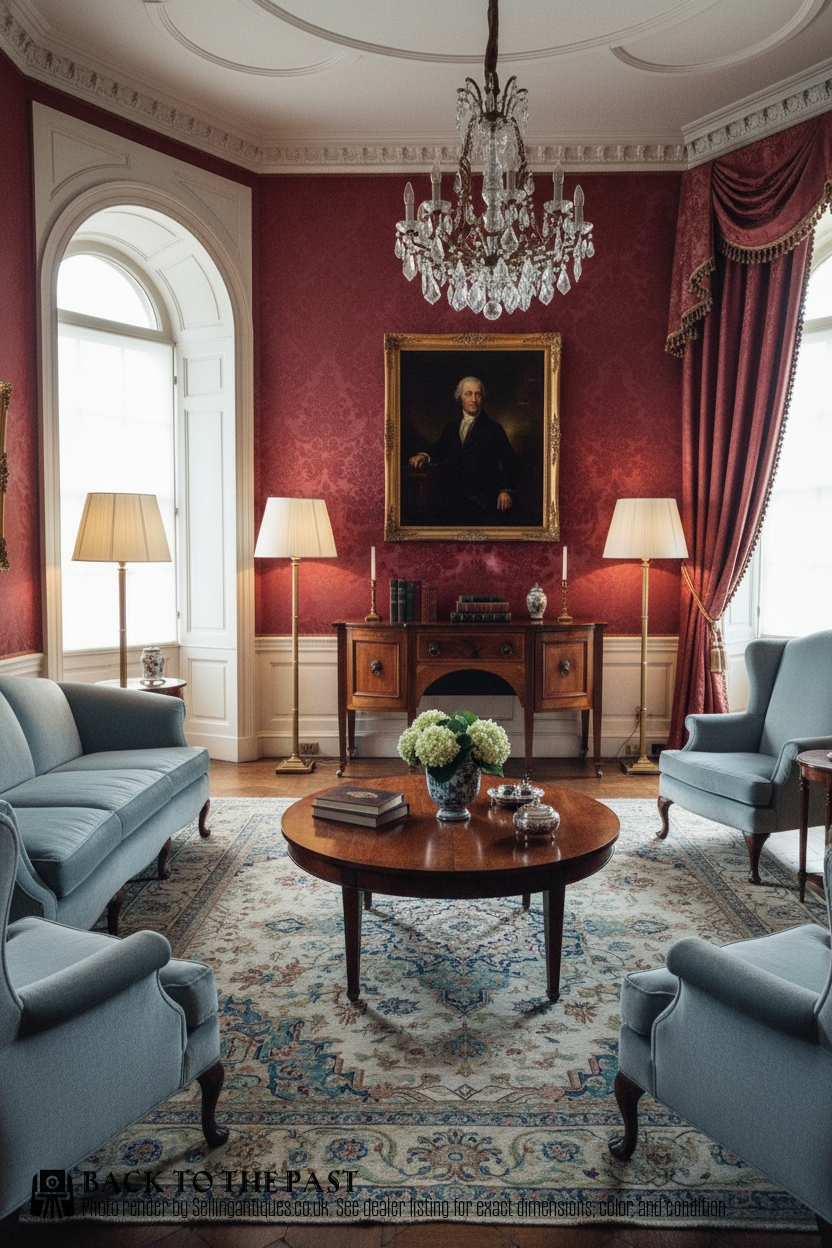
Hewetsons London·Edwards and Roberts·Gillows
The Mahogany Breakfront Sideboard Glossary
- Breakfront
- A cabinet design where the central section projects forward from the flanking side sections. This architectural arrangement creates depth and shadow across the front elevation.
- Flame Mahogany
- A timber veneer cut from the fork of the mahogany tree where branches join the trunk. This method yields a distinctive, flame-like grain pattern used on principal display surfaces.
- Marquetry
- Decorative patterns formed by fitting together thin veneers of different coloured woods. Artisans inlay these floral or geometric designs into the primary mahogany ground.
- Stringing
- Thin lines of contrasting wood or brass inlaid into channels cut into the furniture surface. This technique outlines drawers and panels to add linear definition.
- Credenza
- A low dining room storage cabinet without the raised superstructure found on tall sideboards. The term often describes low pedestal formats.
Mahogany Breakfront Sideboard: Frequently Asked Questions
How do I spot a true breakfront?
Examine the front elevation to see whether the central section steps forward from the flanking wings. True breakfronts maintain this three-part architectural projection across the entire width of the carcase.
Check the internal divisions behind the doors, as matching vertical partitions usually correspond to the external breaks in the facade.
What is flame mahogany?
Flame mahogany is a highly figured wood veneer sliced from the junction where branches meet the main tree trunk. This cutting method reveals rippling, fire-like patterns across the surface of the wood.
Cabinetmakers reserved these decorative veneers for the most prominent exterior panels, such as central cupboard doors and top drawers.
Where should I place a sideboard?
Position your sideboard against a principal dining room wall where its length and depth can command the space without blocking doorways. Ensure adequate clearance in front of the piece for opening large cabinet doors and pulling out drawers.
Keep the timber away from direct heat sources and strong sunlight to protect the fragile mahogany veneers from drying and cracking.
How do I date an antique sideboard?
Inspect the secondary woods inside the drawers, the style of the brass hardware, and the construction methods used on the backboards and drawer linings. Georgian pieces generally display lighter proportions and delicate stringing, while Victorian examples tend to be heavier with deeper mouldings.
Compare the overall decorative vocabulary, such as lion paw feet or marquetry panels, against known period traits recorded in standard cabinetmaking references.