


Inverted Breakfront Sideboard
An inverted breakfront sideboard is a commanding dining room piece defined by its recessed centre section, offering stately storage and rich timber grain.
What an inverted breakfront sideboard is
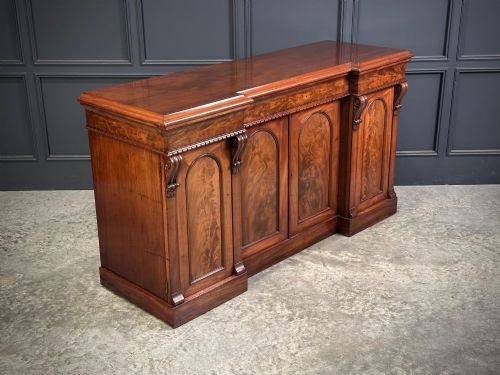
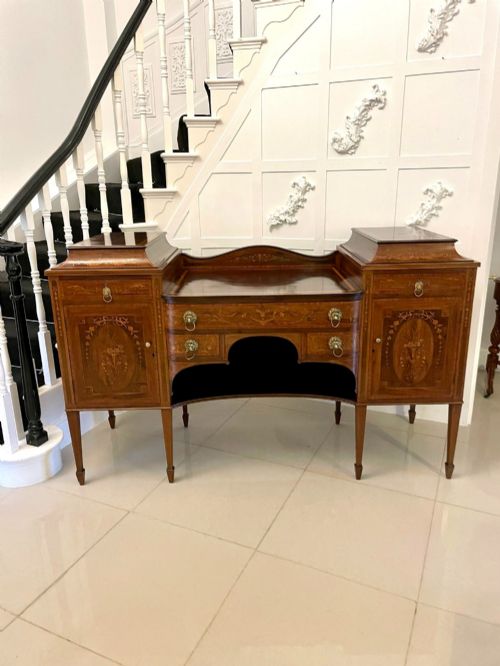
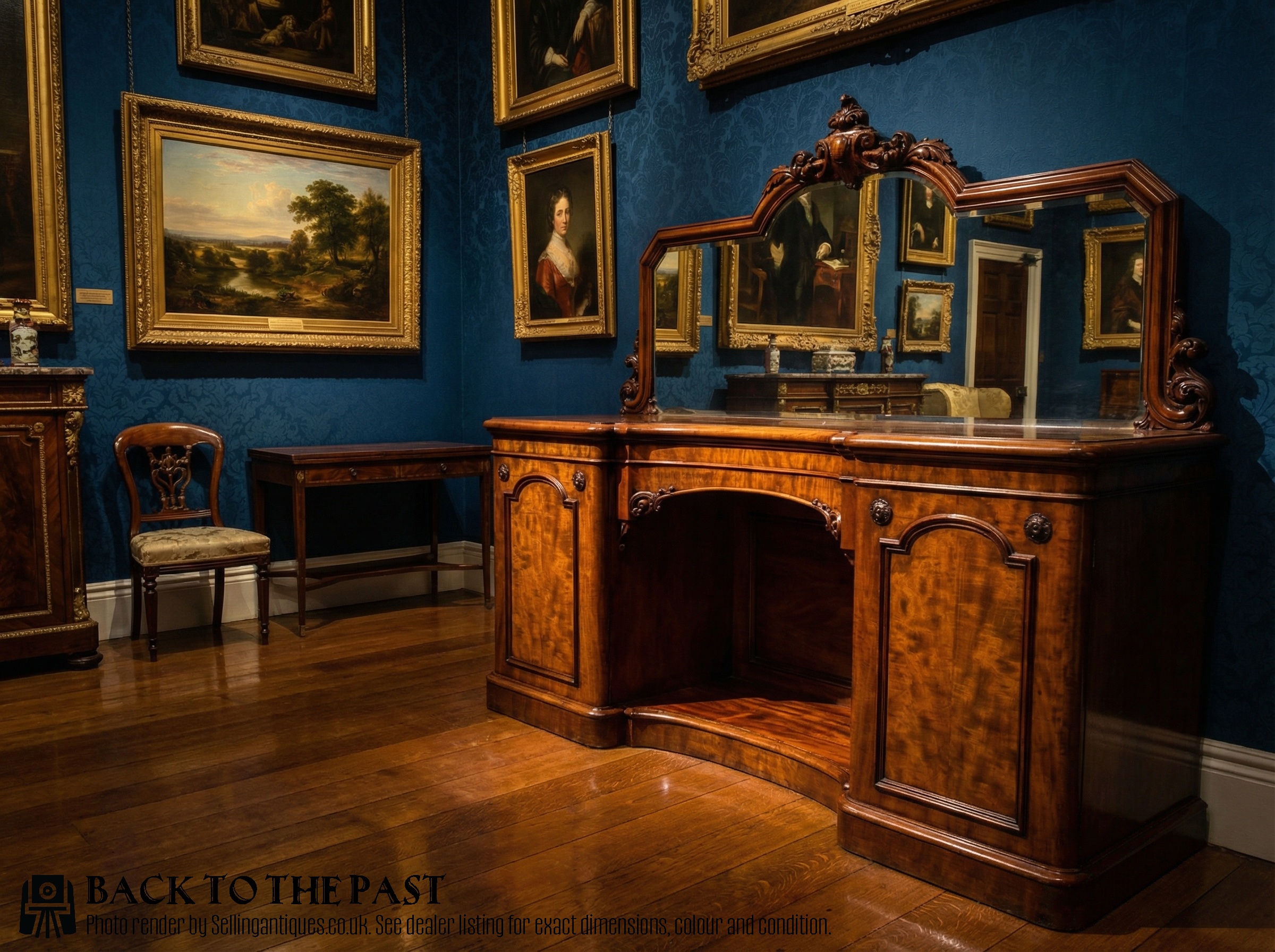
An inverted breakfront sideboard is a substantial timber dining room cabinet built with a recessed central section flanked by forward-projecting pedestals or cupboards. This architectural arrangement creates a dramatic shadow line and a strong focal point within a formal dining room or large reception space.
The versions most frequently met on this page span the Victorian era, the Regency period, and the early twentieth century, alongside revival styles like Sheraton and Chippendale. These pieces typically present substantial proportions, multi-door cabinetry, and deep foundational storage designed for serving silver and dining wares.
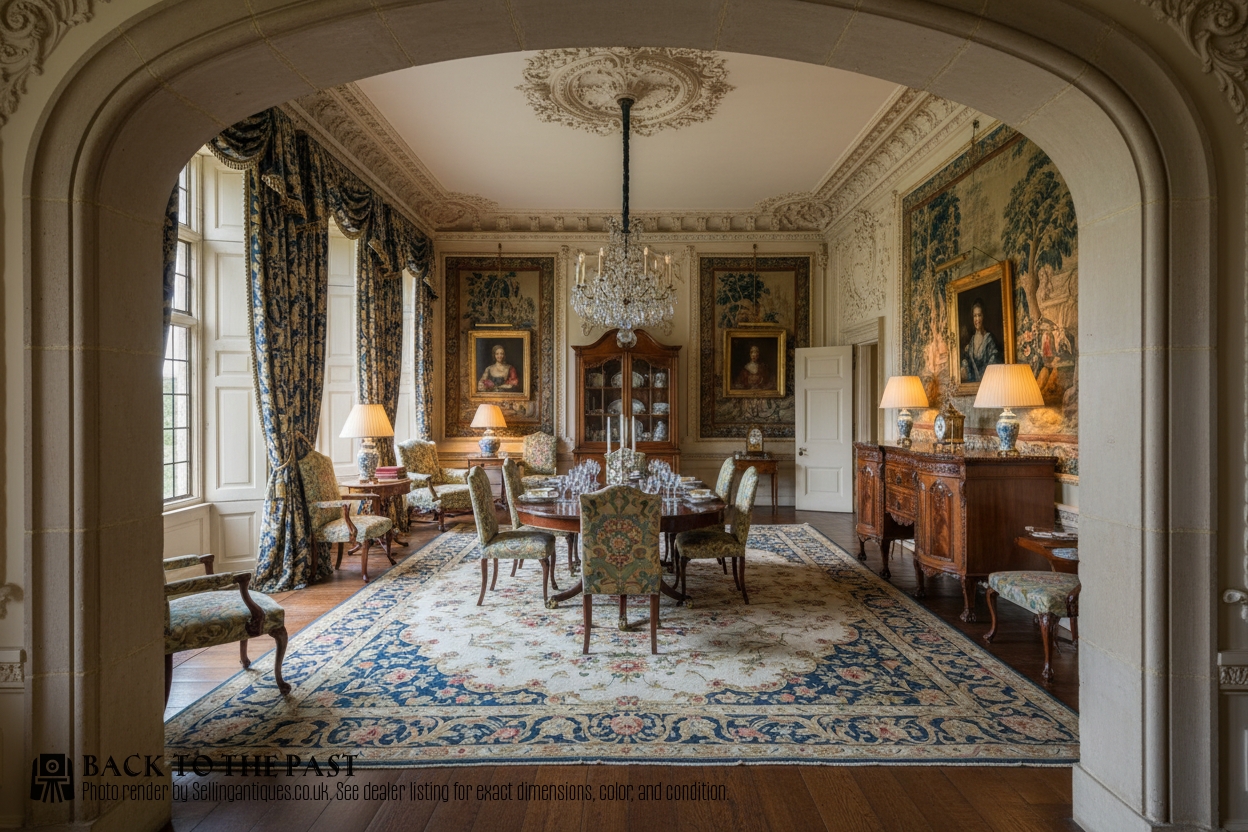
Makers and cabinetmakers of the nineteenth century utilised these complex configurations to showcase fine timber selections and meticulous joinery. The resulting forms serve as both practical storage and grand decorative statements that anchor traditional interiors.
How they were made
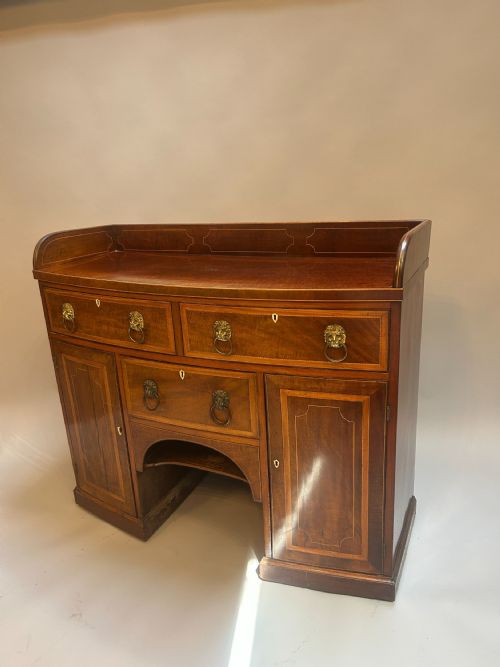
Cabinetmakers constructed these sideboards using sturdy primary timbers such as mahogany and oak, often applying figured flame mahogany veneer to the primary display surfaces. Satinwood and boxwood stringing frequently provide crisp linear contrast and delicate inlaid marquetry detail along the drawer fronts and cupboard doors.
Structural elements incorporated solid brass hardware, including decorative ring pulls, handles, and gallery rails where applicable. Carved mahogany details, such as corbels, pilasters, and feet, were hand-chiselled to add sculptural depth and formal weight to the architectural silhouette.
Retail Price Guide 2026
Typical UK retail prices for inverted breakfront sideboard, calculated from the Sellingantiques database of over a million retail prices indexed since 2003. This retail price guide relies exclusively on Sellingantiques data; no external sources or auction records are used, so the figures do not describe the wider market.
Listings feature mahogany, flame mahogany veneer, satinwood, boxwood, oak, and brass across Victorian, Regency, George IV, and William IV periods.
What varies in quality
The visual hierarchy of these sideboards rests primarily upon the choice and book-matching of flame mahogany veneer across the large expanse of the doors and drawers. Superior examples display symmetrical grain patterns that flow seamlessly across the front, whereas lesser pieces rely on plain timber or mismatched veneers.
Refinement in secondary details distinguishes the finest work from standard production, particularly in the precision of boxwood and satinwood stringing and the crispness of hand-carved mahogany flourishes. The integration of substantial brass mounts and solid drawer linings further separates workshop output.
Hewetsons London
The Inverted Breakfront Sideboard Glossary
- Inverted breakfront
- A furniture facade where the central section recedes rather than projects, reversing the traditional breakfront arrangement. This creates a distinct architectural rhythm across the front of the sideboard.
- Flame mahogany
- A highly figured tropical hardwood veneer exhibiting a flickering, flame-like pattern caused by the intersection of branch junctions with the main trunk. Cabinetmakers prized this timber for its dramatic visual movement.
- Stringing
- A narrow strip of contrasting timber, such as boxwood or satinwood, inlaid into channels on the furniture surface. It defines borders and creates geometric panel effects.
- Pedestal sideboard
- A heavy sideboard design featuring two substantial floor-standing cupboards connected by a central drawer or console table section. These units dominate large dining spaces with their monumental scale.
- Marquetry
- Decorative veneer work forming pictorial or geometric patterns using various coloured and textured timbers. Artisans cut and fitted these pieces together meticulously before gluing them to the carcass.
Frequently Asked Questions
How do I date a sideboard?
Dating a sideboard involves examining the timber species, veneer patterns, construction methods, and stylistic revival cues. Regency and William IV pieces often display heavier classical carving, while Victorian examples introduce mirror backs and rich mahogany veneers.
Hardware styles and secondary timbers like oak also provide reliable clues to the decade of manufacture.
Where were sideboards placed?
These sideboards traditionally stood against the main dining room wall, positioned to serve food, display silver, and store linens. Their generous proportions required spacious reception rooms.
Today, they serve a similar function in large dining rooms or operate as grand storage consoles in wide hallways.
How do I care for mahogany?
Mahogany furniture requires stable indoor humidity levels and protection from direct sunlight to preserve the depth of the timber finish. Regular dusting with a soft, dry cloth maintains the surface sheen without chemical buildup.
Applying occasional appropriate wax preserves the historic lustre of the flame veneer.