

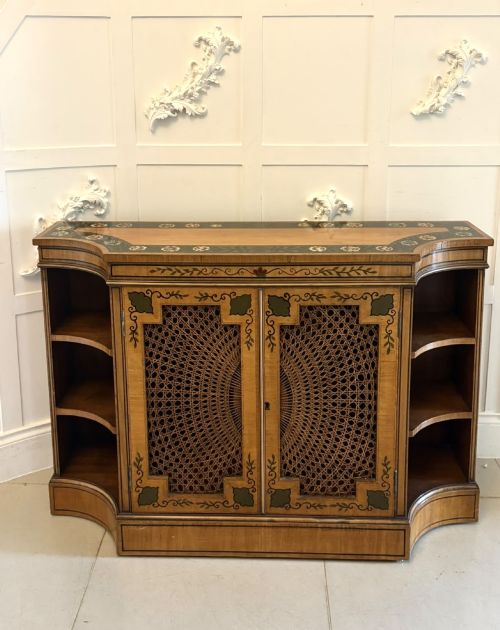
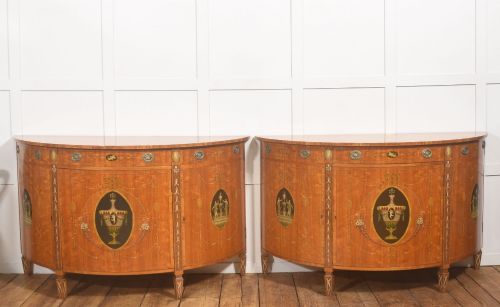
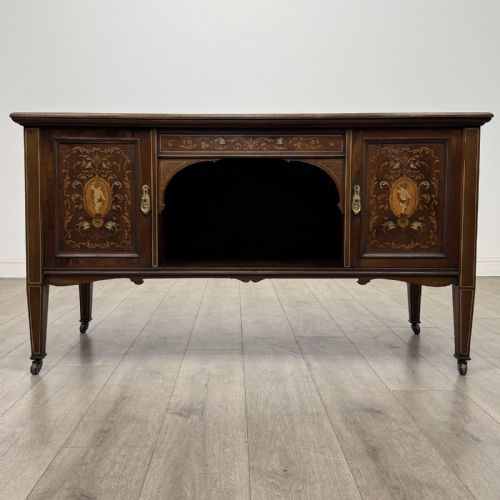
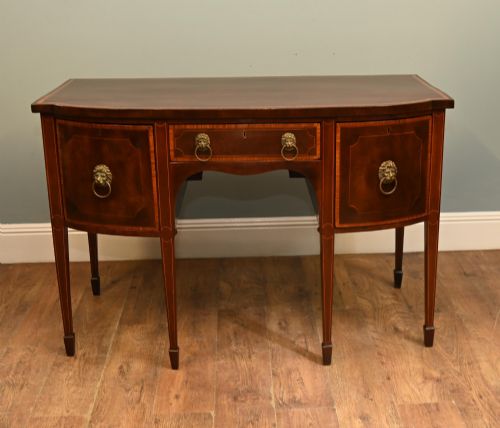
Sheraton Revival Sideboard
A sheraton revival sideboard brings refined neoclassical elegance into a room through delicate inlay and balanced proportions.
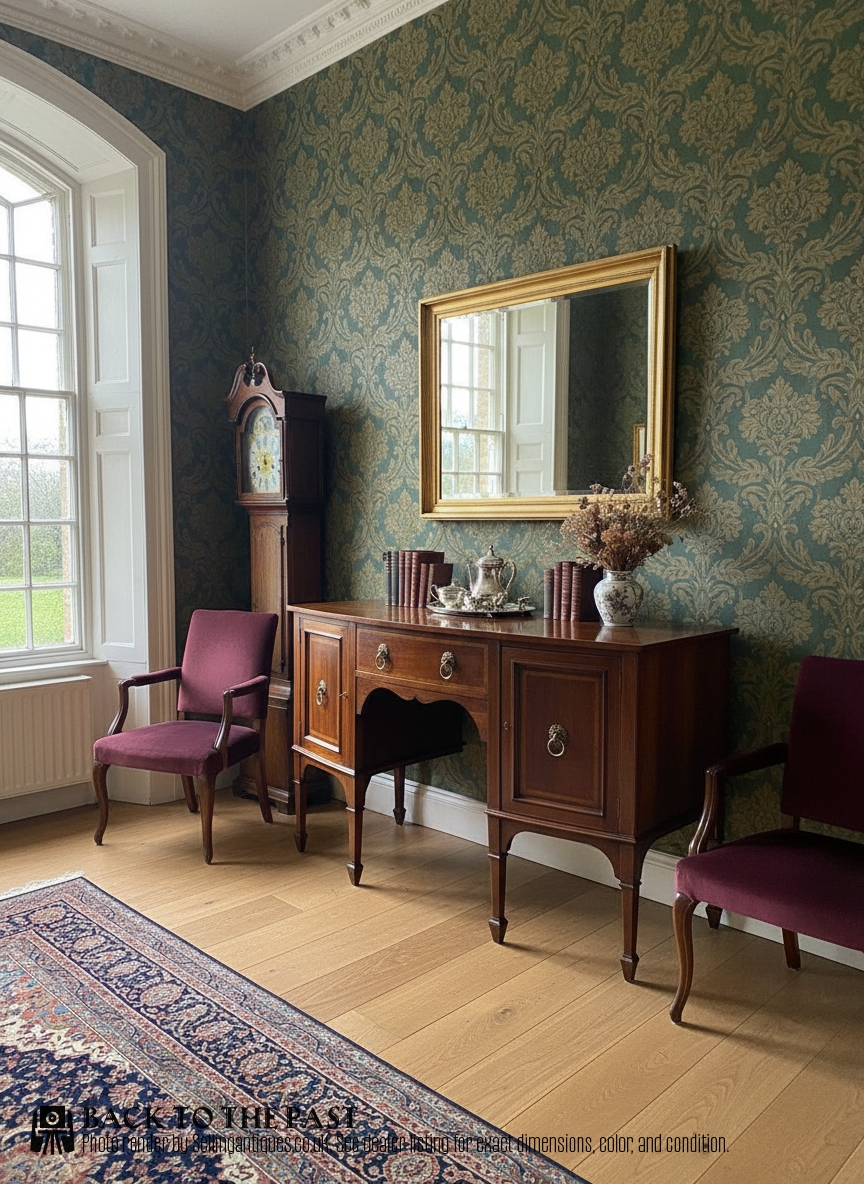
Sheraton Revival Sideboard
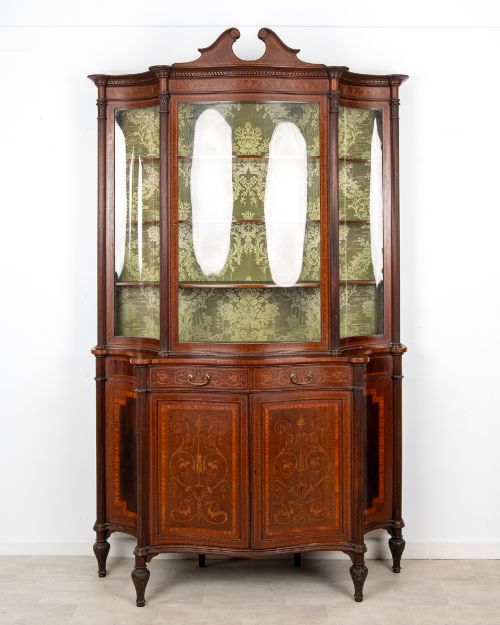
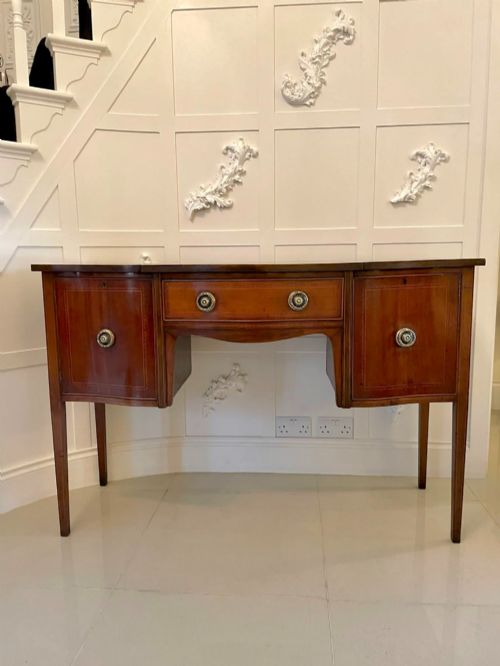
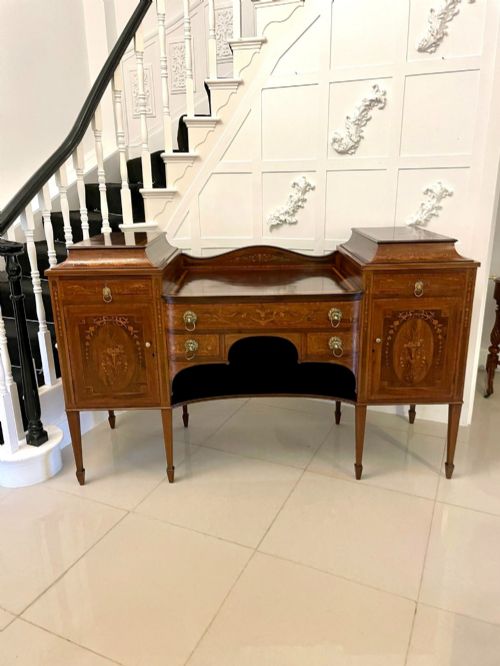
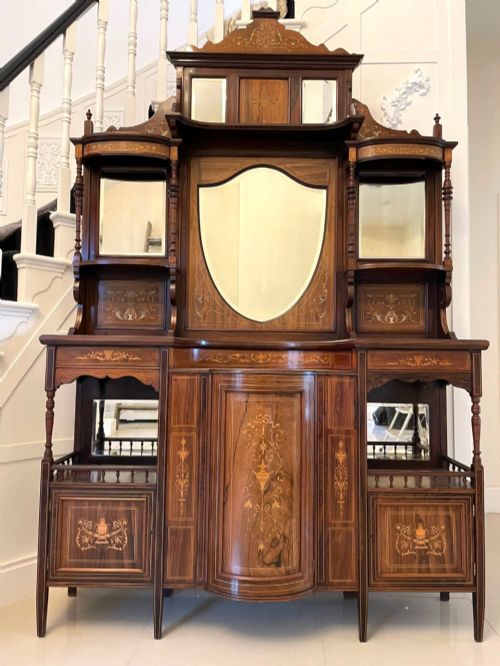
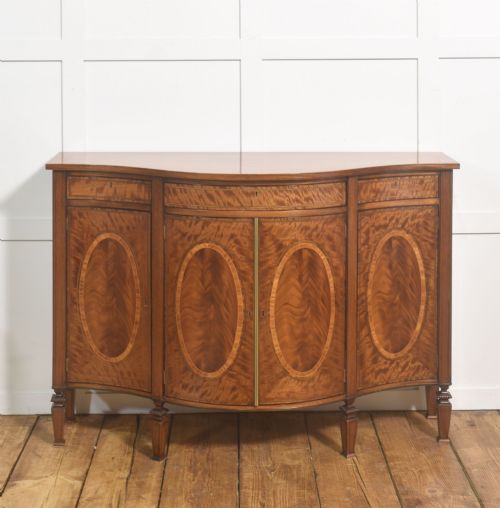
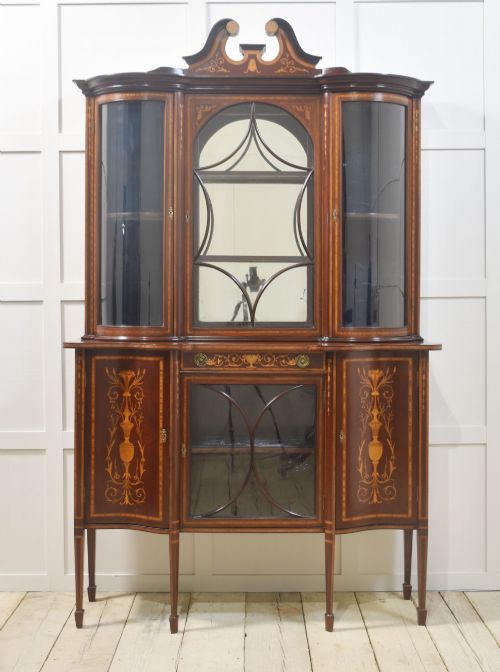
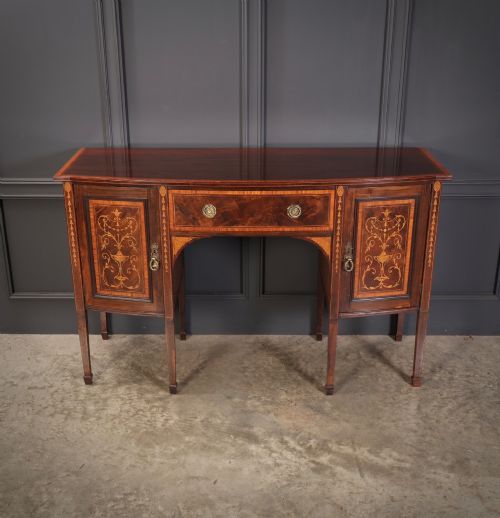
A sheraton revival sideboard is a case piece designed for dining rooms and reception spaces, appearing mostly in Edwardian and late Victorian variations. These pieces draw heavily on eighteenth-century neoclassical precedents, translating lighter forms and symmetrical geometry into server cabinets, bow-front consoles, and breakfront sideboards.
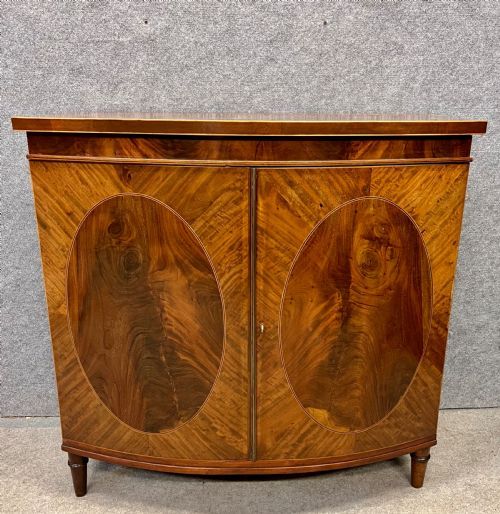
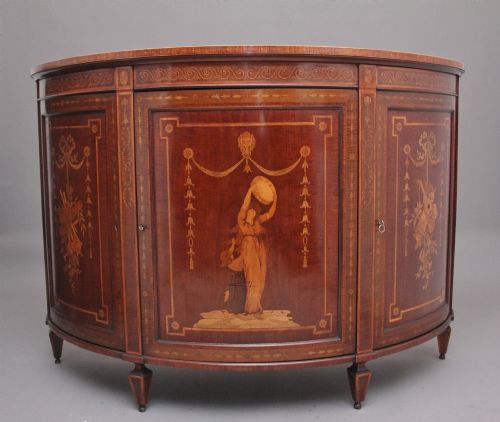
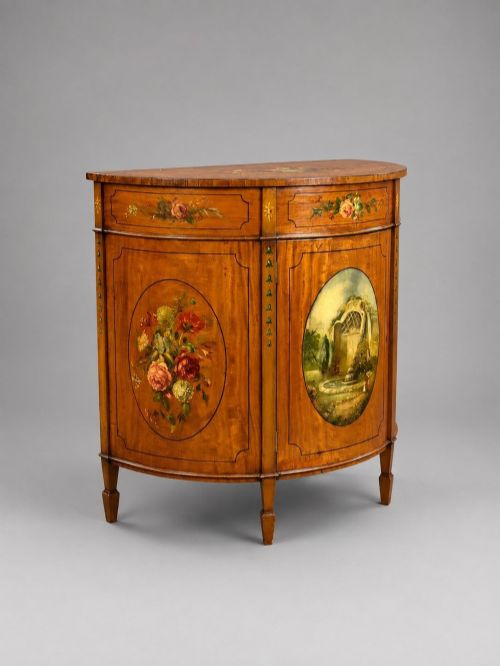
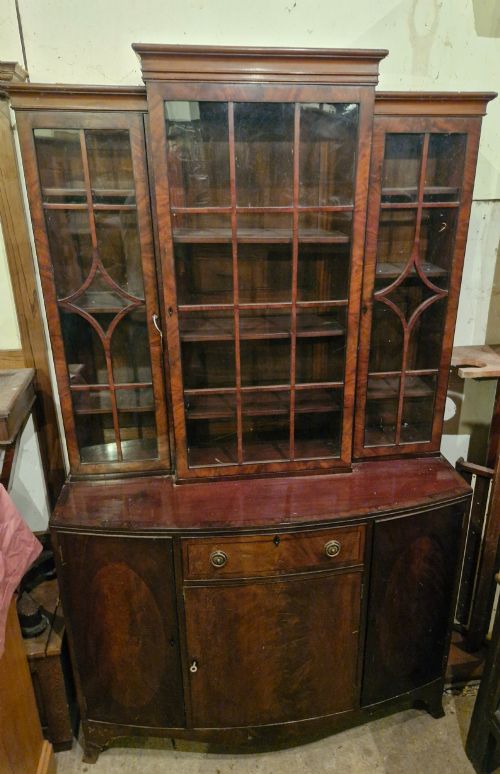
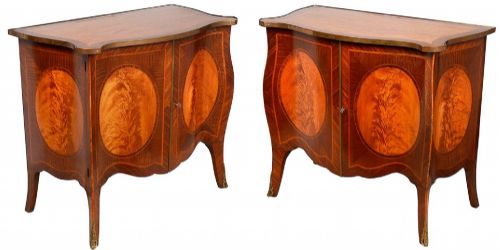
Buyers meet several distinct formats across this category, including serpentine commodes, demi-lune cabinets, and standard servers. Mahogany and satinwood predominate, frequently accented with marquetry, boxwood stringing, and painted panels.
The aesthetic prioritises slender supports and restrained curves over heavy Victorian mass. Pieces range from straightforward mahogany servers to elaborate satinwood sideboards bearing intricate marquetry.
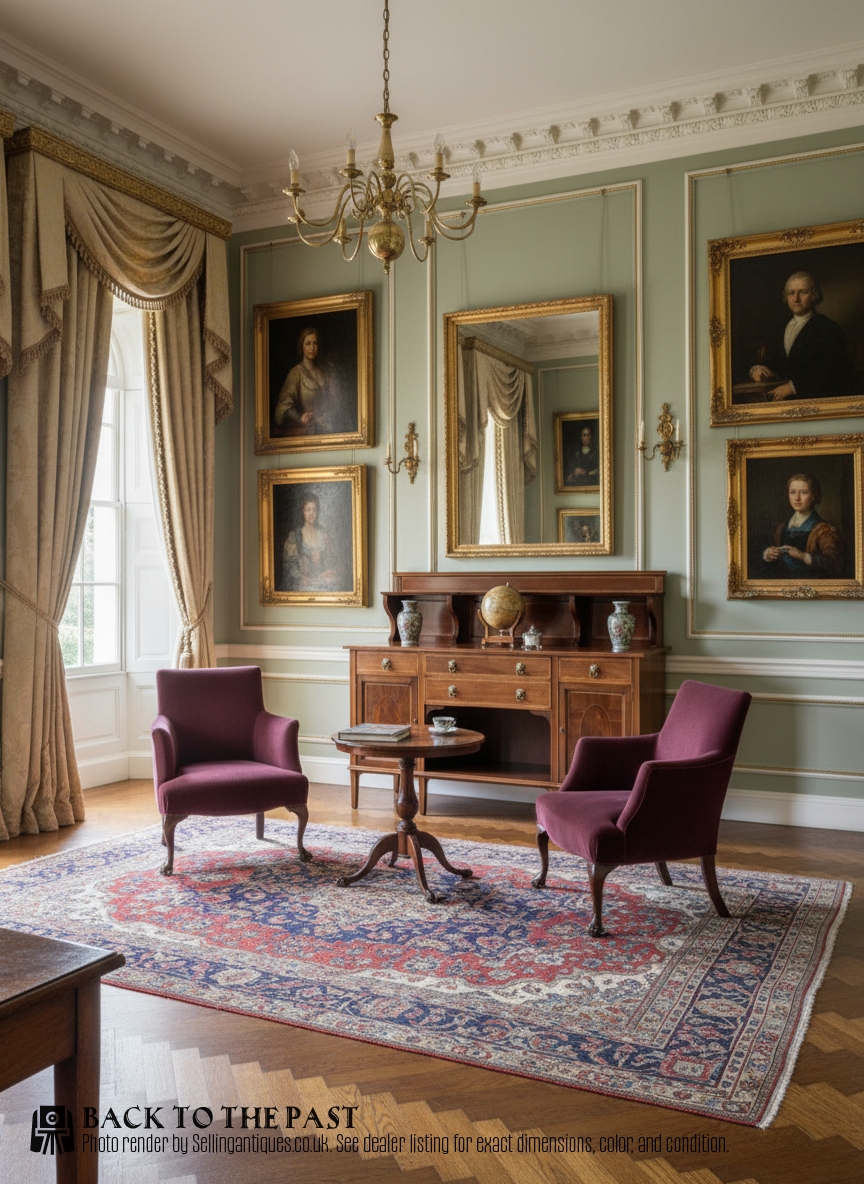
How they were made
Cabinetmakers constructed these frames using solid mahogany, rosewood, or satinwood, often applying rich veneers over secondary timbers to achieve smooth, sweeping curved fronts. Satinwood and mahogany form the primary visual foundations, providing contrasting tones for detailed inlay work.
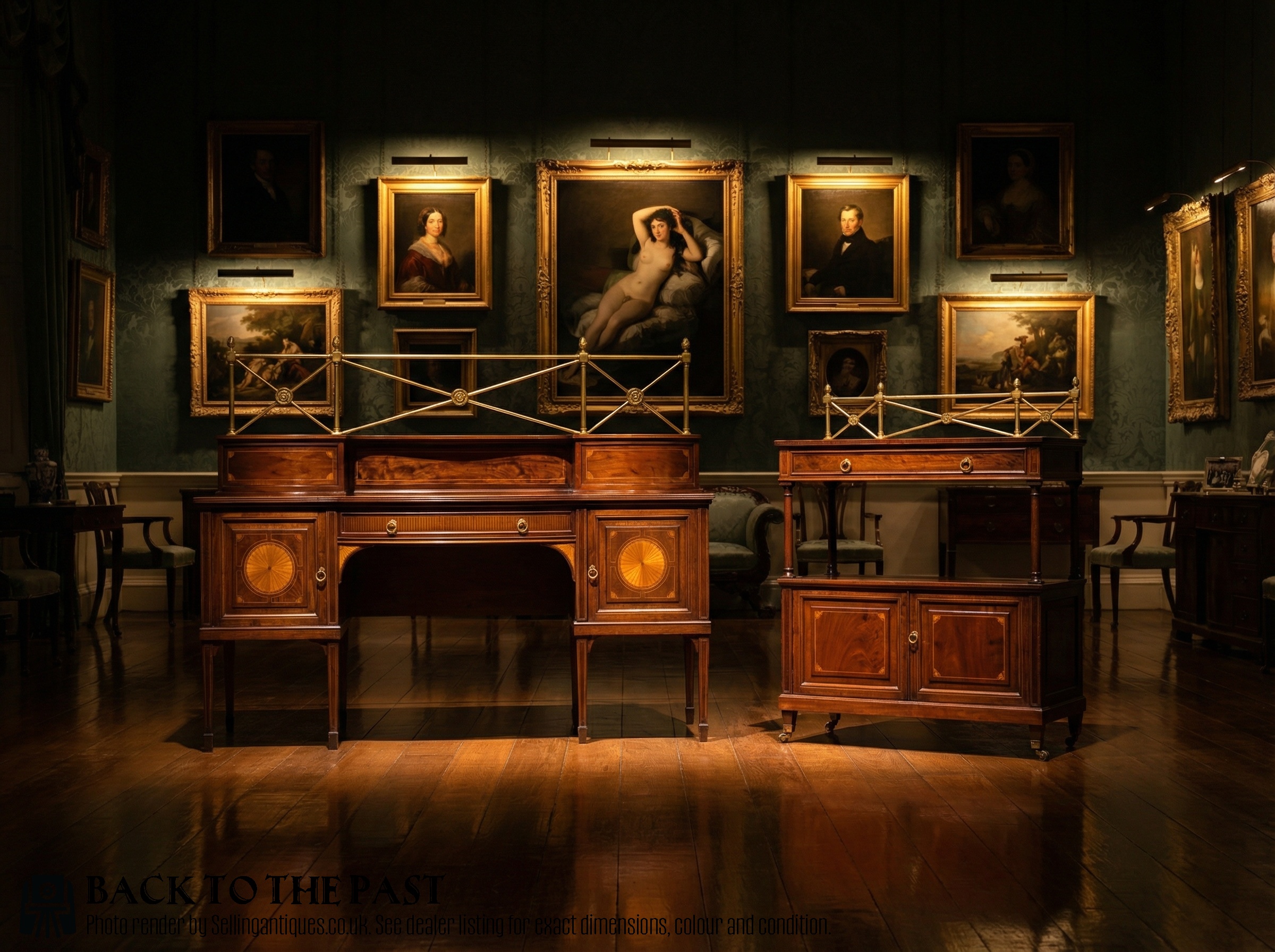
Decoration relied on fine marquetry, boxwood stringing, and occasionally hand-painted motifs depicting classical urns, ribbons, or floral swags. Brass hardware, glass doors, and mirrored backs completed the assemblage in many display cabinets and sideboards.
Sheraton Revival Sideboard Retail Price Guide 2026
Typical asking prices for sheraton revival sideboard among the pieces listed under this phrase on Sellingantiques today, from the lower quarter to the upper quarter. They describe what is for sale here now, not the wider market.
Listings feature mahogany, satinwood, and rosewood cabinets ornamented with boxwood inlay and marquetry.
What varies in quality
Quality rests upon the precision of the marquetry and the crispness of the inlay work, where clean lines separate master workshops from standard production. Cabinetmakers who utilised dense mahogany and finely figured satinwood achieved a depth of finish that simpler pieces lack.
Proportion and the handling of curved fronts, such as serpentine and demi-lune shapes, dictate the overall elegance of the piece. Superior examples display balanced symmetry and meticulous attention to structural joinery.
Hewetsons London·Edwards and Roberts·James Hicks·Warings
The Sheraton Revival Sideboard Glossary
- Marquetry
- Decorative veneer patterns assembled from various woods to form pictorial or geometric designs. This technique adds considerable visual complexity to the front panels and doors.
- Demi-lune
- A half-moon shape characteristic of smaller side cabinets and console tables. This form allows the furniture to sit flush against a wall while offering curved visual interest.
- Serpentine
- A furniture front characterised by a gentle convex centre flanked by concave curves. This contour requires advanced cabinetmaking skill to shape accurately.
- Stringing
- Thin lines of contrasting wood inlay used to outline drawers, doors, and tabletops. It defines the geometric boundaries of the woodwork.
- Breakfront
- A cabinet design where the central section projects forward from the flanking wings. This architectural arrangement creates depth and shadow on larger sideboards.
Sheraton Revival Sideboard: Frequently Asked Questions
What is a sheraton revival sideboard?
A sheraton revival sideboard is a decorative storage and serving piece produced during the late nineteenth and early twentieth centuries. These items emulate the lighter, neoclassical furniture designs popularized in the eighteenth century.
They combine rich timbers like mahogany and satinwood with delicate inlay and restrained geometric forms. Makers adapted these historical styles to suit Edwardian and late Victorian interiors.
How do I date a sheraton revival piece?
Dating relies on examining the timber construction, secondary woods, and stylistic clues within the cabinetwork. Most examples date from the Edwardian era and the late nineteenth century.
Makers' marks or stamps can occasionally help identify the workshop or retailer. Comparing the specific marquetry motifs and hardware styles with known period pieces also assists in determining age.
Where should I place a demi-lune cabinet?
A demi-lune cabinet fits well in hallways, entranceways, or dining rooms due to its flat back and curved front. The half-moon shape occupies minimal floor space while providing surface area for display.
These cabinets often serve as focal points beneath mirrors or artwork in reception spaces. Their finished backs and refined proportions allow them to stand independently against walls.
How do I care for satinwood veneer?
Satinwood veneer requires gentle cleaning with a soft, dry cloth to prevent dust accumulation. Avoiding direct sunlight preserves the light golden colour of the wood.
Applying specialised furniture wax periodically maintains the sheen and protects the delicate surface. Moisture and excessive heat should be kept away from the veneer to prevent lifting.