
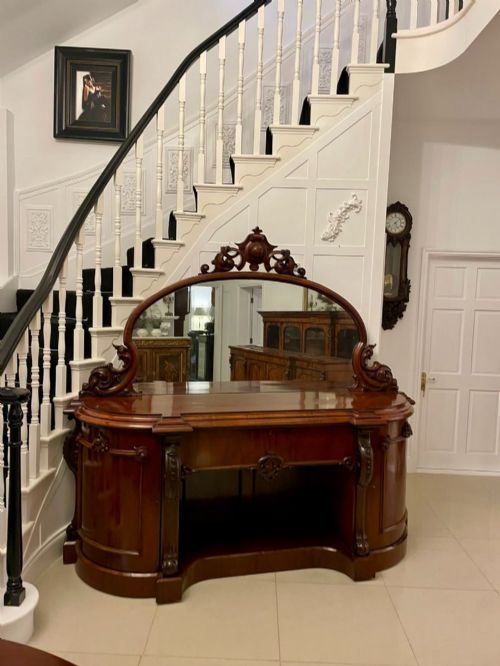
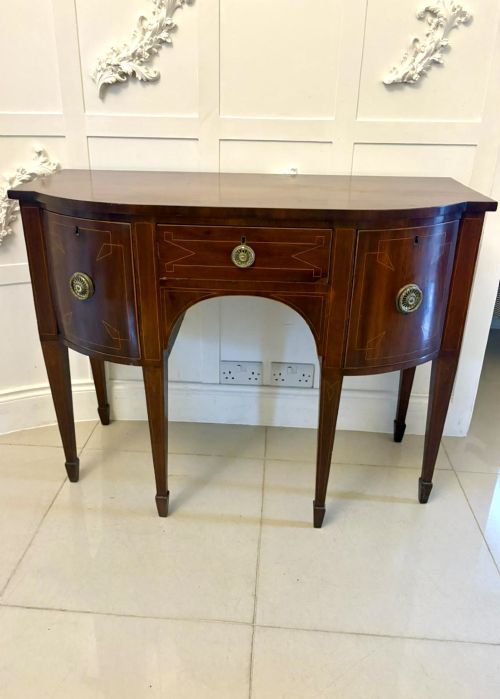

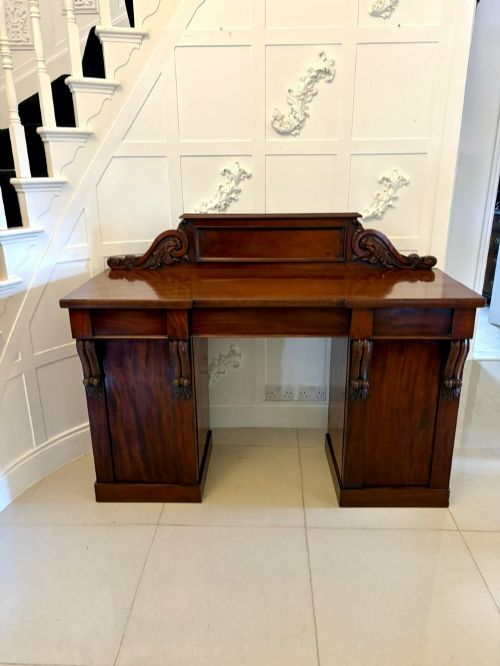
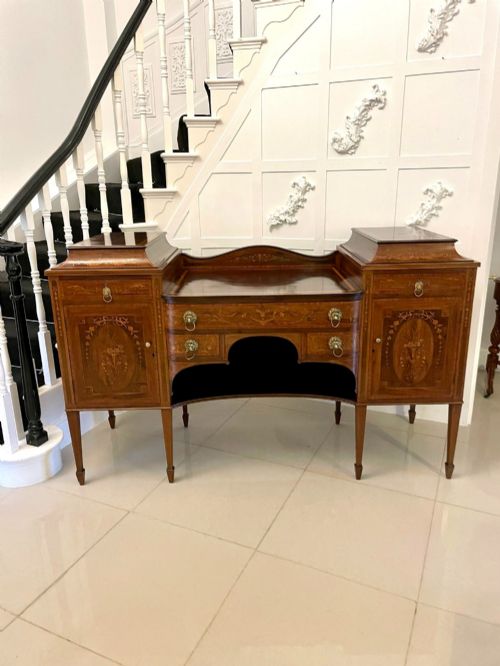
Mahogany Dining Room Server
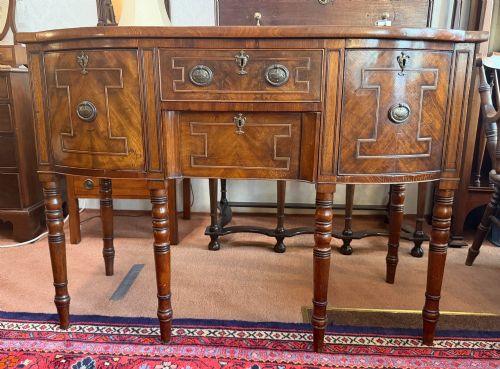
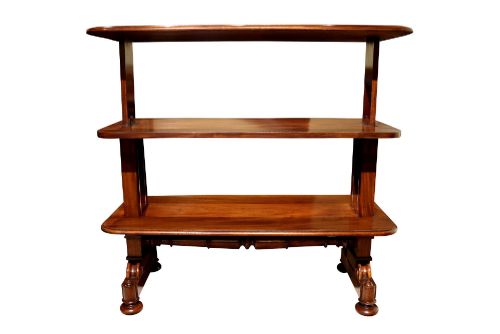
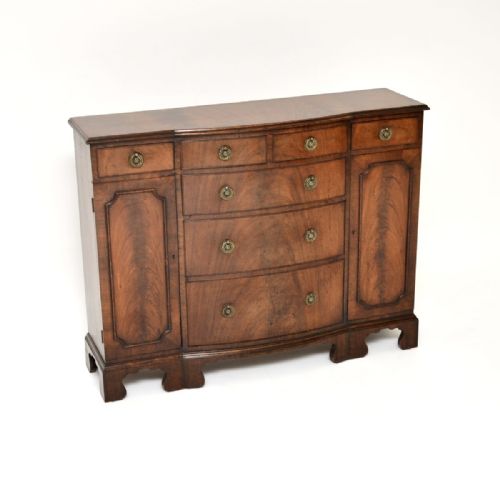
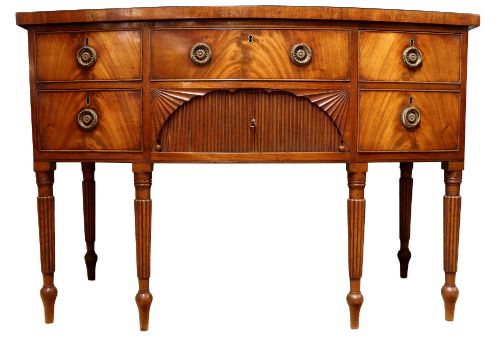
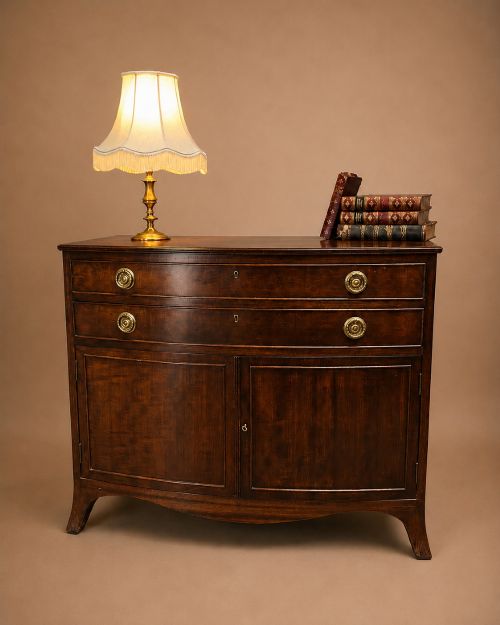
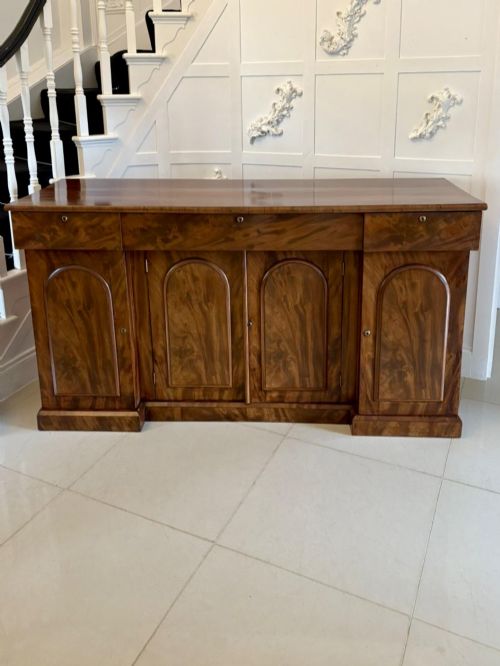
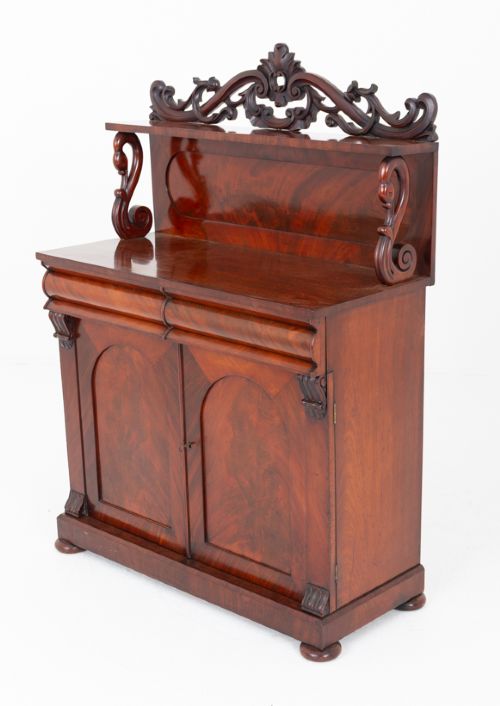
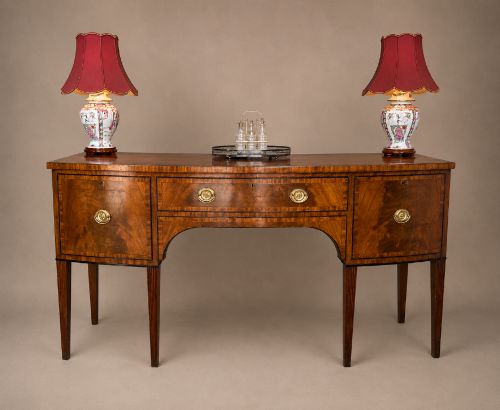
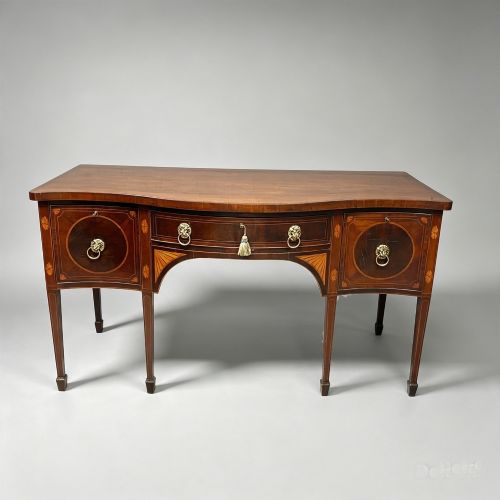
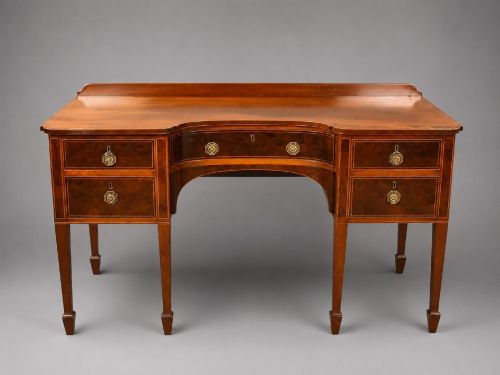
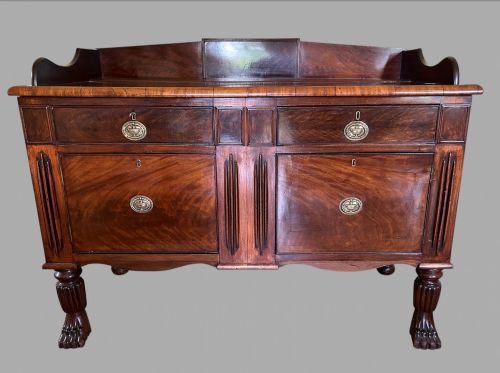
A mahogany dining room server is a practical serving piece designed for storage and display, appearing here in Georgian, Regency and Victorian incarnations.
Mahogany Dining Room Server
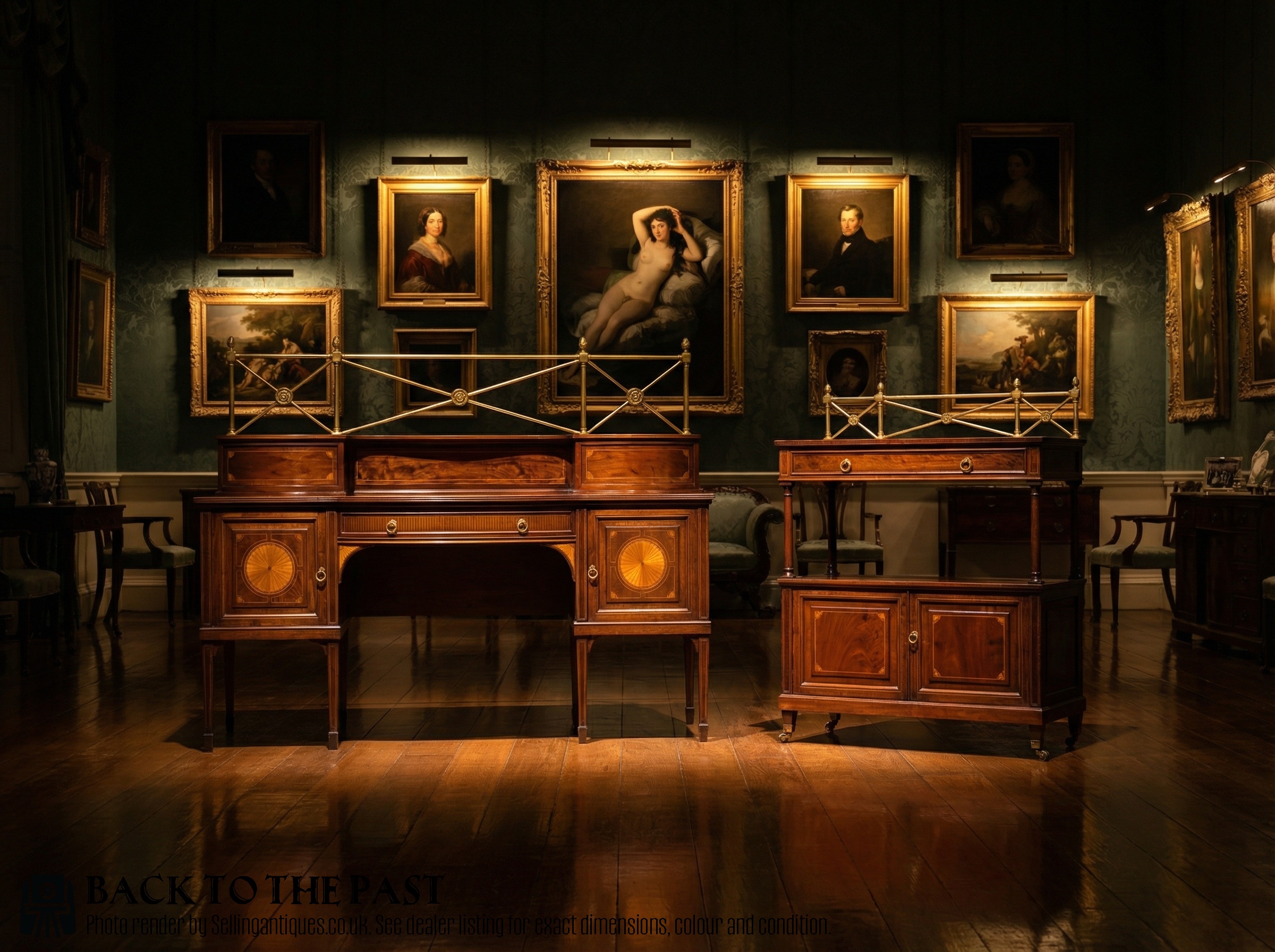
A mahogany dining room server functions as a sturdy surface for food presentation and tableware storage during meals. These items encompass serving tables, chiffoniers, buffets and sideboards originating from the eighteenth century to the twentieth century.
The versions most commonly met on this page date from the Georgian and Victorian periods, featuring bow-front, serpentine or breakfront outlines. Makers utilised cupboards, drawers and tiered shelves to organise dining rooms effectively.
Pieces span formal dining room furniture designed for country houses and more modest domestic settings. Forms include pedestals, dumb waiters and cabinets constructed in regional workshops and London firms.
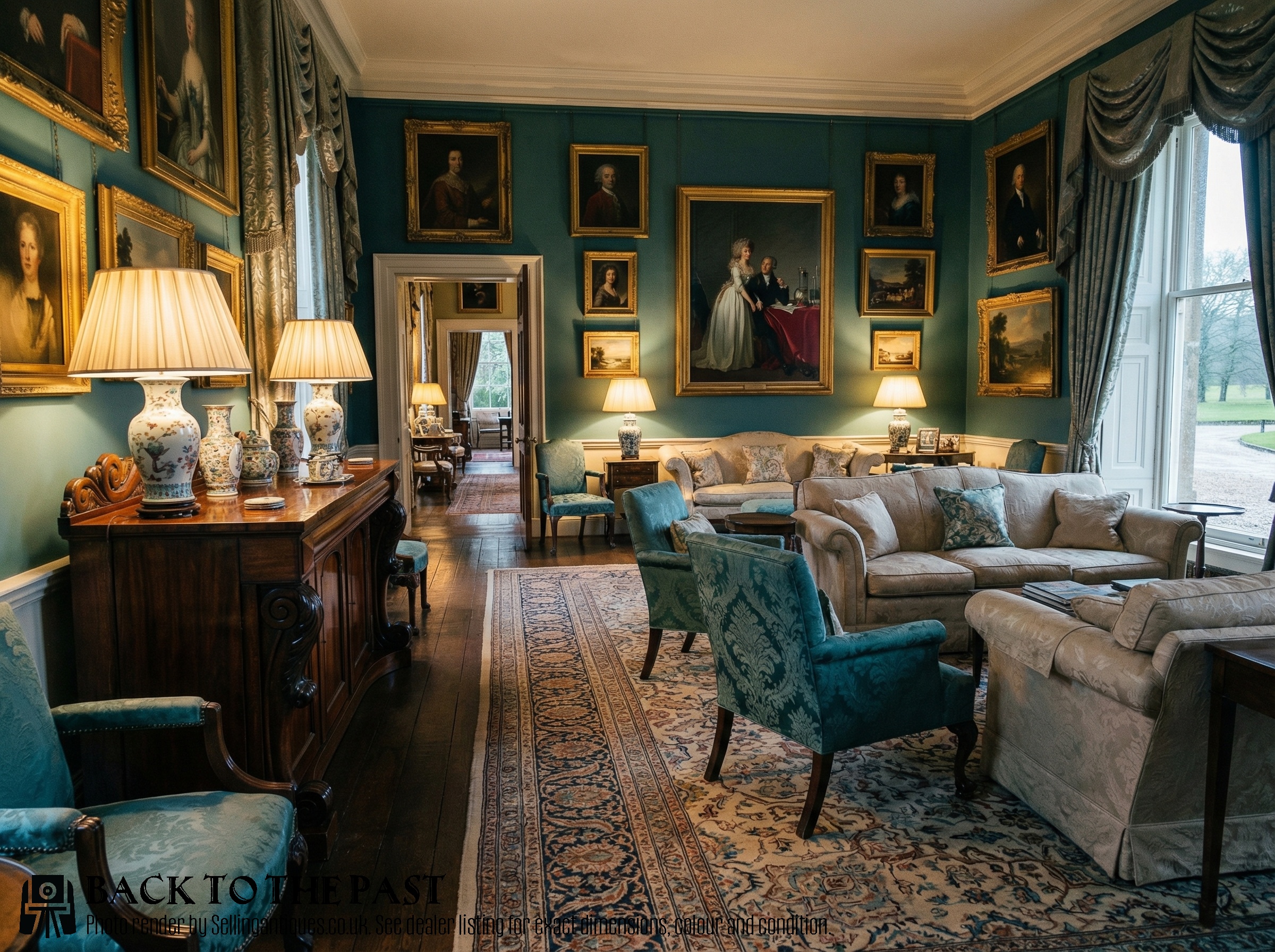
How they were made
Cabinet makers built these items using solid mahogany and flame mahogany veneer applied to secondary timbers. Surfaces often incorporate contrasting stringing and satinwood inlay to define drawers and borders.
Structural hardware relies on brass handles, escutcheons and mounts to secure doors and drawers. Glass elements appear occasionally in upper cabinet doors and tiered configurations.
Mahogany Dining Room Server Retail Price Guide 2026
Typical asking prices for mahogany dining room server among the pieces listed under this phrase on Sellingantiques today, from the lower quarter to the upper quarter. They describe what is for sale here now, not the wider market.
Materials recorded across the inventory comprise solid mahogany, flame mahogany veneer, satinwood inlay, boxwood and brass.
What varies in quality
Selection of timber grain dictates visual appeal, with figured mahogany and symmetrical flame veneers commanding higher regard than plain boards. The precision of inlaid boxwood and satinwood marquetry separates standard workshop output from exceptional cabinet work.
Construction methods reveal craftsmanship through the neatness of dovetail joints in drawers and the integrity of carved mouldings. Original brass hardware and balanced proportions contribute to a coherent aesthetic balance.
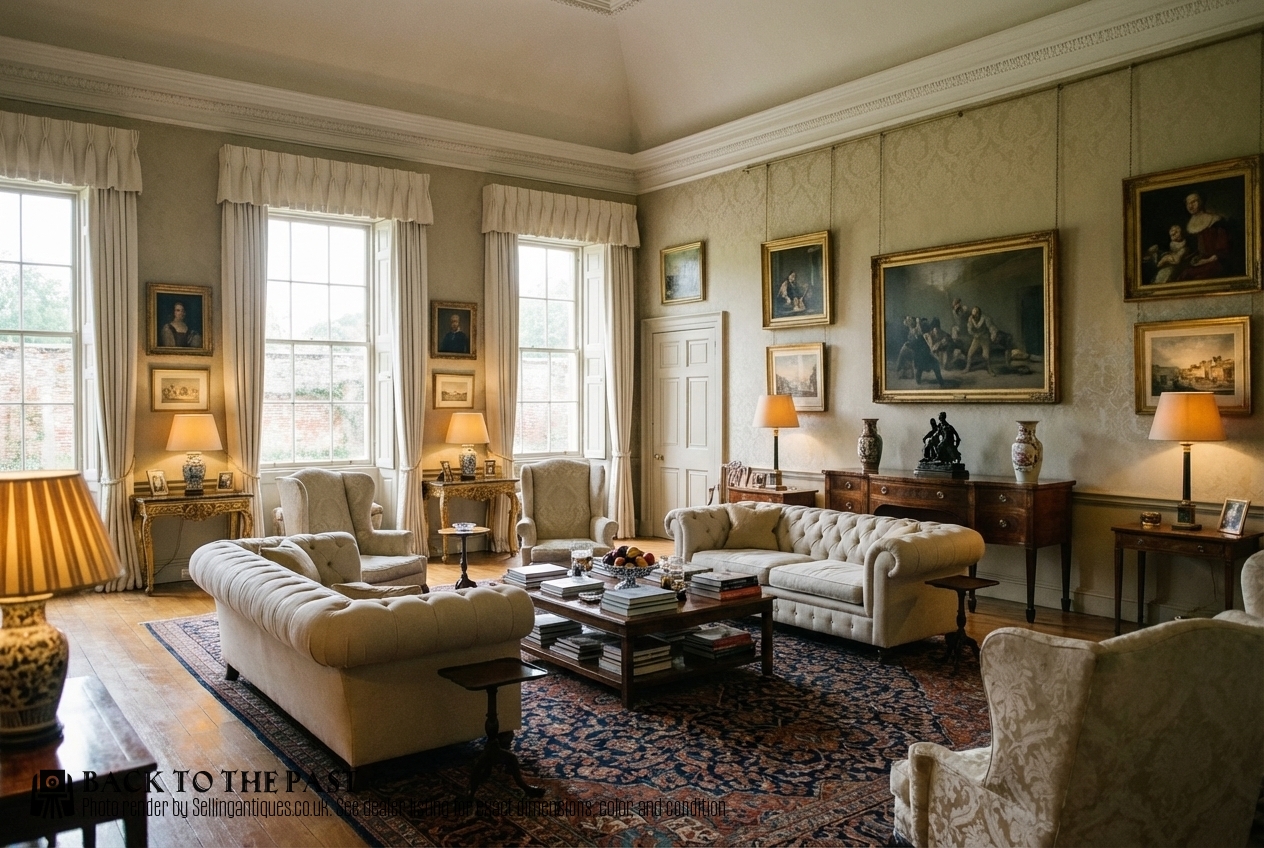
Hewetsons London·M D Miller And Sons Nottingham·George Hepplewhite
The Mahogany Dining Room Server Glossary
- Bow-front
- A convex curved front contour that softens the rectangular geometry of a sideboard. This shape became popular during the Regency and Georgian periods.
- Serpentine
- A horizontally undulating front edge featuring a convex centre flanked by concave curves. This contour requires skilled carpentry to shape timber accurately.
- Chiffonier
- A low cabinet equipped with shelves or drawers, frequently used for storing serving items in dining rooms. Victorian examples often incorporate panelled doors.
- Inlay
- A technique where contrasting woods like satinwood or boxwood are fitted into recesses within the primary mahogany surface. It creates decorative borders and geometric motifs.
- Pedestal sideboard
- A form consisting of two distinct pedestals joined by a central serving table or board. These pieces typically date from the Regency era.
Mahogany Dining Room Server: Frequently Asked Questions
What is a mahogany dining room server used for?
These items provide surface space for serving dishes and storage for cutlery, linen and glassware during meals. They also serve as decorative focal points within dining rooms.
Cabinets, cupboards and tiered shelves allow tableware to be organised close to the dining table for convenience.
How do I identify a Georgian server?
Georgian pieces typically display restrained classical proportions, straight or bow fronts, and understated brass hardware. They often feature fine mahogany veneers and subtle stringing.
Later revival pieces copy these characteristics, but eighteenth-century examples exhibit authentic timber ageing and traditional joinery methods.
What is the difference between a sideboard and a chiffonier?
Sideboards are generally larger server units designed specifically for dining rooms with extensive storage drawers and cupboards. Chiffoniers are typically more compact lower cabinets featuring interior shelving.
Victorian chiffoniers often include enclosed cupboards beneath open upper shelves or mirrored backs.
How should I care for antique mahogany furniture?
Keep wooden pieces away from direct heat sources and strong sunlight to prevent the mahogany veneer from drying and cracking. Regular dusting with a dry cloth maintains the polished finish.
Apply traditional wax polish sparingly when the timber appears dry, buffing gently to preserve the natural lustre of the grain.