
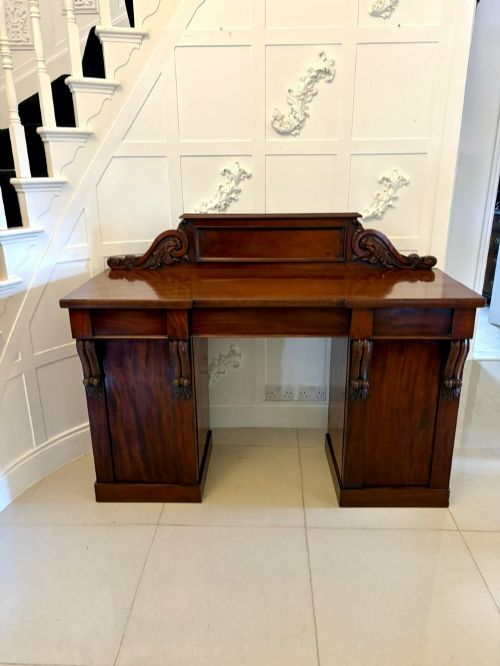
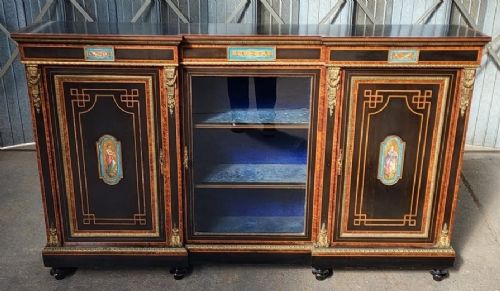
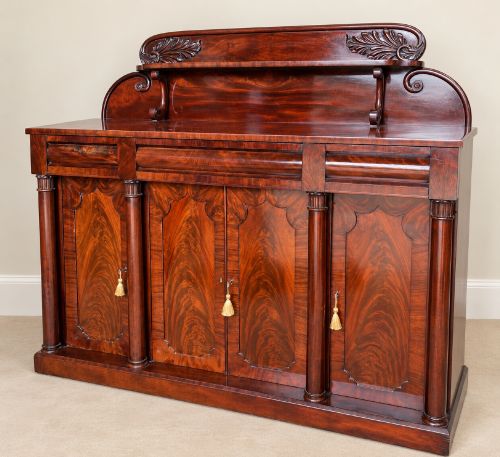

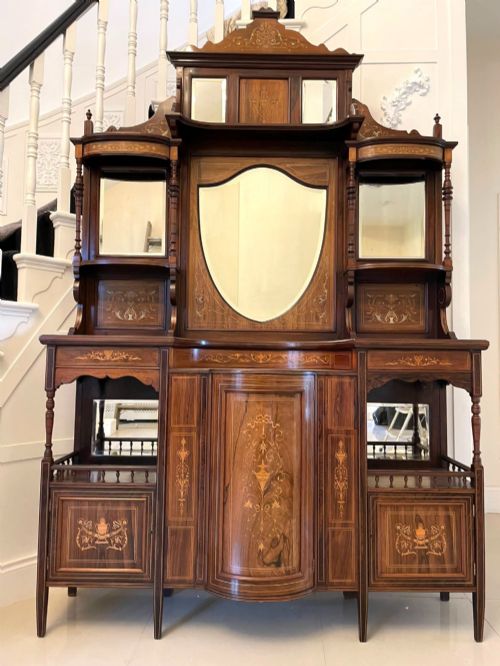
Victorian Wooden Sideboard
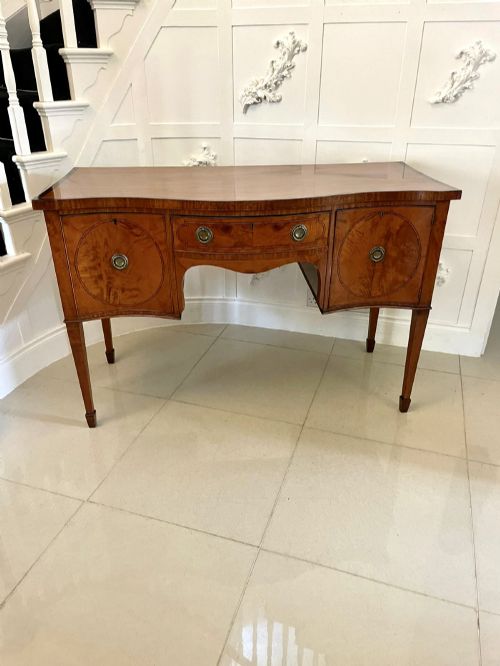
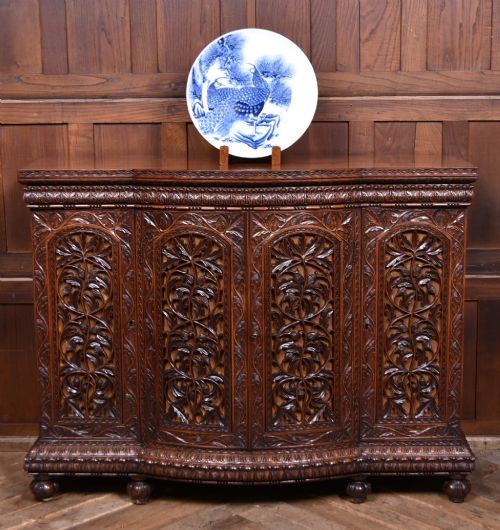
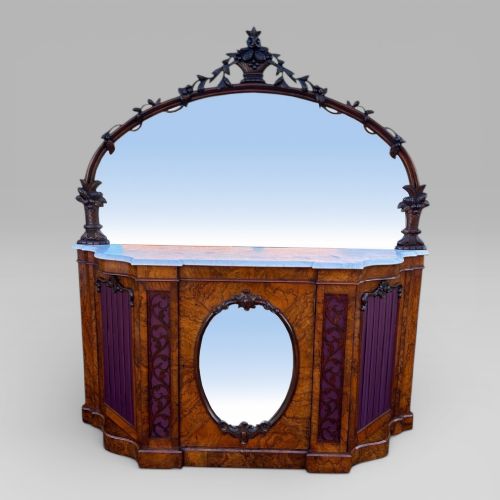
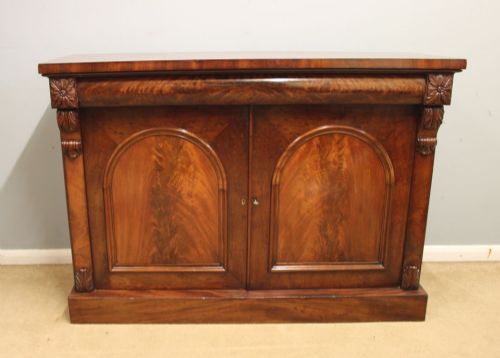
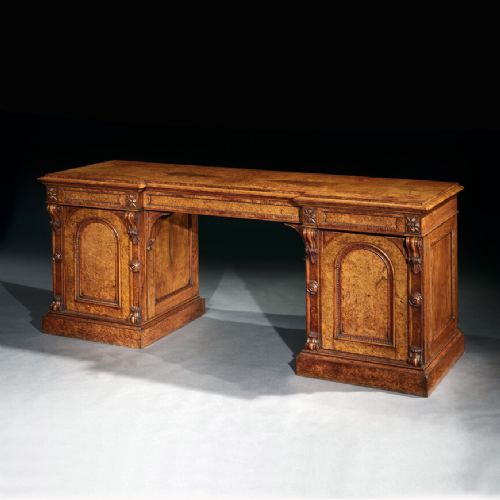
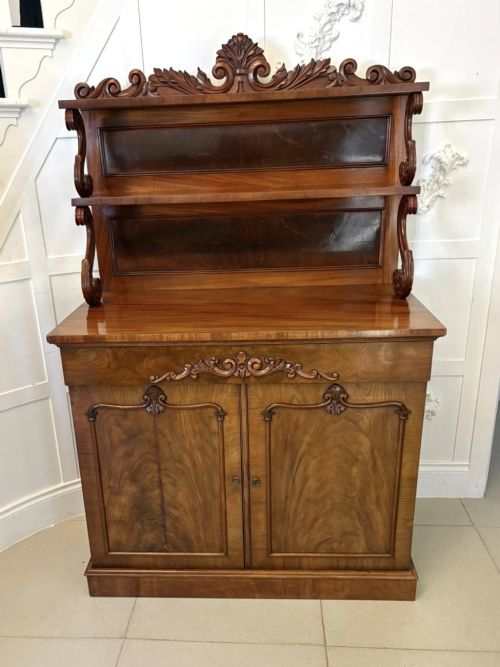
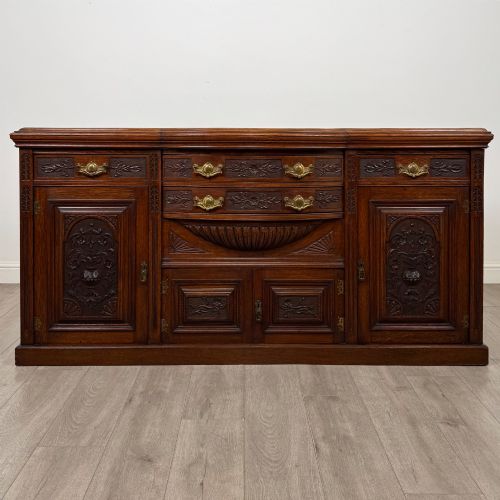
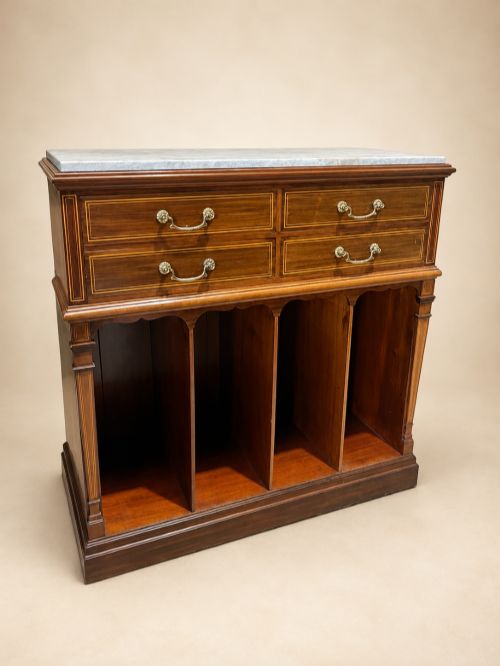
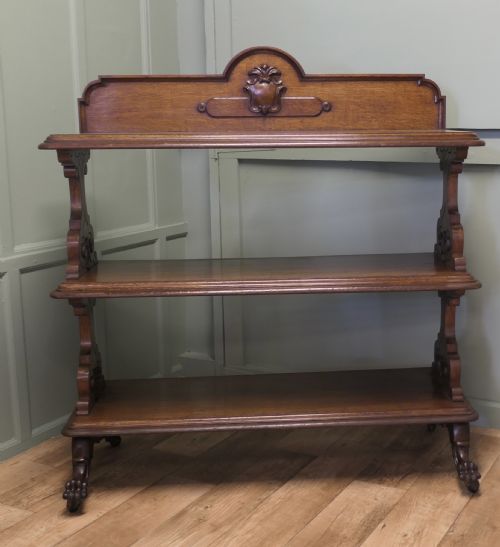
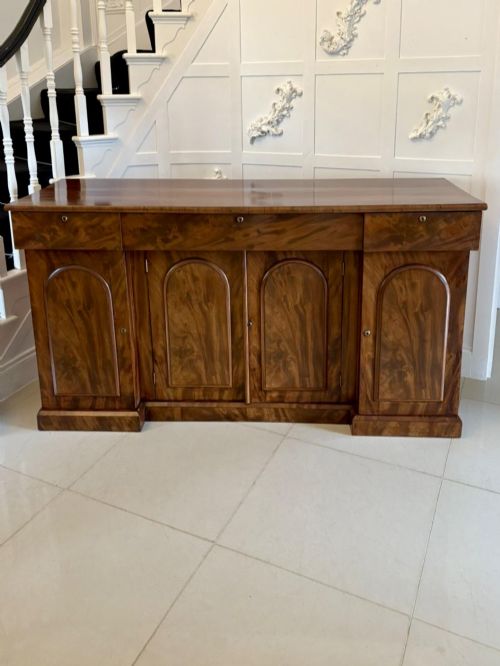
A victorian wooden sideboard brings solid proportions and heavy timber presence into a dining room or hallway, offering deep cupboards and drawers for storage.

Victorian Wooden Sideboard
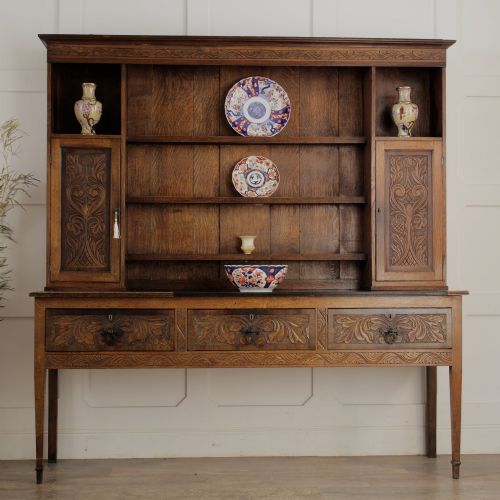
A victorian wooden sideboard is a substantial dining room piece designed for serving food and storing tableware, typically encountered in forms ranging from pedestal sideboards to low chiffoniers and mirror-backed credenzas. These items emerge from the nineteenth century in various regional interpretations, taking shapes such as deep credenzas, open dressers, and enclosed side cabinets.
The material palette is dominated by richly grained hardwoods like mahogany and oak, alongside figured walnut, burr walnut, and rosewood. Examples frequently incorporate architectural carvings, panelled doors, and raised backs, sometimes featuring marble tops or inset brass and ormolu mounts.
Most pieces date from the Victorian era and the broader nineteenth century, reflecting periods of robust cabinet-making where utility matched decorative ambition. Buyers find these items functioning effectively in contemporary rooms for storing modern dining ware whilst anchoring a traditional interior scheme.
Materials and Construction Methods
Cabinet-makers relied on solid structural timbers such as oak, pine, and mahogany for the main carcase, applying figured veneers like flame mahogany, burr walnut, and padouk to drawer fronts and door panels. These veneers were sawn thin and glued carefully to stable backing woods to display complex natural grain patterns.
Joinery involved traditional hand-cut dovetails for drawer construction and mortise and tenon joints for frames, ensuring structural rigidity under heavy daily use. Surfaces were finished with shellac polishes or wax, applied by hand to build a warm sheen that protected the wood while highlighting natural colour variations.
Victorian Wooden Sideboard Retail Price Guide 2026
Typical asking prices for victorian wooden sideboard among the pieces listed under this phrase on Sellingantiques today, from the lower quarter to the upper quarter. They describe what is for sale here now, not the wider market.
Certain military chests double as transport packing cases, revealing that some Victorian furniture owners packed up their entire households for deployment.
Assessing Craftsmanship and Materials
The selection of timber dictates the visual impact, with highly figured grains, book-matched walnut veneers, and solid exotic hardwoods sitting at the upper end of the scale. Plain pine and utility oak serve more utilitarian forms, whereas dense mahogany and rosewood indicate higher workshop investment.
Carving depth and execution separate standard production items from exhibition pieces, where crisp hand-carved fruitage, applied mouldings, and integrated mirror backs demonstrate superior artisan labour. Original brass hardware, secure locks with operational keys, and intact marble inserts further distinguish the finer examples.

The Victorian Wooden Sideboard Glossary
- Chiffonier
- A low sideboard or cabinet, typically featuring enclosed cupboards beneath a shelf or raised back. These items originated in the early nineteenth century as compact serving furniture.
- Credenza
- A sideboard or buffet, frequently associated with Victorian drawing rooms and distinguished by glass doors or marquetry inlay. They often include mirrored backs and extensive surface display areas.
- Buffet
- A side table or low cupboard used for food service and storage. Nineteenth-century examples often incorporate tiers or open serving surfaces.
- Flame mahogany
- A veneer cut from timber where the grain creates a flickering, flame-like pattern. Cabinet-makers reserved this material for prominent drawer fronts and central doors.
- Marquetry
- The art of applying pieces of veneer to a structure to form decorative patterns and pictures. Craftsmen used various coloured woods to achieve tonal depth.
Victorian Wooden Sideboard: Frequently Asked Questions
What is a Victorian sideboard used for?
These pieces served nineteenth-century households as dining room servers for holding cutlery, linen, and heavy serving dishes during meals. Their flat tops provided adequate space for displaying silver and arranging food before service.
Today, they adapt easily to modern living rooms, hallways, and dining spaces as functional storage cabinets for media equipment, tableware, or everyday household items.
How do I identify a Victorian sideboard?
Look for heavy timber construction, hand-cut dovetail joints inside drawers, and traditional finishes such as hand-rubbed wax or shellac polish. Common markers include deep mahogany carcases, carved wooden scrollwork, and panelled doors typical of nineteenth-century workshops.
Many examples feature signature Victorian elements like raised mirror backs, marble tops, or applied burr walnut veneers that distinguish them from later twentieth-century reproductions.
Are these sideboards made of solid wood?
Most examples use a combination of solid structural framing timbers and decorative wood veneers applied over stable secondary woods. Oak, pine, and mahogany commonly form the internal carcases and drawer linings.
Exotic woods like rosewood, padouk, and burr walnut generally appear as thin surface veneers designed to showcase dramatic natural grain patterns without warping the primary structure.
How do I care for a wooden sideboard?
Maintain the finish by dusting regularly with a soft, dry cloth and applying natural beeswax periodically to nourish the timber. Avoid placing the furniture in direct sunlight or near heat sources to prevent the wood from drying out.
Keep humidity levels stable in the room to protect fragile wood veneers and prevent timber movement across the large panel surfaces.