

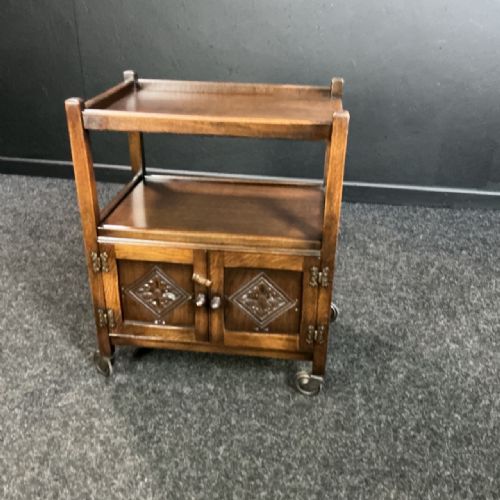
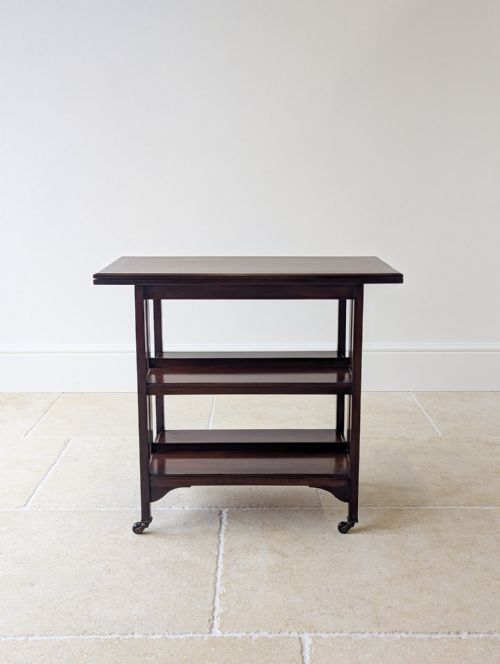
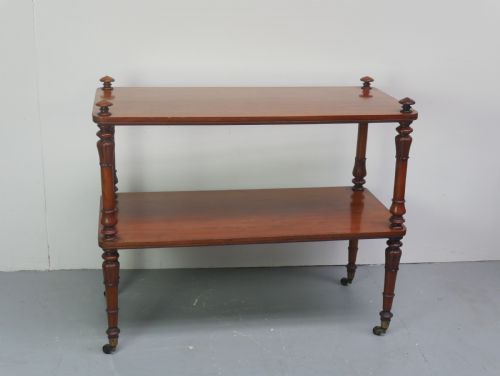
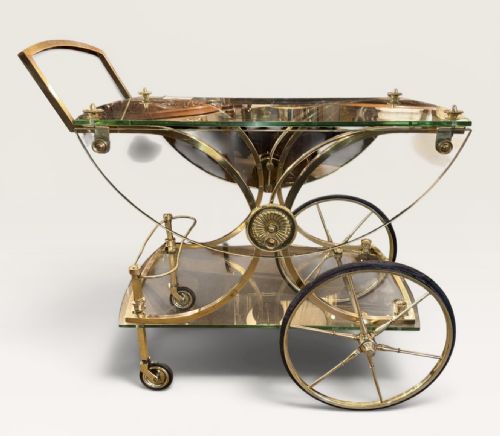
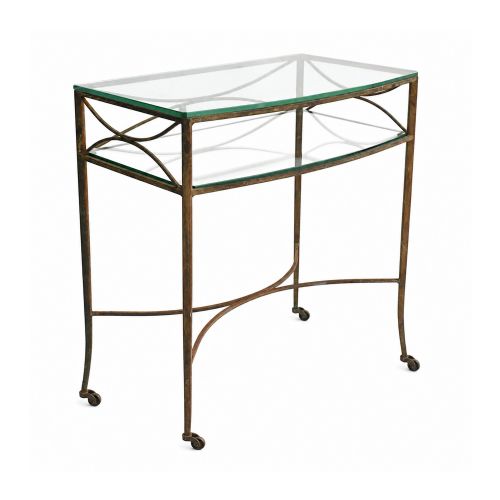
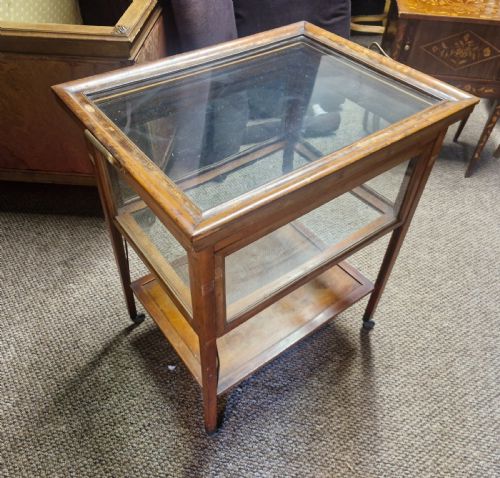

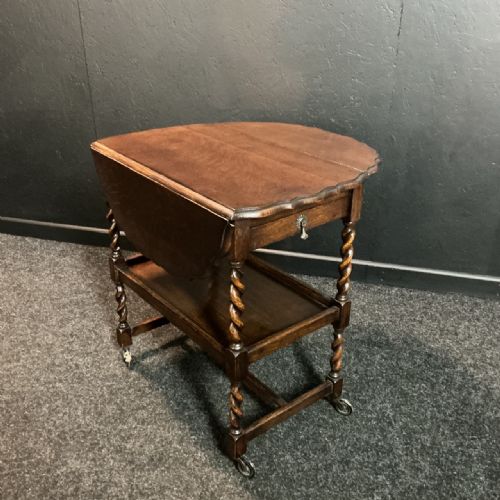
Antique Tea Trolley
An antique tea trolley brings mobile hospitality into a room, offering multiple tiers of timber or metal to carry drinks and serving ware.
Antique Tea Trolley
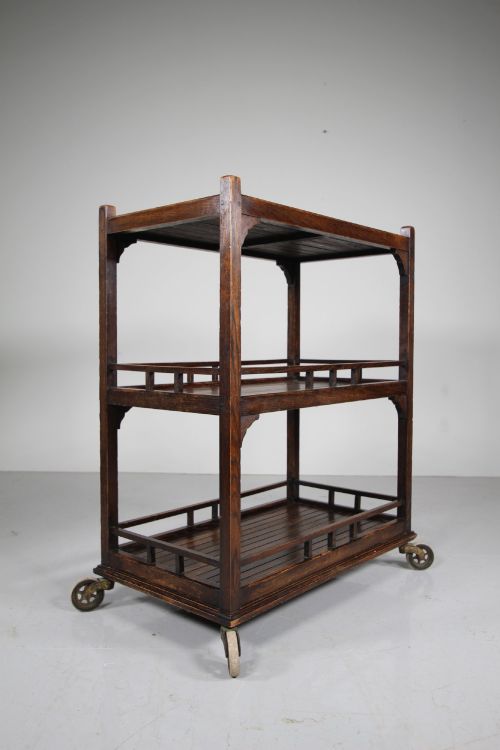
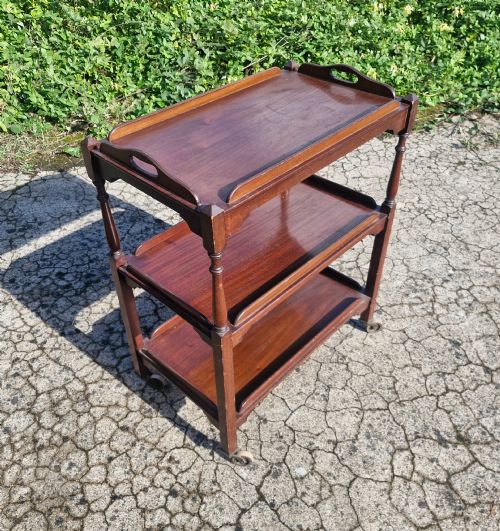
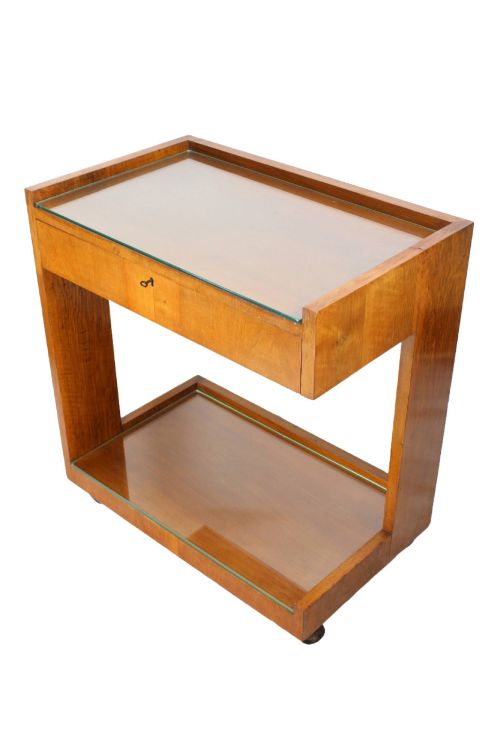
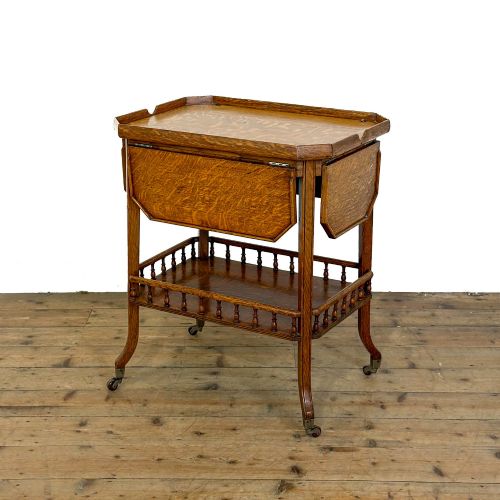
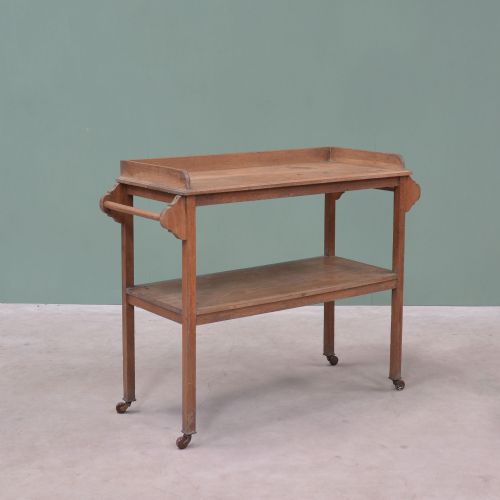
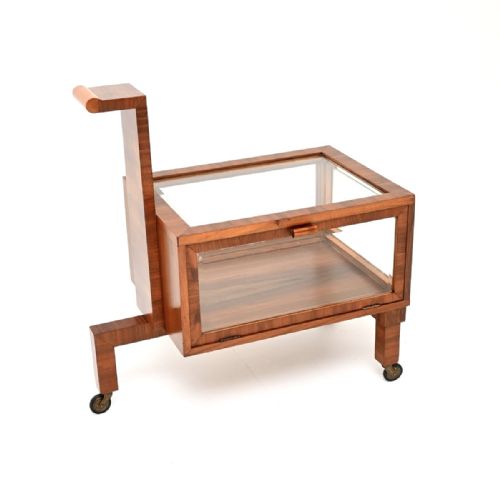
An antique tea trolley serves as a mobile tier for afternoon refreshments, drinks, and occasional display within domestic interiors. These pieces span from the mid-nineteenth century through the mid-twentieth century, evolving from heavy Victorian dumb waiters and buffets into lighter Edwardian oak designs and streamlined Art Deco bar carts.
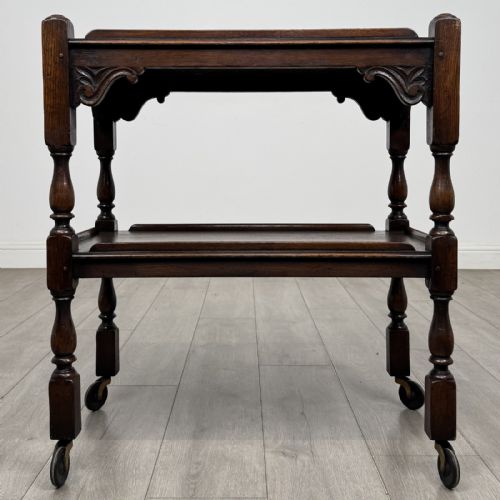
Makers and designers ranged from standard Edwardian cabinet makers producing barley twist oak tables to Parisian luxury houses crafting gilded and brass-mounted cocktail carts. Forms include simple two-tier side tables, multi-shelf etageres, and metamorphic serving trolleys designed to adapt for evening drinks.
Markers of Quality
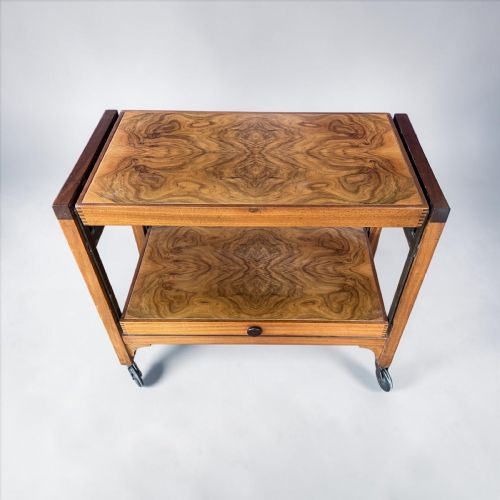
Quality rests upon the selection of timber and veneer, moving from straightforward utility oak to highly figured walnut, amboyna, or satinwood inlay. Finer examples display crisply carved woodwork, substantial brass fittings, and integrated glass trays rather than pressed composite materials.
Structural integrity and the smoothness of operating mechanisms separate basic utility items from superior pieces. Original castors, well-fitted drop-leaf hinges, and stable tier joints indicate higher workshop standards during original production.
Antique Tea Trolley Retail Price Guide 2026
Typical asking prices for tea trolley among the pieces listed under this phrase on Sellingantiques today, from the lower quarter to the upper quarter. They describe what is for sale here now, not the wider market.
Listings feature pieces spanning from the Victorian era through the 1960s, with a strong concentration of 1920s and Edwardian examples.
Maison Bagues
The Antique Tea Trolley Glossary
- Drop side
- A hinged leaf on either side of the top surface that lifts to extend the serving area when needed. It allows the trolley to occupy a smaller footprint against a wall when not in service.
- Etagere
- A piece of furniture consisting of a set of open shelves for displaying small objects or serving items. These often feature slender uprights and multiple tiers in wood, brass, or glass.
- Dumb waiter
- A multi-tiered freestanding serving piece used before the widespread employment of domestic staff. Victorian iterations often prefigure the later development of the tea trolley.
- Barley twist
- A turned wooden furniture leg or upright carved in a spiral twist resembling a rope. This decorative motif appears frequently on Edwardian and 1920s oak examples.
- Castor
- A small wheel mounted on a swivel assembly attached to the base of each leg. Original castors permit smooth transit across a room.
Antique Tea Trolley: Frequently Asked Questions
How do I date an antique tea trolley?
Dating relies on timber choices, hardware, and stylistic markers such as heavy carved Victorian casework versus the geometric lines of Art Deco walnut.
Examining the castors, joints, and handles helps place the piece within periods ranging from the late nineteenth century to the 1940s.
Are these trolleys suitable for daily use?
Most pieces retain sturdy construction with functional wheels and removable trays capable of holding drinks or glassware.
Care should be taken with antique polished wood surfaces to prevent liquid rings and heat marks during regular service.
What is the difference between a tea trolley and a bar cart?
Tea trolleys typically feature wooden frames with drop sides or removable trays intended for afternoon tea and cake.
Bar carts often originate from the Art Deco period, incorporating brass, mirrored glass, and specialised racks for bottles and cocktail glassware.
How do I maintain the wood and brass?
Regular dusting with a dry cloth and occasional application of appropriate beeswax keeps timber surfaces nourished.
Brass fittings and galleries can be cleaned with a mild metal polish if desired, though many prefer to leave a natural age patina.