





Vintage Serving Cart
A vintage serving cart brings mobility to hospitality, offering tiers of polished wood or gleaming metal to transport drinks and afternoon tea.
Vintage Serving Cart
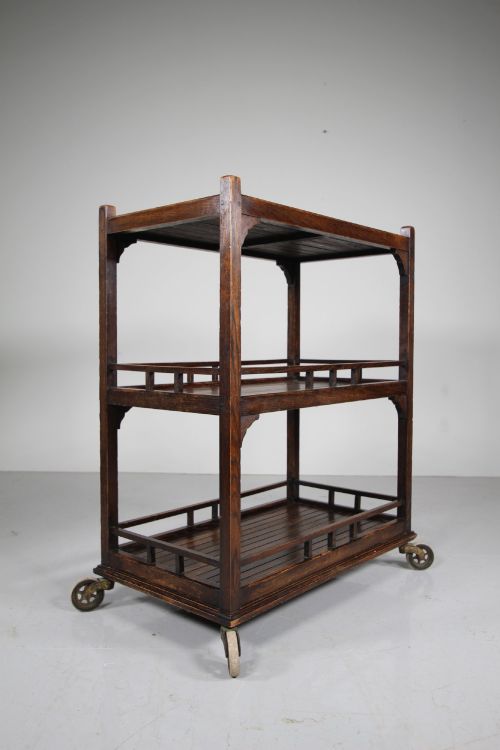
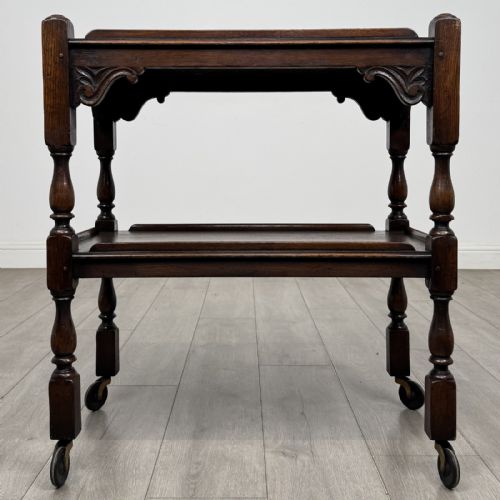
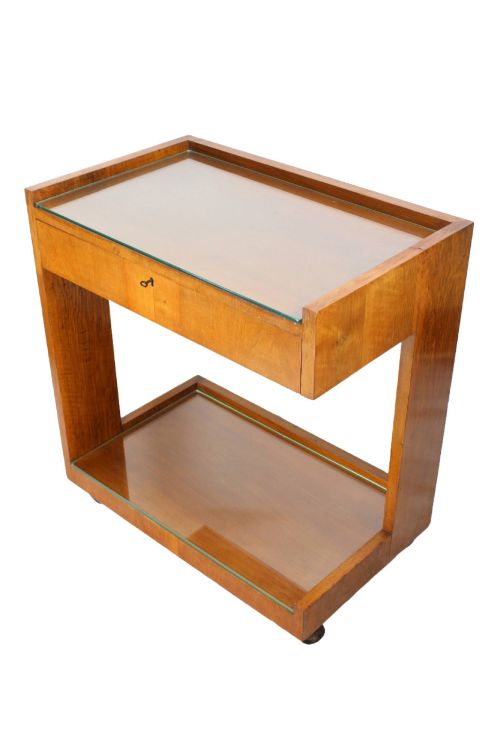
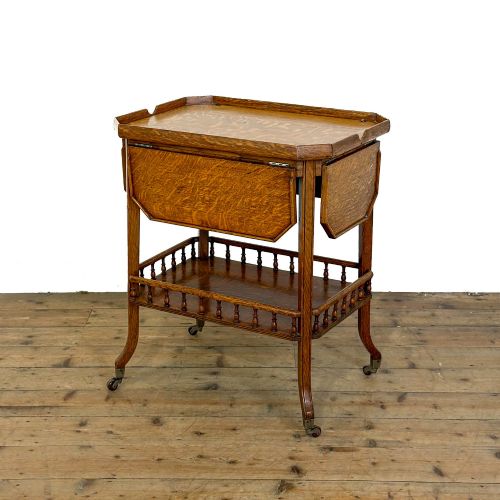
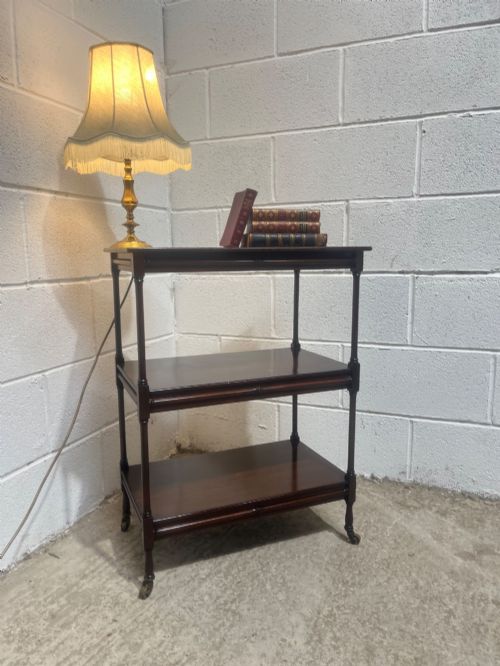
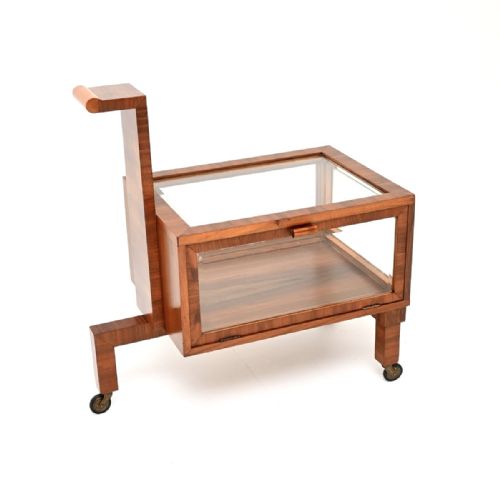
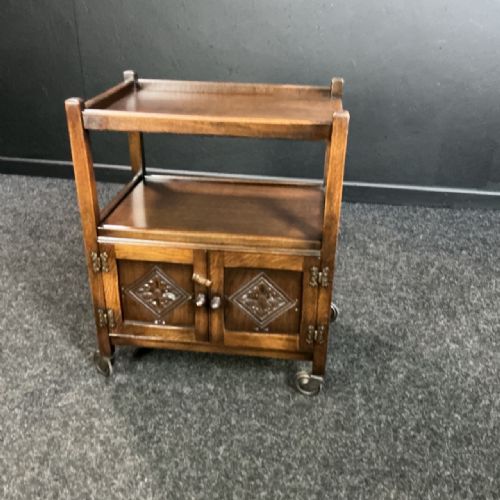
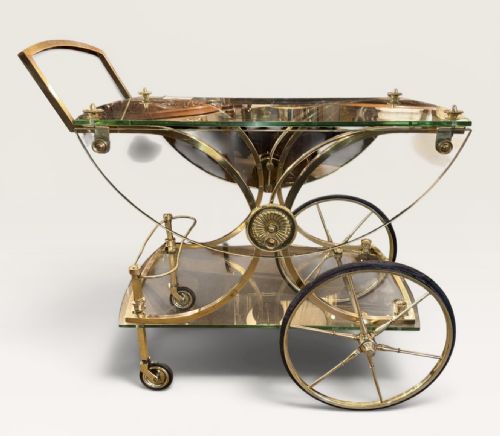
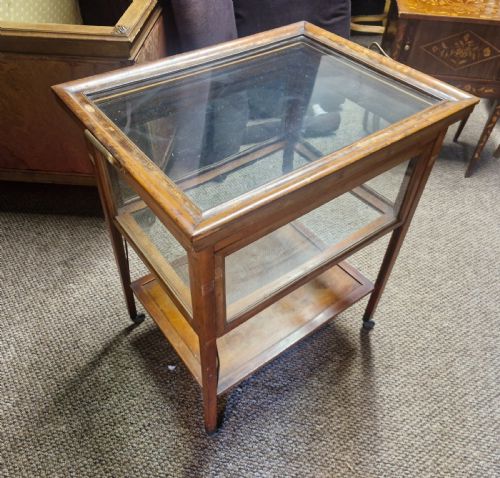
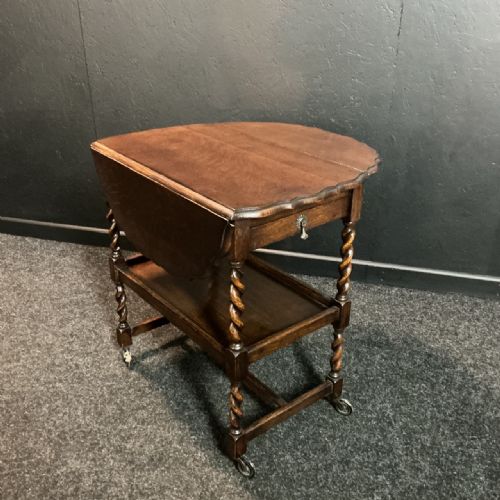
A vintage serving cart encompasses a range of mobile furniture designed for hospitality, including tea trolleys, bar carts, and etageres spanning from the Victorian period through to the mid-twentieth century. The selection ranges from Edwardian oak tables with barley twist legs to sleek Art Deco walnut designs and French mid-century pieces.
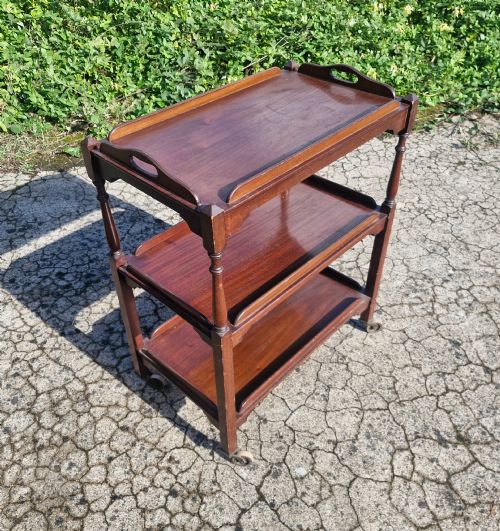
Most items encountered on this page date from the early twentieth century, particularly the 1920s and 1930s, alongside Edwardian and Victorian examples. Common formats include two-tier and three-tier trolleys, drop-leaf designs, and models with removable trays for ease of use during entertaining.
Materials and Construction
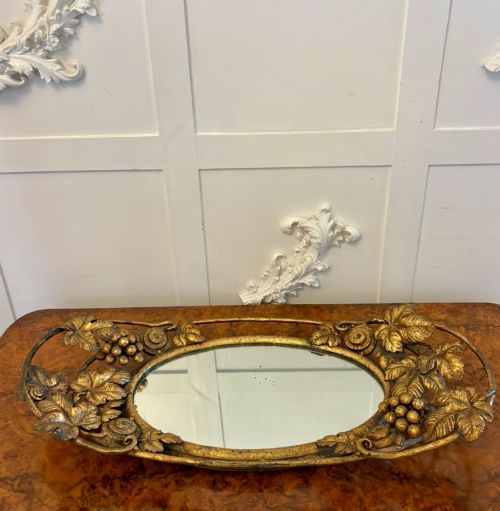
Makers utilised solid timbers and veneers such as oak, mahogany, walnut, and teak, frequently combining them with brass, chrome, and silver-plated galleries. Glass panels, mirrored surfaces, and specialist coverings like goatskin appear across Art Deco and modernist examples.
Joinery techniques include turned barley twist supports, carved detailing, and cane binding on beech frames. Many models incorporate wheels for mobility, folding mechanisms, and removable serving trays resting on multi-level structures.
Vintage Serving Cart Retail Price Guide 2026
Typical asking prices for vintage serving cart among the pieces listed under this phrase on Sellingantiques today, from the lower quarter to the upper quarter. They describe what is for sale here now, not the wider market.
One historical cart even served aboard a British warship before finding its way to the marketplace.
Standards of Execution
The distinction between tiers of quality rests on the selection of figured veneers, the weight of the brass or chrome framework, and the crispness of turned or carved woodwork. Superior examples employ substantial timber, secure joints, and high-grade silver plating rather than lighter plated finishes.
Design sophistication also sets pieces apart, with recognisable styles such as French Art Deco bar carts or specialised modernist trolleys demonstrating greater refinement in proportion and material combinations than standard utilitarian tea trolleys.
Maison Bagues·Lusty of Leicester·Aldo Tura
The Vintage Serving Cart Glossary
- Tea trolley
- A mobile piece of furniture with wheels, built with multiple tiers to transport cups, teapots, and cakes.
- Bar cart
- A wheeled serving cart specifically designed for holding bottles, glassware, and cocktail accessories.
- Etagere
- An open shelving unit or tiered trolley intended for the display of items, often constructed from brass and glass.
- Butlers tray
- A portable wooden tray with raised sides, frequently designed to lift off and rest upon a folding wooden stand.
- Barley twist
- A type of decorative turning carved into wooden table legs and supports in a spiral rope pattern.
Vintage Serving Cart: Frequently Asked Questions
What is a vintage serving cart used for?
These mobile pieces serve as functional furniture for holding and transporting drinks, glassware, and afternoon tea across different rooms.
They also function as static display units or side tables when not in motion during entertaining.
How do I identify an Art Deco cart?
Art Deco models typically date from the 1920s and 1930s, featuring geometric shapes, circular designs, or contrasting materials like chrome, black glass, and figured walnut.
They often display modernist lines that contrast sharply with earlier Edwardian or Victorian timber styles.
What materials are common?
Construction relies heavily on traditional woods like oak, mahogany, and walnut, alongside modern additions of chrome, brass, and silver plate.
Glass, mirrored surfaces, and occasionally goatskin or cane provide the upper display and serving areas.