

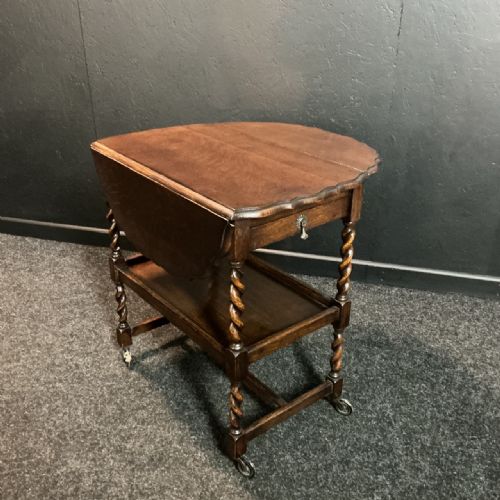


Vintage Tea Trolley
When you need a vintage tea trolley, you find practical wheeled servers in timber and metal built for hospitality and entertaining.
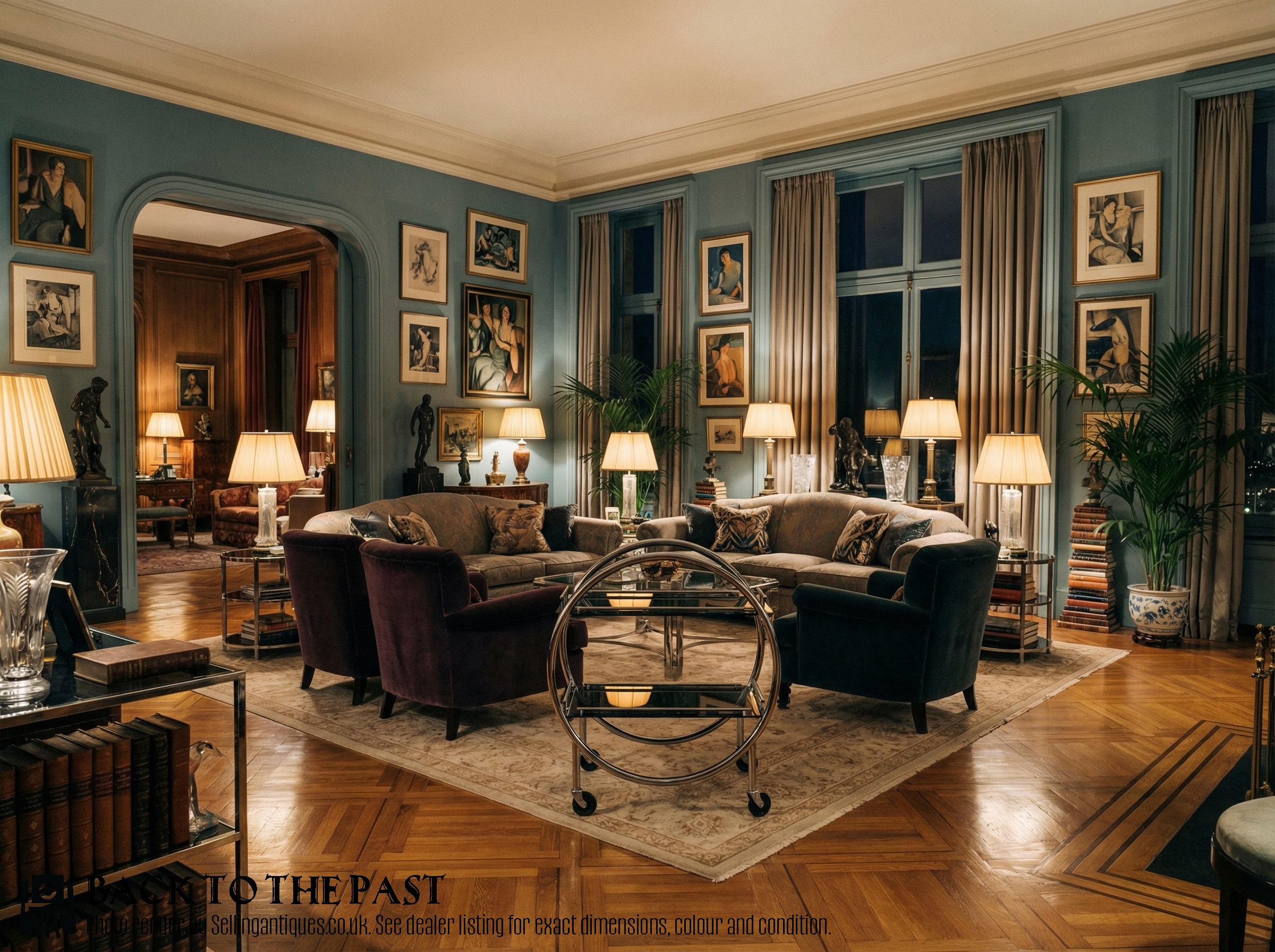
Vintage Tea Trolley
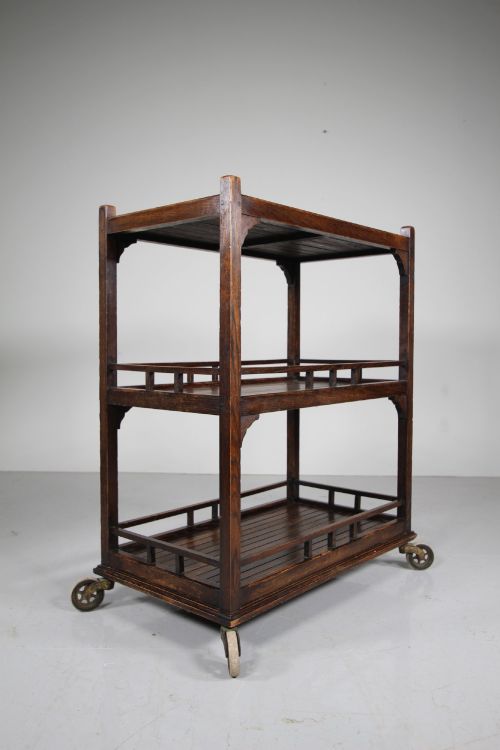
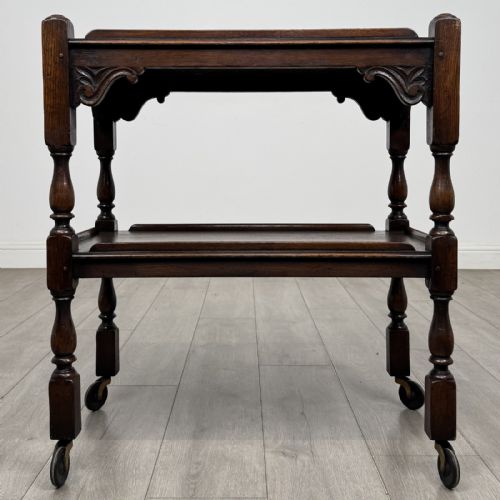
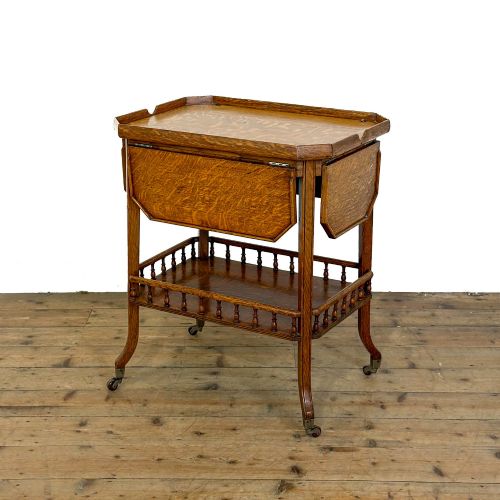
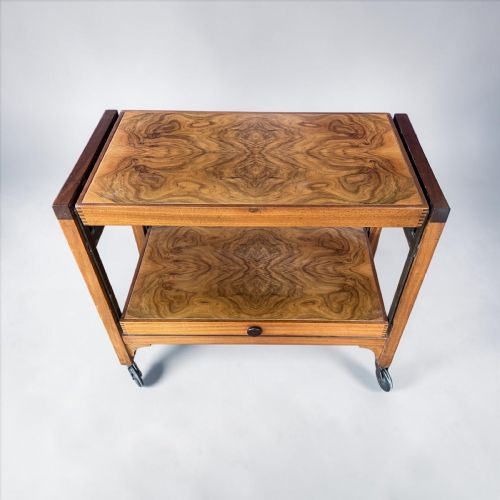
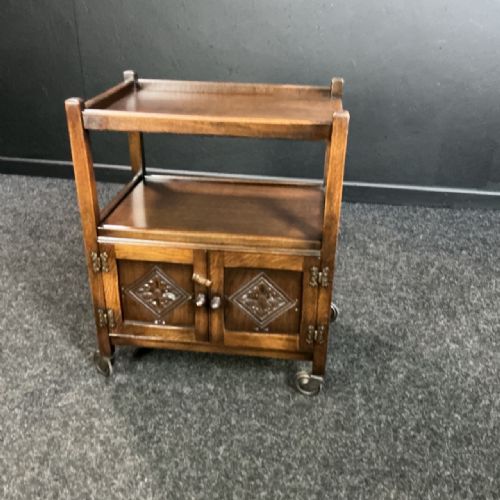
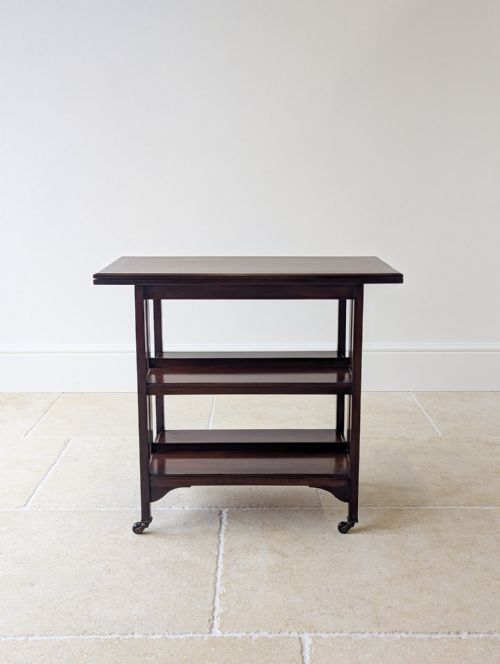
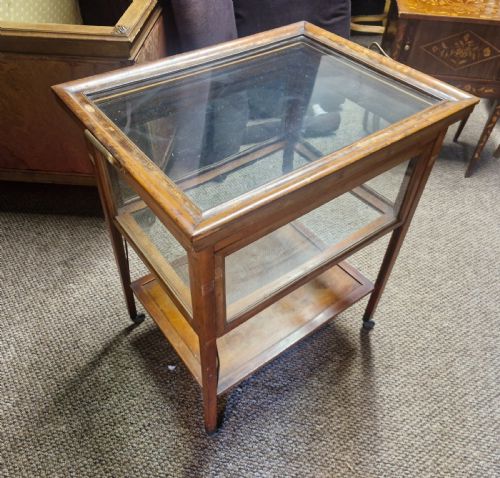
A vintage tea trolley encompasses mobile serving pieces designed to transport afternoon tea, spirits, and glassware across rooms. The selections span compact two-tier tables and elaborate three-tier etageres on small castors.
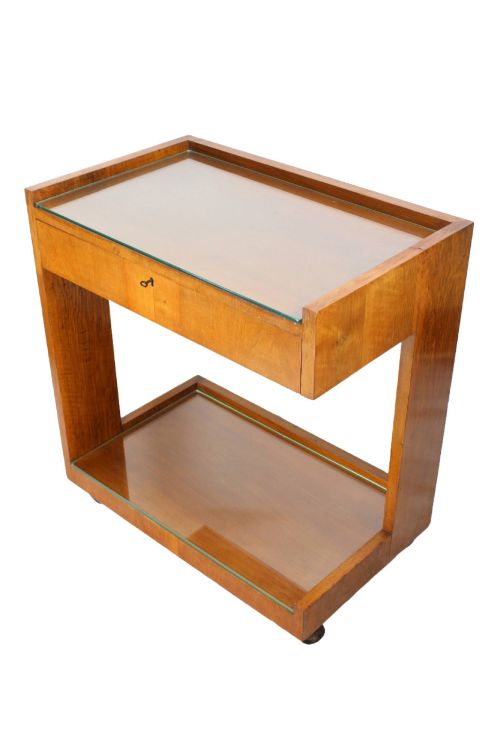
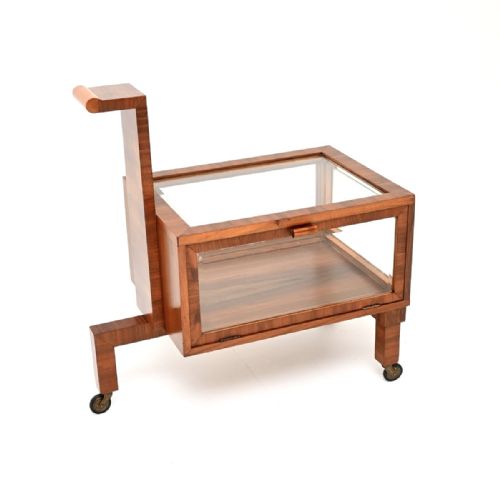
Most examples originate from the Edwardian era through the nineteen-thirties, manifesting in styles from heavy Jacobean revival oak to sleek Art Deco walnut and chrome. You will encounter models featuring drop sides, removable serving trays, and folding mechanisms.
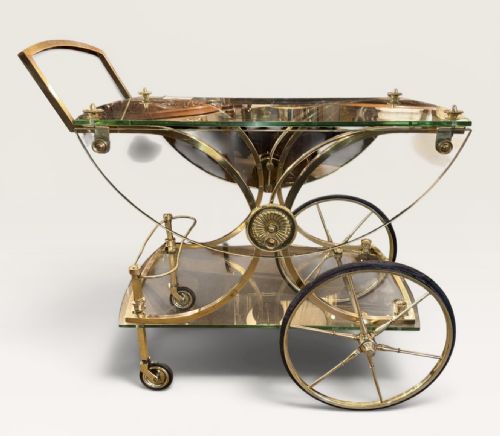
Regional variations include French gilded bar carts, English walnut circular units, and Chinese carved hardwood tiers. These pieces function equally well as mobile drinks cabinets or auxiliary display surfaces in modern interiors.
Materials and construction
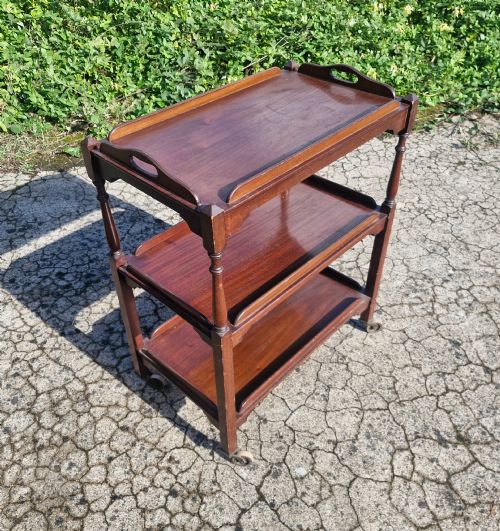
Makers utilised solid timbers and veneers including walnut, mahogany, oak, teak, and beech, frequently pairing them with structural metals. Joinery techniques range from traditional mortise and tenon frames to bentwood structures and cane binding.
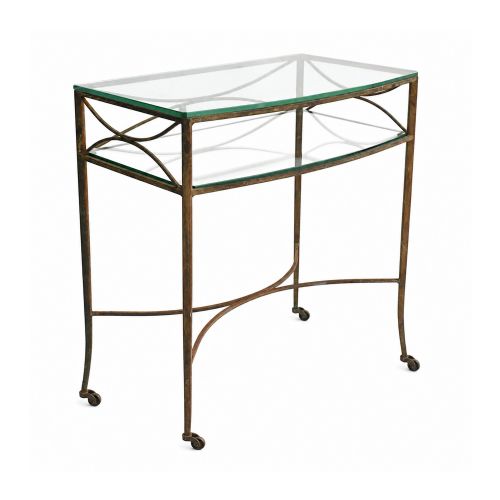
Metal components introduce brass galleries, cast-iron hardware, and gleaming chrome frames to support glass shelves and mirrored surfaces. Finishing touches involve intricate wood turnings like barley twist legs, alongside marquetry inlay and carved mouldings.
Vintage Tea Trolley Retail Price Guide 2026
Typical asking prices for vintage tea trolley among the pieces listed under this phrase on Sellingantiques today, from the lower quarter to the upper quarter. They describe what is for sale here now, not the wider market.
Some models served aboard naval ships before retiring to the domestic drawing room.
Assessing craftsmanship
Superior construction reveals itself in the rigidity of the frame and the smooth rolling action of the original castors. Finer pieces employ figured walnut or burr amboyna veneers with crisp, unblemished edge banding.
Hardware execution separates standard utility items from high-end examples, visible in heavy cast brass galleries and secure tray locators. The integration of functional elements, such as metamorphic folding mechanisms or tightly fitted drop leaves, dictates the tier of manufacture.
Maison Bagues·Lusty of Leicester·Aldo Tura
The Vintage Tea Trolley Glossary
- Barley twist
- A decorative turning technique resembling a spiralling rope, commonly found on table legs and supports.
- Drop side
- Hinged flaps on the table top that fold down to save space or lift up to extend the surface area.
- Etagere
- A set of open shelves for displaying ornaments, glassware, or serving items across multiple vertical levels.
- Metamorphic
- Describing furniture that transforms or changes shape to serve a secondary function, such as converting from a table to a trolley.
- Castor
- A small wheel mounted on a swivel assembly attached to the base of the legs for mobility.
Vintage Tea Trolley: Frequently Asked Questions
How do I care for a wooden trolley?
Maintain timber surfaces by applying quality beeswax periodically to preserve the grain and protect against moisture rings.
Avoid placing hot dishware directly on untreated wood and ensure brass or chrome hardware remains dry.
Are the serving trays removable?
Many period examples feature lift-off trays fitted with handles designed for carrying items independently from the wheeled base.
Check the gallery rails or retaining ledges which secure the tray safely in position during movement.
Can I use these as a bar cart?
These mobile units adapt naturally for holding bottles, decanters, and glassware for home entertaining.
Glass shelves and mirror bases common in Art Deco models handle spills easily while reflecting light through glassware.
How do I identify an Art Deco trolley?
Look for geometric forms, circular silhouettes, and the use of contrasting materials like chrome paired with black glass.
Figured walnut and burr veneers with streamlined profiles dominate this twentieth-century design movement.