



Art Deco Serving Cart
An art deco serving cart brings practical elegance to any room, offering a mobile surface for entertaining with distinctive period style.
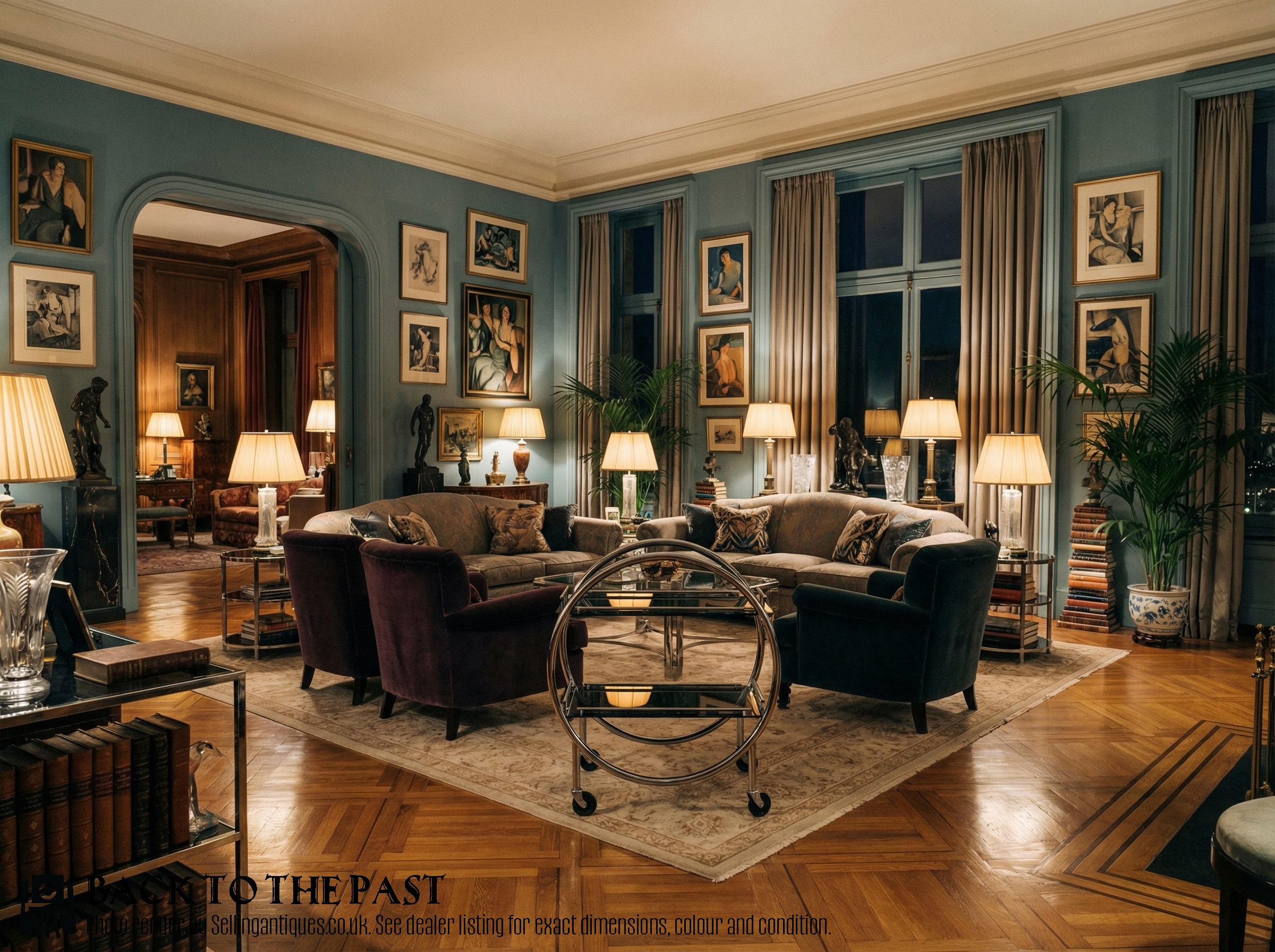
Art Deco Serving Cart
An art deco serving cart unites utility with the streamlined aesthetics of the 1920s, 1930s, and 1940s. These pieces function primarily as drinks trolleys, bar carts, and tea trolleys designed for hosting.
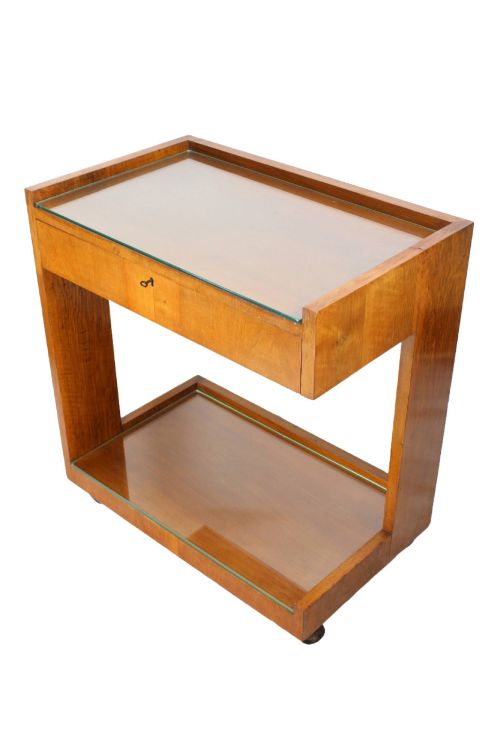
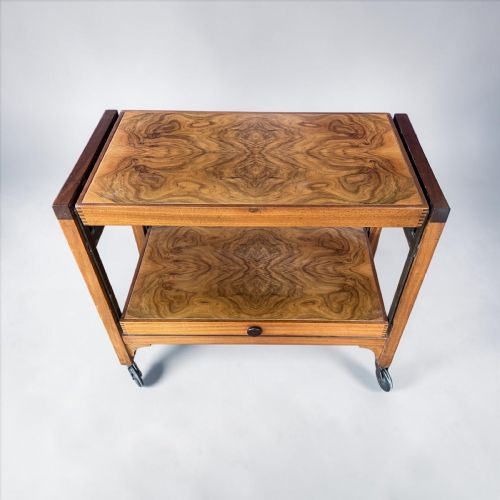
Buyers regularly encounter two-tier trolley designs alongside circular walnut models and specialist hostess carts. English and French examples dominate the selection, often incorporating removable serving trays.
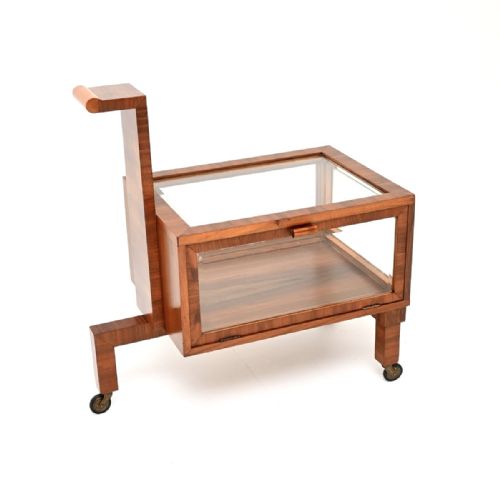
The form spans straightforward wooden tea carts to elaborate modernist cocktail bars mounted on wheels. Each variant reflects the dynamic entertaining habits of the interwar decades.
How they were made
Cabinet makers utilised rich timbers including walnut, burr amboyna, and mahogany, often highlighting figured grain patterns. These wooden frames frequently feature multiple tiers joined by sturdy uprights.
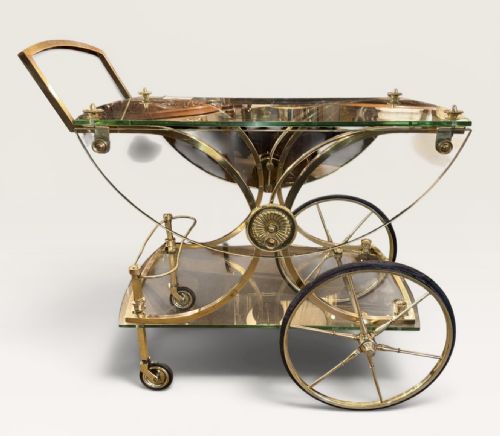
Metalworking played a central role, with chrome, brass, aluminium, and silver plate providing a sleek modernist contrast. Frame construction relied on sturdy metal tubing or cast bronze elements.
Surfaces combined clear glass, black glass, and mirror glass inserts to reflect light and bottles. Certain luxury models incorporated specialised decorative elements like cobalt blue mirror glass.
Art Deco Serving Cart Retail Price Guide 2026
Typical asking prices for art deco serving cart among the pieces listed under this phrase on Sellingantiques today, from the lower quarter to the upper quarter. They describe what is for sale here now, not the wider market.
One exceptional novelty tray depicts the silent film icon Charlie Chaplin.
What varies in quality
The choice of primary material sets the baseline for quality, distinguishing standard mahogany or metal frames from luxury burr amboyna and figured walnut veneers. Superior pieces display master woodworking and precise grain matching.
Hardware and metal finishing create further division across the range. Heavy cast or plated brass and pristine chrome outlast lighter aluminium alternatives and show greater fidelity to original modernist designs.
Design complexity elevates certain examples above standard utility items. Metamorphic mechanisms, integrated display cases, and attributed maker work elevate a standard serving trolley into high-tier collectible territory.
Maison Bagues·Asprey London
The Art Deco Serving Cart Glossary
- Metamorphic
- Describing furniture designed to transform its shape or function through clever mechanical hinges or folding tiers. This engineering allows a compact surface to expand for hosting duties.
- Burr amboyna
- A highly prized wood veneer showing intricate, swirling grain patterns formed by tree growths. Makers selected this exotic material for high-end decorative surfaces.
- Hostess trolley
- A specialised serving cart equipped to transport food, tea, or cocktail equipment between rooms. These pieces prioritize mobility and tiered storage.
- Silver plate
- A thin layer of silver applied over a base metal foundation such as copper or brass. This technique offered the visual appeal of solid silver at a more accessible cost.
Art Deco Serving Cart: Frequently Asked Questions
How were art deco serving carts used?
These carts served drinks, tea, and canapes during social gatherings in the home. Their mobility allowed hosts to circulate refreshments easily among guests.
They also functioned as static display surfaces for cocktail shakers and glassware when not in transit across the drawing room.
How do I style a bar cart?
Balance the tiers by placing taller bottles and glassware on the bottom shelf to maintain stability. Reserve the top surface for active cocktail preparation tools and low glassware.
Incorporate trays to group smaller items together and protect wooden or mirrored surfaces from spills.
How do I date an art deco trolley?
Examine the materials and construction methods to establish an approximate decade of production. Chrome and tubular metal point firmly toward the 1930s, while figured walnut and heavier wooden frames often align with 1920s aesthetics.
Maker marks and stylistic cues specific to French or English workshops provide additional chronological markers.
Are these trolleys suitable for daily use?
Most antique and vintage carts remain robust enough for gentle everyday service. Original glass inserts and silver-plated surfaces require careful cleaning to preserve their condition.
Ensure castors move freely before loading heavy decanters onto the upper tiers.