



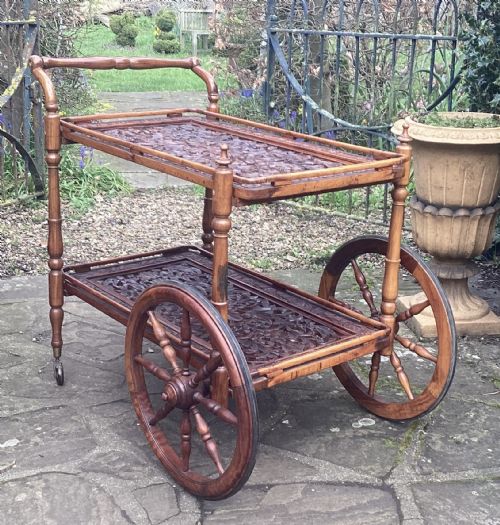


Two Tier Bar Cart
A two tier bar cart is a mobile serving surface for drinks and glassware, combining practical hospitality with distinct period style.
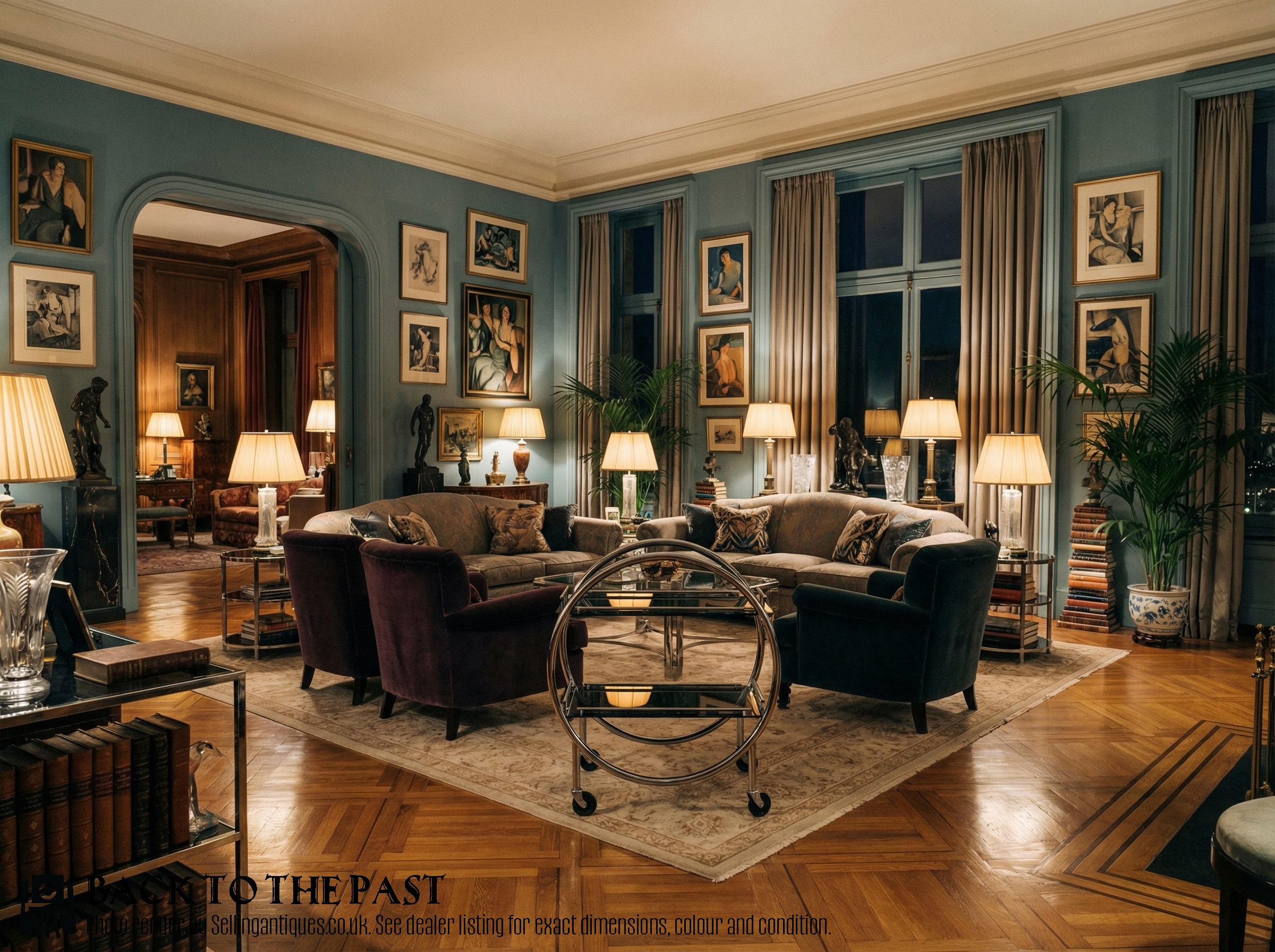
Two Tier Bar Cart
A two tier bar cart provides two separate levels for bottles, glassware, and serving pieces while moving easily on wheels. When you search for a two tier bar cart, you encounter various formats designed for entertaining and serving afternoon tea or evening cocktails.
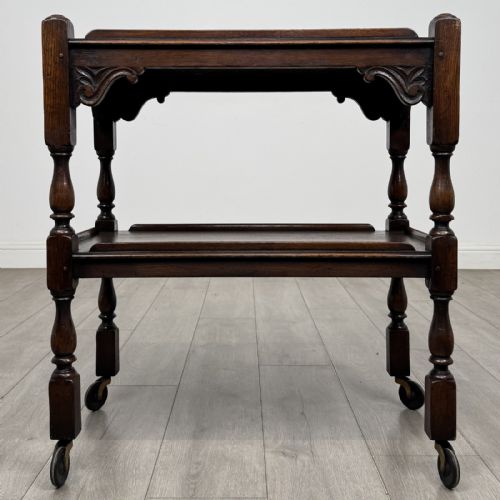
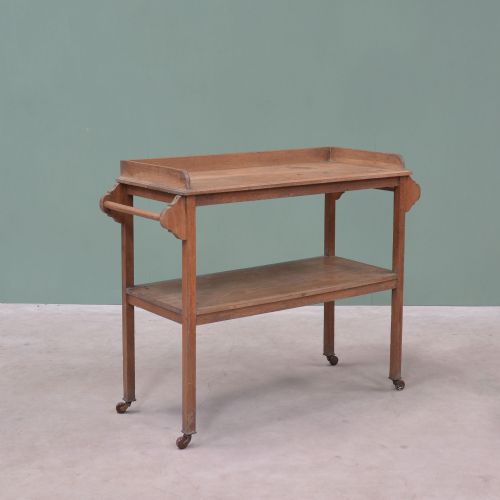
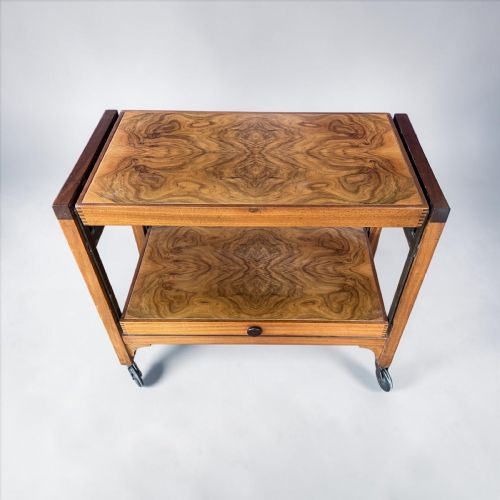
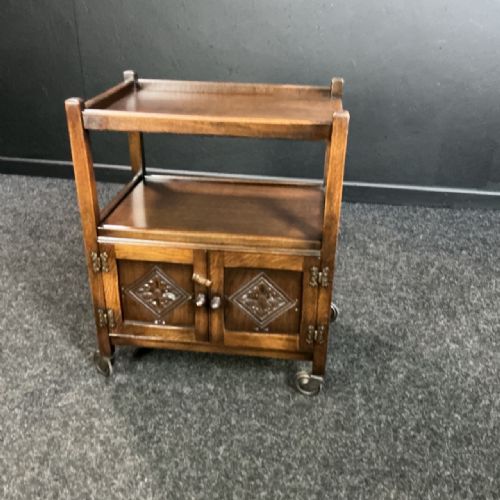
The selections span from early Edwardian oak tea trolleys to sleek Art Deco chrome and glass designs from the nineteen thirties. Mid-century examples also appear alongside Victorian and Georgian style pieces in mahogany and walnut.
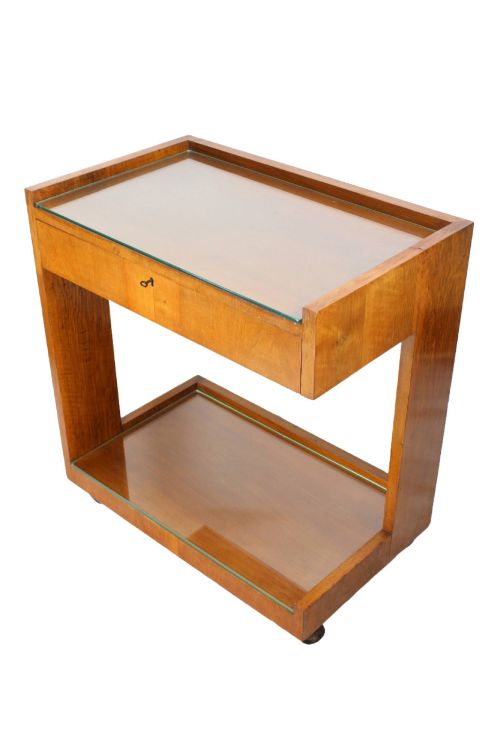
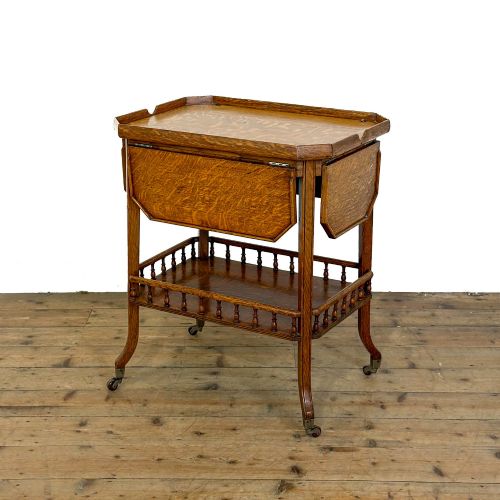
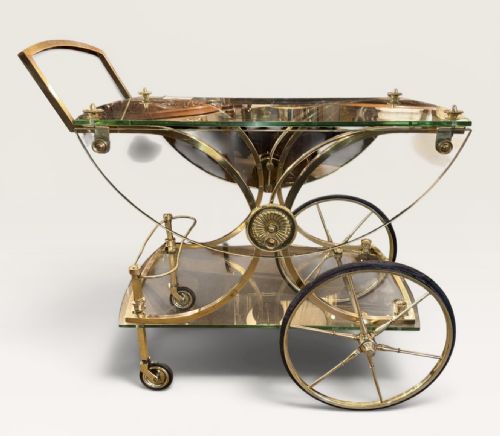
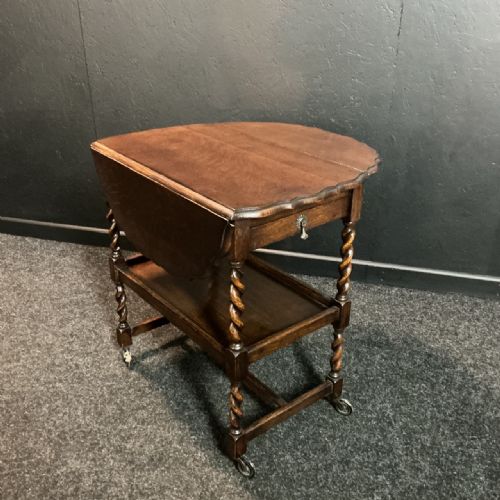
Oak and mahogany versions frequently feature folding tops, drop leaves, or lift-off trays for versatility. Art Deco models tend to pair chrome and mirror glass or deploy walnut with clean architectural lines.
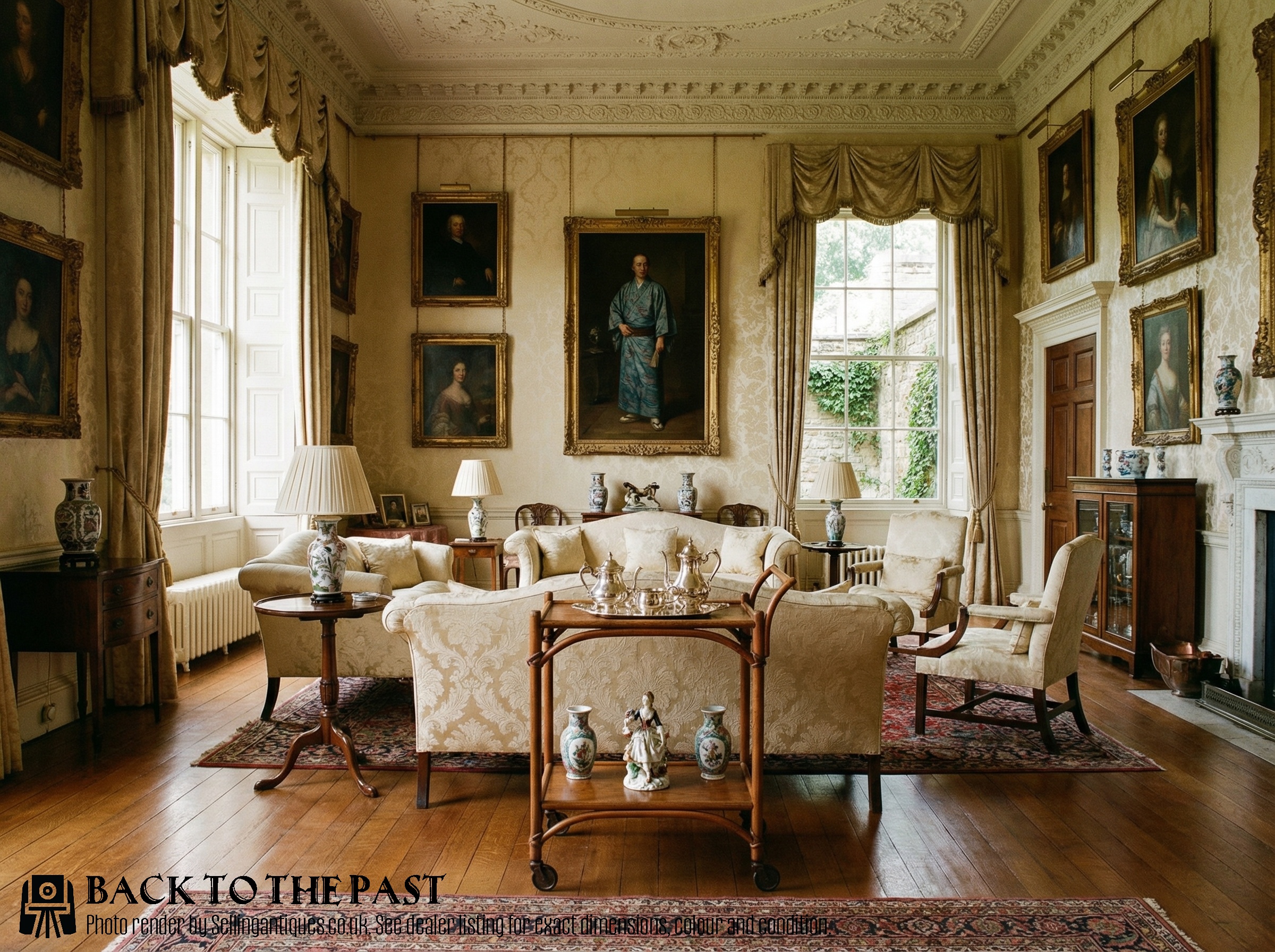
How they were made
Traditional examples rely on solid timbers like oak, mahogany, and walnut, often finished with turned legs and brass castors. Cabinetmakers utilised marquetry inlay and clever folding mechanisms to create convertible tea trolleys and card tables.
Twentieth-century pieces embrace industrial and modern materials, pairing tubular chrome, aluminium, and brass with black glass or mirror plates. Specialised constructions include cane binding, goatskin over wooden cores, and faux bamboo mouldings.
Two Tier Bar Cart Retail Price Guide 2026
Typical asking prices for two tier bar cart among the pieces listed under this phrase on Sellingantiques today, from the lower quarter to the upper quarter. They describe what is for sale here now, not the wider market.
Several trolleys double as card tables with baize surfaces, ready to transition from afternoon tea directly into an evening game of whist.
What varies in quality
The distinction between standard utility items and finer pieces rests on timber selection, joinery precision, and hardware execution. Higher grade trolleys employ figured walnut, well-matched mahogany grains, or heavy-gauge chrome plating that retains its polish.
Mechanism design separates basic models from exceptional ones, particularly in metamorphic serving trolleys, folding drop leaves, and removable trays. Smooth mobility depends upon sturdy castor mountings and well-balanced frames that prevent wobbling during transport.
Maison Bagues·Lusty of Leicester·Aldo Tura·Maison Jansen
The Two Tier Bar Cart Glossary
- Drop leaf
- A hinged tabletop flap that extends the surface area when raised and drops down when not in use. This mechanism is frequently found on Edwardian and mahogany tea trolleys.
- Castor
- A small wheel mounted to the base of each leg for easy rolling across floors. Quality trolleys feature metal or wooden castors that turn freely.
- Metamorphic
- A piece of furniture designed to transform into another form, such as a serving trolley converting into a card table. These clever designs indicate higher craftsmanship.
- Hostess trolley
- A term often applied to serving and drinks trolleys originating from the Art Deco period onwards. They facilitate the movement of food, tea, or cocktails between rooms.
- Tier
- An individual shelf or level within the structure of the cart. Two tier models provide a primary top surface and a lower storage deck.
Two Tier Bar Cart: Frequently Asked Questions
How do I style a two tier bar cart?
Place taller bottles, decanters, and glassware on the top tier for easy access while entertaining guests. Use the lower shelf for stacking extra tumblers, cocktail napkins, or supplementary bottles.
Keep the arrangement balanced by pairing functional items with a small decorative piece or a bowl of bar accessories.
Can these carts be used for daily dining?
Many historical examples were built specifically as tea trolleys and serving carts to transport dishes between the kitchen and dining room. Their wheels and manageable size make them practical for moving everyday items.
Vintage surfaces benefit from coasters and trays to protect older wood or mirror glass from condensation rings.
How do I distinguish an Edwardian tea trolley from an Art Deco model?
Edwardian versions typically utilise solid oak or mahogany with turned wooden supports, panelled trays, and traditional joinery. They often include folding leaves or removable top trays suited for afternoon tea.
Art Deco models favour modern materials like chrome, brass, aluminium, and mirrored glass, featuring streamlined geometric frames and polished metallic finishes.
Are the wheels on vintage carts safe for modern floors?
Most period trolleys feature original metal or wooden castors that roll smoothly over carpets and rugs. Hardwood floors require a quick check of the wheels to ensure no grit is trapped inside the mechanism.
Smaller wheels distribute weight evenly, but heavier laden carts should be guided carefully across delicate floor surfaces.