



1930s Hostess Trolley
A 1930s hostess trolley brings genuine Art Deco style and practical mobility to entertaining, offering clever tiered design for serving drinks and tea.
1930s Hostess Trolley
A 1930s hostess trolley is a mobile serving piece designed for drinks, tea, and entertaining during the interwar period. These items appear primarily as two-tier drinks trolleys, bar carts, and tea trolleys originating from English workshops.
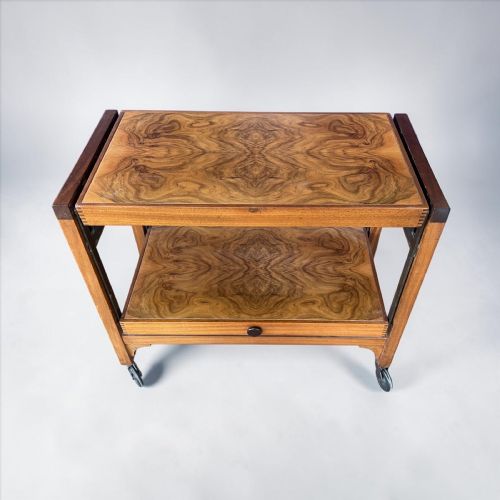
The prevailing aesthetic on this page is strongly rooted in Art Deco design, displaying circular or rectangular forms fitted with wheels. Walnut, mahogany, and various woods feature alongside modern metals.
Makers of the period utilised contemporary materials to create functional furniture for domestic hospitality. The resulting objects combine utilitarian wheels with decorative glass, mirror, and polished metal surfaces.
Materials and construction
Construction relies heavily on traditional cabinet-making timbers such as figured walnut and mahogany for wooden frames and tiered shelving. These warm woods provide a solid foundation for the serving surfaces.
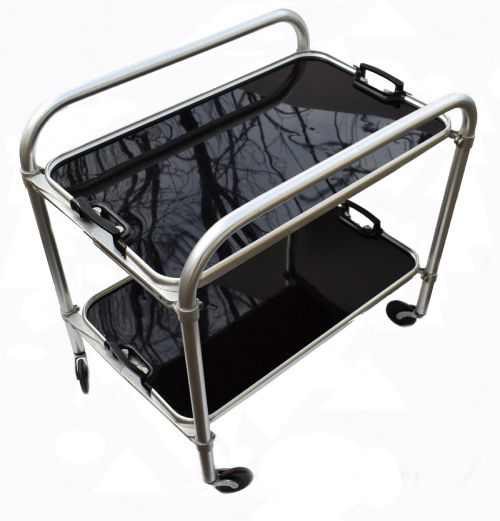
Modern industrial materials define the contrasting modernist pieces, incorporating chrome, steel, aluminium, and brass elements. Glass and mirror inserts are fitted to the tiers to hold glassware and bottles securely.
Castors are attached to the base of each trolley to ensure smooth mobility across floors. Metal frames are often paired with black glass or mirrored panels to achieve the characteristic Streamline look.
Some models feature a circular walnut design known as the Savoy, ready to roll your gin straight into the twentieth century.
Assessing quality and craftsmanship
Quality in a 1930s hostess trolley is visible in the selection of wood veneers, such as figured walnut, and the precision of the metal framing. Superior examples display seamless integration between the supporting structure and the tiered trays.
The choice of surface materials distinguishes standard production from finer work, particularly where heavy chrome plating, polished aluminium, or specialist mirror glass is employed. Attention to detail in the castor fixings and wheel mounts also indicates higher manufacturing standards.
The 1930s Hostess Trolley Glossary
- Art Deco
- A design style spanning the 1920s and 1930s characterised by sleek geometric forms, streamlined shapes, and modern industrial materials. It dominates the aesthetic of these serving trolleys.
- Walnut
- A hard timber prized for its rich grain patterns and deep colour, frequently utilised in figured veneers on high-end cabinet work. It forms the primary wooden medium for many circular drinks carts.
- Castor
- A small wheel mounted on a swivel assembly at the base of a piece of furniture to permit rolling movement. These fittings enable the trolley to function as a mobile bar cart.
- Metamorphic
- A term describing furniture that alters its shape or function through folding or extending mechanisms. These clever designs allow serving surfaces to expand when entertaining.
- Streamline
- A late phase of Art Deco design influenced by aerodynamic principles, featuring curved corners and horizontal lines. This style translates into the rounded frames of modernist drinks trolleys.
1930s Hostess Trolley: Frequently Asked Questions
What is a 1930s hostess trolley used for?
These trolleys were originally designed for serving tea, cocktails, and canapes in the domestic sitting room or dining room. The multiple tiers allow hosts to transport glasses, bottles, and tableware efficiently.
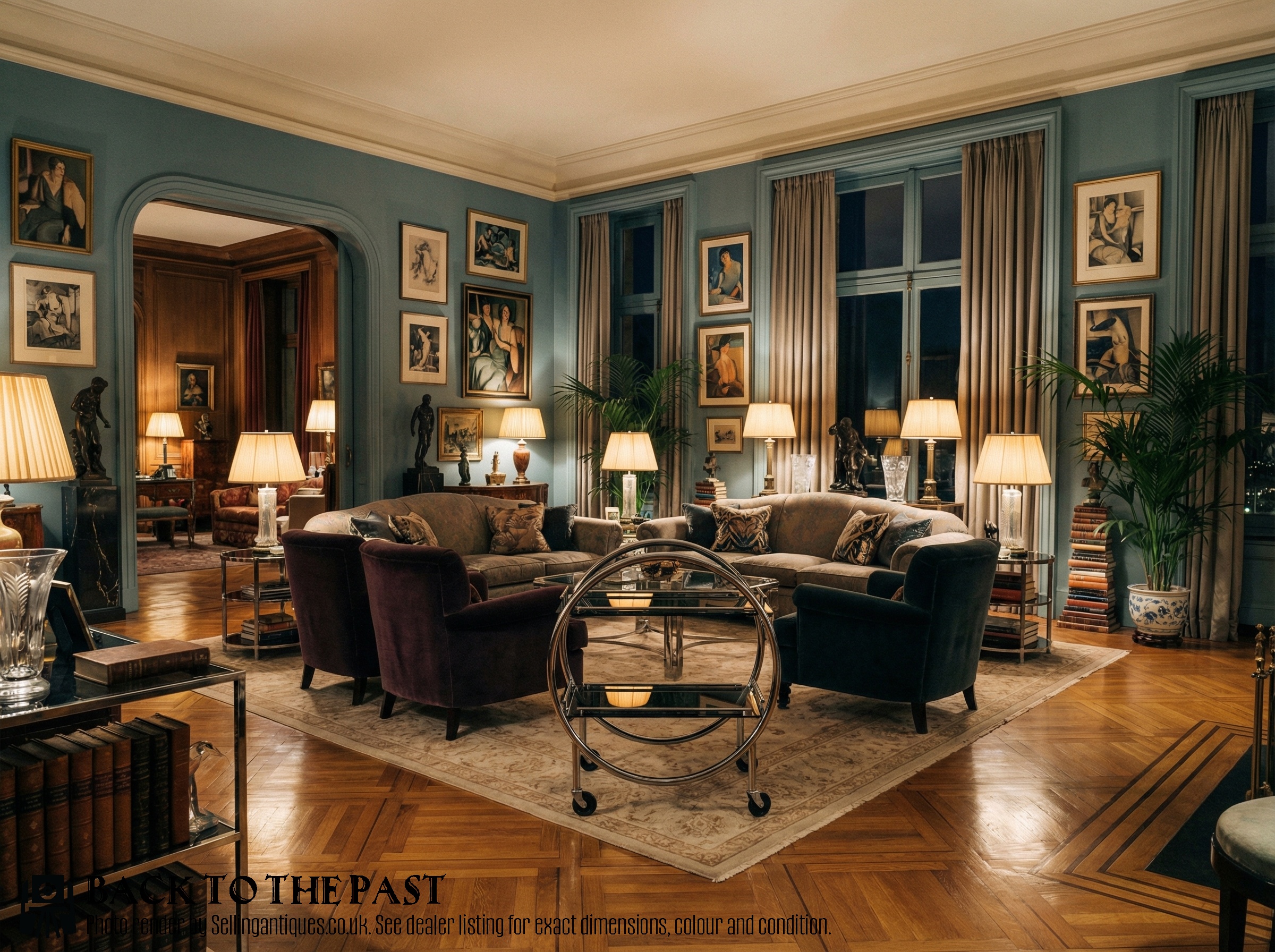
Today, they function well as mobile home bars or decorative side tables in living spaces. Their wheels make them practical for moving refreshments between rooms during gatherings.
How do I identify an Art Deco trolley?
Art Deco trolleys typically feature geometric shapes, such as circular shelves, clean lines, and contrasting materials like chrome and black glass. Walnut and mahogany veneers with polished finishes are also common decorative indicators.
Makers of this era embraced both traditional cabinet woods and modern industrial metals. The presence of streamlined curves and mirrored surfaces further confirms the period style.
Are these trolleys sturdy enough for daily use?
Most examples are built with robust wooden frames or metal structures designed to support heavy glassware and bottles. The inclusion of secure castors ensures they can be pushed across carpets and floorboards safely.
Care should be taken with vintage mirror glass and polished wood surfaces when placing heavy items. Regular gentle cleaning helps maintain the original chrome and timber finishes.
What materials are common in these pieces?
The listings show a combination of traditional hardwoods like walnut and mahogany alongside industrial metals including chrome, steel, aluminium, and brass. Glass and mirror panels form the upper and lower serving surfaces.
Castors are fitted to the base of every piece to provide mobility. The contrast between warm wood grain and shiny metal defines the material palette.