

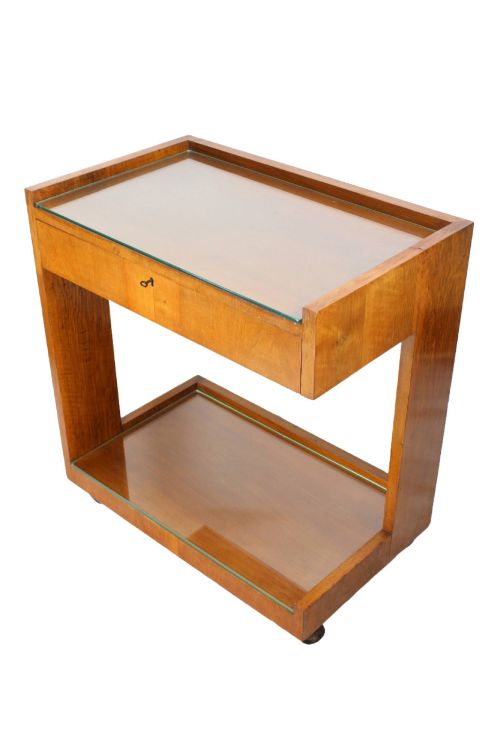
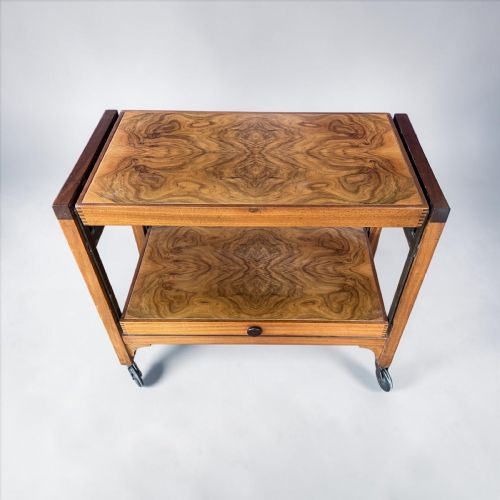
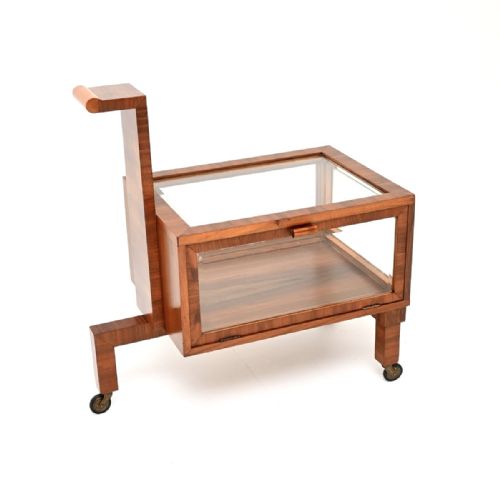
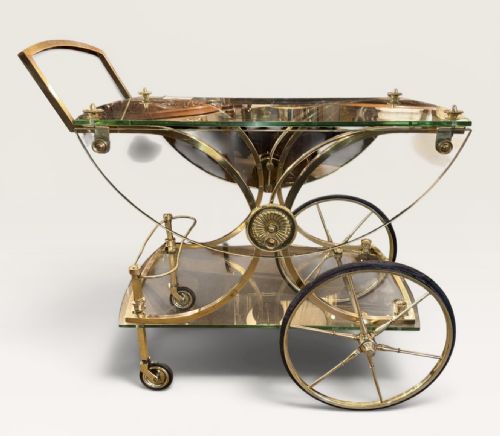


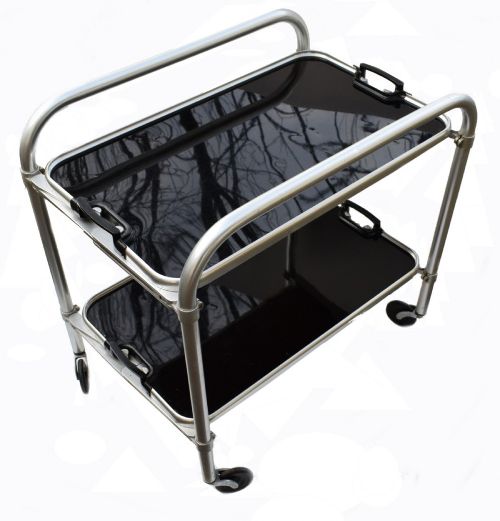
Art Deco Tea Trolley
These art deco tea trolley pieces are clever serving furniture combining walnut, brass, and glass for stylish entertaining.
Art Deco Tea Trolley
An art deco tea trolley functions as mobile serving furniture designed for drinks and refreshments during the twentieth century. These pieces emerge in styles from the 1920s, 1930s, and 1940s, originating from English, French, and Danish workshops.
Most examples found here take the form of drinks trolleys, bar carts, serving carts, or two-tier and three-tier trolleys. Certain variations include metamorphic mechanisms, display cases, or circular Savoy designs suited to domestic hospitality.
The assortment spans traditional woods and metals, incorporating dedicated cocktail bar carts alongside standard tea tables. Buyers encounter forms ranging from simple tiered shelving to elaborate mobile buffets.
Materials and construction
Construction relies heavily on timbers such as walnut, burr walnut, burr amboyna, pollard oak, mahogany, teak, and oak. Artisans pair these rich woods with contrasting metal elements including brass, aluminium, and castors for mobility.
Glass panels feature frequently in shelves and tabletops, creating layered surfaces across two or three tiers. Wood surfaces display distinct figures and grains, complemented by metal framing and wheels.
Art Deco Tea Trolley Retail Price Guide 2026
Typical asking prices for art deco tea trolley among the pieces listed under this phrase on Sellingantiques today, from the lower quarter to the upper quarter. They describe what is for sale here now, not the wider market.
Some trolleys transform completely when needed, proving that 1930s furniture designers loved a secret mechanical trick just as much as a good cocktail.
Distinctions in quality
Quality rests upon the selection of decorative veneers like burr amboyna and figured walnut against standard timbers. The integration of complex elements, such as metamorphic folding actions or fitted cocktail compartments, separates simpler serving tables from advanced designs.
Refinement shows in the harmony of mixed materials, where polished brass fittings and castors join cleanly with glazed tiers and structured woodwork. Superior examples exhibit cohesive proportion across circular or tiered frameworks.
Fyne Ladye
The Art Deco Tea Trolley Glossary
- Metamorphic
- Descriptive of furniture that transforms its shape or function through folding or sliding mechanisms. This engineering allows a compact cart to expand into a larger serving surface.
- Tier
- A horizontal level or shelf within a multi-level trolley structure. Multiple tiers provide separated space for glassware and bottles.
- Castor
- A small wheel mounted on a swivel assembly at the base of the trolley leg. These allow the piece to glide smoothly across flooring during service.
- Veneer
- A thin layer of decorative wood applied over a base timber foundation. Burr veneers showcase intricate, swirling grain patterns highly prized in this period.
- Savoy
- A specific circular trolley design associated with hospitality traditions of the era. The curved footprint offers distinct handling compared to rectangular carts.
Art Deco Tea Trolley: Frequently Asked Questions
What are these trolleys used for?
These pieces serve mobile hospitality needs, functioning as portable bars, serving carts, and tea tables for entertaining guests.
Their multi-tiered shelving holds glassware, bottles, and tea sets conveniently while moving easily across rooms.
How do I date an art deco trolley?
Dating relies on identifying signature materials, timber types, and construction methods recorded across the 1920s, 1930s, and 1940s periods.
Stylistic shifts from early oak and walnut designs toward later aluminium and teak forms help establish chronological placement.
Are all these carts fitted with wheels?
Most pieces include castors to facilitate movement, though certain table trolley variants operate as stationary serving furniture.
Wheels range from subtle hidden castors to prominent metal fixtures integrated into the overall geometric design.
How do I care for wood and glass tiers?
Maintenance involves gentle cleaning of polished walnut or exotic veneers using appropriate wood care without harsh chemicals.
Glass surfaces require standard glass cleaner, while brass and metal trims benefit from occasional careful polishing.