






Vintage Serving Trolley
A vintage serving trolley brings mobility and hospitality together, spanning solid oak frames to sleek chrome and glass tiers.
Vintage Serving Trolley
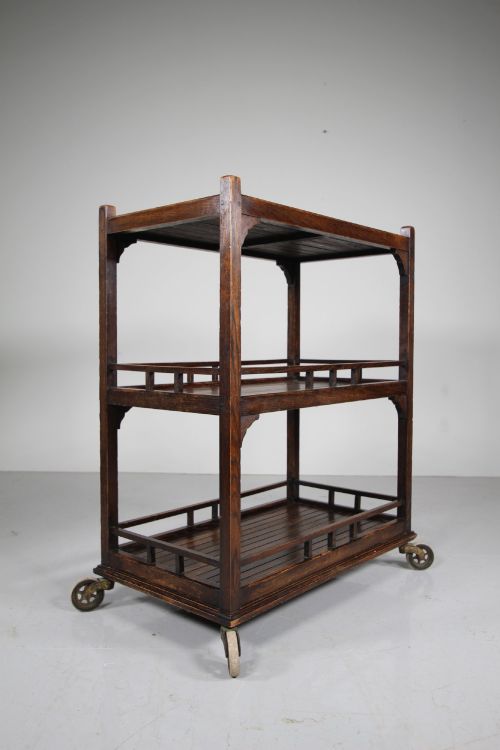
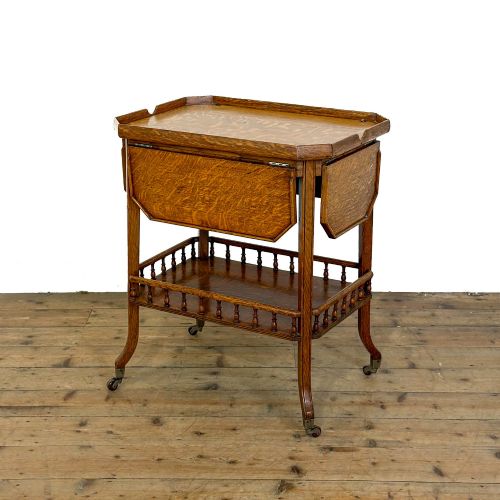
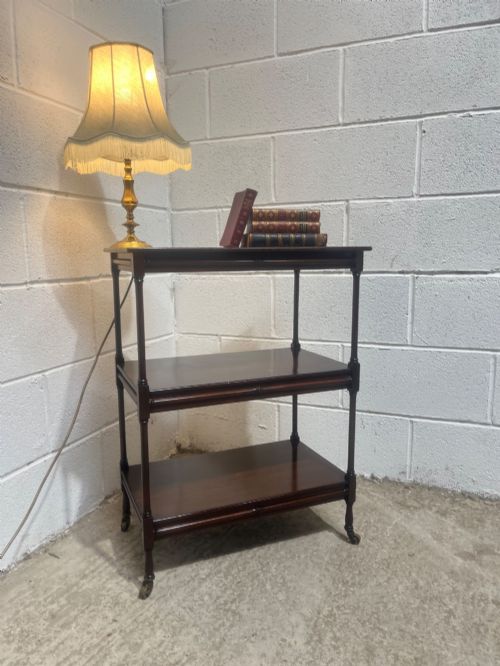
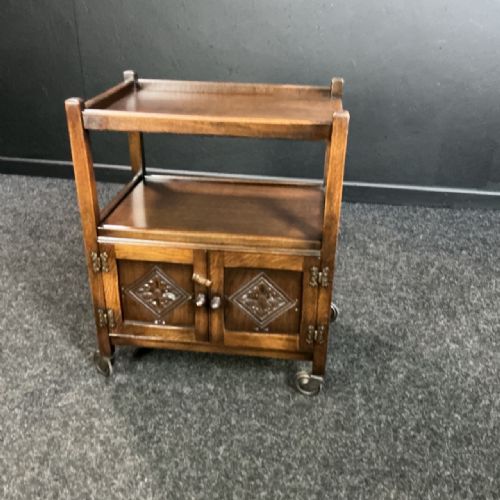
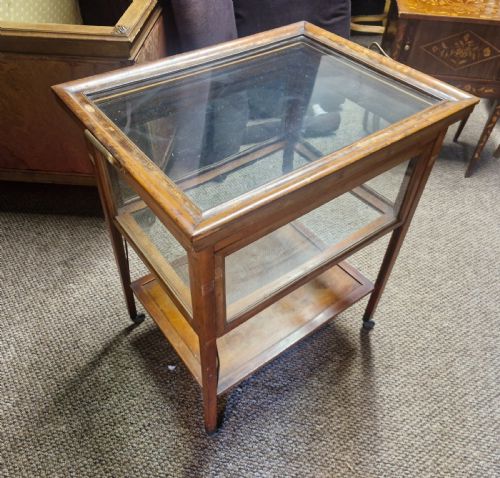
A vintage serving trolley is a mobile furniture piece designed for drinks, afternoon tea, or food delivery, taking forms from multi-tiered tables to folding butler's trays. You will frequently encounter Edwardian and 1930s examples equipped with wheels or castors for easy transport between rooms.
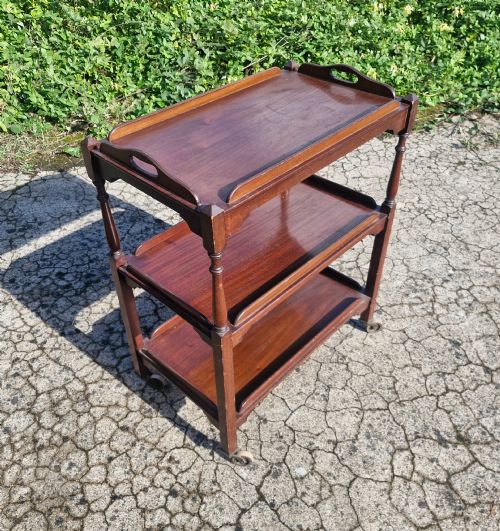
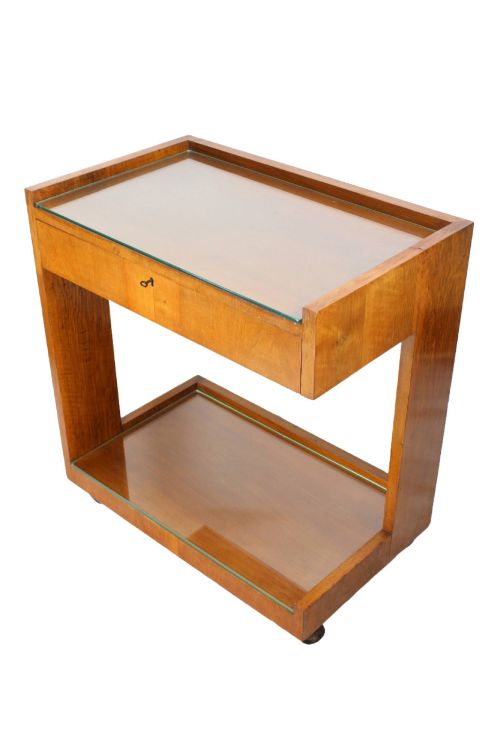
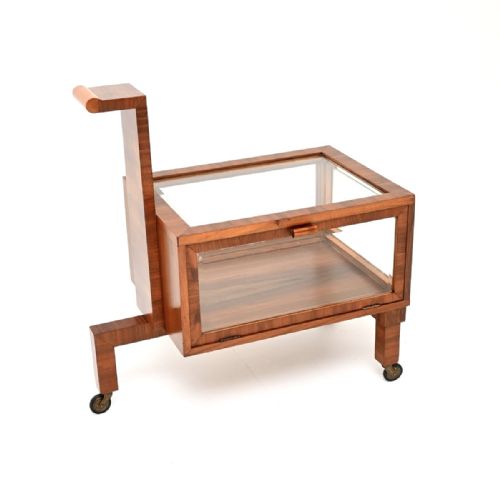
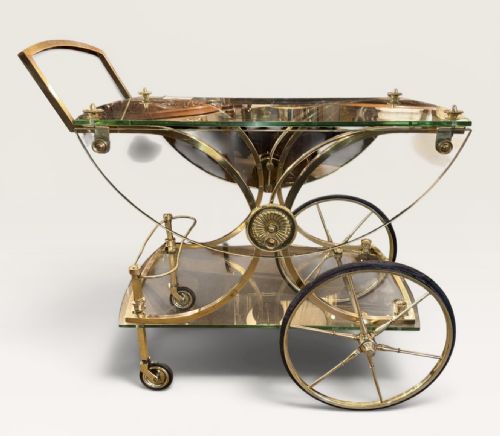
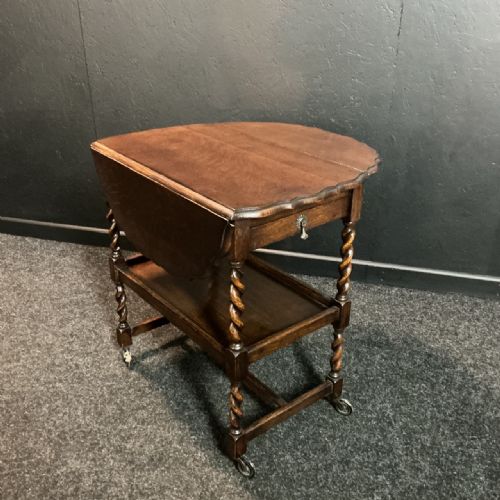
The selection ranges from traditional oak and mahogany tea trolleys with drop sides to striking Art Deco walnut, brass, and glass cocktail carts. Pieces from the nineteenth century often appear as dumb waiters, etageres, or sturdy butlers' stands with removable trays.
Materials and construction
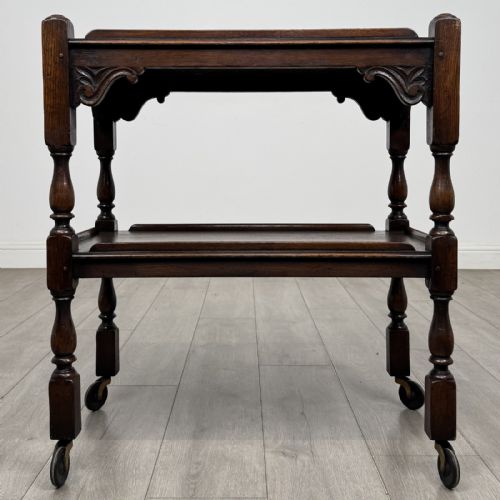
Cabinetmakers utilised timber like mahogany, walnut, teak, and oak for structural integrity, often enhancing surfaces with burr amboyna, figured grain, or carved details such as barley twists. Metal components like brass and chrome frequently form the frames or protective galleries of later twentieth-century designs.
Makers combined glass shelving, cane binding, and goatskin with wheeled carriages, utilising hinges for drop sides and removable trays for functional versatility.
Vintage Serving Trolley Retail Price Guide 2026
Typical asking prices for vintage serving trolley among the pieces listed under this phrase on Sellingantiques today, from the lower quarter to the upper quarter. They describe what is for sale here now, not the wider market.
A sturdy nineteenth-century mahogany tray once carried by a butler now happily holds your Sunday gin and tonic.
Factors of quality
Quality rests upon the selection of timbers, the crispness of turned or carved elements like barley twists, and the integration of moving parts such as folding frames and castors. Superior examples display refined cabinetmaking, such as figured walnut veneers or solid brass fittings, rather than purely utilitarian joints.
The sophistication of the design dictates distinction, moving from standard multi-tiered tea tables to metamorphic furniture or distinct modernist cocktail carts with integrated glass and metalwork.
Lusty of Leicester·Aldo Tura·Maison Bagues
The Vintage Serving Trolley Glossary
- Butlers tray
- A wooden tray with raised sides, often removable, designed to sit on a folding X-frame stand.
- Etagere
- A set of open shelves for displaying items or serving drinks, constructed in wood, brass, or glass.
- Dumb waiter
- A multi-tiered serving table or stand used historically to hold dishes or drinks without requiring a servant.
- Barley twist
- A type of turning shaped like a spiral, commonly found on the legs of Edwardian and oak trolleys.
- Metamorphic
- Furniture designed to transform its shape or function, such as a trolley that converts into a table.
Vintage Serving Trolley: Frequently Asked Questions
What is the difference between a tea trolley and a bar cart?
Tea trolleys typically feature wooden frames with drop leaves or removable trays designed for afternoon tea and service.
Bar carts lean towards twentieth-century designs, often incorporating brass, chrome, and glass tiers specifically for holding bottles and glassware.
How do I care for a wooden serving trolley?
Maintain timber surfaces by applying appropriate beeswax or polish to nourish the grain and protect against moisture rings.
Avoid placing hot cups or wet glasses directly onto antique polished wood without using coasters or protective mats.
Can these trolleys be used safely on carpets?
Most vintage trolleys feature small wheels or castors designed for hard floors rather than thick modern carpets.
Moving a laden trolley across heavy pile requires care to prevent tipping, as older castors lack modern swivel mechanisms.
How do I identify an Art Deco serving trolley?
Art Deco trolleys typically date from the 1930s and feature geometric forms, circular trays, and contrasting materials like chrome and black glass.
They often utilise figured walnut or amboyna veneers alongside polished metal rather than traditional carved wooden ornamentation.