


Mahogany Drinks Cart
A mahogany drinks cart brings portable service to any room, combining rich timber with practical wheels.
Mahogany Drinks Cart
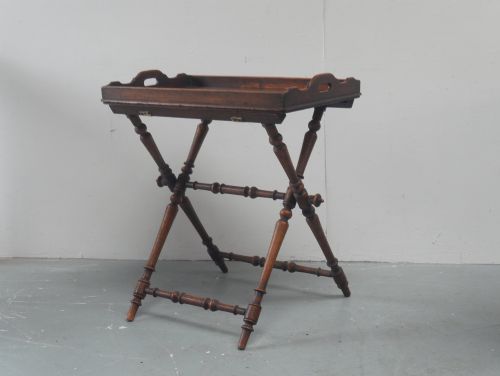
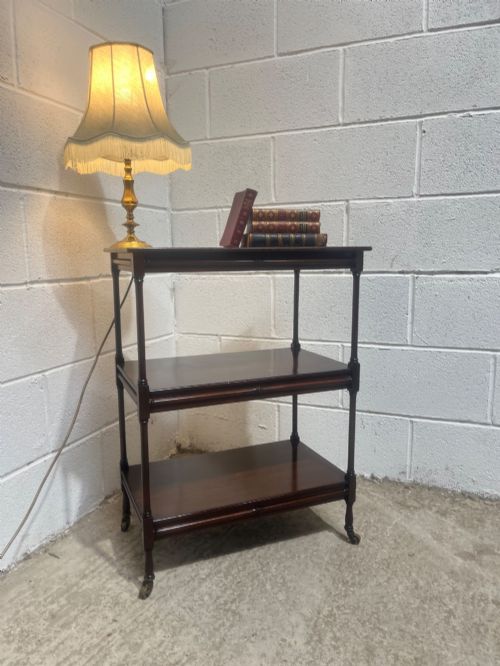
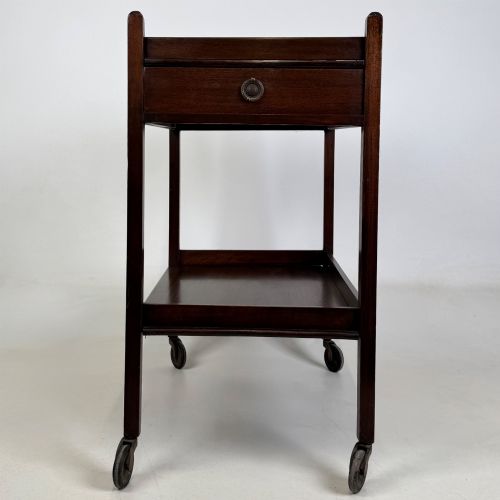
A mahogany drinks cart serves as a mobile surface for entertaining, appearing in forms such as tea trolleys, tray tables, and three-tier trolleys. When searching for a mahogany drinks cart, buyers encounter items spanning the Victorian, Edwardian, and Art Deco periods, alongside Georgian style reproductions.
The most common versions on this page are Edwardian and early twentieth-century tea trolleys, often featuring drop sides, removable trays, or multiple tiers. These practical pieces reflect the social habits of their eras, designed for serving afternoon tea or holding glassware.
How they were made
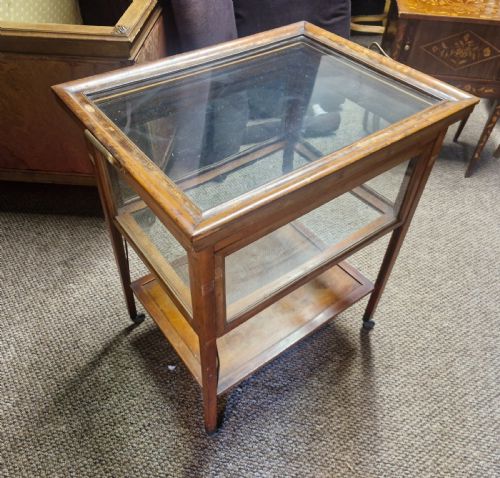
Cabinet makers utilised solid mahogany and mahogany veneers for the primary structures, sometimes incorporating boxwood and satinwood inlay for decorative contrast. Structural elements frequently rely on turned or polished wooden supports.
Metal fittings such as brass castors and handles provide mobility and accents, while glass inserts or silver-plated trays appear on select serving surfaces. Joinery techniques range from traditional framing to hinged drop-leaf mechanisms.
The listings span from early nineteenth-century pieces up to items from the 1930s, incorporating oak, brass, and glass alongside primary mahogany.
What varies in quality
The distinction between standard examples and finer pieces lies in the crispness of the inlay work, the figuring of the mahogany timber, and the substantial weight of the brass hardware. Superior items exhibit careful attention to proportion and joinery detail.
Original castors and intact removable trays elevate a piece's integrity. The fluidity of drop-leaf mechanisms and the depth of the wood polish further separate everyday utility items from superior examples.
The Mahogany Drinks Cart Glossary
- Drop leaf
- A tabletop with hinged flaps that can be folded down to save space or raised to expand the surface area. This mechanism appears frequently on tea and cake trolleys.
- Castor
- A small wheel mounted on a swivel attached to the legs of furniture to allow easy movement. Brass versions are typical on nineteenth and twentieth-century trolleys.
- Dumb waiter
- A multi-tiered piece of furniture designed to hold food, drinks, or tableware without the need for a servant. Victorian examples often feature three graduated tiers.
- Inlay
- A decorative technique where contrasting materials such as boxwood or satinwood are inserted into recesses in the mahogany surface. This creates geometric or floral patterns.
- Tiered trolley
- A mobile serving cart featuring two or more horizontal shelves stacked vertically. These provide distinct levels for bottles, glasses, and serving dishes.
Mahogany Drinks Cart: Frequently Asked Questions
What is a mahogany drinks cart used for?
These pieces were originally designed for serving tea, cake, or alcoholic beverages across different rooms in a large house. Today, they function well as mobile home bars or serving stations for gatherings.
Their multiple tiers and removable trays provide practical storage for glassware, bottles, and decanters while adding period character to a living space.
How do I date a mahogany drinks cart?
Dating relies on observing stylistic markers, construction methods, and materials associated with specific eras like the Edwardian period or the Art Deco movement. For instance, inlaid satinwood details often point toward Edwardian craftsmanship.
Hardware such as brass castors and the presence of specific wood types like oak secondary framing also help narrow down the decade of manufacture.
Are these carts sturdy enough for daily use?
Most examples are constructed from durable mahogany and feature solid wood framing built to support the weight of heavy ceramics, silver, and glassware. The inclusion of wheels makes moving laden trays effortless.
Care should be taken with antique mechanisms like drop leaves or older castors, ensuring they are handled smoothly during repositioning.
What is the difference between a tea trolley and a drinks cart?
While both terms describe mobile serving furniture, tea trolleys often feature drop sides and lower shelves specifically sized for tea services and cakes. Drinks carts lean toward holding bottles and glassware.
Many pieces listed span both definitions, incorporating removable trays that double as serving platters for cocktails or afternoon tea.