





1930s Tea Trolley
A 1930s tea trolley brings mobile elegance to entertaining, offering tiered shelving and smooth castors for serving drinks with period flair.
1930s Tea Trolley
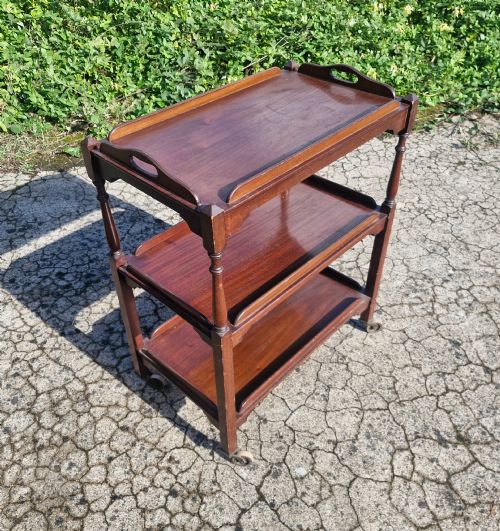
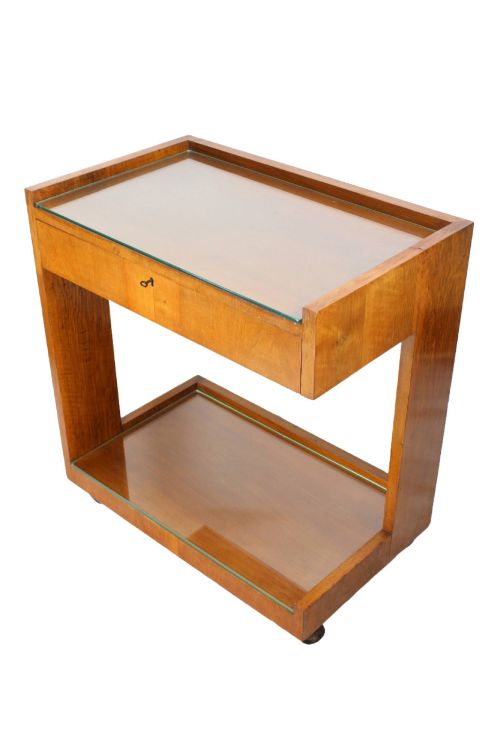
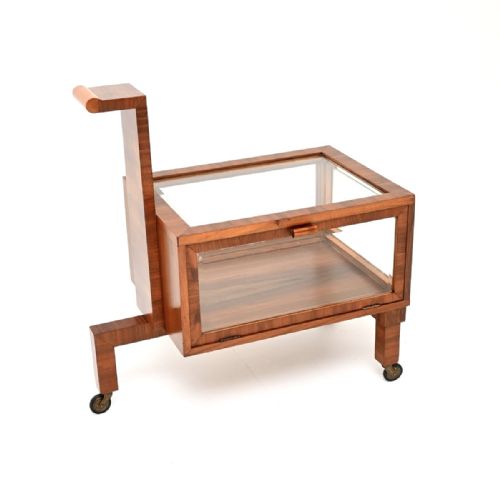
A 1930s tea trolley is a mobile serving piece designed for drinks and hospitality, combining practical mobility with the distinctive geometry of the period. Buyers seeking this form will encounter everything from two-tier walnut servers to circular cocktail carts.
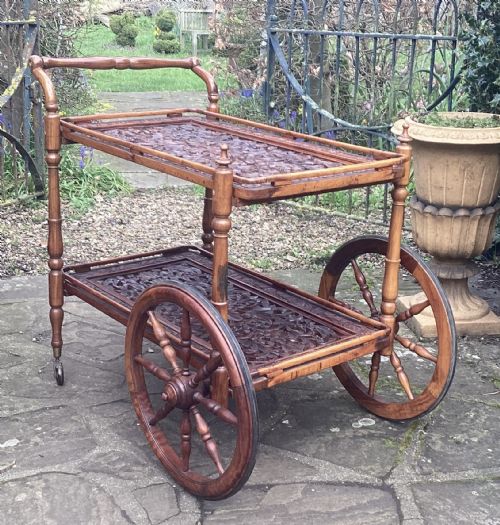
The objects span varied domestic roles, appearing as bar carts, hostess trolleys, and serving tables fitted with castors for easy movement across rooms. Many examples embrace the prevalent Art Deco aesthetic, though Anglo-Indian carved hardwood pieces also emerge.
Most pieces date from the 1930s, though occasional variants touch the 1920s and 1940s, reflecting a steady evolution in functional furniture design. Walnut and chrome dominate the forms seen by buyers today.
How they were made
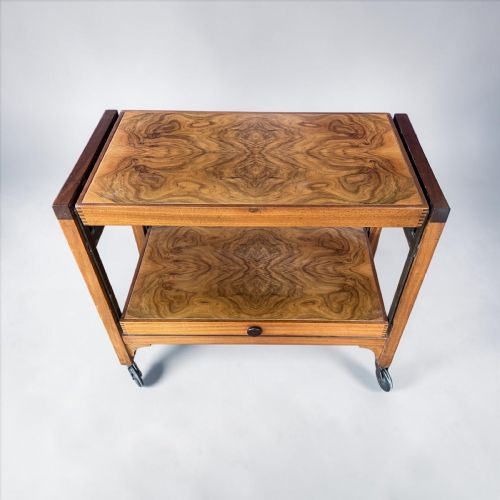
Makers utilised rich hardwoods like walnut, mahogany, oak, and burr amboyna, often figuring the grain to create striking visual patterns on the tiers. These wooden frames were frequently paired with glass, mirror, or metal inserts.
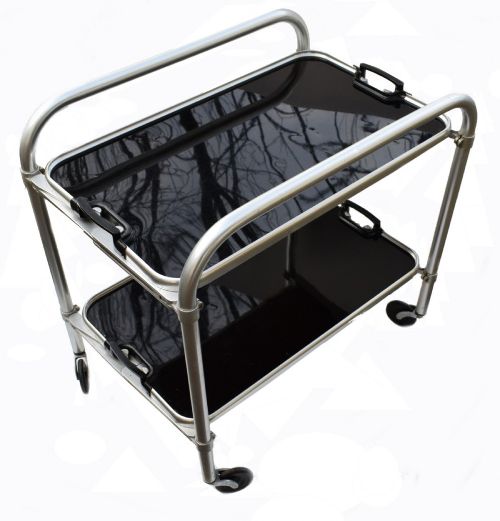
Industrial materials entered domestic furniture design during this era, leading to frames constructed from chromium-plated metal, steel, and aluminium. These shiny metallic structures were matched with black glass or mirrored surfaces for a modern finish.
Construction techniques incorporated functional wheels and castors to support the multi-tiered structures, alongside specialised metamorphic mechanisms in select serving trolleys.
1930s Tea Trolley Retail Price Guide 2026
Typical asking prices for 1930s tea trolley among the pieces listed under this phrase on Sellingantiques today, from the lower quarter to the upper quarter. They describe what is for sale here now, not the wider market.
Listings demonstrate a strong preference for walnut and chrome construction, alongside diverse forms ranging from circular bar carts to two-tier tables.
What varies in quality
Quality rests upon the selection of materials, separating standard timber frames from those utilising figured walnut or burr amboyna veneer. Superior execution shows in the crispness of carved details or the precision of chromium plating.
Design ambition dictates the upper tier of the range, distinguishing simple two-tier utility tables from metamorphic serving trolleys and circular cocktail carts. The integration of specialised components like original mirrored glass elevates a piece further.
The 1930s Tea Trolley Glossary
- Art Deco
- A design style characterised by sleek lines, geometric shapes, and modern materials that dominated the interwar period. It remains the defining aesthetic for these serving carts.
- Hostess Trolley
- A mobile piece of furniture specifically equipped for serving food and beverages to guests. These often feature multiple tiers or specialised compartments.
- Burr Amboyna
- A highly prized wood veneer showing intricate, swirling grain patterns derived from the burl growth of the tree. It adds luxurious texture to cabinetwork.
- Metamorphic
- Describing furniture that transforms or adapts its structure for different uses through clever hinges or folding mechanisms. Such pieces offer dual functionality.
- Castor
- A small wheel fitted to the legs of furniture to allow smooth rolling across floors. They are essential for the mobility of serving trolleys.
1930s Tea Trolley: Frequently Asked Questions
What is a 1930s tea trolley?
A 1930s tea trolley is a mobile serving cart with multiple tiers, designed for moving drinks and refreshments around the home during gatherings. They combine practical wheeled mobility with the decorative styles of the interwar period.
Most examples rely on wooden frames like walnut or industrial metals like chrome, often paired with glass or mirrored surfaces. They function as versatile side tables as well as dedicated cocktail bars.
How were they used originally?
These trolleys served as mobile stations for afternoon tea, cocktail preparation, and formal entertaining in domestic parlours and dining rooms. Hosts used them to wheel refreshments directly to seated guests.
The inclusion of castors meant heavy bottles and glassware could be transported safely without multiple trips to the kitchen or sideboard.
How do I style one in a modern home?
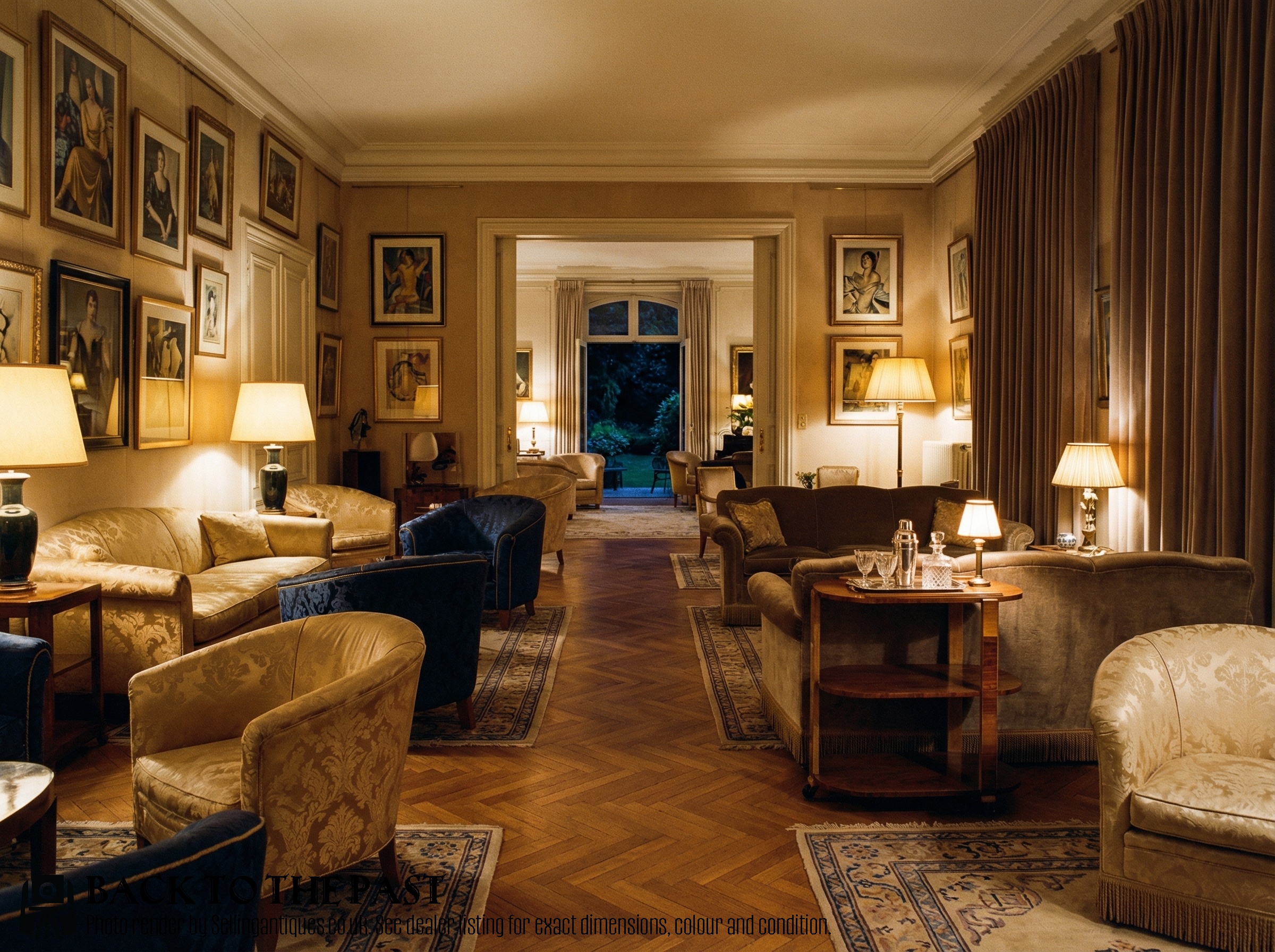
A tea trolley works well as a static or mobile home bar, styled with glassware, decanters, and cocktail accessories on the glass or wooden tiers. Placing it in a living room or dining space introduces period character and functional surface area.
The reflective surfaces of chrome and mirror variants help bounce light around smaller rooms while remaining practical for serving.
How do I tell Art Deco trolleys apart from other styles?
Art Deco trolleys feature clean geometric lines, circular shapes, or streamlined forms, frequently using contrasting materials like chrome and black glass. They embrace a modern, forward-looking aesthetic.
In contrast, other variations from the era might feature traditional wood carving, such as Anglo-Indian hardwood designs, or simpler utilitarian oak construction.