

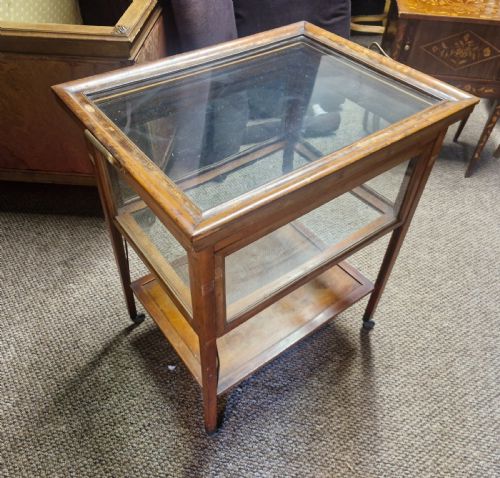


Vintage Cocktail Cart
A vintage cocktail cart brings mobility and theatrical flair to entertaining, offering a practical stage for bottles, glassware, and silver plate.
Vintage Cocktail Cart
When you search for a vintage cocktail cart, you encounter pieces designed for serving drinks during the twentieth century, spanning Edwardian iterations through to mid-century designs. The selection relies heavily upon Art Deco forms, alongside French mid-century and British examples.
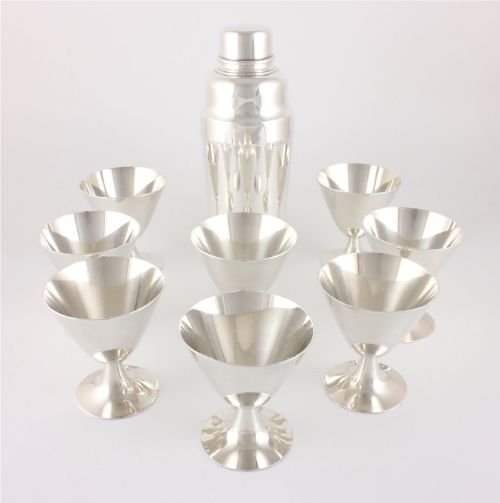
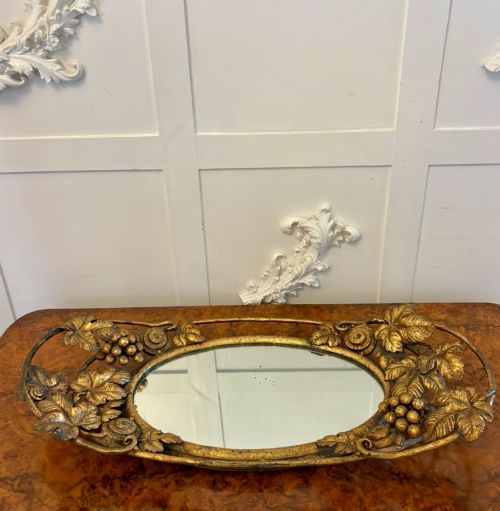
The dominant forms are drinks trolleys, bar carts, and tiered serving trolleys equipped with wheels or castors. Alongside these mobile units, the selection includes accompanying barware such as silver-plated cocktail shakers, trays, and novelty items.
Origins range from English workshops to French studios, with pieces built for domestic hospitality. Walnut, mahogany, and beech underpin the wooden frames, while metal and glass define the modernist variations.
Materials and construction
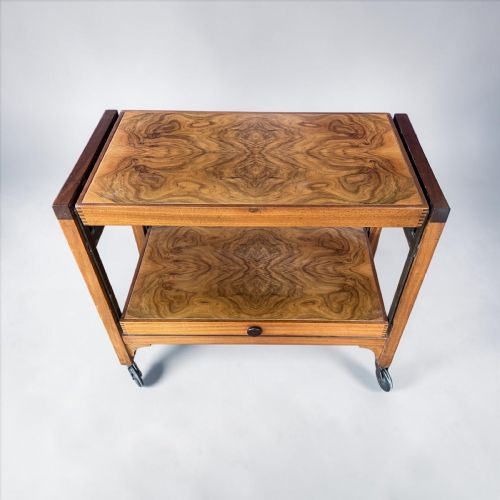
Makers utilised timber frames of walnut, burr amboyna, mahogany, and cane-bound beech, often shaping them into circular or rectangular two-tier structures with drop sides or removable trays.
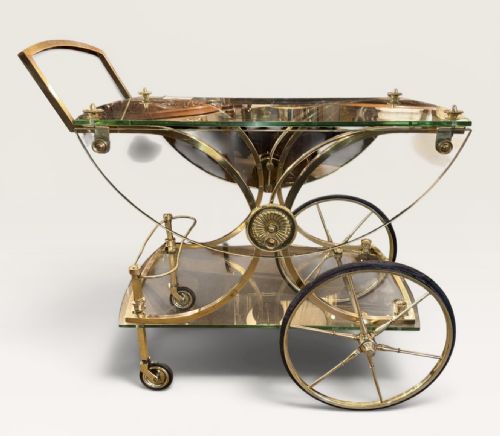
Metal elements provide contrast and structural support, incorporating brass, chrome, aluminium, and silver plate into frames, gallery rails, and integrated hardware.
Glass panels form the shelves and serving surfaces, frequently paired with mirrored backing or cobalt blue accents to reflect light across the barware.
Vintage Cocktail Cart Retail Price Guide 2026
Typical asking prices for vintage cocktail cart among the pieces listed under this phrase on Sellingantiques today, from the lower quarter to the upper quarter. They describe what is for sale here now, not the wider market.
Charlie Chaplin makes a surprise appearance on a novelty Art Deco barware tray.
Evaluating construction and design
Quality rests in the harmony of materials and the integrity of the joinery, distinguishing straightforward utilitarian service pieces from ambitious modernist designs by notable makers.
The sophistication of the metalwork, whether gilt bronze, polished chrome, or substantial silver plate, separates standard production items from high-style creations.
Subtleties in wood selection, such as figured walnut or burr amboyna veneers, dictate the visual depth of the frame and the overall presence of the cart.
Maison Bagues·Lusty of Leicester·J. B. Chatterley & Sons·James Dixon & Sons·C S Green & Co.·Asprey·Gaskell & Chambers·Carl Deffner·Maison Jansen
The Vintage Cocktail Cart Glossary
- Art Deco
- A design style prevalent in the 1920s and 1930s characterised by geometric shapes, streamlined forms, and modern industrial materials.
- Silver plate
- A layer of silver applied to a base metal core such as copper or nickel alloy, commonly utilised for shakers, trays, and cart mountings.
- Metamorphic
- A descriptive term for furniture that transforms in shape or function, such as a trolley with drop sides or adjustable tiers.
- Barware
- The collection of implements and vessels used for preparing and serving drinks, including shakers, strainers, and novelty cocktail sticks.
- Gallery rail
- A raised perimeter edging fitted to the top or lower tiers of a trolley to prevent glassware and bottles from sliding off.
Vintage Cocktail Cart: Frequently Asked Questions
What is a vintage cocktail cart?
A vintage cocktail cart is a mobile serving trolley designed specifically for holding bottles, glassware, and barware during the twentieth century.
These pieces typically feature two or three tiers, castors for movement, and surfaces made from glass, mirrored panels, or polished wood.
How were vintage cocktail carts used?
Hosts utilised these trolleys to wheel drinks and cocktail shakers directly to guests in drawing rooms or dining areas.
The inclusion of removable trays and gallery rails allowed for the safe transport of glasses and bottles without requiring multiple trips to the sideboard.
How do I style a bar cart?
Styling involves arranging barware, cocktail shakers, and glassware by height and frequency of use across the available tiers.
Mirrored glass surfaces naturally reflect light and amplify the gleam of silver plate and crystal.
How do I identify an Art Deco trolley?
Art Deco trolleys are distinguished by geometric symmetry, circular or streamlined wooden frames, and the use of chrome, brass, or figured walnut.
They often embrace modernist principles with clean lines and functional tier arrangements dating from the 1920s and 1930s.