


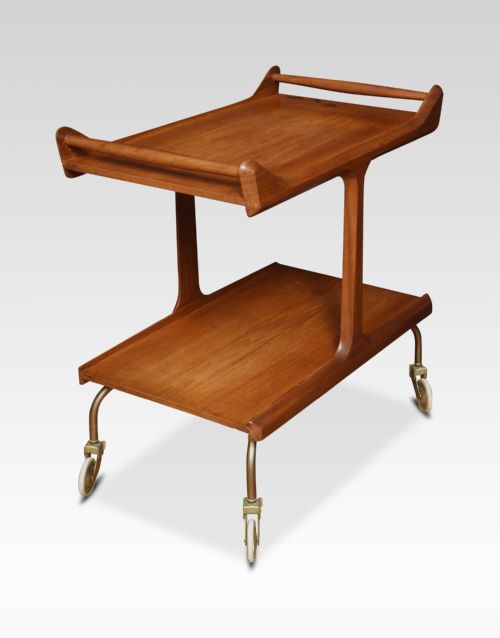
Walnut Tea Cart
A walnut tea cart brings mobile hospitality into a room, offering practical surface space wrapped in warm timber.
Walnut Tea Cart
A walnut tea cart serves as a mobile platform for drinks and serving equipment, combining utility with decorative presence. These pieces frequently appear in Art Deco designs alongside Victorian and Mid-Century Modern interpretations, reflecting the evolving tastes of domestic entertaining across decades.
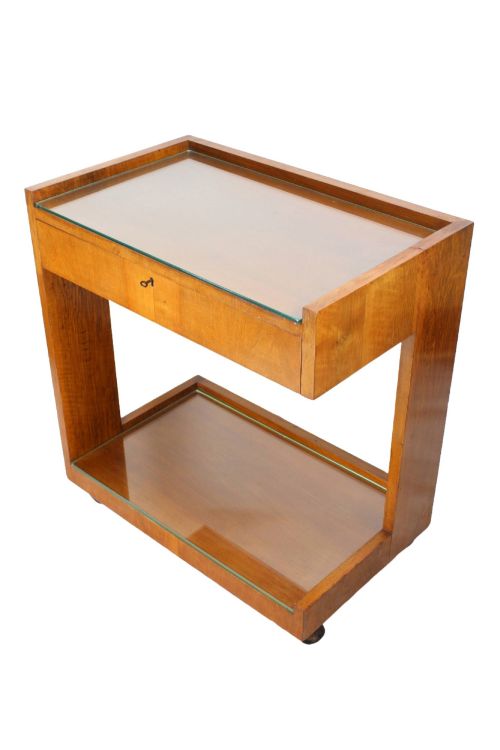
The primary forms on this page span from simple two-tier trolleys and serving carts to circular drinks bars and metamorphic designs. Most examples date from the nineteen-thirties, showcasing the streamlined aesthetic popular during that period.
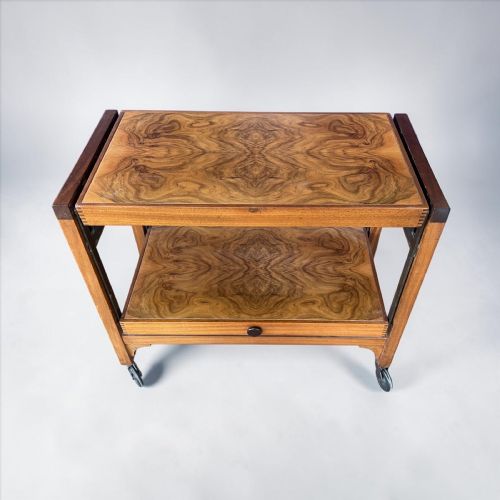
Makers utilised the rich grain of walnut and burr walnut veneer to create visual interest on top surfaces and trays. These items bridge the gap between functional furniture and statement hospitality pieces.
Construction and materials
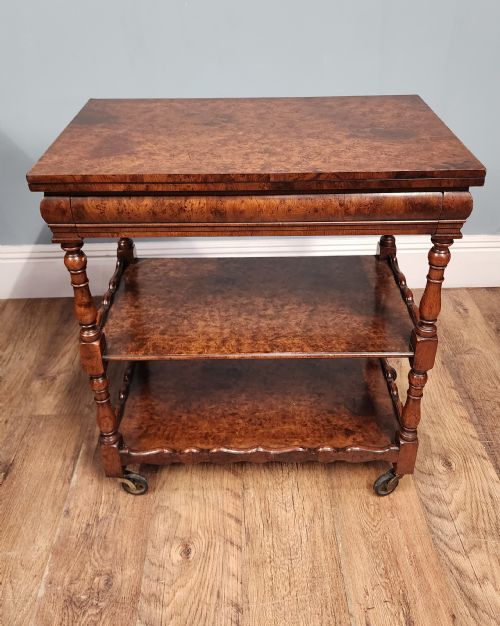
Walnut and burr walnut veneer provide the primary visual surfaces, glued over stable wood cores to present dramatic grain patterns. This technique allowed cabinet makers to display complex figuring across circular tops and rectangular tiers without warping solid timber.
Metal and brass components frequently reinforce the structure, appearing in handles, galleries, and the framing of wheels. Castors allow the heavy timber frames to glide smoothly across floor surfaces during service.
Several trolleys from the thirties hide mechanical tricks inside their frames, ready to transform from a polite tea table into an evening cocktail bar.
Assessing quality
The distinction between standard examples and finer pieces lies in the selection of the veneer and the complexity of the form. Circular configurations and metamorphic mechanisms demand greater woodworking skill than straightforward rectangular two-tier shelves.
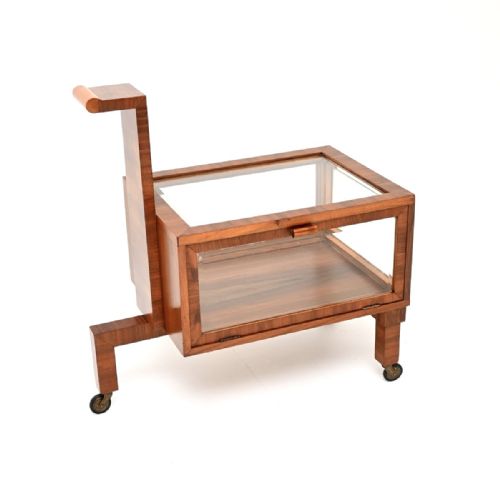
Integration of complementary materials such as glass inserts and cast brass hardware elevates the overall execution. Superior items retain crisp lines in their streamline or Art Deco silhouettes without clumsy proportions.
The Walnut Tea Cart Glossary
- Burr walnut veneer
- A thin slice of wood taken from a growth wart on a walnut tree, prized for its swirling, organic patterns. It covers flat surfaces to create decorative contrast.
- Metamorphic serving trolley
- A piece of furniture designed to transform its shape or function through folding or sliding mechanisms. This engineering allowed a compact surface to expand for hosting guests.
- Castor
- A small wheel mounted on a swivel attached to the bottom of each leg. This allows the trolley to move easily in any direction across a room.
- Two tier trolley
- A serving cart featuring two distinct horizontal shelves stacked vertically. The lower level often carries bottles while the top remains clear for glasses.
- Drinks trolley
- A mobile piece of furniture dedicated to the storage and presentation of beverages and glassware. These items became central to domestic entertaining during the twentieth century.
Walnut Tea Cart: Frequently Asked Questions
What is a walnut tea cart?
A walnut tea cart is a movable table on wheels designed to transport and serve refreshments. They typically feature multiple shelves and handles for easy steering.
Most examples on this page date from the twentieth century and showcase wood veneers and metal castors.
How were these carts used?
Hosts utilised these trolleys to wheel tea, cocktails, and snacks from the kitchen into the reception room. They kept glassware and bottles close at hand during gatherings.
Some designs include specialised trays or drop leaves to expand the available surface area during service.
How do I identify an Art Deco trolley?
Art Deco trolleys feature geometric shapes, streamlined curves, and polished wood surfaces. Circular tiers and polished metal accents are common hallmarks of this design movement.
Many examples from this era date specifically to the nineteen-thirties and emphasise horizontal lines.
Can I use these for modern drinks storage?
These trolleys function well as permanent home bars or mobile serving stations in contemporary spaces. Their sturdy wood construction and wheels remain as practical today as they were a century ago.
Placing glassware and bottles on the tiers creates an atmospheric display in a living room or dining area.