




Three Tier Drinks Trolley
A three tier drinks trolley offers three stages of surface space for bottles and glassware, moving smoothly from room to room on castors.
Three Tier Drinks Trolley
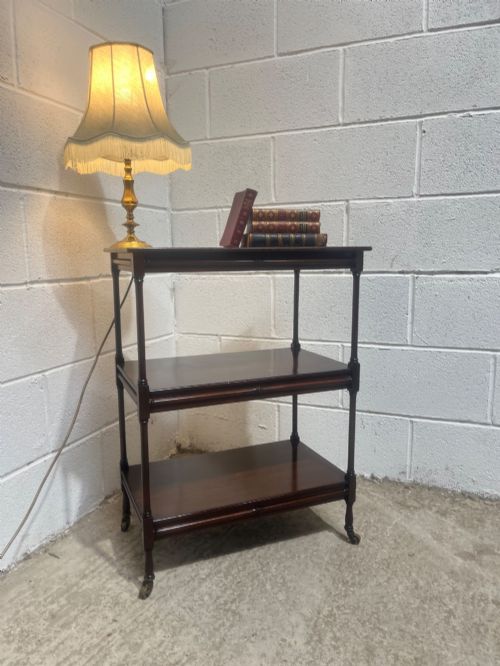
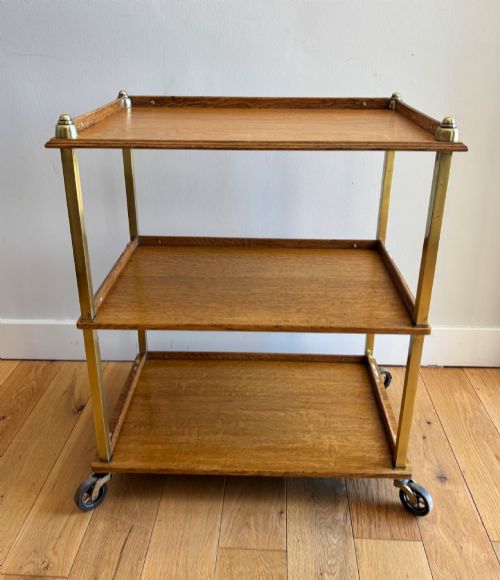
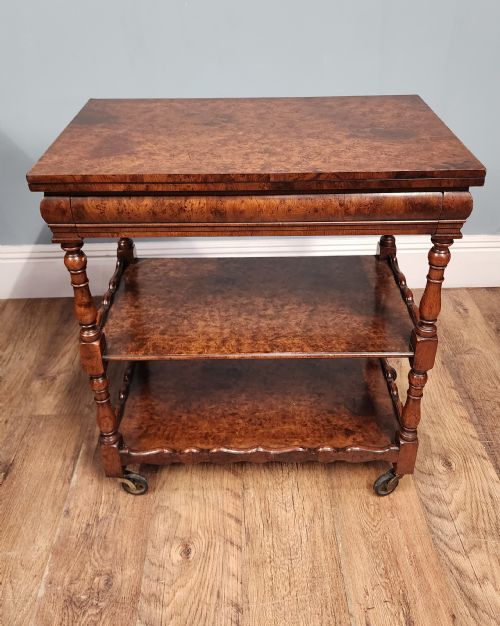
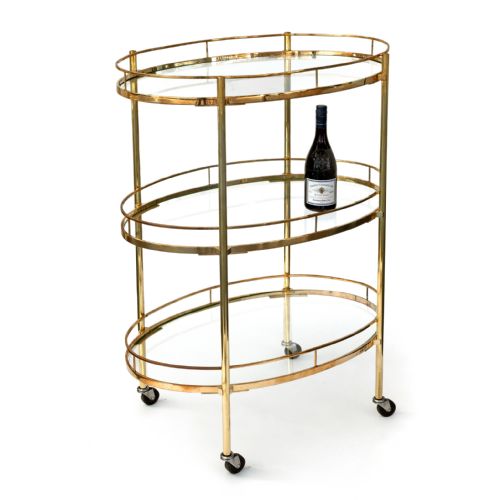
A three tier drinks trolley provides tiered shelving across various periods, from Victorian and Edwardian examples to Art Deco and mid-century designs. You will encounter forms that range from traditional timber tea trolleys to circular walnut bar carts and brass-framed etageres.
These multi-level pieces serve multiple functions as mobile serving tables, dumb waiters, and portable buffets. The three tiers allow for the segregation of bottles, glassware, and accessories while occupying a modest footprint on the floor.
Materials and construction methods
Timbers such as mahogany, walnut, burr walnut veneer, oak, and pollard oak form the structural framework and shelves of wooden variants. Joinery techniques reflect the period of manufacture, utilising turned uprights, barley twist supports, and carved details.
Metal and glass combinations utilise brass frames paired with inset glass panels or mirrored surfaces, particularly seen in Edwardian and Art Deco pieces. Castors fitted to the base enable smooth mobility across domestic flooring.
Some trolleys come equipped with wheels ready to chase you across the room when the gin runs low.
Factors determining quality
The choice of timber veneer and solid wood grain dictates visual appeal, with figured walnut and pollard oak sitting at the higher end of the scale. Superior examples display refined turning, crisp carving, and robust frame construction that withstands regular movement.
Hardware and metalwork quality separates standard production from finer work, notably in the weight of the brass framing, the integrity of galleried edges, and the smooth operation of original castors.
The Three Tier Drinks Trolley Glossary
- Tier
- A single level of shelving or surface space on a multi-level piece of furniture. Multiple tiers increase the usable area without expanding the footprint.
- Etagere
- An open shelving unit with multiple tiers designed for display. These pieces often feature brass and glass construction.
- Dumb waiter
- A tiered serving table or trolley used in dining rooms for holding dishes and drinks. They remove the need for constant service during meals.
- Gallery
- A raised rim or rail around the edge of a shelf. This prevents bottles and glassware from sliding off during movement.
- Barley twist
- A spiral turning technique applied to wooden table legs and supports. This decorative detail is common in Edwardian furniture.
Three Tier Drinks Trolley: Frequently Asked Questions
What is a three tier drinks trolley used for?
These trolleys function primarily as mobile serving stations for bottles, decanters, and glassware during gatherings. The three levels allow users to separate spirits, mixers, and glasses for easy access.
Beyond entertaining, they serve as permanent display stands for books and decorative objects in living spaces. Their mobility permits repositioning wherever required in the room.
How do I care for wooden and brass trolleys?
Wooden surfaces benefit from occasional waxing to nourish the grain and protect against moisture rings from glasses. Avoid placing damp items directly onto unsealed timber.
Brass frameworks require gentle cleaning with a soft cloth to maintain their finish without stripping patination. Checking and tightening castor attachments periodically ensures safe movement.
How do I date a three tier drinks trolley?
Dating relies on observing construction methods, timber choices, and stylistic markers characteristic of specific eras. Edwardian pieces frequently feature oak and barley twist supports, while Art Deco items display circular walnut designs and streamlined silhouettes.
Earlier 19th-century examples tend to utilise solid mahogany or pollard oak with traditional joinery. Castor design and hardware styles also provide clues to the manufacturing period.
Are these trolleys sturdy enough for daily use?
Most pieces are built with robust frames of solid hardwood or heavy metal designed to bear the weight of bottles and glassware. Well-constructed joints and secure shelf fixings ensure stability during transit across rooms.
Checking that the castors roll freely and the frame remains rigid will confirm its suitability for regular movement. Distributing heavier bottles on the lower tier aids balance.