

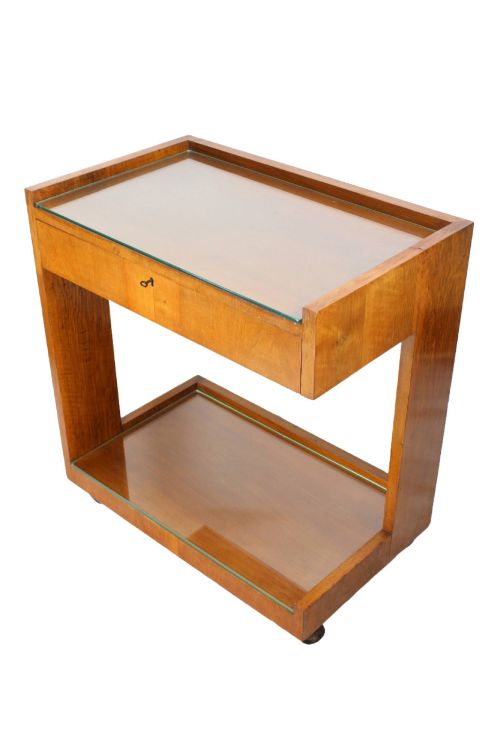
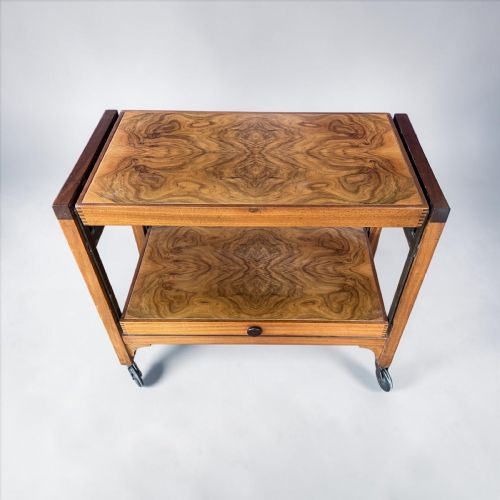
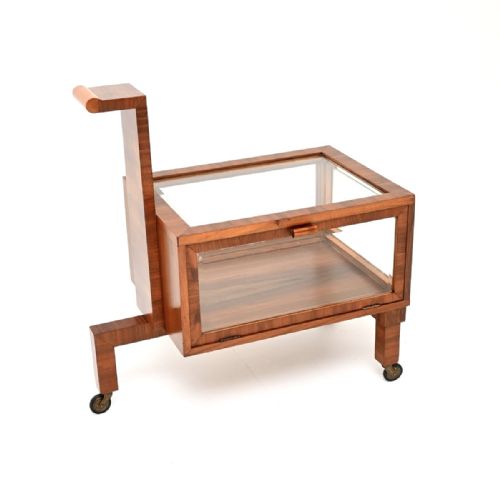


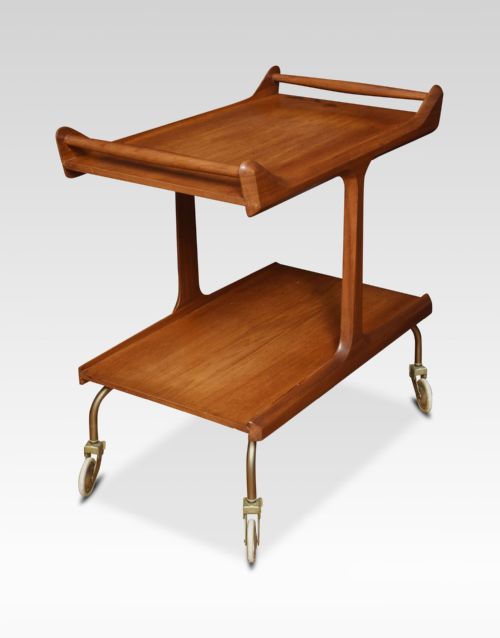


Walnut Drinks Trolley
These walnut drinks trolley pieces bring proper Art Deco style and functional charm to home entertaining.
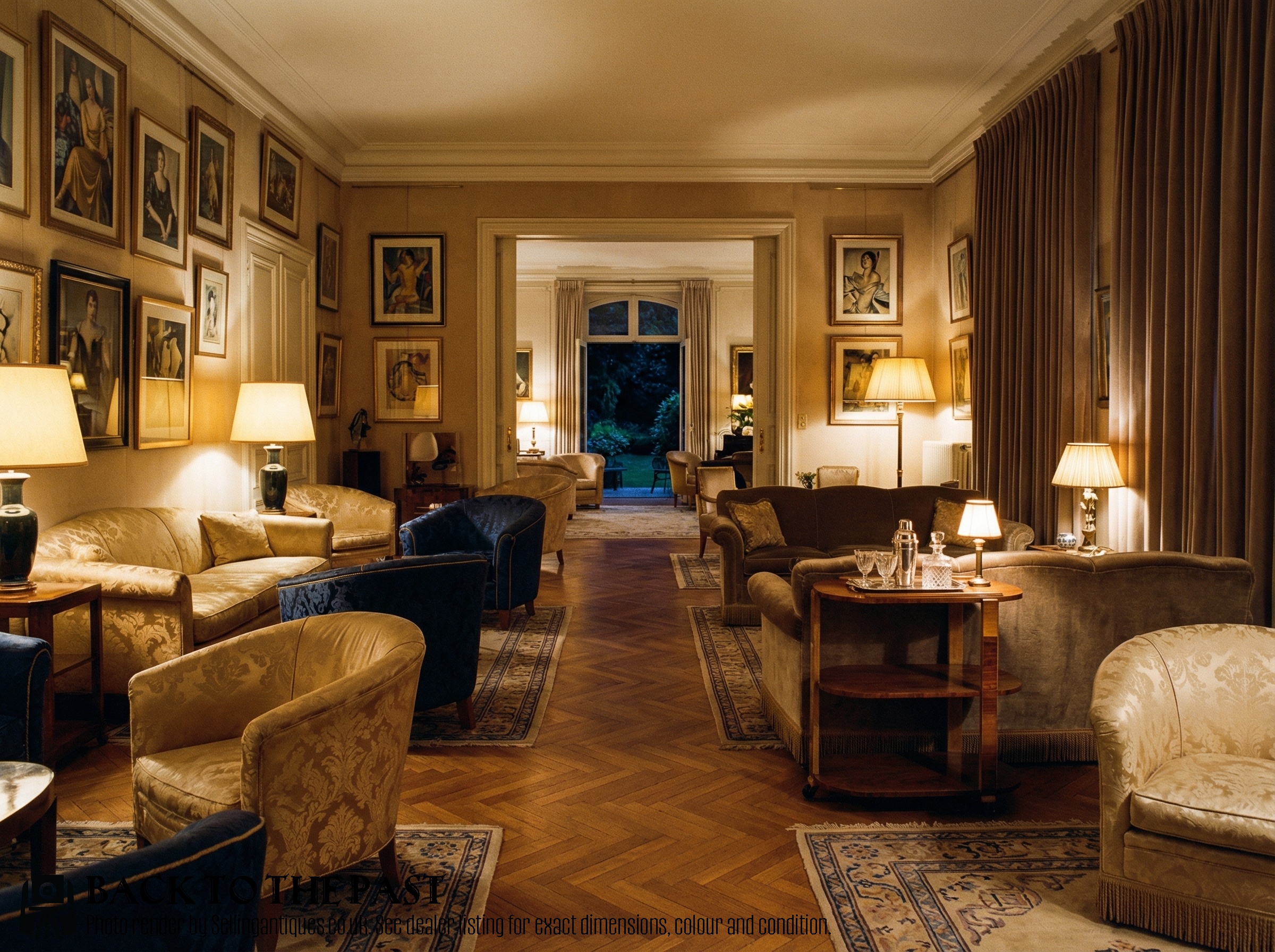
Walnut Drinks Trolley
A walnut drinks trolley serves as a mobile home bar or serving station, capturing the distinct design spirit of the early twentieth century. When browsing this selection, buyers encounter pieces primarily originating from the nineteen-twenties, nineteen-thirties, and nineteen-forties.
The prevailing aesthetic across these items is Art Deco, often expressed through circular forms, tiered shelving, and streamlined silhouettes. English examples dominate the current selection, alongside occasional regional variations that incorporate brass accents and multi-level storage.
Most pieces function as either traditional serving carts or innovative pop-up cocktail tables designed to conceal glassware and bottles. The fundamental appeal lies in combining rich timber grain with practical mobility for hosting guests.
Materials and construction methods
Makers utilised solid timber alongside figured walnut veneer to create striking grain patterns across the main body and shelves. Surfaces frequently display rich brown tones enhanced by careful polishing and finishing techniques.
Structural elements integrate polished brass fittings, metal mounts, and robust castors that allow smooth movement across floors. Multi-tier designs incorporate glass panels for serving surfaces, supported by ebonised wood or metal frames.
Walnut Drinks Trolley Retail Price Guide 2026
Typical asking prices for walnut drinks trolley among the pieces listed under this phrase on Sellingantiques today, from the lower quarter to the upper quarter. They describe what is for sale here now, not the wider market.
Some trolleys are clever enough to pop their drinks up like a Jack-in-the-box.
Distinguishing quality in construction
Superior examples separate themselves through the complexity of their veneer work, selecting figured walnut that creates deliberate symmetry across the top surfaces. The integration of mechanical elements, such as pop-up mechanisms or metamorphic folding actions, demonstrates higher manufacturing skill.
Hardware weight and stability dictate the upper tier of the range, where solid brass trimmings and smooth-rolling castors remain intact and original. Simpler tier arrangements with standard wood framing occupy the more utilitarian end of the spectrum.
Gordon Russell
The Walnut Drinks Trolley Glossary
- Walnut
- A dense hardwood prized for its dark, rich colour and prominent grain patterns. It forms the primary structural and decorative surface for these serving pieces.
- Veneer
- A thin layer of superior timber applied over a secondary wood base to display decorative grain. Figured cuts are chosen specifically for their visual depth.
- Castor
- A small wheel mounted to the base of a trolley leg for mobility. Quality versions often incorporate brass fittings.
- Metamorphic
- A descriptive term for furniture that transforms its shape or function through hinges, lifts, or folding tiers. These designs offer hidden storage for bottles and glassware.
- Tier
- A horizontal shelf level within the trolley structure. Pieces generally feature two or three tiers for organising drinks and accessories.
Walnut Drinks Trolley: Frequently Asked Questions
How do I date a walnut drinks trolley?
Dating relies primarily on stylistic indicators such as Art Deco geometry, streamlined contours, and the presence of specific materials like brass and figured walnut veneer. Most examples date from the nineteen-twenties and nineteen-thirties.
Construction methods and castor types also provide clues, as older pieces utilise period-appropriate hardware rather than modern replacements. Labels or stamps, when present, offer definitive attribution to specific makers.
Are these trolleys suitable for daily use?
These trolleys were built for entertaining and remain entirely practical for serving drinks or displaying glassware in a modern home. Their mobility allows them to function as movable cocktail stations during gatherings.
Care should be taken to protect polished wooden surfaces from moisture and heat using coasters or trays. Regular gentle cleaning preserves the original finish and veneer.
How do I maintain the walnut finish?
Maintaining walnut surfaces involves dusting with a soft cloth and occasionally applying appropriate furniture wax to nourish the grain. Avoiding direct sunlight prevents the timber from fading unevenly over time.
Spills should be wiped away promptly to protect both the wood and any veneer work. Proper humidity control in the room prevents the timber from warping.