




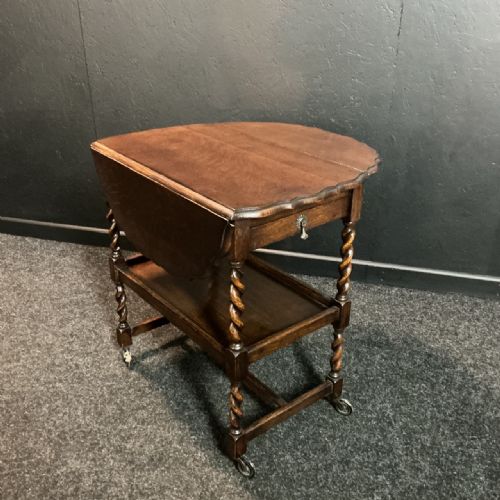


Wooden Drinks Trolley
A wooden drinks trolley brings functional hospitality into a room, offering tier upon tier of period charm for serving refreshments.
Wooden Drinks Trolley
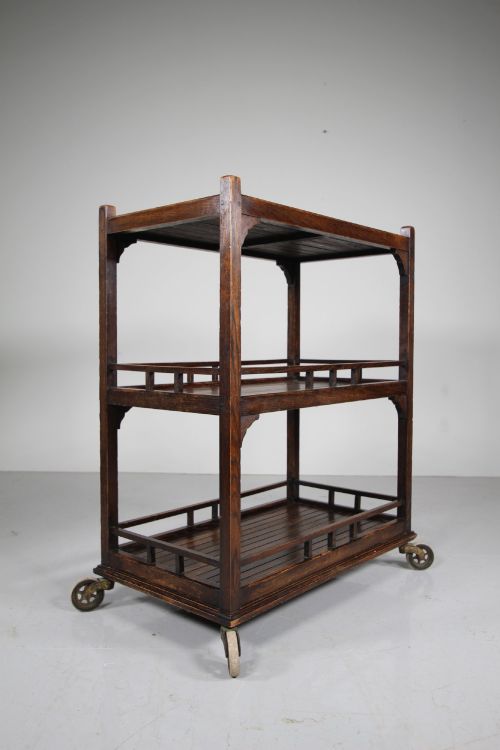
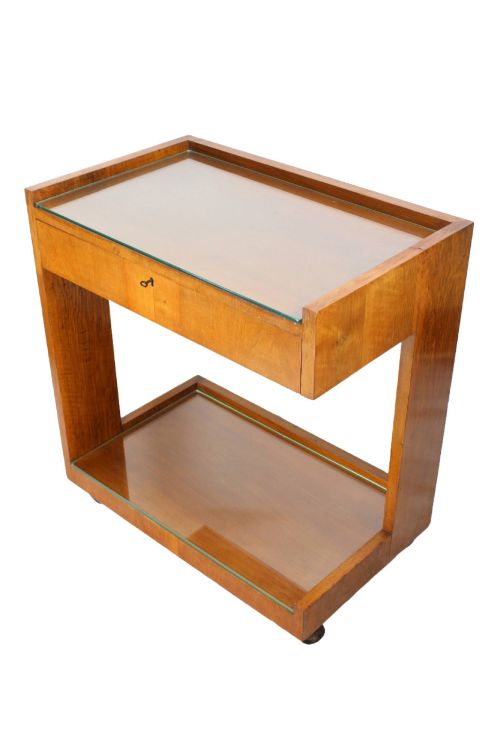
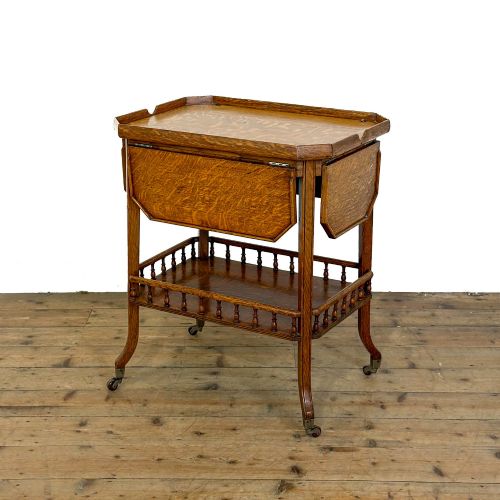
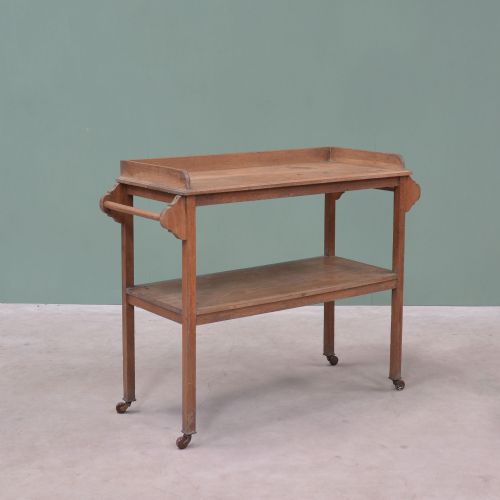
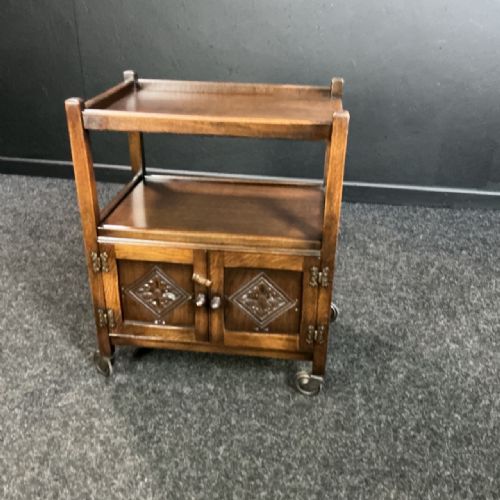
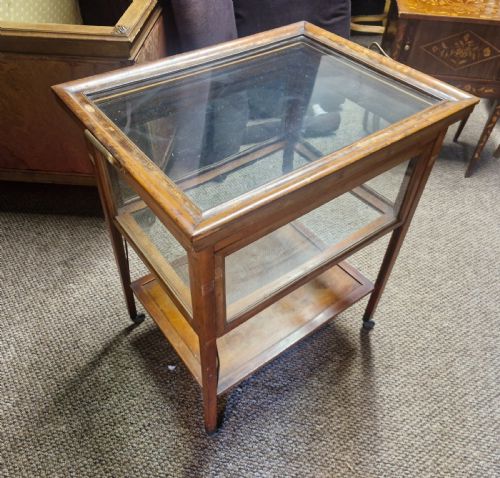
A wooden drinks trolley serves as a mobile surface for entertaining, appearing in forms ranging from traditional tea trolleys to Art Deco bar carts. Buyers searching for a wooden drinks trolley encounter designs spanning the Georgian period, the Victorian era, and the Edwardian years.
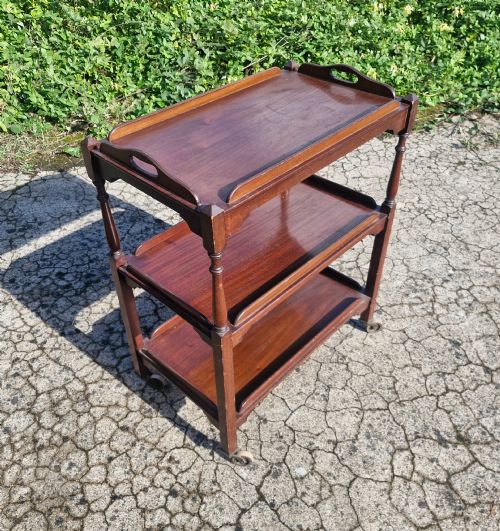
The selection includes two-tier models, drop-leaf variations, and pieces fitted with lift-off trays or folding tops. Common wood types include oak, walnut, and mahogany, often accompanied by brass accents and glass inserts.
Materials and construction
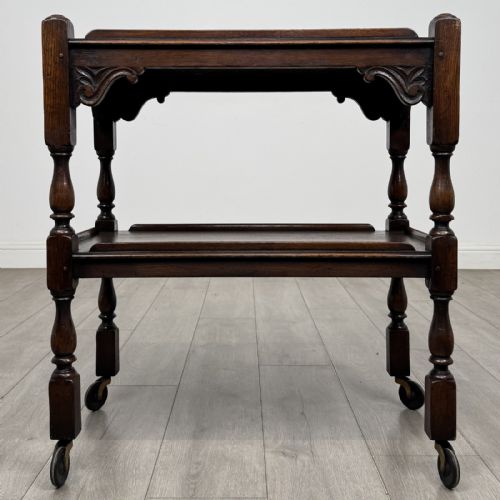
Construction relies heavily on traditional hardwoods such as oak, mahogany, and walnut, frequently enhanced by figured veneer or carved details. Many examples incorporate turned supports, including barley twist legs, alongside fitted drop sides and removable serving trays.
Movable elements involve wheeled castors for smooth transit across floors, while specialised pieces utilise metamorphic mechanisms to transform from side tables into serving surfaces.
Wooden Drinks Trolley Retail Price Guide 2026
Typical asking prices for wooden drinks trolley among the pieces listed under this phrase on Sellingantiques today, from the lower quarter to the upper quarter. They describe what is for sale here now, not the wider market.
Listings feature oak, mahogany, and walnut across periods ranging from Georgian to Art Deco.
Distinctions in quality
Quality rests upon the selection of timber, such as figured walnut or dense mahogany, and the precision of the joinery in drop-leaf mechanisms and removable trays. Finer examples display superior carving, intact wheel mounts, and balanced proportions across multiple tiers.
Pieces bearing specific workshop attribution or sophisticated metamorphic actions stand apart from standard production models, reflecting greater care in construction and design.
Lusty of Leicester
The Wooden Drinks Trolley Glossary
- Butlers tray
- A portable wooden tray with raised edges, often designed to rest on a folding X-frame stand.
- Barley twist
- A decorative turning style resembling a spiral rope, frequently seen on table legs and trolley supports of the early twentieth century.
- Metamorphic
- Describing furniture designed to transform its function, such as a side table that opens into a serving cart.
- Drop-leaf
- A table or trolley top with hinged flaps that fold down to save space or lift up to extend the surface area.
- Etagere
- A set of open shelves for displaying or serving items across multiple tiers.
Wooden Drinks Trolley: Frequently Asked Questions
What is a wooden drinks trolley used for?
These pieces serve as mobile surfaces for holding glassware, bottles, and tea services during gatherings. They allow hosts to transport refreshments easily between rooms.
Historically, similar carts functioned as afternoon tea tables or dumb waiters in dining spaces. Today, they serve a parallel purpose while functioning as decorative furniture.
How do I date a wooden drinks trolley?
Dating relies on observing wood choices, construction techniques, and stylistic markers associated with specific eras. For instance, heavy turned oak often points to Edwardian production, while streamlined curves suggest the 1930s.
Examining the castors, hardware, and veneer types helps narrow the decade of manufacture. Comparing these elements with documented examples provides a clearer timeline.
Are these trolleys sturdy enough for daily use?
Most wooden trolleys are constructed from solid hardwoods like mahogany and oak, making them durable for regular service. Original castors roll smoothly when maintained properly.
Care should be taken with older joints and drop-leaf mechanisms to preserve their integrity. Routine use remains practical provided the weight placed on the tiers is balanced.
What is the difference between a tea trolley and a bar cart?
Tea trolleys typically feature wooden tiers, drop sides, and removable trays intended for afternoon refreshments. Bar carts often incorporate more glass, metal, and specialised bottle storage.
Over time, the terms have overlapped as designs evolved from Edwardian tea service to Art Deco cocktail culture.