





Antique Tea Cart
An antique tea cart brings moveable service and period charm to a room, moving effortlessly from afternoon refreshment to evening drinks.
Antique Tea Cart
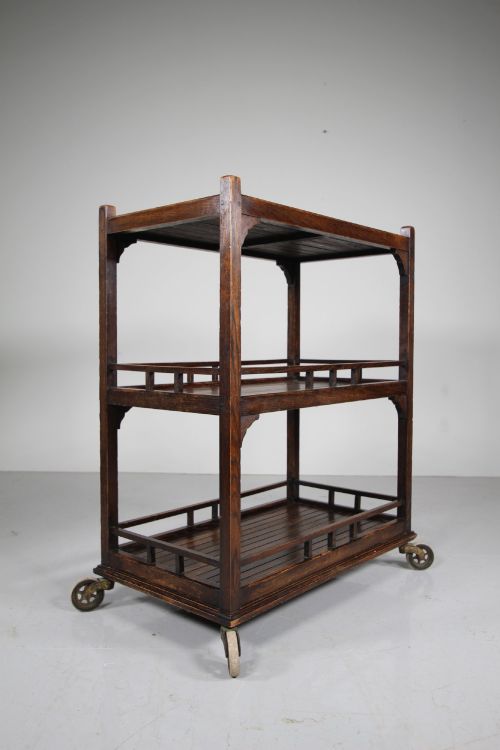
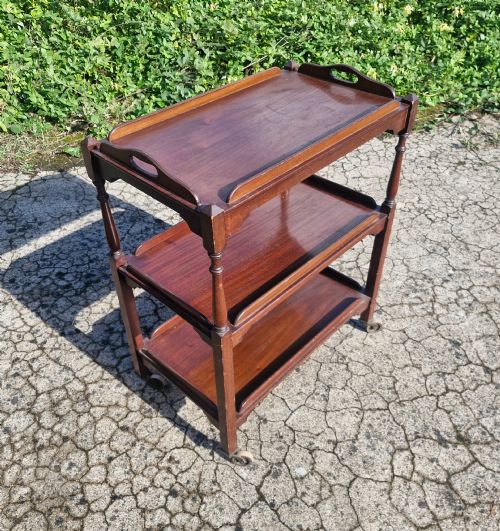
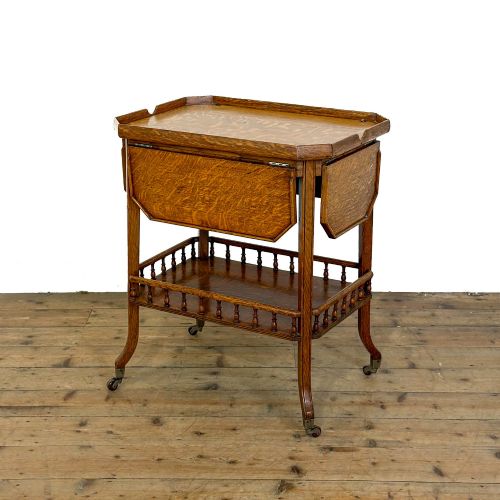
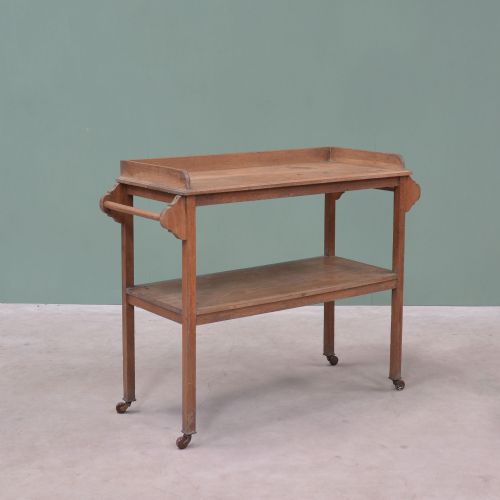
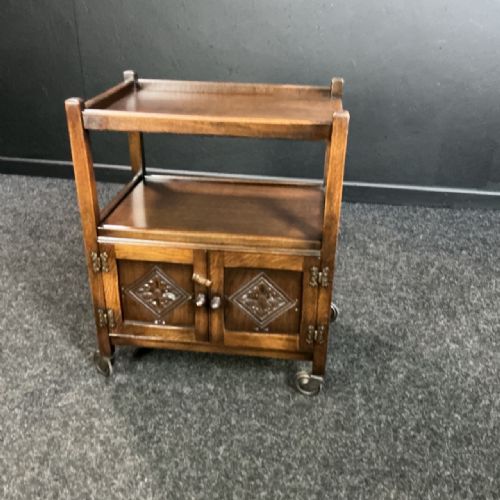
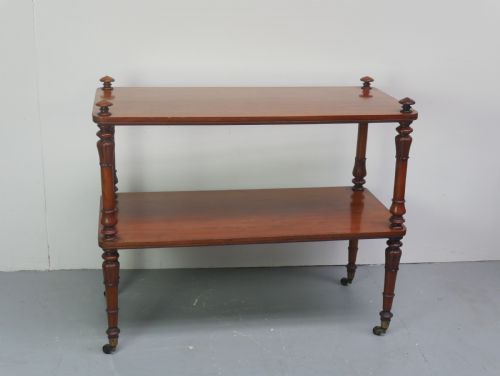
An antique tea cart serves as a mobile platform designed for moving refreshments, glassware, and bottles across rooms. You will frequently encounter Edwardian and Art Deco examples featuring multiple tiers, drop sides, and wheeled mobility.
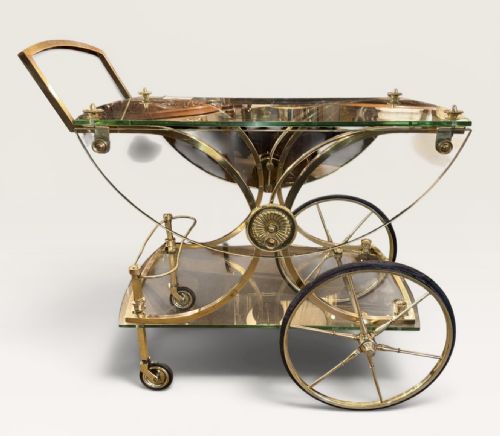
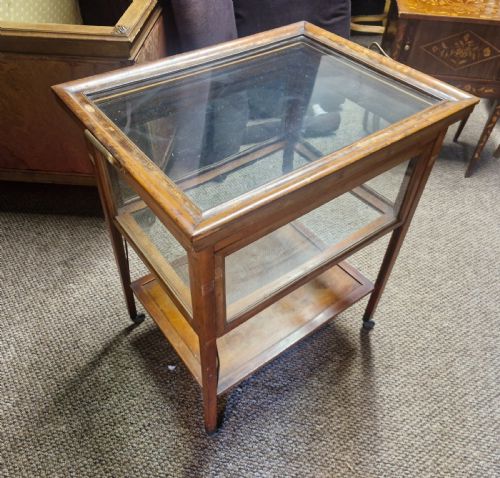
The form spans straightforward oak and mahogany service tables to elaborate burr walnut and mirrored cocktail carts. Many items include removable trays or clever metamorphic designs that adapt for serving afternoon tea or hosting guests.
How they were made
Cabinet makers built these pieces using solid timbers like oak, mahogany, and walnut alongside exotic veneers such as burr amboyna. Metal elements including brass, silver plate, and glass appear frequently in frames, galleries, and tray inserts.
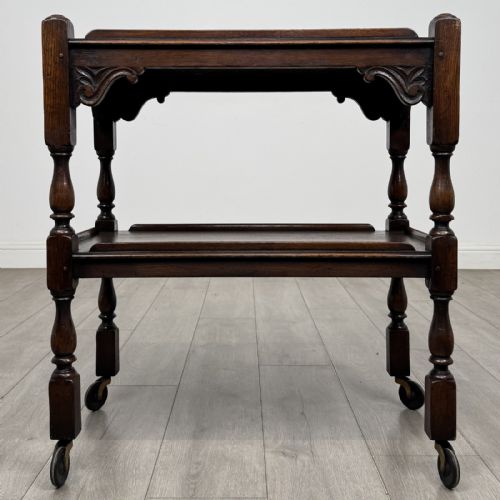
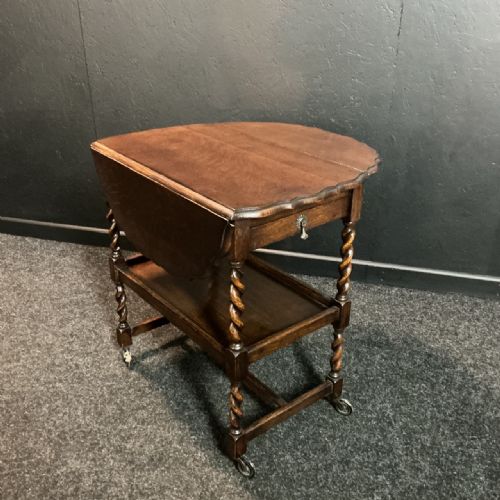
Construction techniques include turned barley twist legs, carved ornamentation, and integrated wheels or castors designed for smooth movement. Drop-leaf hinges and removable top trays demonstrate practical engineering tailored for hosting.
Antique Tea Cart Retail Price Guide 2026
Typical asking prices for tea cart among the pieces listed under this phrase on Sellingantiques today, from the lower quarter to the upper quarter. They describe what is for sale here now, not the wider market.
Some Edwardian models feature fold-out baize surfaces, quietly converting from afternoon tea to an impromptu card game.
What varies in quality
The distinction between standard utility items and finer examples rests on timber selection and decorative detail. Figured veneers, intricate inlay work, and substantial cast brass mounts elevate a piece above basic production.
Design sophistication also separates ordinary trolleys from exceptional ones, particularly in metamorphic mechanisms or distinctive Art Deco and French Neoclassical styling. Integrity of the original wheels, glass inserts, and surface polish determines the overall character.
Maison Bagues·Asprey
The Antique Tea Cart Glossary
- Barley twist
- A turned wooden column carved in a spiral rope pattern popular during the Edwardian period and earlier revivals.
- Etagere
- A set of open shelves or tiers used for displaying objects or serving drinks.
- Metamorphic
- Describing furniture designed to fold, extend, or transform into an alternative form or table surface.
- Gallery
- A raised raised metal or wooden rim around the edge of a tray or trolley top to prevent items sliding off.
- Drop side
- A hinged flap on the edge of a surface that lowers or lifts to alter the overall width of the trolley.
Antique Tea Cart: Frequently Asked Questions
How do I use an antique tea cart today?
These mobile tables function brilliantly as cocktail bars, side tables, or plant stands in modern living spaces. Their wheels allow you to reposition drinks and glassware easily when entertaining.
They also provide useful display shelving in dining rooms or kitchens while adding period character to your interior decor.
Were tea carts used only for tea?
While originally designed for serving afternoon tea in formal drawing rooms, their flexible shelving suited various domestic tasks. Many double as serving trolleys, portable sideboards, or general drinks carts for evening hospitality.
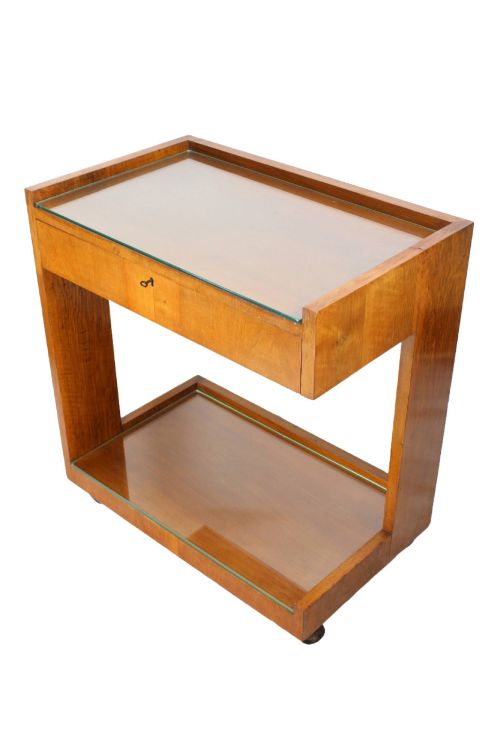
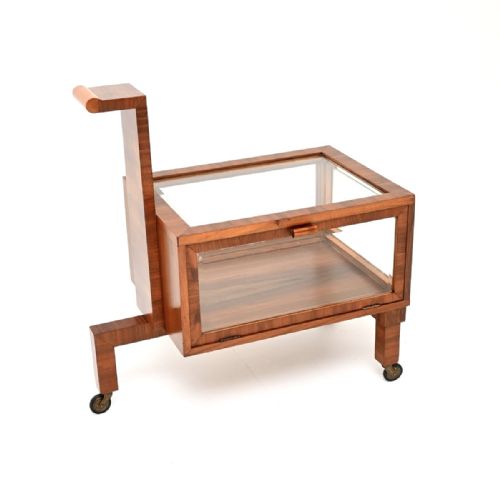
Later Art Deco models leaned specifically towards cocktail service with fitted glass tiers and bottle compartments.
How do I distinguish Edwardian from Art Deco carts?
Edwardian tea carts tend to feature warm oak or mahogany, turned barley twist legs, and traditional inlaid woodwork. They emphasise domestic comfort and classic tea service.
Art Deco examples embrace streamlined geometric forms, figured walnut or burr amboyna, and contrasting metal or glass elements geared towards cocktail culture.
Do antique tea carts move easily on modern floors?
Most pieces retain their original castors, though the ease of movement depends on the floor surface and wheel condition. They glide smoothly across wooden floors and tight carpets alike.
Care should be taken when moving heavily laden trolleys carrying antique glassware across uneven thresholds.