


Antique Drinks Cart
An antique drinks cart brings practical surface space and period character to a room, offering a versatile stage for serving afternoon tea or spirits.

Antique Drinks Cart
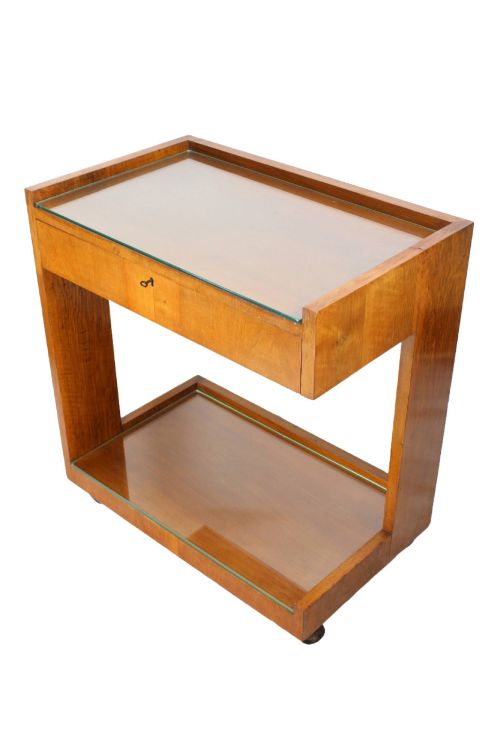
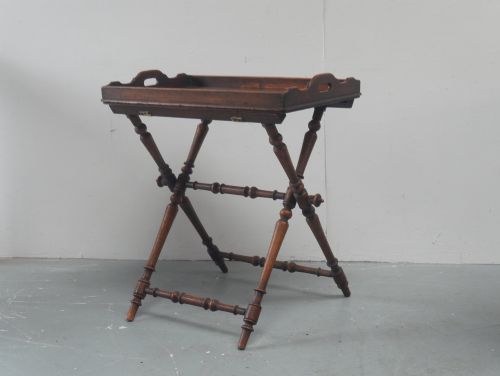
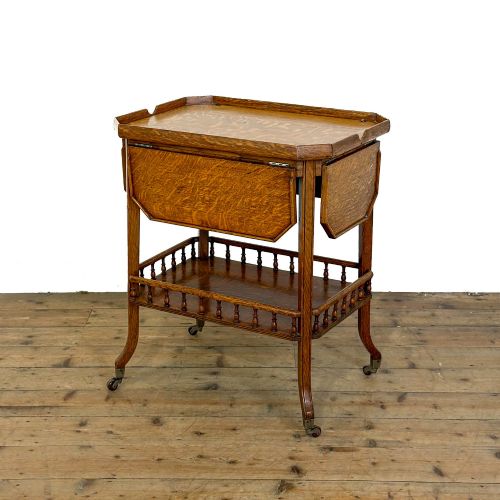
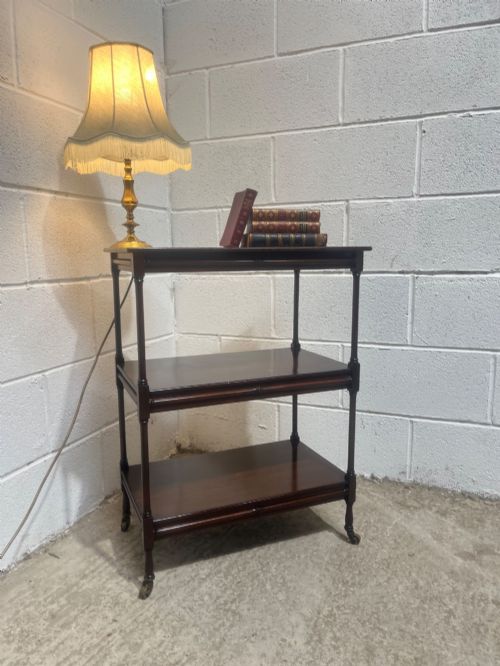
An antique drinks cart serves as a mobile surface for refreshments, spanning forms such as tea trolleys, bar carts, drop-sided serving carts, and nested tables. These pieces accommodate varied hosting needs through folding leaves, multiple tiers, and wheeled mobility.
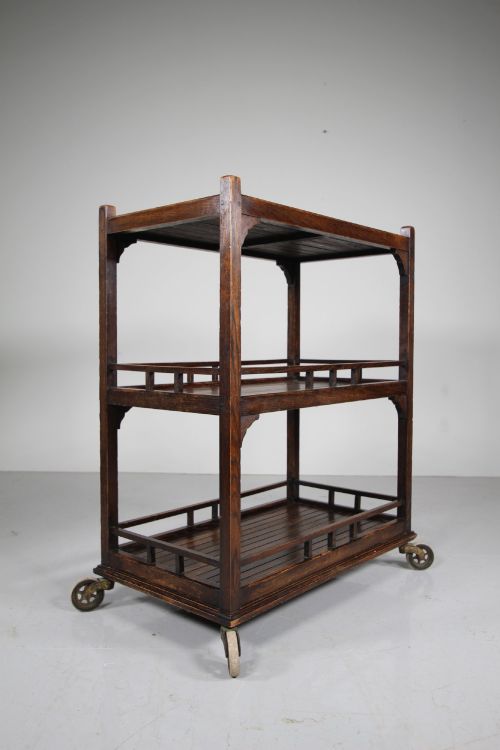
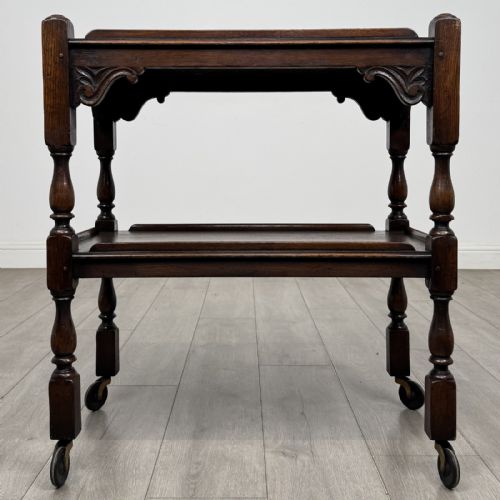
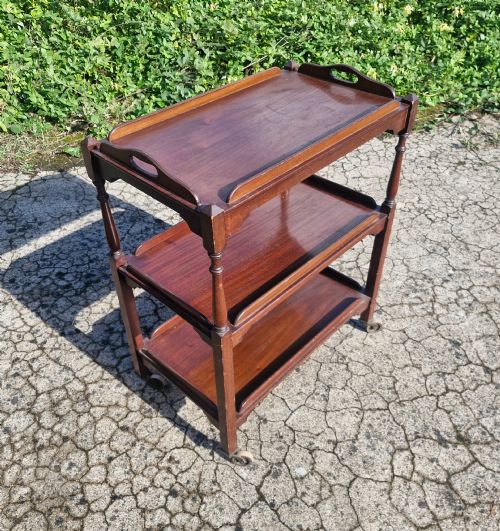
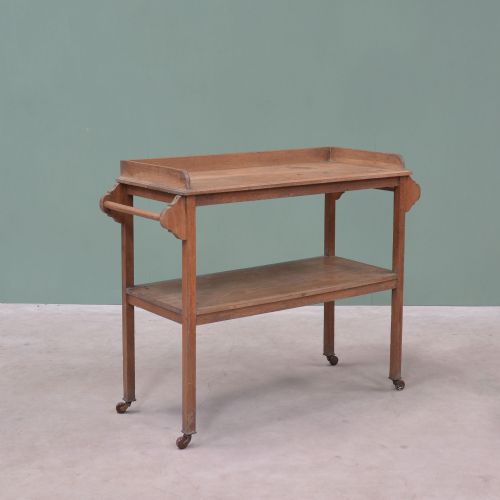
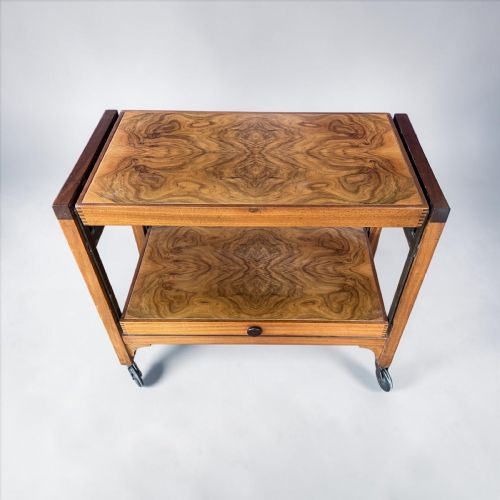
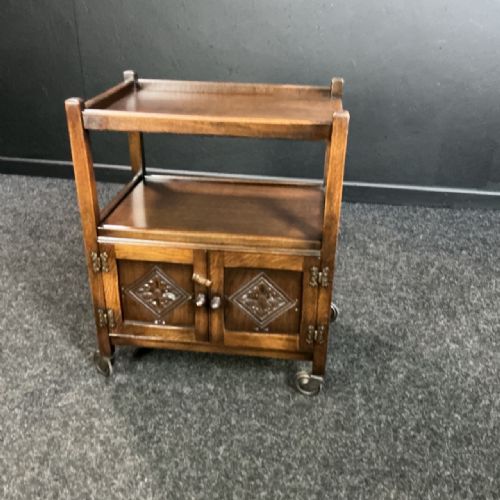
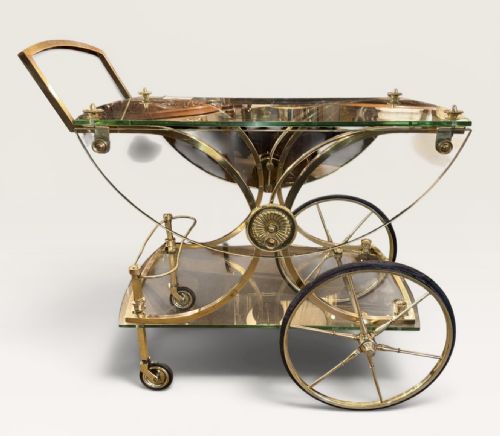
The versions most commonly met on this page range from Edwardian and early twentieth century oak tea trolleys with barley twist legs to later mid-century brass designs and drop-leaf variations. Walnut and mahogany examples further expand the selection alongside utilitarian ship-board pieces.
Origins stretch across the Edwardian era through the nineteen-twenties, nineteen-thirty, and nineteen-sixty decades, reflecting shifting domestic habits from formal afternoon tea service to cocktail hosting.

How they were made
Construction relies heavily on traditional cabinet-making timbers including oak, mahogany, walnut, and teak, shaped into turned uprights, framed trays, and drop-leaf mechanisms. Joinery methods secure stability across tiered frames, hinged leaves, and nesting configurations.
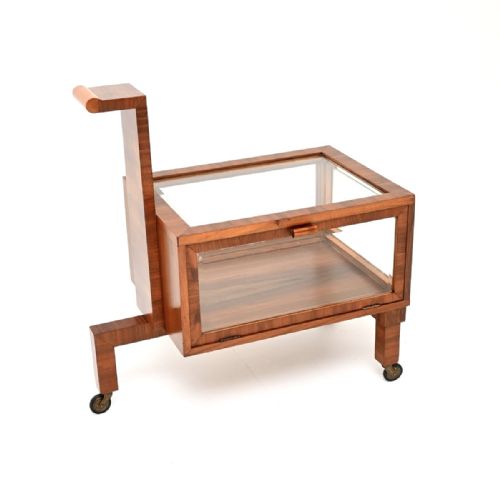
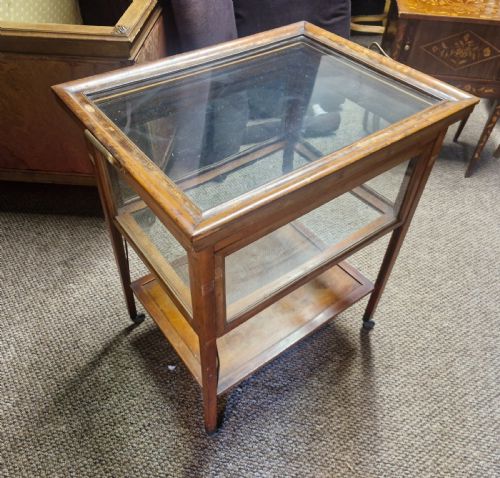
Metal components such as brass fittings, castors, and structural frames provide mobility and decorative contrast against wooden surfaces. Glass inserts frequently form top trays or shelving tiers, paired with fitted baize surfaces in dual-purpose tables.
Antique Drinks Cart Retail Price Guide 2026
Typical asking prices for drinks cart among the pieces listed under this phrase on Sellingantiques today, from the lower quarter to the upper quarter. They describe what is for sale here now, not the wider market.
Materials recorded across the inventory include oak, mahogany, walnut, teak, brass, glass, and metal.
What varies in quality
Superior examples demonstrate refined timber selection and intricate turning work, such as crisply carved barley twist legs, compared to simpler utilitarian frames. The integration of functional mechanisms like drop leaves and smooth-running castors dictates the overall mechanical success of the piece.
Distinction also lies in material combination and designer attribution, where specialist brasswork and recognised workshops elevate standard serving furniture into distinct decorative objects.
Maison Baguès
The Antique Drinks Cart Glossary
- Barley twist
- A decorative turning technique resembling a spiral rope, frequently seen on table legs and upright supports in early twentieth century furniture. This style draws on earlier Jacobean revival motifs.
- Drop leaf
- A hinged section of a tabletop that folds down to save space or lifts up to extend the surface area. Supporting brackets or swing legs secure the leaf when raised.
- Baize
- A coarse woolen fabric, traditionally green, used to line the playing surface of card tables and serving trays. It protects surfaces during use and dampens the sound of glassware.
- Nest of tables
- A set of graduated tables designed to fit neatly beneath one another when not in use. They offer flexible auxiliary surface space in compact living areas.
- Tiered trolley
- A mobile serving cart featuring two or more horizontal shelves stacked vertically. This design maximises carrying capacity while maintaining a small floor footprint.
Antique Drinks Cart: Frequently Asked Questions
What is an antique drinks cart?
An antique drinks cart is a movable table or trolley designed specifically for holding and serving beverages, glassware, and tea service items.
These pieces typically feature wheels or castors, multiple tiers, and sometimes folding leaves to adapt to different entertaining requirements.
How were tea trolleys used?
Tea trolleys were primarily utilised in Edwardian and twentieth-century households to transport afternoon tea, cakes, and dining accessories from the kitchen to the parlor or drawing room.
Their mobility allowed hosts to serve guests efficiently without relying entirely on fixed sideboards or dining tables.
How do I date a drinks cart?
Dating relies on identifying stylistic markers, construction materials, and hardware details characteristic of specific decades like the Edwardian period or the nineteen-thirties.
Turned woodwork styles, types of metal castors, and timber preferences provide reliable clues to the manufacturing era.
Can I use an antique drinks cart daily?
These carts are structurally designed for active hospitality use, featuring sturdy timber frames and functional castors that handle regular movement.
Protecting wooden and glass surfaces with coasters and avoiding excessive weight ensures the cart remains practical for contemporary entertaining.