

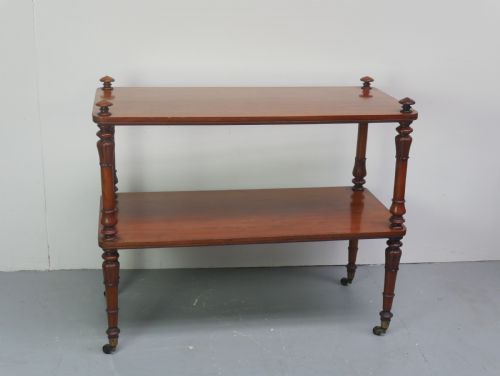
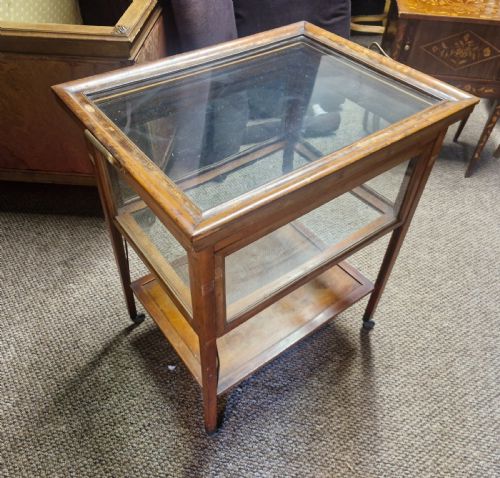
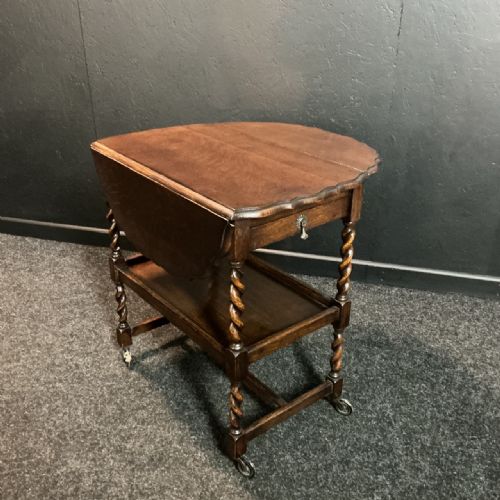


Edwardian Tea Trolley
An edwardian tea trolley is a mobile serving piece built for hosting, and collectors prize these practical items for period hospitality.
Edwardian Tea Trolley
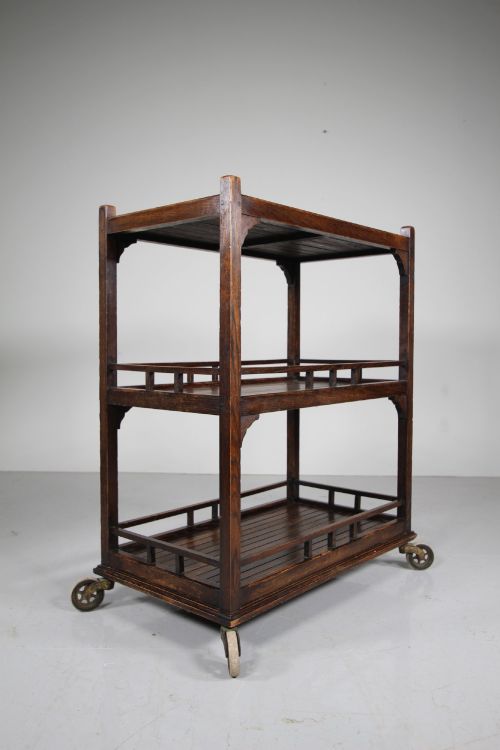
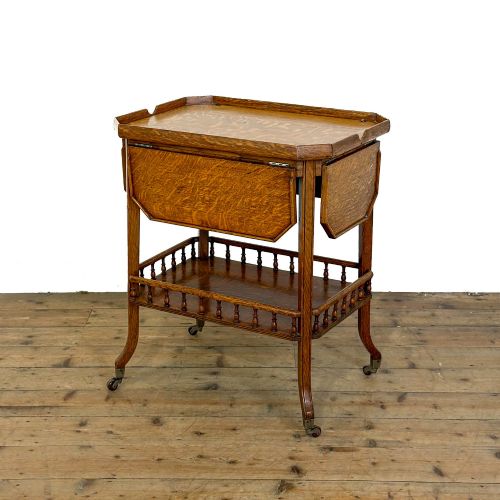
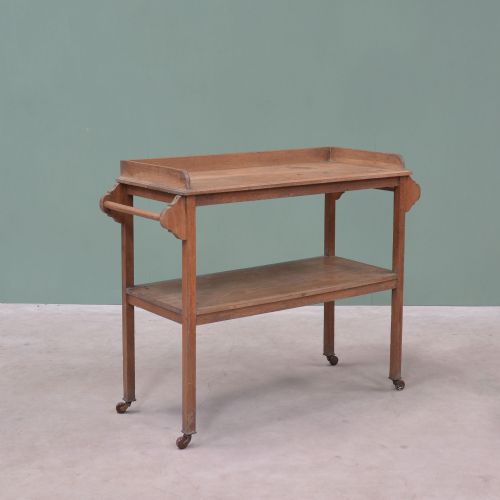
An edwardian tea trolley serves as a mobile tier for refreshments, featuring wheels and multiple levels for easy hosting during the home afternoon service. These pieces frequently appear in oak or mahogany, often equipped with folding leaves or removable top trays to aid practical domestic use.
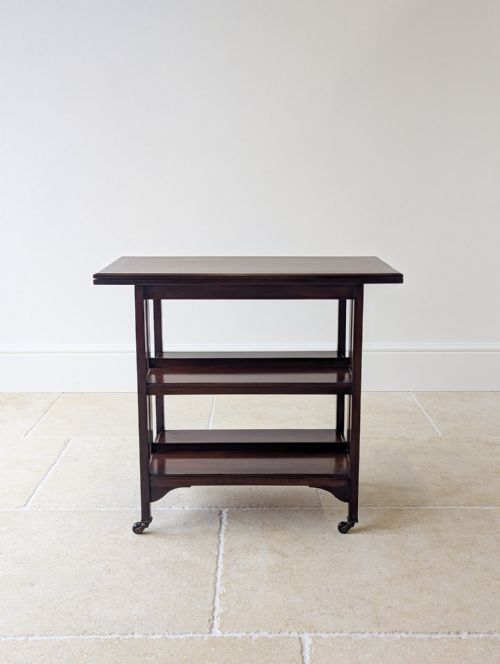
Buyers encounter numerous variants ranging from simple two-tier oak stands to elaborate inlaid mahogany models and substantial teak examples salvaged from historic maritime sources. Occasional items incorporate drop sides, book storage, or convertible card table surfaces alongside standard serving duties.
How They Were Made
Cabinet makers utilised dense hardwoods such as oak, mahogany, walnut, and teak, constructing sturdy frames supported by brass, iron, or wooden wheels. Many versions incorporate turned supports like barley twist legs, while others display fine string inlay or satinwood details.
Working mechanisms include drop leaves with folding brackets, removable top serving trays, and hinged or folding table tops that transform the trolley into a card table. Joinery relies on traditional techniques to ensure stability under heavy loads of china and silver.
Edwardian Tea Trolley Retail Price Guide 2026
Typical asking prices for edwardian tea trolley among the pieces listed under this phrase on Sellingantiques today, from the lower quarter to the upper quarter. They describe what is for sale here now, not the wider market.
Recorded materials span oak, mahogany, teak, walnut, rosewood, brass, iron, and glass across various periods including the Edwardian era and the 1920s.
What Varies in Quality
Quality rests upon the selection of timber and the precision of the joinery, distinguishing utilitarian items from high-end reception furniture. Superior examples exhibit finely figured mahogany or burr veneers, crisp inlay work, and solid turning rather than mass-produced simplicity.
Hardware and mobility components dictate operational excellence, separating smooth-rolling cast wheels and well-fitted drop leaves from stiff or loose hinges. The inclusion of original removable trays and solid secondary timbers elevates a piece within its category.
Heals·Hughes Bolckow and Co·Castles of London
The Edwardian Tea Trolley Glossary
- Barley twist
- A decorative turning technique resembling a spiralling rope column, frequently seen on table legs and supports.
- Drop leaf
- A hinged section of a table top that folds down when not in use and lifts to extend the surface area.
- Etagere
- A piece of furniture consisting of a set of open shelves for displaying small objects or serving.
- Dumb waiter
- A multi-tiered serving stand or trolley used for holding food and dishes away from the main dining table.
- Inlay
- A technique of inserting pieces of contrasting timber or decorative materials into a recessed wood surface to form a design.
Edwardian Tea Trolley: Frequently Asked Questions
How do I use an edwardian tea trolley today?
These pieces function well as mobile drinks bars, bedside stands, or side tables in living spaces. Their multi-tier design holds glassware, books, or decorative items efficiently.
Folding leaves allow the trolley to save space when not serving refreshments during gatherings.
Are these trolleys sturdy enough for daily use?
Solid hardwood construction ensures most examples remain robust for supporting heavy items like tea sets or decanters. Traditional joinery provides structural stability across multiple tiers.
Checking wheel mountings and leaf brackets ensures safe movement across domestic flooring.
What is battleship teak?
Certain items utilise reclaimed timber sourced from decommissioned naval vessels during the early twentieth century. This wood offers exceptional durability against moisture and wear.
Workshop stamps or plaques occasionally verify this maritime provenance on specific models.
How do I distinguish Edwardian from later styles?
Edwardian items typically display lighter proportions, classical Sheraton revival influences, or specific oak and mahogany turning popular before the First World War. Later pieces often reflect 1920s traditional or Jacobean revival characteristics.
Materials, hardware styles, and construction methods help confirm the period of manufacture.