

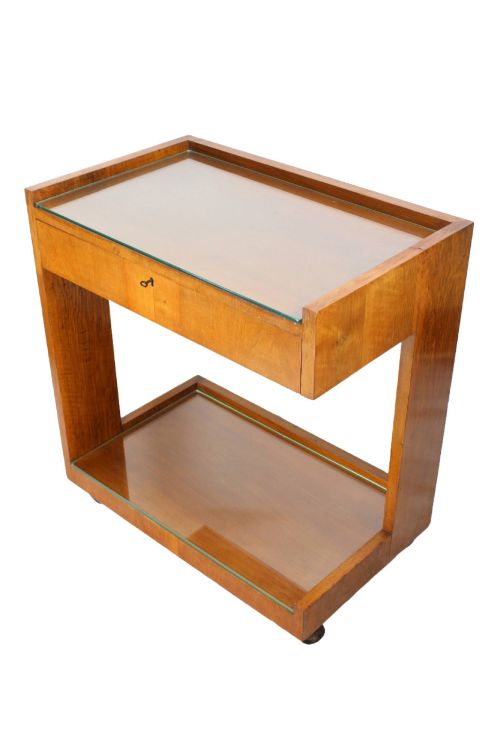
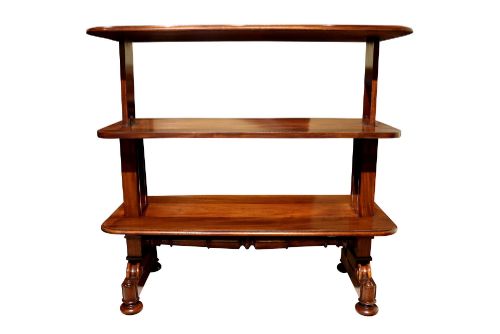
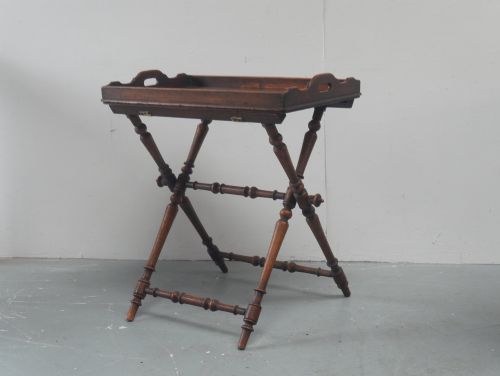
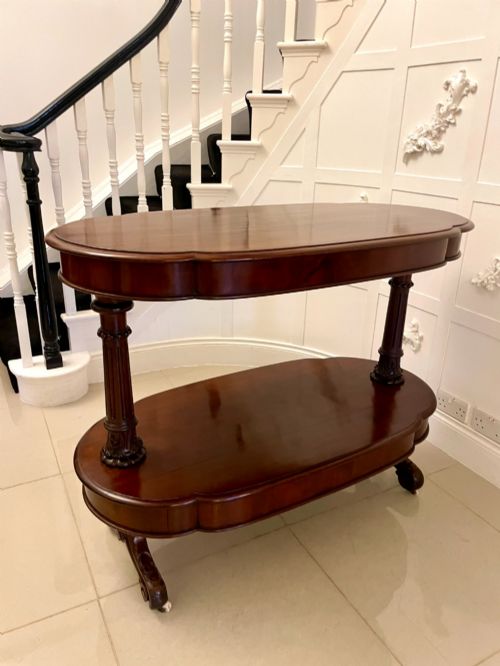
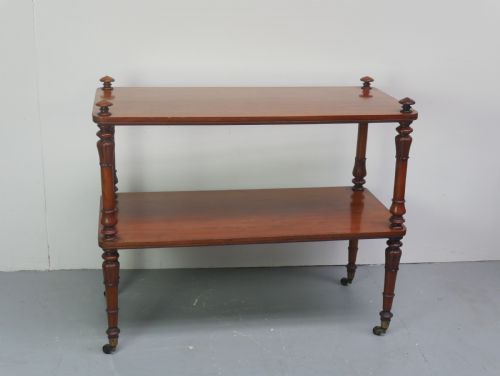

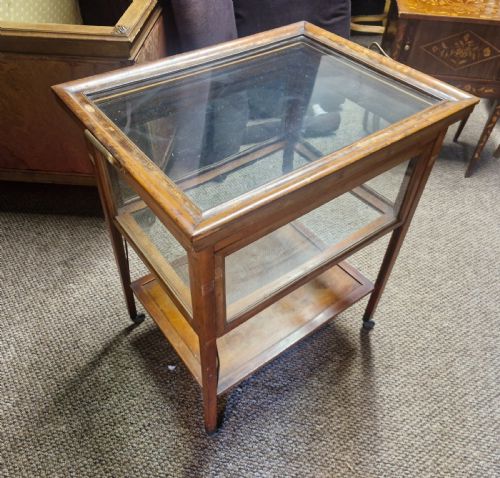

Wooden Serving Trolley
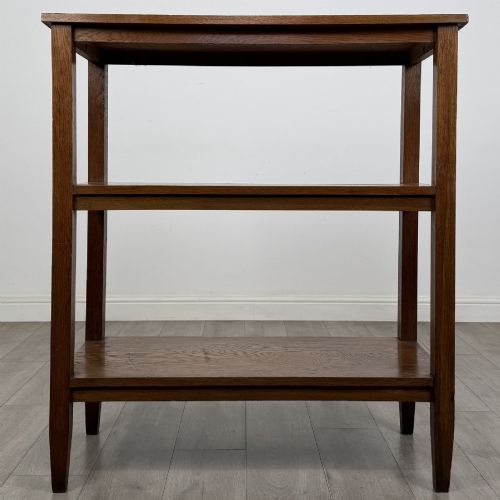
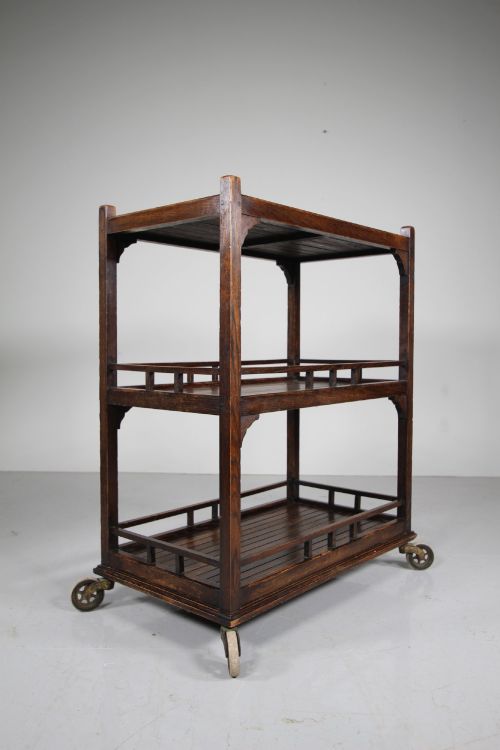
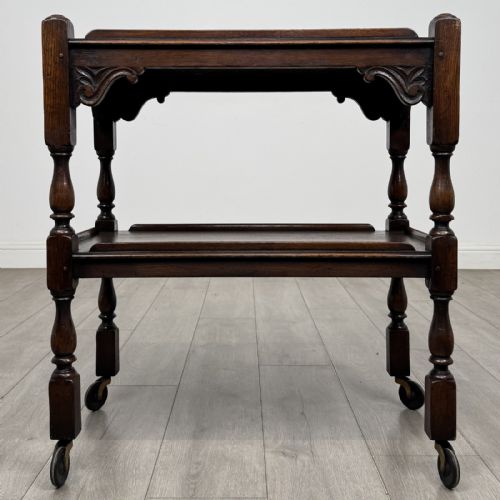
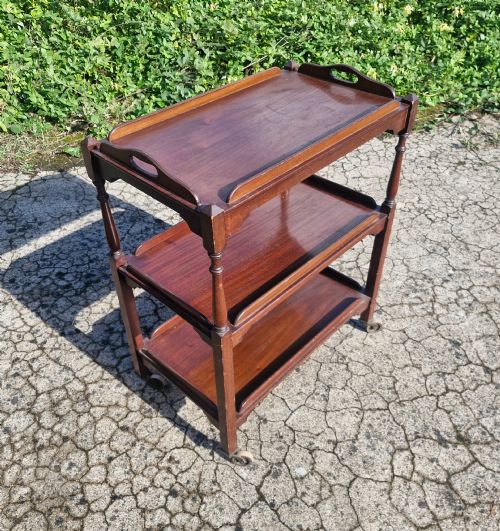
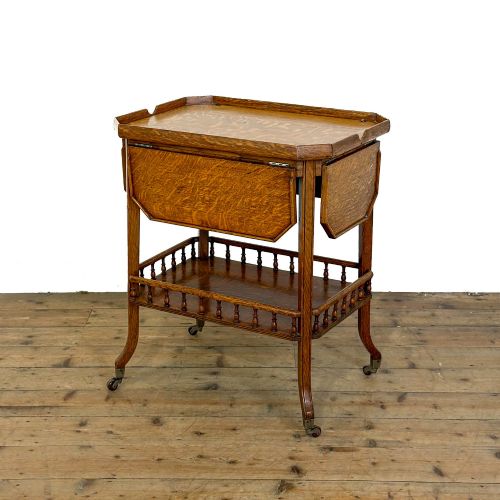
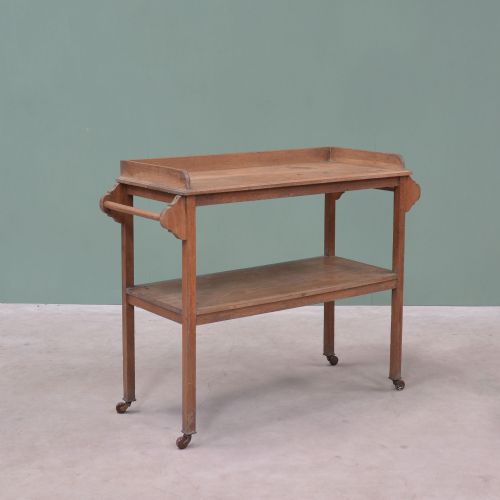
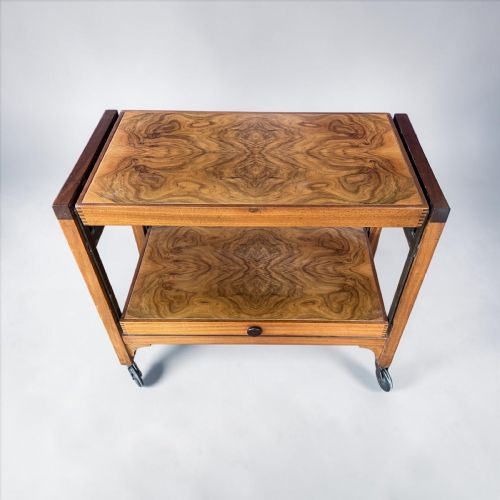
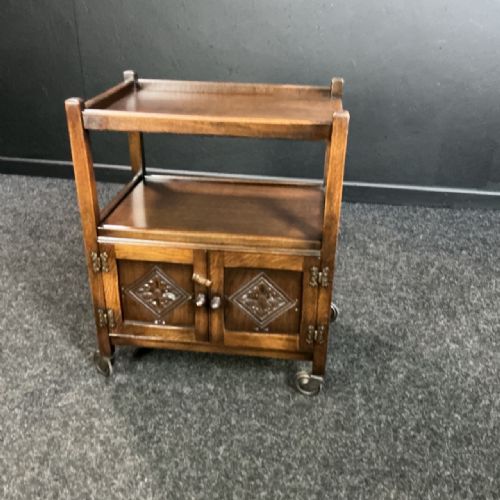
A wooden serving trolley brings mobility and solid materials to dining spaces, ranging from folding butler trays to tiered oak and walnut tea carts.
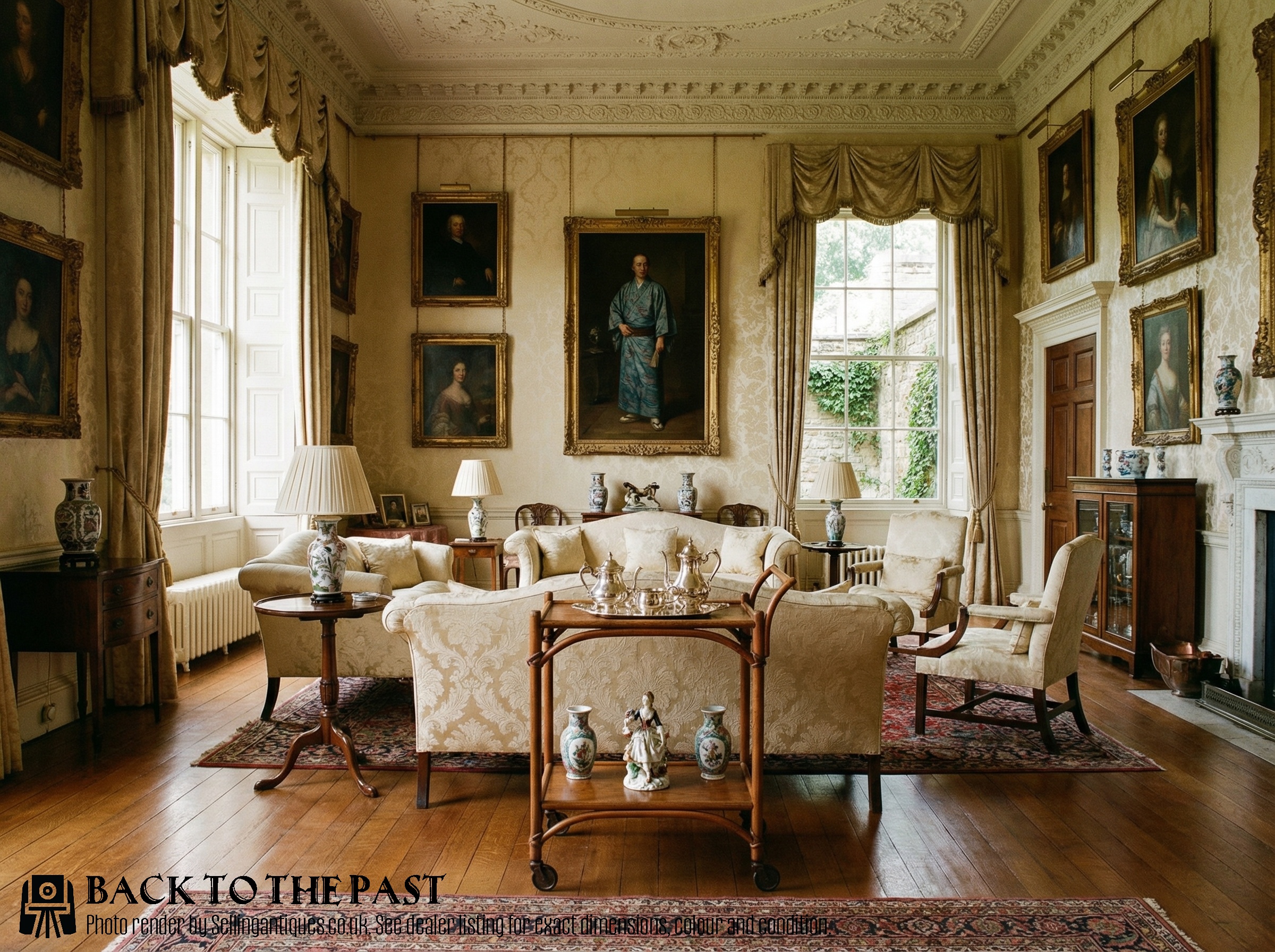
Wooden Serving Trolley
Buyers searching for a wooden serving trolley encounter forms spanning tea trolleys, drinks carts, dumb waiters, and multi-tier buffets. These pieces accommodate varied hosting needs through drop sides, removable trays, and wheels.
The selection here draws heavily from Victorian and Edwardian examples in oak and mahogany, alongside Art Deco walnut designs and earlier nineteenth-century dumb waiters. Simpler folding butler trays on stands appear frequently alongside elaborate three-tier serving tables.
Origins include English country pieces, regional workshops, and specialised makers utilising hardwoods like beech, walnut, and oak. Some forms incorporate specialised tiers for tea, cake, or drinks service.
Distinctions in craftsmanship and materials
Quality rests in the selection of timbers, such as figured walnut or dense pollard oak, paired with refined joinery and well-turned supports. Finer examples retain original castors, smooth folding mechanisms, and securely fitted removable trays.
Simpler utility items contrast with substantial three-tier buffets and architectural dumb waiters that demonstrate superior carving, balanced proportions, and careful timber matching across multiple levels.
Wooden Serving Trolley Retail Price Guide 2026
Typical asking prices for wooden serving trolley among the pieces listed under this phrase on Sellingantiques today, from the lower quarter to the upper quarter. They describe what is for sale here now, not the wider market.
Listings feature oak, mahogany, and walnut woods across Victorian, Edwardian, and Art Deco periods.
Lusty of Leicester
The Wooden Serving Trolley Glossary
- Dumb Waiter
- A tiered stand or serving table used to hold dishes or drinks without requiring a servant at the table. These pieces often feature revolving or fixed circular shelves on a central pillar or multi-tier framework.
- Butlers Tray
- A shallow wooden tray with handles that lifts off its folding support stand. This portable surface allowed domestic staff to transport items between rooms before placing the tray onto its frame.
- Castor
- A small wheel mounted on a swivel attached to the legs of a trolley. Original castors permit smooth movement across floors during service.
- Tier
- A horizontal shelf or level within a trolley or buffet structure. Multi-tier designs typically offer two or three distinct surfaces for storage and display.
- Drop Side
- A hinged leaf on the edge of a table or trolley top that lowers when not in use. This mechanism allows the surface area to expand quickly for afternoon tea or drinks.
Wooden Serving Trolley: Frequently Asked Questions
What is the difference between a tea trolley and a dumb waiter?
Tea trolleys are mobile serving carts typically equipped with wheels, handles, and multiple tiers designed for transporting cups, cakes, and pots during afternoon gatherings. They often feature drop sides or removable top trays for convenience.
Dumb waiters originate from earlier periods as stationary or heavy tiered serving tables intended to hold dishes and books. While both provide extra surfaces, dumb waiters frequently rely on fixed architectural pillars or tiered shelves rather than nimble wheel-based movement.
How do I use a serving trolley in a modern home?
A serving trolley functions practically as a mobile bar cart for glassware, bottles, and cocktail accessories in a living room or dining space. The wheels allow you to relocate drinks easily when entertaining guests.
Alternatively, you can use a tiered wooden trolley as a side table for books, plants, or lamps. Pieces with removable trays double as serving platters when you need to carry items across rooms.
Are these trolleys sturdy enough for daily use?
Most antique wooden trolleys were built from dense hardwoods such as oak, mahogany, and walnut using traditional joinery designed to bear weight. Their durable construction suits everyday holding of books, decorative objects, or serving ware.
Checking the stability of the frame and the condition of the original castors ensures safe movement. Regular care keeps the wooden surfaces and joints functioning smoothly.