
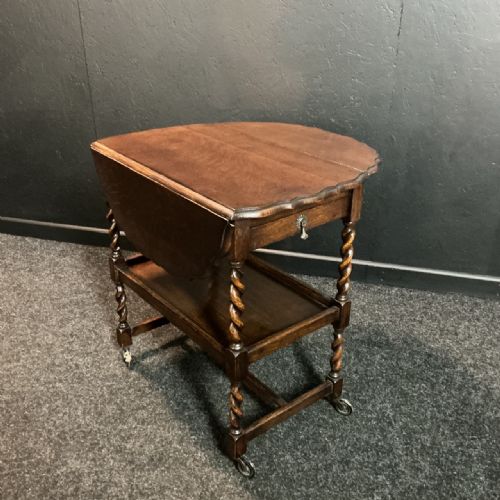


Two Tier Drinks Cart
A two tier drinks cart brings portable hospitality into a room, offering functional surface space across dual levels with period character.
Two Tier Drinks Cart
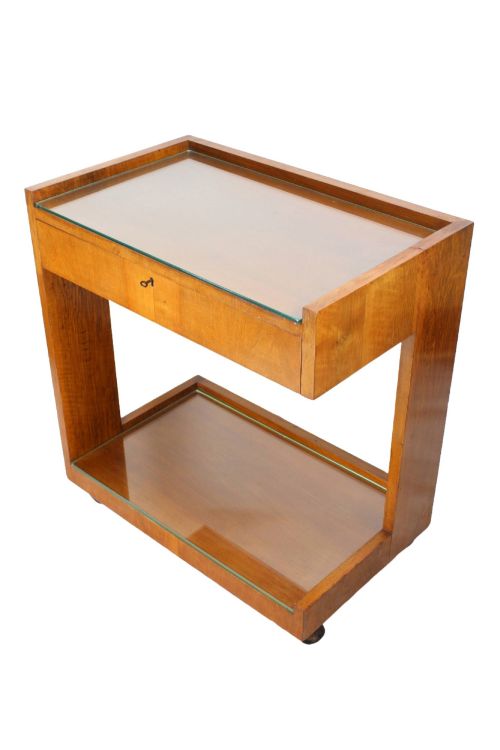
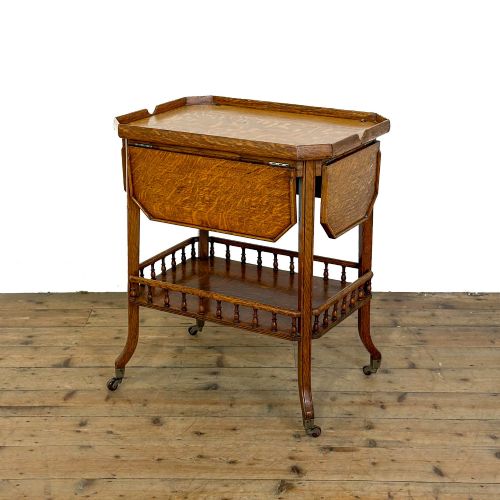
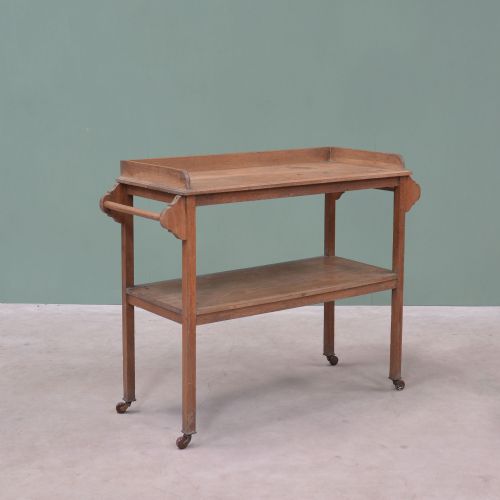
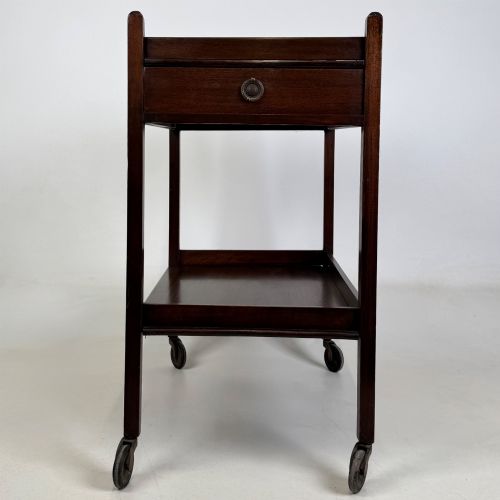
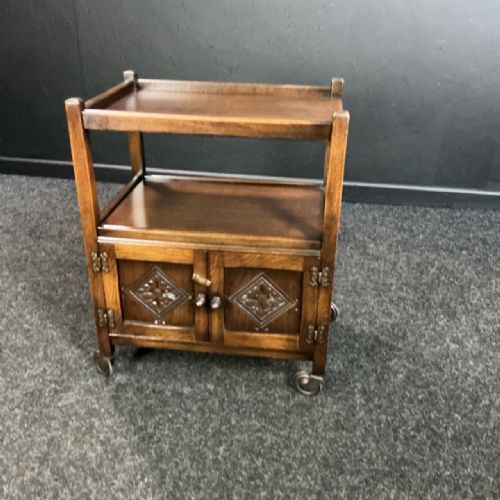
A two tier drinks cart serves as a mobile surface for serving bottles, glassware, and afternoon tea across multiple levels. These pieces range from early Edwardian oak designs with folding leaves to modernist chrome and glass creations from the nineteen-thirties.
Buyers encounter various forms including tea trolleys, bar carts, and metamorphic serving tables fitted with wheels. Materials span traditional timbers like mahogany and walnut alongside industrial metals such as brass, chrome, and aluminium.
Origins stretch from Georgian style revivals and Victorian pieces through to mid-century British, French mid-century, and Anglo-Indian production. The primary function remains the same across these styles: moving refreshments efficiently from kitchen to parlour.
How they were made
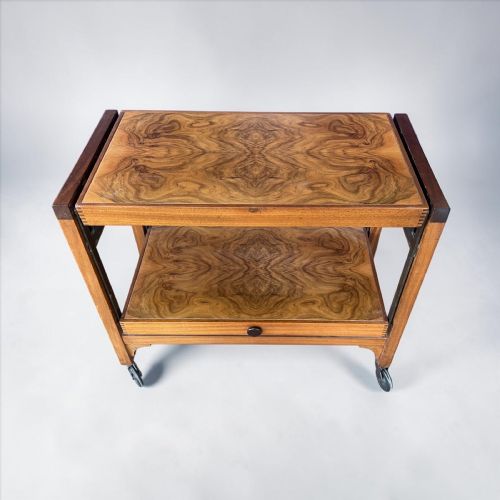
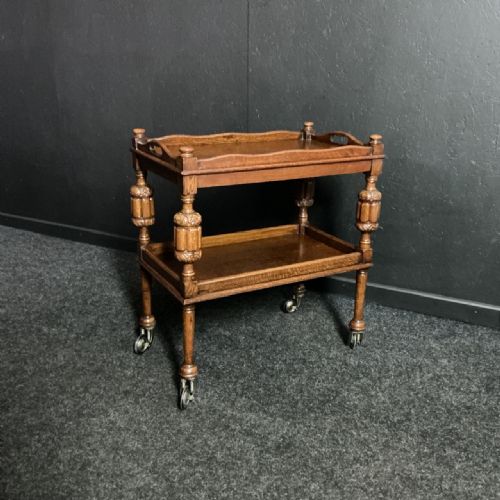
Cabinetmakers constructed the wooden framework of a two tier drinks cart using solid timbers like oak, walnut, and mahogany, frequently incorporating turned barley twist supports or inlaid decorative veneers. Some examples utilise cane bound beech or carved hardwood to achieve distinctive regional textures.
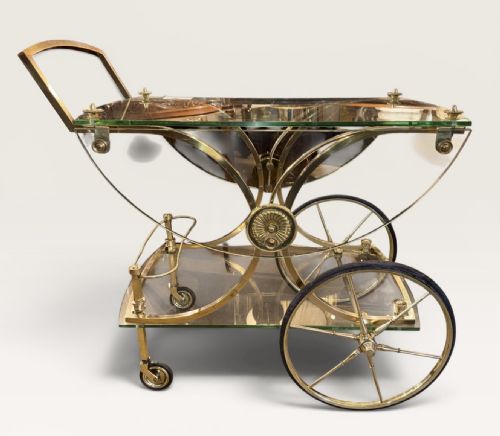
Metal iterations rely on brass, chrome, aluminium, and cast iron frames paired with glass, mirror, or wood tiers to create lighter transportable structures. Wheels and castors allow smooth movement, while clever engineering permits drop leaves, folding tops, and lift off trays.
The listings on this site span multiple eras, from Victorian and Edwardian oak tea trolleys to Art Deco chrome and nineteen-sixties French bar carts.
What varies in quality
The distinction between standard utility items and superior examples lies in the selection of materials and the execution of mechanical elements. High tier carts demonstrate crisp carving in mahogany or oak, precise joinery on drop leaves, and robust fittings for wheels and castors.
Design sophistication also dictates the range, where mass-produced tea trolleys differ significantly from specialist modernist chrome and glass bar carts or designer pieces. Original surfaces, intact mirror glass, and smooth metamorphic action elevate the standing of any cart.
Maison Bagues·Lusty of Leicester·Aldo Tura·Maison Jansen
The Two Tier Drinks Cart Glossary
- Metamorphic
- Describing a piece of furniture designed to transform its shape or function, such as a serving trolley converting into a card table. This ingenuity allows single objects to serve dual purposes in compact hosting spaces.
- Drop leaf
- A hinged table flap that folds down when not in use and is supported by swing brackets when extended. This mechanism allows a cart to expand its surface area instantly during gatherings.
- Barley twist
- A decorative turning technique resembling a spiralling rope applied to wooden table legs and vertical supports. It remains a defining characteristic of Jacobean revival and early twentieth century oak tea trolleys.
- Castor
- A small wheel mounted on a swivel assembly attached to the base of furniture legs for easy rolling. Quality wheels ensure smooth transit across carpets and floorboards without sticking.
- Hostess trolley
- A specialised serving cart intended for moving food and drinks between rooms during formal or informal hospitality. These units often incorporate removable trays or mirrored display surfaces.
Two Tier Drinks Cart: Frequently Asked Questions
What is a two tier drinks cart?
A mobile serving unit featuring an upper and lower surface designed to transport glassware, bottles, and tea service items. They combine practical mobility with period decorative styles.
These pieces function as portable tables that move easily between rooms during hosting.
How were these trolleys used?
They served primarily for afternoon tea service and for holding cocktail accessories in domestic sitting rooms and parlours.
The dual levels allowed hosts to keep glassware below while preparing or pouring drinks on the top surface.
How do I date an oak tea trolley?
Dating relies on identifying stylistic markers like Edwardian turned supports, Art Deco chromium framing, or Jacobean revival barley twists. Construction methods also provide clues to the era of manufacture.
Earlier pieces often feature solid oak and heavy castors, while later mid-century versions introduce lighter metals and glass.
Can these carts be used on carpet?
Most carts feature original wheels or castors intended for smooth movement across various domestic floor surfaces. Larger wheels handle rugs and carpets more easily.
Care should be taken with vintage castors to ensure they roll freely without snagging delicate rug fibres.